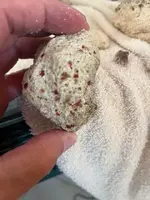
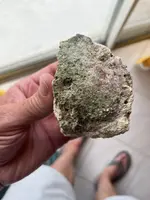
Forgive my naivety, but what is a tuesday rock?Obviously a 'tuesday' rock. Who could hang a name on it?
Welcome to Tnet
Interesting, but unfortunately your picture is terrible. Could we please have some larger close-ups which are in focus?
Are you sure the inclusions are coral? Are they glassy in appearance and is the specimen very light in overall weight... because it looks like it might be a piece of pumice with fire opal phenocrysts?
Play on words from the Rolling Stones song Ruby Tuesday and your characterization of Ruby color. "Good bye, Ruby Tuesday, who could hang a name on you"? 1967, so you're forgiven.Forgive my naivety, but what is a tuesday rock?
Let me explain a little better...any old dead coral, shells, and rock that is underwater will form soft growths, and algae on them. This is a common algae that is found in tropical waters...it is quite hardy, and will dry in place without even fading...it can usually be scraped off, but is difficult to remove with soaps and chemicals...it will even resist bleach and heavy cleaners. A green abrasive pad will remove it but it is stubborn. It will stick to most surfaces, even glass, and can build up quite thick and become more even in its coverage causing large areas of red discoloration...I'll try and take a picture of some of it on my artifacts that have been out of the water for years and still have it adhering to them.That's typical red algae found on most coral and rock in the keys and south Florida!!
Interesting that it appears glassy looking when dry (assuming it’s dry). Is that what the red algae does? Maybe that’s white coral and not shine.Let me explain a little better...any old dead coral, shells, and rock that is underwater will form soft growths, and algae on them. This is a common algae that is found in tropical waters...it is quite hardy, and will dry in place without even fading...it can usually be scraped off, but is difficult to remove with soaps and chemicals...it will even resist bleach and heavy cleaners. A green abrasive pad will remove it but it is stubborn. It will stick to most surfaces, even glass, and can build up quite thick and become more even in its coverage causing large areas of red discoloration...I'll try and take a picture of some of it on my artifacts that have been out of the water for years and still have it adhering to them.
www.reef2reef.com
This is very prevalent in natural reef habitat...only finding aquarium talk about it...people worry when it forms in there tanks, and it can get pretty bad if there are no natural predators to eat it such as snails, and tropical fish. In the wild it is kept in balance by other organisms feeding on it....to shallow and it will die, and to deep it will not form as fast. Very common and can also form in fresh water...quite common and a sign of a healthy ecosystem it is important for the health of the reef, as everything works in a symbiotic way on a healthy reef.![]()
Red spots on rock
Can someone tell me what these red spots on my rock are? Coralline? Dinos? Cyano? I scrubbed gently with toothbrush and it did not come off.www.reef2reef.com