What's new

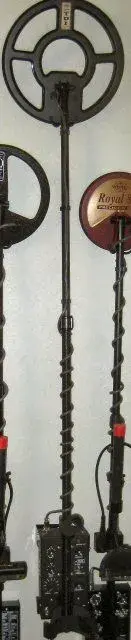
Straightening the cord from your coil to the main body of your detector.

thadd

Jr. Member
Joined
Oct 7, 2012
Messages
71
Reaction score
29
Golden Thread
0
Location
Huntington Beach, CA
Detector(s) used
Whites MXT
Primary Interest:
Metal Detecting
I saw a YouTube video where the guy recommend that you straighten the cord on your coil several inches from the coil itself and where it goes into the jack on the main body of the machine. He used some Velcro to keep it straight and then had it coiled up the shaft and then straightened again at the other end.

Does anyone else do this, or think it makes any difference? He made it sound like it would help the detector work more efficiently, but I kind of feel like it might make sense on paper, but really not have any benefit to bother doing it.

Thought I'd get other opinions before I considered giving it a try.

Thanks all!
 
Upvote 0
I did try it recently with my teknetics. The machine did not seem to like it and began giving false signals. I have heard others state that for some machines it cures falsing? Guess you have to try on your machine to see.
 
Since the coil reports on metal it is wise to run the cable straight up a ways on the shaft before wrapping in around. I just wrap it up till I can plug it in. The cable is taped with electrical tape so it doesn't move.
 
Since the coil reports on metal it is wise to run the cable straight up a ways on the shaft before wrapping in around. I just wrap it up till I can plug it in. The cable is taped with electrical tape so it doesn't move.

agreed 100%
 
metal_detector.gif
Coil or straight - IMHO - the MD vendor would absolutely recommend the proper approach. Garrett shows it wrapped around... Hey, if it works better straight - wouldn't you think the vendor would recommend that approach?
 
I think that if it was a significant issue, the manufacturer, or design engineers, would address that in the owner's manuals. Or, at the very least, one of the dozens of experts writing books all about every detail of the detector and how to get the most out of it, would address that issue. However, the most you hear is the occasional comment alluding to improved performance. Kind of like those choke filters being sold on eBay these days.
So I wrap all my coil wires as per the manufacturer's instructions - with one exception; it is well recognized that wire management is critical to performance on the TDI, so I use these clips (rather than Velcro) on all my detectors:
IMG_0854_zps5e649da5.jpg


I do run the coil wire straight up the lower shaft, using three clips to hold it in place, then start wrapping it over the upper cable, like so:
TDI clips.webp
 
My machines just seem more estable aswell when I run the cable halfway up the shaft And then wrap it
 
I have heard this claim before, but I don't think it merits worry. I have found no difference in depth or performance whether taped in a straight line, vs wound around. And the claim is not just for the fact that the detector's function is to pick up metal (and the chord, afterall, has metal), but also I've heard the claim that somehow added chord length (wound vs straight) adds to more distance the info. has to travel, thus minutely affecting performance. Or something to that effect.

But I have seen no difference either way. So I don't bother.

Think of it: The machine is ALREADY compensating/acclimating to the amount of "metal" (minerals) that it's slated to go through anyhow. So any metal in those chords, is simply a part of the normal ground matrix to which you are now balanced to. Not sure if I'm explaining that right now not. But the machine "acclimates" to that as the bench/basis, the minute you've tuned it anyhow (because the chord placement is a "constant" that doesn't move). Does that make sense?
 
I think what Tom is saying is that during the ground balancing phase, the machine takes into account the shaft and wiring metals as a constant and ignores them as a signal source. I've tried both straight and wound cables and find no difference on my machines. The only thing you need to do however is to make sure there is not enough excess down by the coil to where the cable can flop around. That will likely give you a false signal. I just use the velcro type straps. I tried electrical tape and found it just made a sticky mess after a while and didn't seem to make any improvement over the velcro.
 
Once I get the feel of my machine down better, maybe I'll give it a try if I can find some Velcro or something to secure it. I wouldn't notice anything different right now, since my detector is still new to me; but once I start using it more regularly, hopefully I will be able to tell if it has any affect or not.

I appreciate all the input, great forum. :thumbsup:
 

Users who are viewing this thread

Latest Discussions

Back
Top Bottom