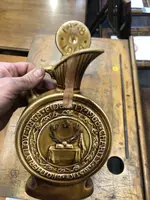
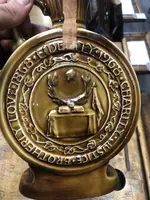
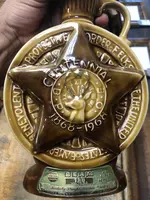
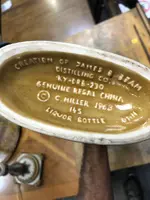
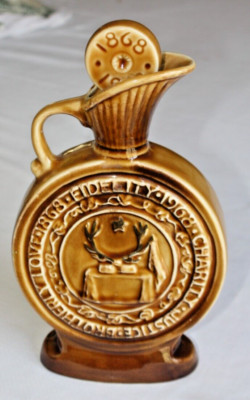
Jim Beam had so many styles of decanters. I couldn't imagine how much room you'd need to collect them all ...
... A TREASURE TIP: Liquor produced before 1990 was made in smaller batches, & with superior ingredients (mainly a better corn &, or, rye ... no GMO junk...). If you can find unopened bottles, they can be worth (to the right buyer) anywhere from $200 per bottle, up, depending on the brand. The older the liquor, the better (not from aging, just better quality. Liquor doesn't age in a sealed bottle...it ages in barrels, where it can "breathe" ...).
...I've found liquors & liqueurs that were valued as much as $1000 per bottle. Estate sales are a good source. ATF usually doesn't care, if the amounts are small. You can "barter" for the liquor, as the older stuff is a "collectable", buying the bottle, not the contents...
... Seagram's 7, produced in Lawrenceburg, Indiana, in the 1960s & 1970s, is a really great "find". This rye whisky was made & marketed as an inexpensive liquor to mix with Coca Cola. But what made this liquor special was the expertise of master distiller Greg Metze. Metze used the highest quality ingredients available. This, coupled with the fact that local, unadulterated Indiana water was limestone filtered, & just as high in quality as the finest Kentucky branch water, enabled Metze to use his expertise to produced a product that rivaled any of Kentucky's finest.
...So, consumers were buying $4 a bottle Seagram's 7, & mixing it with Coke. Savvy connoisseurs today seek this product (1960s-1970s), & pay premium prices for a bottle, which rivals Pappy Van Winkle in quality ...
...Cheers...