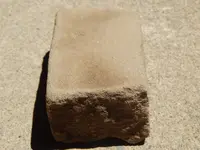
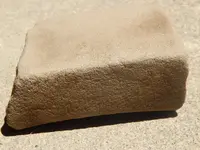
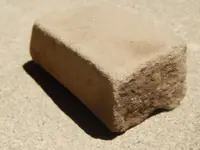
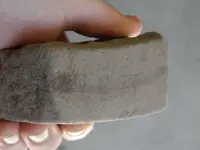
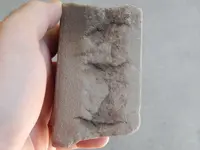
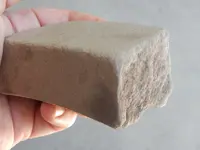
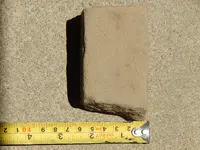
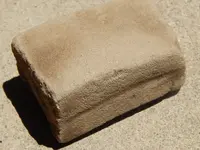
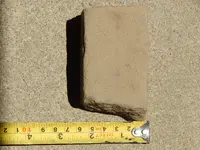
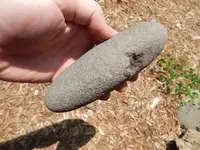
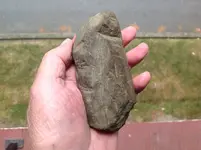
It can be hard to distinguish things sometimes. I have a couple boxes of "maybe" rocks. Just keep posting. There are many here with a lot of experience - I've been learning a lot from these folks.
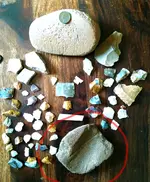
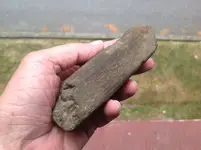
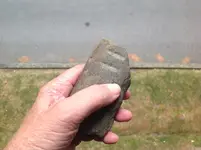
I'm going with it is an artifact. It is sandstone and it was selected to be use for its abrasive properties. I have found them myself and the sandstone material was far from the source of which it came from with this one I found. I believe these type of artifacts are called an abrader. Here's one I found circled along with other things all found on a site here in the Rocky mountain front range and none of this material is native to the region and was not brought there by geologic forces. It was all transported there by the hand of man.
It looked like sandstone to me. That would be a material of choice for sharpening/abrading stones, since it's like a natural sandpaper. I briefly thought this one was an old brick when I first picked it up. It's multipurpose, a whetstone surface on the side, to sharpen hardstone bits, and sharpening grooves that were maybe from sharpening bone tools.
That is a tough one. I have looked at green stone celts under a micro scope and the lines on it appear to be from a fine sand as a polish. Though sandstone is very porous it is possible they used that material to polish and hone.