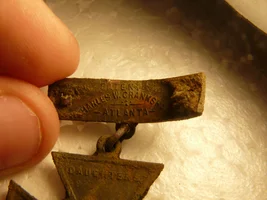
There seems that many members believe that the PAS system in the UK works in a certain way.
Even one member believes it gives a person a license to hunt restricted lands.
Another believes that it would open up these restricted lands.
Amazing thoughts and maybe a little too hopeful ☺️
PAS basically has a set rule of the article has to be 300 yrs old and have a 10% content of gold or silver.
We're talking apples and oranges for history.
The Roman occupation of England mirrors the colonial history of North America.
From doing 8 trips = 1000 hrs of detecting in England I got to keep every single recovery.
Each one was documented from 50 BC to modern.
Here is a AI response to restricted lands in England.
- managed by the Forestry Commission requires permission from them.
- Private Land:
You need permission from the landowner to detect on any private land, including farmland and woodland.
- Council Land:
Some council-owned areas like public parks or beaches may have restrictions or require permits.
- Beaches:
While some beaches are publicly accessible, others may have restrictions or require permits, particularly those owned by the Crown (the monarchy) or those with private ownership above the high tide line.
Important Considerations:
- Always seek permission:
It's crucial to get permission from the landowner or relevant authority before detecting on any land.
- Be aware of local bylaws:
Some local councils may have specific regulations regarding metal detecting in public areas.
- Respect the law:
Failure to comply with these restrictions can lead to legal penalties.
- Report finds:
If you do find anything of historical or archaeological significance, it's important to report it to the relevant authorities.
The UK Portable Antiquities Scheme (PAS) provides guidelines for reporting archaeological finds, particularly those potentially classified as "Treasure" under the Treasure Act 1996. The PAS encourages the public to record all finds, not just those that are legally defined as treasure, as it provides valuable archaeological information. Finds should be reported to the local Finds Liaison Officer (FLO).
Key aspects of the PAS and Treasure Act:
Treasure:
Defined by the Treasure Act, it includes certain types of objects found in the UK, primarily gold and silver objects over 300 years old, and groups of coins (hoards) meeting specific age and metal content criteria.
Reporting Requirements:
Finders of potential Treasure are legally obligated to report their finds within 14 days to the coroner for the district where the find was made.
Portable Antiquities Scheme (PAS):
A voluntary scheme that encourages the recording of all archaeological finds, not just those defined as treasure, by the public.
Finds Liaison Officers (FLOs):
FLOs are based around the country and are the first point of contact for reporting finds and receiving advice on the PAS and Treasure Act.
What to Report:
The PAS encourages reporting of all finds, not just those that are Treasure, as they can provide important archaeological information.
Importance of Findspot:
Accurate recording of the findspot is crucial for the archaeological value of the find.
Landowner Permission:
It is essential to obtain landowner permission before searching for archaeological finds.
Ownership:
Unless otherwise agreed, the landowner owns the finds.
Reward:
If a find is deemed Treasure and acquired by a museum, the finder and landowner may be eligible for a reward.
In summary, the PAS and Treasure Act aim to encourage the recording of archaeological finds for the benefit of research and public knowledge, while also providing a framework for the identification and acquisition of treasure by museums.