What's new

digging based on tone alone?

jeffmrgan

Full Member
Joined
Apr 24, 2007
Messages
122
Reaction score
3
Golden Thread
0
Detector(s) used
explorer se /whites xlt
if using conductive sounds, & little discrimination iron sounds very much like a deep coin. smartfind sometimes is correct sometimes not. so how do you decide (other than dig everything) what iffy signals to dig? when searching a good area where i have found old coins, i have dug some pretty crappy signals and pulled out old deep coins, but i have also found alot of rusty junk. any way to decide which ones to dig and which ones to leave? bryce seems to have figured this out as have a few others........any help out there?
 
jeffmrgan said:
if using conductive sounds, & little discrimination iron sounds very much like a deep coin. smartfind sometimes is correct sometimes not. so how do you decide (other than dig everything) what iffy signals to dig? when searching a good area where i have found old coins, i have dug some pretty crappy signals and pulled out old deep coins, but i have also found alot of rusty junk. any way to decide which ones to dig and which ones to leave? bryce seems to have figured this out as have a few others........any help out there?

IDK about the XLT, but on the DFX there are three methods. First is the tone, then is the VDI, and lastly is the Signagraph. If the first 2 are "iffy", the signagraph will either be a solid bar or two or three next to each other. If it is smearing across the spectrum around it is probably iron.

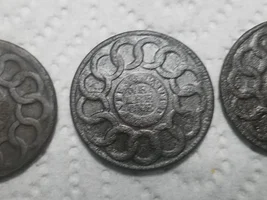
If it is very deep I will dig it. My recent 1857 Flying Eagle was reading iron, but bouncing back to a 31 VDI. I decided to dig it and glad I did. I would rather dig lots of trash than miss one of those!
 
At least you know when you dig it. IMO the best thing is a tone machine. You don't LEAVE much for someone else to find. Only negative is some trash you can turn into cash.
Newt
 
when I crank up the settings on my trusty XLT or use mixed mode, I find that I hit some really nice deep coins, but I think that you first should hit all the shallower definate hits..... survey the area, working out alot of modern trash.... then do the cranked up method...... this helps you not get so burnt out digging trash....... I found that approx. 10% of the "iffy" signals turned into keepers..... (10% on a really good day...... 5% or less on most) but the thing is that the keepers are def. worth the work.... thats how I hit my gold wedding band at 10 inches and my 1868 IH at same depth at a worked out church lot...... sometimes when I dont have anyplace new to hunt, I will go back to old sites and dig everything.. maybe 10 targets or so a hunt..... as of yet, I havent found that I missed anything by not digging poor signals, but I have found that sometimes I walked over shallow targets by not hitting them just right on previous hunts..... also have found that getting shallow trash or even some iron signals out of the way, will open up keepers that the machine couldnt hit before.... thats how I found my one and only Flying Eagle... it was right below a huge spike, and 2 nails were in the same hole with it...... removing the spike opened up a broken decent target
 
ive tried ferrous sounds,but i like conductive better and seem to find more. but ive tried ferrous and dug even the scratchiest sounds and found coins, so maybe i should just stick to that
 
I just want to add.. and this has become very true recently.. there are some great iron relics out there too!! Trade axes... iron back buttons... gun tools.. knives.. etc.... you just don't know tile you dig... besides.. you can safe all the crap to seed another spot when someone jumps it!!! ;-) Just kidding...

MB
 
If you are in an old spot.....DIG EVERYTHING!!!!!!!!! Take it from me. I could have passed over some iffy stuff that turned out to be very good stuff. The 25-83a on the banner is a classic example. Dead on bottle cap and wouldn't move. Turned out to be a VERY RARE and historic find. Mid to high $$$$ value coin at 6". We will know an exact amount in 6 days! Takes 1 min to DIG! :icon_sunny: :thumbsup: Could end up being your lucky day and find of a lifetime! Another reason is there could be 2 targets close together and the crap target could be hiding the good target!
 
What I have learned is when in doubt DIG a few minutes of your time could be a find of a lifetime :thumbsup:
 
I always tell myself that if I don't dig it, I won't likely get my coil over it again--ever.

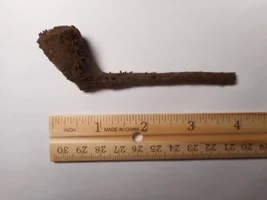
Dig it out. We've found CW era Bowie knives, musket parts, etc--all Valuable--and all made of Iron.


If you're at an early spot, dig it.


TID might be great for working a park, and a meter or signagraph might be good for coinshooting in Some cases...but when folks try to coinshoot an old site, I think it's quite funny! Meters are not the end-all. They aren't the Bible of detecting, either. And I don't think they're that useful in the oldest of sites. Place too much stock in them, and you'll miss out for sure. And then I'll come along and dig the boot pistol, musket, ramrod, gun tool, trade axe, and other Iron finds worth hundreds of dollars each. :wink: :)


-Buckles
 
All metal then pp and last to ID mode when I want to find old goodies. If I'm slumming it in the park I just hit the high tones.

As to a carriage bolt I dug at 4", turns out there was a seated dime another inch under it. Also a '92 O quarter came out an inch under that 4" deep mouth harp. Didn't see any indication in ID mode other than iron, but in all metal and pp they both looked bigger than nails so I recovered them and subsequently the items they totally masked in otherwise "hunted out" sites. Both coins would have been long gone to cherry pickers had it not been for the iron targets hiding them.
 
Jimmy 'Sierra' Normandy found a strong box with silver and paper money. I do not think that the silver was heard through the iron. It is your call. Discriminate all iron or prepare to dig a lot of soup cans. Speaking of cans....us old guys get off on a tangent. I was detecting around an old dug mine north of Vegas that was about dated about 1930s. It was the depression miners that were working along bedrock undergrond and took all of the dirt and gravel and placed it on top of the ground so that they could drywash it. Right next to the clasified material, that their classifier dropped off the drywasher, was a hill bigger than me of bean cans. Talk about mining for beans...been there...done that....jim
 
Lowbatts said:
All metal then pp and last to ID mode when I want to find old goodies. If I'm slumming it in the park I just hit the high tones.

As to a carriage bolt I dug at 4", turns out there was a seated dime another inch under it. Also a '92 O quarter came out an inch under that 4" deep mouth harp. Didn't see any indication in ID mode other than iron, but in all metal and pp they both looked bigger than nails so I recovered them and subsequently the items they totally masked in otherwise "hunted out" sites. Both coins would have been long gone to cherry pickers had it not been for the iron targets hiding them.

That's a good point about iron masking. Both of the machines I use will not "see" a coin on top of or underneath a big chunk of iron--heck, they have trouble with a coin underneath nails--but I know what such a signal sounds like because I have air tested my machines, and also dug numerous such signals in the field. Iron masking is Very Real.

I urge everyone to air test their machine (keeping in mind that an air test is the Best possible conditions you'll encounter). Place a coin underneath a chunk of iron. Place a coin under three large nails. You will be surprised.


-Buckles
 
Request this topic be moved to Tech Talk instead of finds of the day. I also agreee to dig everything. When you least expect it who knows what you will find.
 
The main reason I like my GTI 2500 is that it shows the approximate size of the object. Don't dig so many deep aluminum cans that way. Aluminum cans are my nemesis with my other detectors, especially the ones with just one tone. They invariably squawk silver just like a half dollar. Monty
 
Dig everything!, i use a Whites DFX which show's on the Visual ID Ring/Bottle Cap, Coin, Etc...I dig no matter what, i have dug a bunch of rings that came up as a "bottlecap" signal, Including my only 14K Gold Man's wedding band, as well as a bunch of silver rings, i have also dug a Flying Eagle Cent, and a Shield Nickel that were both, "Iffy" signals...my advice...dig everything, even if it is trash you are still cleaning up the area especially if it is a site you intend on returning to.

-Dan
 
Ferrous sounds give a low tone to iron and a high tone to everything else great way to use no disc at all on the Explorer line. :thumbsup:

Also when in conductive and little discrimination make sure to check the signal at a 90 degree angle from where you first got it, if it sounds scratchy it's mostly iron silver will have a nice fluty tone to it.

On modern places I dig everything none iron, same goes for older sites. I might have to reconsider my habits on the older sites it seems.
Though on old sites I use ferrous sounds and on modern I use conductive, personal preference I guess.
 
once the weather clears up i'll have to try some of the suggestions. just hate digging trash all day, but i guess thats what it takes sometimes
 
might help if you tell us a few things

how long you been using the machine
what program you running it would be nice to know what your listening to and what i mean by that
different programs produce slightly different sounds
certain setting affects what shows up on the screen also

fade rate, averaging, and accumulate for instance can alter things.

DTM
 
minelab se been using it for about 1 & 1/2 years, conductive sound, iron mask-about 1/3 of the screen
 

Users who are viewing this thread

Latest Discussions

Back
Top Bottom