Once upon a time, electrical interference was a relatively simple subject, but most engineers weren't up to date on it. While the electric companies were trying to get light dimmer and electric motor interference cleaned up in the VLF spectrum, the world exploded in the UHF spectrum. In the UHF spectrum, circuits large enough to look at with the naked eye don't exist: everything's either a transmission line or an antenna. Electronic components designed for the VLF spectrum where metal detectors work, the data sheets don't even tell you what those components will do under the influence of a UHF signal. Rational design for high performance is impossible.
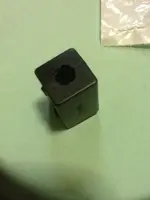
The clip-on chokes do nothing for VLF interference, they work (if they do) in the UHF range where trying to predict what will happen is in the realm of voodoo and black majick.
The beep business is competitive, but to my knowledge no manufacturer includes clip-on ferrite common-mode chokes. There are reasons for this.
1. They help sometimes, but the manufacturer is unable to say when or how often or how much. Doesn't matter which manufacturer, we're all in the same boat on this one.
2. In the beep business, regardless of manufacturer, one of the most common points of failure is the searchcoil connector. Clamp 50 grams (about 2 ounces) of dead weight on the cable right next to the connector, and you've just invited a warranty repair.
3. Clip-on chokes are a consumer commodity item you can buy at Radio Shack (in the USA), and I suppose they're widely available elsewhere for reasons having nothing to do with metal detectors. The way a metal detector manufacturer can avoid the headaches of clip-on chokes is to dump the problem onto the customer. If a warranty repair results, the smart customer says nothing about the clip-on choke.
4. Beep companies get quantity discounts, but not like what mass market computer products get. We're small potatoes and the manufacturers of components don't like the effort required to spud us out of the ground. Tom suggested $2 as a representative price tag, and that's about right, I've got examples sitting on my desk right now.
5. Two bucks is not throwaway money for a beep manufacturer, it cuts directly into the after-tax profit margin of the entire operation, and those margins are slim. In the USA which is regarded as having a comparatively strong economy compared to most other countries, the interest rate is nearly zero because there are so few ways to invest that can show a profit. It's an easy test to take: provide the answer to the following question: "If someone gave you $100,000 and would kill you if you didn't return it with profit a year from now, would you take it?" If you can't answer that question, you shouldn't be in business, and neither should we. (I'm not saying that the answer has to make the first year look good, only that the answer has to make enough sense to stave off the investor whose perception of reality otherwise ends one year from now.)
*************
SUMMARIZING:
1. If you've got problems with electrical interference that you can't resolve through "the customary methods", spend a couple of $US or whatever ya got on a clip-on choke, and try the damn thing out.
2. If it works, tell us. If the choke wrecks the connector, tell us that too, but privately por favor. This whole situation is evolving and we'd rather solve real real problems than to defend publicly against complaints that we have no means of solving. As a matter of international law, metal detectorists have to put with the havoc created by licensed transmitters.
--Dave J.