What's new

First Shelter Dig...Any Advice?

Hutch in PA

Full Member
Joined
Nov 18, 2010
Messages
195
Reaction score
3
Golden Thread
0
Location
Western PA
Well guys, I'm finally taking the plunge and expanding from 'field walking' to digging. I spent Sunday walking the hillside of a local river, and located what I think is a good location. After some research and door knocking, I located the owner and gained permission. But it has some challenges (more on that in a minute).

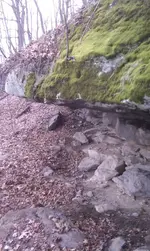
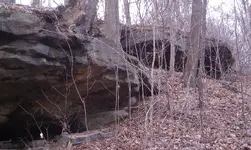
The spot is about one mile up river from one of my most productive farms, and about five miles below a well-documented woodland site. Based on its location, the size of the shelters, and their southern exposure, I am certain they had to be occupied over the years.

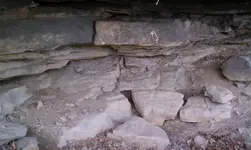
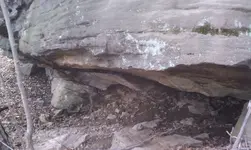
There are three rock ledges within 100 yards of each other, and each is located about 100 yards from the river. I decided to start with the 'most obvious' of the shelters (the biggest and deepest). It is about ten feet tall at the entrance and five feet tall at the back wall. The length is about twenty feet. The other two are about half that size.

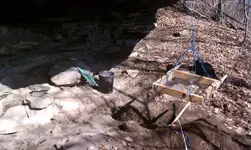
I rigged my sifter to a tree at the top of the shelter and started raking out the leaves. It became immediately obvious that this has been a party spot for campers via canoe. I cleaned out hundreds of broken beer bottles (pigs). The style of the bottles shows that people have been in there for many years.

Once that was done, I started to dig. I focused on an area just inside the drip line. My first sift produced one piece of flint. Four hours later, I was 3.5' down...found no more flint...and was STILL pulling up recent garbage (including a 1967 penny). Ugh.

I have to assume that I'm digging through the refuse of the last person to sift the site....would you agree? Inside the shelter, there is a pit about four feet wide and a foot deep...I was 'hoping' that pit was just a place modern campers/partiers built their fires. Now I am starting to question whether investing the time to continue will only result in digging through what has already been dug.

On the bright side, I started in the MOST OBVIOUS place. Anybody who was going to dig the site would dig right where I dug. And, I could see no evidence of digging at the other shelters.

I've read a lot of comments on here about how productive the spots outside the shelter can be...but here, there is a deep drop/bank right outside.

Any thoughts or comments are welcome. Am I wasting my time? What would you do?
 

Attachments
  • Two Shelters Resized.webp
    Two Shelters Resized.webp
    381.7 KB · Views: 1,112
  • Third Shelter Resized.webp
    Third Shelter Resized.webp
    308 KB · Views: 1,145
  • 1st Shelter Underneath Resized.webp
    1st Shelter Underneath Resized.webp
    137.3 KB · Views: 1,195
  • Sifter Set Up Resized.webp
    Sifter Set Up Resized.webp
    301.9 KB · Views: 1,305
  • 2nd Shelter Underneath Resized.webp
    2nd Shelter Underneath Resized.webp
    191.4 KB · Views: 1,333
Upvote 0

Hutch, move out away from the "drip edge 5' and try a few test pits
 
Thanks Flintmel. I plan to do so on the other two sites, but the one I started with drops-off the hillside rapidly.
 
Looks like a cool site! I have yet to try any sites like these. Very similar to yours. It kind of makes me wonder if they would've used the "overhead compartment" to store things. Then there would be no risk of stepping on things or kicking it down the hill. I'd say it's worth a try! Good luck! Hope you find a gem in there
 
I would check out the flat area below the shelter also. Treefrog seemed to have luck digging below his shelter.
 
Everything has to be perfect for a shelter to be used. Wind direction sun,,, one will be loaded and the next one zilch. Check the old stream bed that is near it. Water was important, Most shelters were used in the fall for the nut gathering season then back to the valley to hunt. Looks like fun. Enjoy!
 
TnMountains is right, source of drinking water besides southern exposure is paramount, though I found one once that was full of pottery shards and believe it was used for storage only...
 
Thanks for all the tips. As for water, there is a spring very close...which leads into a major river down hill about 100 yards. My biggest concern is that i'm currently digging through someone else's fill. I was back out last night, went down another foot, and located a small rusty shovel (the small kind you use in the garden...can't think of what they're called) and the remnants of a paint brush.
 
I respectfully disagree with the posts suggesting that a shelter face south, some of the best shelters I've dug in face due North. We have no idea why some shelters were used and some were not. The artifacts only tell us that they were there, not when and not how long. What might have been a perfect shelter 3,000 years ago may not have the appearance of a perfect shelter today and vice versa. There may or may not have been a water source there thousands of years ago. Let's not forget, the Natives were very capable of storing water.

The first question I would ask myself in regard to your shelter(s): Is it possible during a flood that the river could flood the shelter? If so, I wouldn't bother but, you did find flint, if it's a worked piece, I'd say the river can't make it. If you have known Woodland sites nearby, it's a possibility that the shelters may not have been used frequently enough to leave much behind.

3.5 feet is plenty deep, especially for a Woodland artifact. At that level, I'd expect something Archaic but then, erosion can bury things in a hurry.

Now here's the problem with digging the front of the shelter. If it's been dug in the past, the sift piles most likely would have been dumped there. You start digging there, find the waste flakes that used to be inside the shelter and you really think you're onto something. If this was my dig, and I wasn't finding flint in the top foot, I'd pull out. I say that because I am lucky to have plenty of shelters to explore. If you don't have options and you really enjoy digging, then digging six feet or more shouldn't be out of the question, afterall, it is possible to find artifacts that deep and deeper.

When I get into a situation like you're facing, I use a sifter that will barely sift sand so that I don't miss even the smallest speck of flint. Sometimes I get renewed hope when I revert to this method, it lets me know I'm in the right place. Those sifters with 1/4 wire allow alot of clues to pass.
 
1320, guess it depends on where you are and where the sun comes up? In my area anything facing north seems to be in the shadows most of the day so the southeast, south, southwest exposure must have been more appealing as the didn't have any means of light other than fire?
 
My best shelter ever was in a steep dark valley and faced North West, during 100 year type floods it would have flooded. I found artifacts as deep as 9?. Alot of work!!
 
flintmel said:
1320, guess it depends on where you are and where the sun comes up? In my area anything facing north seems to be in the shadows most of the day so the southeast, south, southwest exposure must have been more appealing as the didn't have any means of light other than fire?

Mel, good question/point, I think the answer(s) could be different for each and every region. I think we've all brain washed ourselves to think that shelters have to face south for warmth but the research shows that's just not the case. At different times in the past 15,000 years, North America was much warmer than today. Imagine this as well, a retreating iceberg that catches and reflects light all day long would make for a very warm and very bright north facing shelter. I imagine that sunburn might have been a problem! Maybe that's why Natives sought Southern facing shelters :dontknow: :icon_scratch:

There's been much debate about shelter usage in my region and most agree that the shelters were very temporary quarters, a few days at most, not the full time living that I was brain washed into believing. There are exceptions of course but if shelter life was of short duration, conditions wouldn't have to be perfect, kinda like a camping trip I suppose. Social compression may also have played a role in shelter usage, kinda like when there's a big event in town and all the hotels are full, often times you'll just give up searching for the perfect hotel, you just go with what's left. I can imagine several nomadic groups chasing a herd or pack of animals, all showing up at the same place at the same time, it's just our nature isn't it?! LOL. I'm certainly no expert and no one knows for sure but it's a topic that is exciting to explore, I respect your opinions and appreciate you're willingness to discuss. :icon_thumleft:
 
buzzgator said:
My best shelter ever was in a steep dark valley and faced North West, during 100 year type floods it would have flooded. I found artifacts as deep as 9?. Alot of work!!

Wow! 9 feet! That is a tremendous amount of work. Where the artifacts paleo, archaic, etc? Do you think flooding may have deposited sediment? That's why I was asking Hutch if flooding might be possible. He might have to dig past 3.5 feet. Hutch, you might want to hire some heavy equipment :D

I recall one shelter in the Northeast (Meadowcroft? :icon_scratch:) that had paleo occupation at something like 12 feet. The depth was attributed to flood deposits.
 
1320 said:
buzzgator said:
My best shelter ever was in a steep dark valley and faced North West, during 100 year type floods it would have flooded. I found artifacts as deep as 9?. Alot of work!!

Wow! 9 feet! That is a tremendous amount of work. Where the artifacts paleo, archaic, etc? Do you think flooding may have deposited sediment? That's why I was asking Hutch if flooding might be possible. He might have to dig past 3.5 feet. Hutch, you might want to hire some heavy equipment :D

I recall one shelter in the Northeast (Meadowcroft? :icon_scratch:) that had paleo occupation at something like 12 feet. The depth was attributed to flood deposits.

It is the Meadowcroft rockshelter out by Pittsburg. That site will most certainly re-write the books. so put no faith in what you are reading now...............GTP
 
Mostly Archaic with woodland at about 5? and mississippian from 2?-5?. It was a very small shelter to start maybe 3x5? and 3? tall, but once i finished it was about 12? ceiling and 8?x10? floor space. Very hard work! The pottery and hard stone made it worth while tho.
 
It is the Meadowcroft rockshelter out by Pittsburg. That site will most certainly re-write the books. so put no faith in what you are reading now...............GTP[/quote]

Is Meadowcroft the shelter that's challenging the Clovis first?

That would be nice if Hutch finds himself a Paleo shelter!!!! :o
 
Kostner site north of St louis if i remember right was 30ft deep and either 14 or 21 different occupation levels. Dont know why my phone put question marks instead of the symbol for ft on my post. yes meadowcroft will has changed historic ways of thinking.
 
1320 said:
It is the Meadowcroft rockshelter out by Pittsburg. That site will most certainly re-write the books. so put no faith in what you are reading now...............GTP

Is Meadowcroft the shelter that's challenging the Clovis first?

That would be nice if Hutch finds himself a Paleo shelter!!!! :o
[/quote]

The Meadowcroft Rock Shelter has found point types that pre-date Clovis Culture. Archy's on the other hand are challenging it stating contamination of the soil due to occupants fire-pits. They are saying the ash washed its way through the soil and now they cannot get a true and accurate reading. What people do not understand is that we have a abundance of what they do not have in dry climates and that would be foliage. So our Clovis points are there but extremely buried until accidental discovery. The land bridge theory well that would apply to both sides of the US as the glacier covered most of the Northern hemisphere so they very well could have used that path to get on the Eastern Seaboard first and then Western seaboard second. Who knows. Certainly there will be enough proof to know. Today though there is really not enough proof to truly give a definitive placement of first settlement............ http://multimedia.post-gazette.com/?autoStart=true&topVideoCatNo=default&clipid=4360552 ....... http://www.heinzhistorycenter.org/secondary.aspx?id=86 .................................Enjoy.............GTP
 
Thanks for all of the comments! Great information. Let me start with the conversation about the flood plane. Unless conditions were drastically different, IMO this is far too high for flood concerns. If the river ever reached that far up the hillside, it would be an epic event. My go-to site is is down river about a mile, and is on a plateau. It's probably only 40-50 feet above the river and would be a much more likely candidate for flooding...yet based on my observations, only the very lowest portions have been flooded. But what do I know?

I encourage everyone to read about Meadowcroft. As mentioned, it has reset the time for man's incursion. By no means am I suggesting this dates that far back...but I am less than 30 miles from Meadowcroft. Plus, I personally know the finder of a fluted base that was featured by Gary Fogelman in one of his books http://indian-artifacts.net/books.html That base came from the site I referenced in the first paragraph.

I'm off tomorrow and hope to do some more digging. Rather than continue in the same spot, I'm going to shift positions and dig several 'test pits'. My goal is to get out of the debatage from the previous digger and see what I can come up with. I'll keep you posted!

Good luck to everyone out there (that includes me...I am on a TERRIBLE drought). Haven't found anything of interest in months.
 
Hutch in PA said:
Haven't found anything of interest in months.
Ooooh! That means you're working extra hard and are gonna' find something monumental! I hope! Good luck!
 

Users who are viewing this thread

Back
Top Bottom