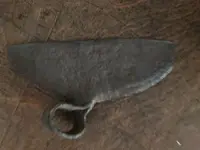
Thank you so much for your excellent explanation. I measured the bottom - it is 11”. The front side bottom edge is beveled. The back side is flat. A friend of mine who likes old tools and owns an antique store here in SW Ohio bought it because it intrigued him. He thought it might be an adze. Settlement in this part of Ohio was in the period of 1796 with more settlers coming well into the 1800s.
Also I presume it’s iron. It’s very heavy.
Linda
I certainly believe it's heavy with an 11 inch blade.
They can be bigger , but that measurement means you have a broadaxe. Vs a broadhatchet. (My version of a poleaxe.)
I'm not leaning towards adze. An adze a few inches wide is a handfull when you're straddling a log and chipping towards your shins...
The eye on your piece is the interesting thing that stands out.
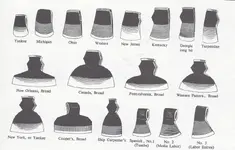
Most more recent broad axes do not have a round eye.
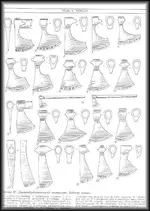
Those from other countries with round eyes have extended material for strength.
Your Axe holds a secret of who built it. It might date in the late seventeen hundreds into the early eighteen hundreds.
Why it was not repaired or recycled is just another question. It was not uncommon for such things to get tossed in a pile. Potential stock ,or future projects.
Maybe the design discouraged repair attempt?
Or no forge on the homestead yet?
A neat piece. Worth hanging onto while digging further towards the origin of the mystery of who and when....
My interest in them started with my Grandfathers broad Axe and what he made with it. I'd heard accounts before I inherited it.
I never got to ask him why he kept it under the steps to his house.
Was it a superstition? Or just the humidity of the soil keeping it's handle tight? Or simply a place to store it flat and fairly dry out of harms way?