What's new

How old is this stained glass?

rockpassion

Hero Member
Joined
Oct 5, 2024
Messages
540
Reaction score
605
Golden Thread
0
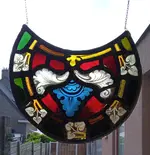
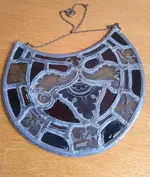
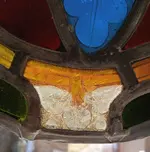
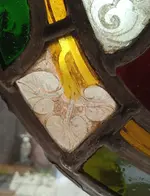
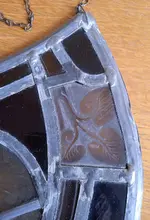
I bought a pair of stained glass windows. How old are they?
 

Attachments

  • IMG_20250901_134049_1.webp
    IMG_20250901_134049_1.webp
    191.5 KB · Views: 122
  • IMG_20250901_134238.webp
    IMG_20250901_134238.webp
    438.4 KB · Views: 78
  • IMG_20250901_134752_1.webp
    IMG_20250901_134752_1.webp
    275.9 KB · Views: 73
  • IMG_20250901_134756_1.webp
    IMG_20250901_134756_1.webp
    231.9 KB · Views: 68
  • IMG_20250901_134207_1.webp
    IMG_20250901_134207_1.webp
    436.3 KB · Views: 73
Great find!!!!!!


There are several ways to identify the age of stained glass, examine the style (e.g., Art Nouveau, Art Deco), the type of glass (e.g., opalescent, amber slag), the materials used for leading (copper foil for 20th century), and specific pigments (like cadmium for the 19th/20th centuries). Also, look for a signature or mark, check building records, research the studio or artist, and be aware that older techniques like heavy lead cames are consistent with earlier periods.

Art Deco: Geometric designs, common in the late 1920s or 1930s triangular glass inserts was fashionable. so its not art Deco and not from the 1920s or 1930's. it appears to be closer to the Art Nouveau: Curved lines, popular in the late 1890s to 1910.

one clue Opalescent glass: More than one color, usually made after 1880. Amber or green low-grade "slag" glass: Likely made in the early 1900. Etched glass has ancient roots, with examples of sandblasting and chemical etching in Rome, but became more common in the 18th and 19th centuries alongside the rise of decorative stained glass and Art Nouveau designs. While techniques developed over centuries, a true "etched stain glass" combining the two art forms emerged in the late 19th century. The age of a specific piece can be estimated by the type of glass, the etching method used, and the design style, which often reflects a particular historical period. another factor to consider Cadmium or chromium: Points to 19th or 20th-century glass. Lead: The historical material for leading; heavier cames (strips) are older.

With all of these factors considered. About around 1890 to 1900.

Crow
 
Great find!!!!!!


There are several ways to identify the age of stained glass, examine the style (e.g., Art Nouveau, Art Deco), the type of glass (e.g., opalescent, amber slag), the materials used for leading (copper foil for 20th century), and specific pigments (like cadmium for the 19th/20th centuries). Also, look for a signature or mark, check building records, research the studio or artist, and be aware that older techniques like heavy lead cames are consistent with earlier periods.

Art Deco: Geometric designs, common in the late 1920s or 1930s triangular glass inserts was fashionable. so its not art Deco and not from the 1920s or 1930's. it appears to be closer to the Art Nouveau: Curved lines, popular in the late 1890s to 1910.

one clue Opalescent glass: More than one color, usually made after 1880. Amber or green low-grade "slag" glass: Likely made in the early 1900. Etched glass has ancient roots, with examples of sandblasting and chemical etching in Rome, but became more common in the 18th and 19th centuries alongside the rise of decorative stained glass and Art Nouveau designs. While techniques developed over centuries, a true "etched stain glass" combining the two art forms emerged in the late 19th century. The age of a specific piece can be estimated by the type of glass, the etching method used, and the design style, which often reflects a particular historical period. another factor to consider Cadmium or chromium: Points to 19th or 20th-century glass. Lead: The historical material for leading; heavier cames (strips) are older.

With all of these factors considered. About around 1890 to 1900.

Crow
thank you for the explanation.
 
You can also see that it has been repaired many times over that period of time. I would have guessed early 20th century. Sure is beautiful.
 
Do you have the back story on this piece?
Was it actually in a window or made as a decorative piece?
If from a window, do you know where the building is/was?
Don in SoCal
 
Do you have the back story on this piece?
Was it actually in a window or made as a decorative piece?
If from a window, do you know where the building is/was?
Don in SoCal

Hello Don

I suspect it was a early 1900 beginners stain glass training project. Students start with square window then graduate to circular and various shapes. Even today the teaching principles are the same except for type of lead cames used.

IMG_1884-600x915.webp


IMG_1873-3-742x1024.webp


IMG_1881-Copy-600x581.webp


2828973-600x447.webp


Modern ones like the above are worth about 150 to 200 dollars. The 1900 piece given it's age and unusual shape about 300 to 350.

Crow
 

Users who are viewing this thread

Latest Discussions

Back
Top Bottom