What's new

How to find rings on the wetsand?

methevas2

Jr. Member
Joined
Jan 10, 2013
Messages
77
Reaction score
35
Golden Thread
0
Ive yet to find a ring on wetsand. I can only ever really find a few coins. I have a minelab excal 2, I live in nothwest florida and detect at the beaches there on the ocean. ALL TIPS will be appreciated - thanks
 
Upvote 0
Try lower than the coins..closer to the water where you see heavier and bulkier material... If you start finding lead sinkers that's a good sign
 
So when you say that do you mean not touching the water just close to it?
 
It depends on what the surf is doing sometimes I get bashed by water on a regular basis
 
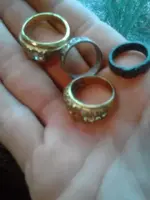
I don't really target modern jewelry I almost always am hunting for much older items but I do alright as a bi-catch actually... These are recent

ForumRunner_20131211_113753.webp
 
Id love to find older items. Thats why i started detecting but the beaches here dont have TOO many oldies. The gold later became my concern. Actually found one from 1955 the other day . Great rings!
 
Good luck to you...and p.s. ... Keep your eyes open for stone projectile points in your area of the coastline
 
First, I think you have to understand that gold rings are very heavy/dense and they have little surface area to support them, so they tend to sink fairly deep and quickly unless there is a firm enough bottom where they can settle. While the upper portions of the beach may seem a bit firmer/harder at low tide they can still be pretty soupy at high tide once they become saturated with water, and so things begin to sink in this sand more easily as well. In other words, you can have a thousand swimmers on the beach losing these heavier items every day in the summer but if they sink too deep too quickly then the odds of recovering them are pretty slim. So, think "firm bottoms" when you're looking for gold rings if you want to up your odds of success. Explore you area beaches and try to find some of these sections that possess firmer bottoms that you can access. Low spots can be good places to start searching but a low spot alone isn't always productive if it's over soupy beach. Just "in the water" isn't always the answer either for much the same reasons. It all just takes a lot of time to iron out, there is much to learn, and unfortunately, there's few shortcuts. Good luck!
 
That's an important point I'm glad he explained it better than I did.
When I said lower on the beach where bulkier items gather.. I basically meant scanning sometimes long sections of beach until you find the areas that can support them
 
One thing I use to do that really allowed me to learn my beaches- there were times when I just carried my scoop and a long thin diameter, but strong, metal probe. With just these two things I'd take hikes up and down the beach when it was flat and every so often I'd see how deep I could sink the probe without too much effort. Most often I had no trouble sinking the probe a lot further then I could detect but every once in a while I'd hit "an area" where it was much harder to sink the probe. From here I'd keep repeating the process to get an idea just how large this firmer/denser area was. I'd use my scoop to see what was making it denser, most often it was shell-pack or just really hard, tightly packed, "gray" sand, but it was firmer, denser bottom, the type of firm that could support those heavier items I wanted to find. I even mapped these areas for future reference and it eventually paid off and still does from time to time. :icon_thumleft:
 
reply

Ive yet to find a ring on wetsand. I can only ever really find a few coins. I have a minelab excal 2, I live in nothwest florida and detect at the beaches there on the ocean. ALL TIPS will be appreciated - thanks

If you're finding coins already, then eventually, you should get a ring in the mix. But to increase the odds, it's as gator-boy says: watch the surf/swells/erosion. When the sand is eroding out (when you see cuts or steep slopes), is when mother nature takes all the light stuff out, leaving the heavier items. Naturally that will still be coins too, but I have seen conditions where fishing sinkers settle in certain zones (like a giant mother nature riffle board or sluice-box on the entire face of the beach). And if you find yourself in one of those zones where the target weights are favoring sinkers on the wet beach .......... watch out ! :icon_thumright:
 
metheas2, as you can see by just the few replies already, the beach has it's own dynamics and there is a lot more to finding consistent success then just using a quality machine and swinging the coil at random. Each beach can be different and even each season can present different dynamics to these beaches. The guys you see posting a lot of quality finds are experienced hunters who understand all of the various factors that come onto play, took each of them a very long time and a lot of hours hunting to amass such knowledge. In the hands of an inexperienced hunter the top of the line machine means very little, yet in the hands of an experienced "beach hunter" that same machine becomes a lethal tool of the trade. Learning to read the beach is the biggest difference maker, and when I say "beach hunter" that's exactly what I mean because these guys usually hunt for the best areas of beach to hunt before they ever turn their detectors on. :thumbsup:
 
One thing I use to do that really allowed me to learn my beaches- there were times when I just carried my scoop and a long thin diameter, but strong, metal probe. With just these two things I'd take hikes up and down the beach when it was flat and every so often I'd see how deep I could sink the probe without too much effort. Most often I had no trouble sinking the probe a lot further then I could detect but every once in a while I'd hit "an area" where it was much harder to sink the probe. From here I'd keep repeating the process to get an idea just how large this firmer/denser area was. I'd use my scoop to see what was making it denser, most often it was shell-pack or just really hard, tightly packed, "gray" sand, but it was firmer, denser bottom, the type of firm that could support those heavier items I wanted to find. I even mapped these areas for future reference and it eventually paid off and still does from time to time. :icon_thumleft:

Excellent idea/post. I think I'm going to add that to my toolbox. Thanks!
 
This thread reminds me of a recent post by Whydah in which he states something like, "when we arrived at the beach it was all sanded in so we went looking for a different place to hunt." I remember thinking at the time, "There is actually a mountain of advice in that simple statement from a very experienced and successful hunter that will probably go largely ignored by most readers." But this is what I'm talking about, after observing their targeted beach Whydah and those he was hunting with knew right away that they needed to find a different hunting area, one that offered them better odds of success. Guys like this just know how to keep their coils over the best ground possible, this being addressed before they ever turn their machines on. :thumbsup:
 
Thats how its done I've been reading one guy who writes a blog.."hardcore....".. he seems to go on and on about how good he is at finding things in what is called bad conditions by most people.."sanded in".. I find it funny because while he's busting his hump to find something in the bad conditions most of us have moved on to where conditions are better to only go back and find things at that same place at another time.

 
This thread reminds me of a recent post by Whydah in which he states something like, "when we arrived at the beach it was all sanded in so we went looking for a different place to hunt." I remember thinking at the time, "There is actually a mountain of advice in that simple statement from a very experienced and successful hunter that will probably go largely ignored by most readers." But this is what I'm talking about, after observing their targeted beach Whydah and those he was hunting with knew right away that they needed to find a different hunting area, one that offered them better odds of success. Guys like this just know how to keep their coils over the best ground possible, this being addressed before they ever turn their machines on. :thumbsup:

yeah but whydah won't give me his address, so I got a drone looking for him
 
Thats how its done I've been reading one guy who writes a blog.."hardcore....".. he seems to go on and on about how good he is at finding things in what is called bad conditions by most people.."sanded in".. I find it funny because while he's busting his hump to find something in the bad conditions most of us have moved on to where conditions are better to only go back and find things at that same place at another time.

I think I know who that "hardcore pro" is.
 
Gary Drayton
 
Last edited:

Users who are viewing this thread

Latest Discussions

Back
Top Bottom