What's new

Is a Pi machine deeper than a Multi frequency detector on a mild to moderate beach in 2026?

Calabash Digger

Gold Member
Joined
Apr 18, 2016
Messages
5,412
Reaction score
12,055
Golden Thread
2
🥇 Banner finds
2
Detector(s) used
XP DEUS II ,XP DEUS, EQUINOX 800, EXCALIBUR II,
Primary Interest:
All Treasure Hunting
Today I’m putting modern simultaneous multi-frequency detectors head-to-head against pulse induction units, including the White's TDI BeachHunter and the Fisher AQ Impulse.

There’s been a long-standing belief that pulse induction machines have the edge in depth on gold rings at the beach. This test is designed to take a serious look at that claim under real-world conditions.

We’re working on a mild to moderately mineralized saltwater beach along the Carolina coast. Every machine in this test has been set up for stable, practical use—no unrealistic “maxed out” settings that wouldn’t actually work in the field. The pulse induction units are running stable, usable configurations, and I’ve already documented in other videos which extreme settings are not viable on this type of beach.

For the simultaneous multi-frequency machines, I’ve pushed them as far as possible while maintaining stability—running the lowest recovery speeds and highest sensitivities that the conditions will allow.

This is a true apples-to-apples comparison focused on real performance, not theoretical limits.

I’m interested to hear your thoughts:
Do you still believe pulse induction machines hold the depth advantage on a mild to moderate beach in 2026, or has modern simultaneous multi-frequency technology closed that gap?

This is a true shootout—results may surprise you. Stay tuned.
MINELABMANTICORE SETTINGS.....
GENERAL , LOW CONDUCTOR,BEACH / SURF / SEAWATER SETTINGS
Ground Balance: Pumping Ground Balance
Recovery Speed: 4–6
Sensitivity:
9" Coil: 20–24
11" Coil: 18–24
15" Coil: 18–24
Audio Theme: Depth (Medium Profile) or Prospecting (your choice)
Volume: Set to a comfortable level (23 recommended)
Iron Settings:
Horseshoe (All Metal): ON
Iron Volume: 6–112
Upper Ferrous: 8
Lower Ferrous: 4–5 (helps with bottle caps)
Noise Cancel: Long press
 
Upvote 0
But sources may be conflicted.
Is Quartz a mineral?

AI Overview

Yes, quartz is a mineral. It is a naturally occurring, inorganic solid with a specific chemical composition (SiO2
- silicon dioxide) and a ordered atomic structure. It is one of the most abundant minerals in the Earth's crust, found in igneous, metamorphic, and sedimentary rocks.

Source: https://naturalhistory.si.edu/education/teaching-resources/featured-collections/all-sorts-quartz

- Geowizard
Quartz is a specific crystalline form of silicon dioxide, while silicon dioxide (silica) is the general chemical compound SiO₂ that can exist in many forms.
 
’m not trying to be disrespectful here, but I don’t need a lecture on metal detector theory or circuitry. I’m a practical, field-results kind of guy.

Maybe instead of “old-timers,” I should say people who are still stuck in the past—that’s just been my experience, and I’m sharing it honestly.

When it comes to testing detectors, I don’t need thousands of trials, lab analysis, or sand composition reports. I’ve been testing detectors for the last 10 years in real-world conditions, and the results speak for themselves. What have I consistently shown? The top-performing machines.

And to be blunt—how many times have I been wrong? None. That is I told everyone what the top performing detectors are....

I didn’t need thousands of data points to figure out which detector unmasks iron better. I demonstrated that with the XP Deus 2. I didn’t need to take core samples from relic sites or break down the physics behind it. I simply set the machines up in stable, usable, huntable configurations and tested them side by side.

Same thing on the beach. I’ve shown that the Minelab Manticore has the depth edge. That conclusion didn’t come from theory—it came from practical testing.

At the end of the day, it’s actually pretty simple: bury targets, run the machines properly, and see which one hits and which one doesn’t.

If someone enjoys diving deep into the technical side—studying circuitry, mineralization, and all the theory behind it—more power to them. That’s their part of the hobby. It’s just not mine.

What I care about is performance in the field. And based on years of hands-on testing, the machines that perform best in controlled, practical scenarios are the same ones that perform best in real hunts.

So no, I don’t believe it takes thousands of data points to figure that out.

Thanks for your post—I know there are people who appreciate that level of technical detail. It’s just not the direction I take.
 
Last edited:
I agree with Calabash.
In my former life, I didn’t see a need to study the physics of the ballistic performance of an anti-tank round. If the round was effective in neutralizing the target, I was confident that I could rely on that round to do what I needed it to do. It was an observable practical result. That’s all I or my soldiers needed to see and know. We left the science to the scientists and went on with life. 😉
 
Yep, Colonel nailed it!
Remember as users we are limited to how we can adjust a metal detector.
And the digital meter type sure help out versus knobs jobs. How would person really even be able to study the data points using a knob job PI detector? Yikes

Also to note. I have bought quite a few new metal detectors, even one PI detector. In all the user’s manuals I have never seen it said. Oh, you must have a PhD degree to run this device and be successful in the field using. Hmm
 
Lots of folks can get good at doing something. Like playing darts, pool, etc. Even a sport. Got an 82 year old man who lives down the road who built lodas of house here locally in the 60s, 70s and 80s. He don’t have a higher level degree. None of the houses have fell down. Due to bad construction. He didn’t go to school to particularly learn how to build a house either. Did he use some of what he learned in school to help him build the houses. Likely. Like understand the numbering system and be able to read a tape measure.

Trial and error. Hmm
Wonder if the folks who built those pyramids in Egypt had higher level degrees?
Oh, and the engineers at Minelab have degrees, don’t they. And they have engineered some fantastic performing detectors both PI and VLF. But even with their high degrees, they do what? Trial and error. How about that!!
They do trial and error engineering a detector and we as users do trial and error using the same detector models.

This is what CD did in those videos really a form of trial and error. Comparing models. Some evidently either don’t believe or like the outcome reached.

The cameras and microphones CD uses are bad azz huh.
They don’t lie generally. They capture the moment.
 
Last edited:
I agree with Calabash.
In my former life, I didn’t see a need to study the physics of the ballistic performance of an anti-tank round. If the round was effective in neutralizing the target, I was confident that I could rely on that round to do what I needed it to do. It was an observable practical result. That’s all I or my soldiers needed to see and know. We left the science to the scientists and went on with life. 😉
Thanks to you and your family for your service, Sir!

Speaking to the audience now, precision in warfare is based on good science. That's why we aren't speaking German or Japanese today.

Only an EWO in the back seat of a Phantom II knows the sinking feeling when an incoming SAM shortens his or her life expectancy to seconds. I was there when Intel introduced the first 4 bit microprocessor, the 4004. Eight bit microprocessors, the 8008 and relatives, were already in the hands of military contractors. Microprocessors took electronic warfare to a new level. A SAM was detected and in microseconds, the Radar image of the Phantom suddenly moved to five other places! Phantom Phantom II's were everywhere! Eight bits gave computation greater precision. They missed. We didn't miss!

Back to the beach. STEM has been introduced into our school systems to enable young people to explore Science, Technology, Engineering and Mathematics. Our future and the future of our great nation is now in the hands of those kiddos.

Instead of dumbing down, we adults in the room should pull up our big boy pants and get busy supporting technology by setting an example to others. Precision in metal detecting is a good example.

Thank you!

- Geowizard
 
Lots of folks can get good at doing something. Like playing darts, pool, etc. Even a sport. Got an 82 year old man who lives down the road who built lodas of house here locally in the 60s, 70s and 80s. He don’t have a higher level degree. None of the houses have fell down. Due to bad construction. He didn’t go to school to particularly learn how to build a house either. Did he use some of what he learned in school to help him build the houses. Likely. Like understand the numbering system and be able to read a tape measure.

Trial and error. Hmm
Wonder if the folks who built those pyramids in Egypt had higher level degrees?
Oh, and the engineers at Minelab have degrees, don’t they. And they have engineered some fantastic performing detectors both PI and VLF. But even with their high degrees, they do what? Trial and error. How about that!!
They do trial and error engineering a detector and we as users do trial and error using the same detector models.

This is what CD did in those videos really a form of trial and error. Comparing models. Some evidently either don’t believe or like the outcome reached.

The cameras and microphones CD uses are bad azz huh.
They don’t lie generally. They capture the moment.
Did the old man complete 8 grade and use good sentence structure? ::)

- Geowizard
 
Did the old man complete 8 grade and use good sentence structure? ::)

- Geowizard
He’s a millionaire. And owns about 800 acres of land. And owns around 300 head of cattle.
Not bad huh.
 
Calabash, Thank you for sharing your testing. I know that took a bunch of effort and time. Seeing some those detectors come up silent over the target was an eye opener even though I do not beach hunt..

I remember running a Tesoro metal detector with a 10” coil over a $5 gold coin that was buried 5” and getting nothing, then running a Fisher Gold Bug with a 5” coil over it and getting a very solid signal. This was an actual dig - not a test. The Tesoro detector instantly became a nearly useless detector at that point in time.

When you realize what you are passing over due to old technology, it’s time to upgrade.
 
"Close only counts in hand grenades and horseshoes";

Without precision and accuracy, testing and making comparisons in metal detectors becomes riddled with inaccuracy. Content creators are being held accountable. Metal detector designers, their companies and their attorneys seek out comparisons made of their products in public. Stock holders and investors view videos on products they are financially invested in. Without valid, measurable proof, the result is possible liability. Content creators have a responsibility to viewers to show well founded factual information.

- Geowizard
 
Last edited:
"Close only counts in hand grenades and horseshoes";

Without precision and accuracy, testing and making comparisons in metal detectors becomes riddled with inaccuracy. Content creators are being held accountable. Metal detector designers, their companies and their attorneys seek out comparisons made of their products in public. Stock holders and investors view videos on products they are financially invested in. Without valid, measurable proof, the result is possible liability. Content creators have a responsibility to viewers to show well founded factual information.

- Geowizard
You have been walking a thin line (IMO) between contributing in a positive way and being condescending in a thread that someone put a lot of effort in. Without seeing something similar from yourself that is precise and factually correct (as you say it should be), you’re just blowing smoke. The fact that you think your an adult who wears size “big boy” pants is irrelevant until you take the time to put together a better video and post it up on your own thread.
 
Opinions are like a-holes, everybody has one;

I cite only the facts. I keep opinion out unless it's relevant. Your opinion is irrelevant in this discussion.

- Geowizard
 
He’s a millionaire. And owns about 800 acres of land. And owns around 300 head of cattle.
Not bad huh.
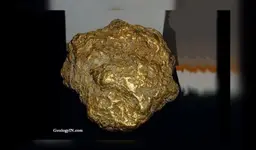
I grew up with a kid that came from a mill town in eastern Oregon. He was poor and tinkered with radios in his parents attic that he found at the local dump. Over his lifetime he paid his way through college classes taken at night. They call it night school. Fast forward, he discovered the source of the 294.1 troy ounce Alaska Centennial Nugget with a metal detector. See post #40.

centennial nugget.webp


- Geowizard
 
Opinions are like a-holes, everybody has one;

I cite only the facts. I keep opinion out unless it's relevant. Your opinion is irrelevant in this discussion.

- Geowizard
Thank you for demonstrating what I suspected.

Most likely came here for content. Folks clicked on a video link and watched a guy attempt to provide a real world comparison test with the thoughts that maybe we could glean something USEFUL from it. It’s really that simple.

We all know “it depends” and “results may vary”.

I would bet that nearly 99% of metal detector consumers are just regular folks spending their free time digging up trash in hopes of finding something valuable or interesting. Some spend more time doing this than others, but we are all just using up detectors and replacing them with what we feel is the latest and greatest. I certainly don’t want to have to educate myself to the point of being able to manufacture a detector myself. Nor do I care what constitutes sand.

Thank you though for the deep dive into what sand is composed of.
 
It must be a long cold winter up in Alaska, otherwise I know you wouldn’t be here reminding people of their responsibilities.
 
Gentlemen please end it or a mod will.

Please post by our rules, applies to all...
If someone doesn't want to see a member 's post then block them.
 
I want to be clear—I did feel disrespected by the way this thread was being taken off course.

I’ve invested a significant amount of time, money, and effort into this work. I purchased the machines, hired a cameraman, and spent a lot of time learning how to properly run and set up a PI unit on the beach. These results didn’t come from theory—they came from real-world testing.

So when the discussion gets redirected away from the actual topic into something it was never intended to be, it feels like the work itself is being dismissed. I do appreciate the moderator stepping in and keeping things on track.

The core discussion here is simple:

Why are modern simultaneous multi-frequency detectors outperforming PI machines on mild to moderate sand beaches?

For years, the accepted belief has been that PI machines are inherently deeper. My testing challenges that. Based on what I’ve demonstrated, that assumption no longer holds true—at least not in these beach conditions in 2026.

Historically? Yes—PI had the edge.
Today? That’s clearly in question.

Now, I’m open to more data. In fact, I’d welcome it.

If someone—Geo or anyone else—wants to go out, film comprehensive, side-by-side testing in a real, huntable setup (not maxed-out, unrealistic settings), I’d be more than willing to share those results on my channel and here on the forum.

But for me, the focus is on practical performance. I’m not interested in debating sand composition or diving deep into detector engineering. That’s valuable to some, and I respect it—but it’s not necessary to determine which machine performs better in the field.

The question remains:

On mild to moderate beaches, why are SMF machines outperforming PI in real-world conditions?

Because based on everything I’ve shown so far, PI no longer has a depth advantage—in fact, the advantage appears to have shifted the other way.

Thank you.
 

Users who are viewing this thread

Back
Top Bottom