What's new

Is a Pi machine deeper than a Multi frequency detector on a mild to moderate beach in 2026?

Calabash Digger

Gold Member
Joined
Apr 18, 2016
Messages
5,412
Reaction score
12,055
Golden Thread
2
🥇 Banner finds
2
Detector(s) used
XP DEUS II ,XP DEUS, EQUINOX 800, EXCALIBUR II,
Primary Interest:
All Treasure Hunting
Today I’m putting modern simultaneous multi-frequency detectors head-to-head against pulse induction units, including the White's TDI BeachHunter and the Fisher AQ Impulse.

There’s been a long-standing belief that pulse induction machines have the edge in depth on gold rings at the beach. This test is designed to take a serious look at that claim under real-world conditions.

We’re working on a mild to moderately mineralized saltwater beach along the Carolina coast. Every machine in this test has been set up for stable, practical use—no unrealistic “maxed out” settings that wouldn’t actually work in the field. The pulse induction units are running stable, usable configurations, and I’ve already documented in other videos which extreme settings are not viable on this type of beach.

For the simultaneous multi-frequency machines, I’ve pushed them as far as possible while maintaining stability—running the lowest recovery speeds and highest sensitivities that the conditions will allow.

This is a true apples-to-apples comparison focused on real performance, not theoretical limits.

I’m interested to hear your thoughts:
Do you still believe pulse induction machines hold the depth advantage on a mild to moderate beach in 2026, or has modern simultaneous multi-frequency technology closed that gap?

This is a true shootout—results may surprise you. Stay tuned.
MINELABMANTICORE SETTINGS.....
GENERAL , LOW CONDUCTOR,BEACH / SURF / SEAWATER SETTINGS
Ground Balance: Pumping Ground Balance
Recovery Speed: 4–6
Sensitivity:
9" Coil: 20–24
11" Coil: 18–24
15" Coil: 18–24
Audio Theme: Depth (Medium Profile) or Prospecting (your choice)
Volume: Set to a comfortable level (23 recommended)
Iron Settings:
Horseshoe (All Metal): ON
Iron Volume: 6–112
Upper Ferrous: 8
Lower Ferrous: 4–5 (helps with bottle caps)
Noise Cancel: Long press
 
Upvote 0
Ok you win Florida has minerals....The discussion is about WHY is PI machines not deeper on my beaches? Have you tested a Deus II ,Manticore against PI units on your beach? WHY are the PI machines so far behind the MULTI FREQ machines on my beaches? WHY did the guy in France get similar results? Why did the guy on great salt lake get similar results? You made a blanket statement that they were deeper!
 
I gave my opinion based on my experiences working in repair centers for Minelab and Kellyco, just me, but I never cared to buy my own PI, Florida beaches are too trashy with man made iron for me to use a PI.

I prefer detecting iron only when I want to, which is why I like Minelab detectors.

Every beach is different, what works great on our beaches may not work great on someone else's beaches.

Im done arguing.
 
I gave my opinion based on my experiences working in repair centers for Minelab and Kellyco, just me, but I never cared to buy my own PI, Florida beaches are too trashy with man made iron for me to use a PI.

I prefer detecting iron only when I want to, which is why I like Minelab detectors.

Every beach is different, what works great on our beaches may not work great on someone else's beaches.

Im done arguing
This isn’t an argument—it’s a data-driven debate based on real-world testing that I’ve personally conducted.

We’re talking about 2026, not 2019. Back then, detectors like the Minelab Manticore and XP Deus II didn’t exist. These modern simultaneous multi-frequency machines have changed the game entirely.

I have documented, repeatable test results showing that the Manticore and Deus 2 are outperforming pulse induction machines on gold rings—by inches. In some cases, I’m seeing up to a five-inch advantage over machines like the Minelab Excalibur on deep targets. These tests are not air tests or unrealistic setups—they are conducted on the beach, in stable, usable, real hunting configurations.

For years, the accepted belief in the metal detecting community has been that PI machines are deeper on gold rings. And in 2019, that may have been true—especially compared to older technology. But based on what I’m seeing today, that belief no longer holds up on mild to moderately mineralized beaches.

I’ve tested across a wide stretch of North Carolina coastline—from Morehead City down to Ocean Isle Beach—and the results have been consistent: modern SMF detectors are outperforming PI machines in real-world conditions.

Now, could results differ in Florida? Possibly. I’ve said before that I believed they would be similar, but I corrected that statement because the truth is—I don’t know. That’s speculation without data, and I’m not interested in guessing. I’d like to see controlled, transparent testing done there, especially given that Florida beaches may be slightly more mineralized than what we have here.

That said, the core question still stands:

If PI machines are truly deeper, why are they consistently losing to modern SMF machines on mild to moderate beaches?

That’s the part that hasn’t been answered.

We all know highly mineralized environments—like parts of the West Coast or volcanic beaches in Hawaii—are a different story entirely. But that’s not what we’re dealing with here.

Right now, there’s very little real, side-by-side video evidence from places like Florida. What we do have is years of repeated claims—essentially dogma—that PI machines are deeper. I believed it too. But after extensive testing, I was honestly surprised by the results.

The footage I’ve put out is real. The setups are transparent. The machines are run in stable, huntable configurations. I’ve done everything I can to present accurate, honest data so people can see what’s actually happening on these beaches.

I appreciate the conversation, and I’m interested to see where the data leads as more people start putting these machines to the test.
 
As stated, done with this argument....
 
I found the video test interesting and the open discussion (not argument) interesting as well considering the price difference in PI detectors compared to multi-frequency VLF detectors. I have a feeling the type of ground and mineralization is a big factor in performance differences.

Beach sand is in no way comparable to other types of mineralized ground with hot rocks that have to be accounted for.
 
I found the video test interesting and the open discussion (not argument) interesting as well considering the price difference in PI detectors compared to multi-frequency VLF detectors. I have a feeling the type of ground and mineralization is a big factor in performance differences.

Beach sand is in no way comparable to other types of mineralized ground with hot rocks that have to be accounted for.
Are there any tests out there on the Minelab M9" DD coil for the Manticore metal detector on dealing with hot rocks and high iron?
This question may be off of the topic for most beaches except perhaps on the West Coast.
I should add also the M8 coil that is 8.5" if there are any tests for this coil as well.
Thank you for your input.
 
Are there any tests out there on the Minelab M9" DD coil for the Manticore metal detector on dealing with hot rocks and high iron?
This question may be off of the topic for most beaches except perhaps on the West Coast.
I should add also the M8 coil that is 8.5" if there are any tests for this coil as well.
Thank you for your input.
I have not see any...We need more data from these types of beaches.
 
I found the video test interesting and the open discussion (not argument) interesting as well considering the price difference in PI detectors compared to multi-frequency VLF detectors. I have a feeling the type of ground and mineralization is a big factor in performance differences.

Beach sand is in no way comparable to other types of mineralized ground with hot rocks that have to be accounted for.
We’re talking strictly about beach hunting here. I fully understand that pulse induction (PI) machines are king in the gold fields and in places like Culpeper, Virginia. There’s no debate there. The same likely applies to highly mineralized, volcanic beaches—such as those in Hawaii or along parts of the West Coast.

What I’m interested in, though, is just how much of an advantage PI machines actually have over modern simultaneous multi-frequency detectors like the Minelab Manticore and the XP Deus II in those environments.

The problem is, those comparisons are almost nonexistent. I’m not talking about gold fields or Culpeper—I already have a solid understanding of those scenarios from firsthand experience and from friends who hunt those areas with PI units. I’m specifically talking about beach performance.

How far has simultaneous multi-frequency technology advanced? Has it reached a point where it can effectively handle those harsher beach conditions? That’s what I’d like to see tested—properly.

What would be valuable is a true, unbiased comparison:

  • Competent operator
  • No agenda or brand bias
  • Real-world, stable, huntable settings
  • Side-by-side testing in the same conditions
Then we can actually see what the differences are.

Another important point—what percentage of beach hunters are even dealing with those extreme conditions on a regular basis?

From what we’re seeing on mild to moderate beaches, PI machines are no longer holding the advantage they once did. That’s been demonstrated repeatedly—whether from my own testing, the French videos, or comparisons like those from Relics and Rings at the Great Salt Lake.

So the real question isn’t whether PI was better in the past—it’s how much of that advantage still exists today, and where it actually matters.
 
We’re talking strictly about beach hunting here. I fully understand that pulse induction (PI) machines are king in the gold fields and in places like Culpeper, Virginia. There’s no debate there. The same likely applies to highly mineralized, volcanic beaches—such as those in Hawaii or along parts of the West Coast.

What I’m interested in, though, is just how much of an advantage PI machines actually have over modern simultaneous multi-frequency detectors like the Minelab Manticore and the XP Deus II in those environments.

The problem is, those comparisons are almost nonexistent. I’m not talking about gold fields or Culpeper—I already have a solid understanding of those scenarios from firsthand experience and from friends who hunt those areas with PI units. I’m specifically talking about beach performance.

How far has simultaneous multi-frequency technology advanced? Has it reached a point where it can effectively handle those harsher beach conditions? That’s what I’d like to see tested—properly.

What would be valuable is a true, unbiased comparison:

  • Competent operator
  • No agenda or brand bias
  • Real-world, stable, huntable settings
  • Side-by-side testing in the same conditions
Then we can actually see what the differences are.

Another important point—what percentage of beach hunters are even dealing with those extreme conditions on a regular basis?

From what we’re seeing on mild to moderate beaches, PI machines are no longer holding the advantage they once did. That’s been demonstrated repeatedly—whether from my own testing, the French videos, or comparisons like those from Relics and Rings at the Great Salt Lake.

So the real question isn’t whether PI was better in the past—it’s how much of that advantage still exists today, and where it actually matters.
 
Having done the calculations on both detectors, I can submit that with a level playing field working at the same frequencies, in an environment having the same conductivities and same energy/power.

The discussion is settled and eliminates who, where and when. They are equal.

- Geowizard
 
Having done the calculations on both detectors, I can submit that with a level playing field working at the same frequencies, in an environment having the same conductivities and same energy/power.

The discussion is settled and eliminates who, where and when. They are equal.

- Geowizard
Not trying to be disrespectful, but this matter isn’t settled yet. We need to see actual video data—real in-the-field testing on these types of beaches—with both machines set up in stable, usable, huntable configurations. That’s the only way to properly evaluate performance.

Figures and estimates are one thing, but real-world results are what matter.

I’ll be keeping an eye on things over the next few months and looking to see if anyone puts together a proper comparison after seeing these discussions and videos.

Thanks for providing the figures.
 
Yeah.
There is more to this what CD has showed.
How does the audio provided compare exactly.
Wonder if both pi and Manticore can give audio clue a target exist. Let’s say it’s infact a gold ring deeper.
This pi is giving a slight waver of threshold, the Manticre audio that is well say is more robust, more obvious. This would mean what exactly. Believe it or not this is about how the Deus 2 and Manticore compare in scenario stated above.
Hitting a target is one thing, another model giving easier audio to hear and decipher some thing else.
And guess what. PI detectors generally have no external,speaker do they? Yet Manticore does.
But CD used his microphone and slipped it in the hesdphones of Manticore and others as well as the PI units. And they sounded off like they did depending on the target and target depth.
Has anyone ever showed this ever using one of those microphones.
Looks like CD’s videos using what equips t he used is about as close to BEING THERE! Right…
Audio provided is KING. And not everyone has superior hesding either. And likely as we get older our hesring does what? Just like our eye sight it starts getting worse.
Not to mention the fact. Is it ever totally quiet on seashore? I doubt it. Waves, winds, kids screaming, horns blowing, Cessnas pulling banners up and down the beaches. Sea gulls screaming, etc.
Talk is cheap. Less talk and more action. More tests. Honest tests. Just like CD did.
 
The question is comparison of depth?

Consensus;

Without a lecture on the virtues of experimental versus experiential data, we can form a general consensus that provides added value in this discussion, ladies and gentlemen.

For clarification, If the question is which method, PI or VLF or any other electromagnetic method goes deeper the answer can be calculated. This eliminates Who, what, where, when and how.

We can agree that technology is improving the design of metal detectors. More sensitive amplifiers having higher gain with lower noise improve the signal response. More robust, low distortion power amplifiers improve the quality and signal strength of magnetic energy going into the ground. The question of depth is a matter of physics and the very simple fact is that any signal - all electromagnetic signals and waveforms have a well known limitation. The limitation is universal. It applies in Florida, California, Georgia and parts of West Virginia. :dontknow:

"Attenuation".

Depth of penetration into the ground is controlled partly by conductivity of the ground. Using a level playing field of both sinusoidal (VLF) and pulse waveforms having the same power, say 10 watts. The waveforms are attenuated "absorbed" as the energy (watts/hour) is converted into heat in watts per hour.

"Energy can neither be created nor destroyed."

We can Level the playing field further by making the conductivity constant, using a moderate conductivity based on conductive saltwater in clean, non-conductive silica sand, the attenuation is constant. Given 1/2 power loss (-3 dB) per each three inches, the power getting to a US nickel coin, at 12 inches is -12 dB. Three inches deeper, 15 inches is -15 dB.

The breakdown is: At 3 inches, 5 watts. At six inches, 2.5 watts. At nine inches 1.25, watts. At 12 inches, 0.625 watts. At 15 inches, 0.3125 watts = 312.5 milliwatts (mw) at the target depth.

Return trip:

In the target, magnetic energy is converted to electron flow, more energy is lost as eddy currents experience resistance, power losses and simultaneous conversion to counter current magnetic energy.

Attenuation is the same coming back to the search coil. First, the 312 mw is divided across a width of diameter 15 inches or 40 cm, Radius, (r) exp 2 = 400 x 3.14 square cm = area of 1240 square cm. A US 5 cent piece (7/8 inch diameter or 22 mm and radius of 11 cm = 11 x 11 x 3.14 = 1.21 square cm oriented horizontally, results in only 1.2/1240 = .001 = .1 percent induction = 3 mw of energy in the coin. After 30 dB attenuation, 3mw / 32 = 97.5 microwatts at the coil. In a conventional 300 ohm coil, P = I x R exp 2. Solving for I, I = P/R exp 2. = 97 microwatts/90000 = about 1 nano-amp. Voltage = I X R = 1 nano-amp x 300 ohms = 300 nano-volts. It's easy to see why handheld metal detectors have a depth limit around 15 inches as confirmed by Calabash Digger.

Audio indication? Make "nothing" louder? Max out all the knobs? CD showed the knobs. Multi-frequency helps. Every frequency has different attenuation and half-power points. Low frequency goes deeper. Square wave pulses generate harmonics, the fundamental frequency goes deepest.

The solution is more power. 20 Watts? 100 Watts? Strap a lead-acid car battery on each hip and let's go!

Next?

- Geowizard
 
Last edited:
The question is comparison of depth?

Consensus;

Without a lecture on the virtues of experimental versus experiential data, we can form a general consensus that provides added value in this discussion, ladies and gentlemen.

For clarification, If the question is which method, PI or VLF or any other electromagnetic method goes deeper the answer can be calculated. This eliminates Who, what, where, when and how.

We can agree that technology is improving the design of metal detectors. More sensitive amplifiers having higher gain with lower noise improve the signal response. More robust, low distortion power amplifiers improve the quality and signal strength of magnetic energy going into the ground. The question of depth is a matter of physics and the very simple fact is that any signal - all electromagnetic signals and waveforms have a well known limitation. The limitation is universal. It applies in Florida, California, Georgia and parts of West Virginia. :dontknow:

"Attenuation".

Depth of penetration into the ground is controlled partly by conductivity of the ground. Using a level playing field of both sinusoidal (VLF) and pulse waveforms having the same power, say 10 watts. The waveforms are attenuated "absorbed" as the energy (watts/hour) is converted into heat in watts per hour.

"Energy can neither be created nor destroyed."

We can Level the playing field further by making the conductivity constant, using a moderate conductivity based on conductive saltwater in clean, non-conductive silica sand, the attenuation is constant. Given 1/2 power loss (-3 dB) per each three inches, the power getting to a US nickel coin, at 12 inches is -12 dB. Three inches deeper, 15 inches is -15 dB.

The breakdown is: At 3 inches, 5 watts. At six inches, 2.5 watts. At nine inches 1.25, watts. At 12 inches, 0.625 watts. At 15 inches, 0.3125 watts = 312.5 milliwatts (mw) at the target depth.

Return trip:

In the target, magnetic energy is converted to electron flow, more energy is lost as eddy currents experience resistance, power losses and simultaneous conversion to counter current magnetic energy.

Attenuation is the same coming back to the search coil. First, the 312 mw is divided across a width of diameter 15 inches or 40 cm, Radius, (r) exp 2 = 400 x 3.14 square cm = area of 1240 square cm. A US 5 cent piece (7/8 inch diameter or 22 mm and radius of 11 cm = 11 x 11 x 3.14 = 1.21 square cm oriented horizontally, results in only 1.2/1240 = .001 = .1 percent induction = 3 mw of energy in the coin. After 30 dB attenuation, 3mw / 32 = 97.5 microwatts at the coil. In a conventional 300 ohm coil, P = I x R exp 2. Solving for I, I = P/R exp 2. = 97 microwatts/90000 = about 1 nano-amp. Voltage = I X R = 1 nano-amp x 300 ohms = 300 nano-volts. It's easy to see why handheld metal detectors have a depth limit around 15 inches as confirmed by Calabash Digger.

Audio indication? Make "nothing" louder? Max out all the knobs? CD showed the knobs. Multi-frequency helps. Every frequency has different attenuation and half-power points. Low frequency goes deeper. Square wave pulses generate harmonics, the fundamental frequency goes deepest.

The solution is more power. 20 Watts? 100 Watts? Strap a lead-acid car battery on each hip and let's go!

Next?

- Geowizard
If the detector is getting from say 12" to 15" for repeatable results, with a given setup then it may not matter if the detector is VLF or PI is what I'm hearing here. It appears that this could be the general limits of both.
In other countries there may be no power limits with the power source and that would make a big difference.
 
For years, we’ve heard the same argument from some of the old-school crowd—that VLF technology had already reached its peak. That there was no more depth to be gained, nothing left for manufacturers to improve. But that simply isn’t true.

Just look at machines like the XP Deus II and the Minelab Manticore. These are not minor upgrades—they are technological leaps. We’re seeing real-world gains in depth, measured in inches, compared to older machines like the Minelab Excalibur. And on mild to moderate saltwater beaches, those gains are even challenging long-held assumptions about PI performance.

So that raises a valid question:
Why don’t we see companies like Minelab, XP Metal Detectors, Nokta Detectors, or Garrett Metal Detectors producing dedicated PI beach machines right now—while Fisher Research Labs does with the Fisher Impulse AQ?

And another question: why does the AQ advertise a pulse delay down to around 7 µs, when most PI machines historically operate at 10 µs or higher?

From my own testing, I can tell you this—running below 10 µs may look good on paper, but in real-world beach conditions, it’s not practical. The machine becomes unstable. In my experience, the AQ actually performs better around an 11 µs delay, with ATS in the 6–8 range and sensitivity pushed as high as stability allows. You can run it hotter, but you’re walking a fine line before it becomes unusable.

At the end of the day, I’m not an engineer—I don’t claim to understand every technical detail behind the circuitry. What I do understand is how to set a machine up to run stable, quiet, and at maximum usable performance. And when you put detectors side by side in real beach conditions, the results speak for themselves.

One machine gives a clean, repeatable signal. The other doesn’t.

That’s what matters.

I’m less interested in theory and more interested in what actually happens in the field. Real-world testing, in real conditions, with machines running in stable, huntable configurations—that’s where the truth shows up.
 
For years, we’ve heard the same argument from some of the old-school crowd—that VLF technology had already reached its peak. That there was no more depth to be gained, nothing left for manufacturers to improve. But that simply isn’t true.

Just look at machines like the XP Deus II and the Minelab Manticore. These are not minor upgrades—they are technological leaps. We’re seeing real-world gains in depth, measured in inches, compared to older machines like the Minelab Excalibur. And on mild to moderate saltwater beaches, those gains are even challenging long-held assumptions about PI performance.

So that raises a valid question:
Why don’t we see companies like Minelab, XP Metal Detectors, Nokta Detectors, or Garrett Metal Detectors producing dedicated PI beach machines right now—while Fisher Research Labs does with the Fisher Impulse AQ?

And another question: why does the AQ advertise a pulse delay down to around 7 µs, when most PI machines historically operate at 10 µs or higher?

From my own testing, I can tell you this—running below 10 µs may look good on paper, but in real-world beach conditions, it’s not practical. The machine becomes unstable. In my experience, the AQ actually performs better around an 11 µs delay, with ATS in the 6–8 range and sensitivity pushed as high as stability allows. You can run it hotter, but you’re walking a fine line before it becomes unusable.

At the end of the day, I’m not an engineer—I don’t claim to understand every technical detail behind the circuitry. What I do understand is how to set a machine up to run stable, quiet, and at maximum usable performance. And when you put detectors side by side in real beach conditions, the results speak for themselves.

One machine gives a clean, repeatable signal. The other doesn’t.

That’s what matters.

I’m less interested in theory and more interested in what actually happens in the field. Real-world testing, in real conditions, with machines running in stable, huntable configurations—that’s where the truth shows up.
Trying to answer in a general way is marketing and price points could be the general answers to your questions as most companies don't want to lose market share they have.

The coil, type of ground material, and how the power is used are big factors that come to mind with the different responses you find in your tests with any given setting.
Testing in your area will show the small differences is the general rule.
 
For years, we’ve heard the same argument from some of the old-school crowd—that VLF technology had already reached its peak. That there was no more depth to be gained, nothing left for manufacturers to improve. But that simply isn’t true.

Just look at machines like the XP Deus II and the Minelab Manticore. These are not minor upgrades—they are technological leaps. We’re seeing real-world gains in depth, measured in inches, compared to older machines like the Minelab Excalibur. And on mild to moderate saltwater beaches, those gains are even challenging long-held assumptions about PI performance.

So that raises a valid question:
Why don’t we see companies like Minelab, XP Metal Detectors, Nokta Detectors, or Garrett Metal Detectors producing dedicated PI beach machines right now—while Fisher Research Labs does with the Fisher Impulse AQ?

And another question: why does the AQ advertise a pulse delay down to around 7 µs, when most PI machines historically operate at 10 µs or higher?

From my own testing, I can tell you this—running below 10 µs may look good on paper, but in real-world beach conditions, it’s not practical. The machine becomes unstable. In my experience, the AQ actually performs better around an 11 µs delay, with ATS in the 6–8 range and sensitivity pushed as high as stability allows. You can run it hotter, but you’re walking a fine line before it becomes unusable.

At the end of the day, I’m not an engineer—I don’t claim to understand every technical detail behind the circuitry. What I do understand is how to set a machine up to run stable, quiet, and at maximum usable performance. And when you put detectors side by side in real beach conditions, the results speak for themselves.

One machine gives a clean, repeatable signal. The other doesn’t.

That’s what matters.

I’m less interested in theory and more interested in what actually happens in the field. Real-world testing, in real conditions, with machines running in stable, huntable configurations—that’s where the truth shows up.

I would encourage you to think about what you said for a moment...
"I’m less interested in theory and more interested in what actually happens in the field. Real-world testing, in real conditions, with machines running in stable, huntable configurations—that’s where the truth shows up."

You used "stable, huntable configurations" and...

What actually happened? Unfortunately, your limited human perception can not perceive all of the factors affecting your tests. You cannot see linear or non-linear conductivities within the limited depth of penetration. You have never seen the targets you missed. You show many interesting finds on the beach! Can you show the ones you did not find? The short answer is "no". You assume a degree of absolute, correctness, complete coverage and a repository of knowledge based on your experience including many well done quasi-controlled and verifiable experiments. Experiments require a design to build a database that covers many tests, hundreds and potentially thousands of tests to prove approximate "truth" with a stated certainty in your results. Truth has to be proven in a manner that is compelling and overwhelming evidence. The numbers need form a tight cluster with little variation to convince others of repeatability. You do some of that from your video.

One example is when you mention the tide having just gone out. How does saltwater saturation of the sands and depletion of saltwater affect the response? It's a basic question and the answer affects every measurement over time as the water saturation changes minute to minute. I noted to your credit, you did a forward and reverse pass on each test. You document the tests very well. I am not in a position to be judgemental on a public forum. If you take a core sample of beach sand, the sand is sorted. There are stratigraphic layers of different sizes and weights (masses) of sand particles. That variability changes with each cycle of the tide. To make a general statement about depth requires a list of "controls" that standardize testing from day to day. and season to season. A return visit to prior testing sites to check variability in the depth numbers. For example, I did ten tests on ten separate days on site A then ten more tests on ten days on site B.

Suggestions: Document time of tests, time of high tide. time of low tide. Test the water! Get a TDS meter. Get a conductivity tester and yes, calibration solutions for both.

Thanks for sharing your work!

- Geowizard
 
Last edited:
Sand is primarily composed of silicon dioxide (SiO₂), which is a non-metal and an insulator.

Dry sand is generally an insulator and does not conduct electricity, but wet sand or sand containing impurities can conduct electricity to some extent.

How charged is the battery at the time of the test can also affect the test as well.
I'm sure there are many other factors as well for each test.
 
I would encourage you to think about what you said for a moment...
"I’m less interested in theory and more interested in what actually happens in the field. Real-world testing, in real conditions, with machines running in stable, huntable configurations—that’s where the truth shows up."

You used "stable, huntable configurations" and...

What actually happened? Unfortunately, your limited human perception can not perceive all of the factors affecting your tests. You cannot see linear or non-linear conductivities within the limited depth of penetration. You have never seen the targets you missed. You show many interesting finds on the beach! Can you show the ones you did not find? The short answer is "no". You assume a degree of absolute, correctness, complete coverage and a repository of knowledge based on your experience including many well done quasi-controlled and verifiable experiments. Experiments require a design to build a database that covers many tests, hundreds and potentially thousands of tests to prove approximate "truth" with a stated certainty in your results. Truth has to be proven in a manner that is compelling and overwhelming evidence. The numbers need form a tight cluster with little variation to convince others of repeatability. You do some of that from your video.

One example is when you mention the tide having just gone out. How does saltwater saturation of the sands and depletion of saltwater affect the response? It's a basic question and the answer affects every measurement over time as the water saturation changes minute to minute. I noted to your credit, you did a forward and reverse pass on each test. You document the tests very well. I am not in a position to be judgemental on a public forum. If you take a core sample of beach sand, the sand is sorted. There are stratigraphic layers of different sizes and weights (masses) of sand particles. That variability changes with each cycle of the tide. To make a general statement about depth requires a list of "controls" that standardize testing from day to day. and season to season. A return visit to prior testing sites to check variability in the depth numbers. For example, I did ten tests on ten separate days on site A then ten more tests on ten days on site B.

Suggestions: Document time of tests, time of high tide. time of low tide. Test the water! Get a TDS meter. Get a conductivity tester and yes, calibration solutions for both.

Thanks for sharing your work!

- Geowizard
BTW, packaging "old-timers" doesn't add much substance to your position.

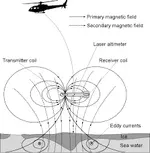
I interpret multi-frequency conductivity and phase data every day from airborne geophysical surveys that measure from the surface to depths of over 400 feet. The systems are helicopter borne, traveling 90 miles per hour measuring a swath 60 feet wide on five frequencies, at 10 samples per second. It calculates depth to tops of mineralization on five frequencies with discrimination! :hello:

- Geowizard

dighem v.webpdighem system.webp
 
Sand is primarily composed of silicon dioxide (SiO₂), which is a non-metal and an insulator.

Dry sand is generally an insulator and does not conduct electricity, but wet sand or sand containing impurities can conduct electricity to some extent.

How charged is the battery at the time of the test can also affect the test as well.
I'm sure there are many other factors as well for each test.

Florida beach sand is primarily composed of quartz crystals (silica) in the Panhandle, while southern and Atlantic beaches often contain higher percentages of calcium carbonate (ground-up shells and coral). Northwest Florida's white, "sugary" sand is 97-99% pure quartz washed down from the Appalachian Mountains. Sands on the Atlantic/Gulf coasts are a mixture of quartz, broken shell fragments, and fossilized organic.

Reference:
 

Users who are viewing this thread

Back
Top Bottom