What's new

🔎 UNIDENTIFIED Is this bone?

Nathan W

Silver Member
Joined
Jan 14, 2023
Messages
3,452
Reaction score
10,828
Golden Thread
0
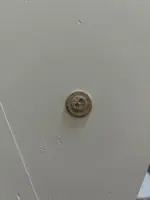
How can you tell? It was found sifting church site pit near my work. It's not metal or plastic. It looks almost compressed material. Any opinions ? I'm starting to get more buttons after I've cleaned the place out and they are a bit deeper.
 

Attachments
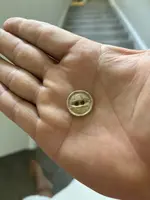
  • IMG_0020.webp
    IMG_0020.webp
    789.2 KB · Views: 125
  • IMG_0022.webp
    IMG_0022.webp
    570.1 KB · Views: 99
Last edited:

  • Feel: Bone buttons will feel dry and slightly cold to the touch.
  • Sound: When tapped against your teeth, a bone button will produce a sharp, hard sound.
  • Weight: Bone buttons tend to be heavier than plastic buttons.

  • Powder Test: You can scrape a bone button with a knife to produce a fine powder.

  • Hot Needle Test: A hot needle test (placing a heated needle against the button) can help distinguish bone from certain plastics. If the needle easily penetrates and produces a burning odor, it's likely plastic; if it doesn't penetrate and produces no odor, it's more likely bone.
 
Upvote 0
  • Feel: Bone buttons will feel dry and slightly cold to the touch.
  • Sound: When tapped against your teeth, a bone button will produce a sharp, hard sound.
  • Weight: Bone buttons tend to be heavier than plastic buttons.

  • Powder Test: You can scrape a bone button with a knife to produce a fine powder.

  • Hot Needle Test: A hot needle test (placing a heated needle against the button) can help distinguish bone from certain plastics. If the needle easily penetrates and produces a burning odor, it's likely plastic; if it doesn't penetrate and produces no odor, it's more likely bone.
Thanks for that test chart
 
Upvote 0
I'd guess celluloid. It was invented and used extensively in the late 1800s.
Bone would be very difficult to mount and turn on a lathe to produce a button like the one pictured.
I will look into celluloid , thanks
 
Upvote 0
Identifying the material in such a small item is fairly easy but it damages the item. Bone emits a characteristic odor when sanded or machined. Heating sufficiently to get the camphor odor of celluloid hardens and weakens the object. So to identify it requires damaging it. Oh such a small item that can be significant. If it were mine, I would keep it as it is.
 
Upvote 0
Identifying the material in such a small item is fairly easy but it damages the item. Bone emits a characteristic odor when sanded or machined. Heating sufficiently to get the camphor odor of celluloid hardens and weakens the object. So to identify it requires damaging it. Oh such a small item that can be significant. If it were mine, I would keep it as it is.
Rubbing it won't hurt it any.
If anything it would give it a bit of a polished look on one side.
 
Upvote 0
Identifying the material in such a small item is fairly easy but it damages the item. Bone emits a characteristic odor when sanded or machined. Heating sufficiently to get the camphor odor of celluloid hardens and weakens the object. So to identify it requires damaging it. Oh such a small item that can be significant. If it were mine, I would keep it as it is.
Yeah I don't want to ruin anything, I've broken some items in the past I would rather not anymore lol
 
Upvote 0

Users who are viewing this thread

Back
Top Bottom