You are using an out of date browser. It may not display this or other websites correctly.
You should upgrade or use an alternative browser.
You should upgrade or use an alternative browser.
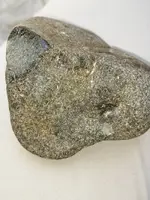
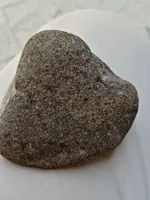
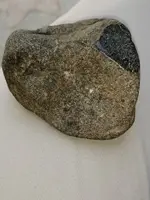
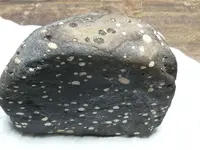
Is this stone a meteorite?
- Thread starter Fara
- Start date

Red-Coat
Gold Member
- Joined
- Dec 23, 2019
- Messages
- 7,934
- Reaction score
- 25,200
- Golden Thread
- 0
- Location
- Surrey, UK
- Primary Interest:
- All Treasure Hunting
Why would you think it is?
What characteristics do you believe it has which suggest that possibility to you?
What characteristics do you believe it has which suggest that possibility to you?
Fara
Jr. Member
- Joined
- Jun 16, 2020
- Messages
- 22
- Reaction score
- 6
- Golden Thread
- 0
- Primary Interest:
- All Treasure Hunting
- #3
Thread Owner
I have no idea about it, Actually. On the internet, there was a martian rock picture, so that was very similar to it. That rock has equal density and very weak absorption like this one. Just for some similarities...
Customx_12
Hero Member
- Joined
- May 22, 2008
- Messages
- 559
- Reaction score
- 336
- Golden Thread
- 0
- Detector(s) used
- Tesoro Silver uMax
- Primary Interest:
- All Treasure Hunting
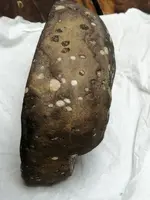
Have you tried sticking a magnet to it? What are the dimensions? How much does it weigh? Meteorites are heavy and, generally, have a high iron content that makes them magnetic.
Red-Coat
Gold Member
- Joined
- Dec 23, 2019
- Messages
- 7,934
- Reaction score
- 25,200
- Golden Thread
- 0
- Location
- Surrey, UK
- Primary Interest:
- All Treasure Hunting
It's not true that all meteorites are heavy and there are are many classes that have a low iron content, making them non-magnetic or only weakly so. Martian meteorites would be a case in point,
However, you think you've found a Martian meteorite based on density, absorption and a similar picture found on the internet? That's not the way to identify a meteorite, and the same applies to the spotted basalt you posted elsewhere believing it might be from the moon.
If you have a browse through the many replies posted in the 'Meteorite' section you should pick up on many of the features that we look for to narrow down specimens that justify expert testing. I'm afraid that your rock really has none of those characteristic features. It looks like a terrestrial rock in the territory of basalt (SG ranges from around 2.70 - 3.30) or andesite (SG ranges from around 2.40 - 2.80).
However, you think you've found a Martian meteorite based on density, absorption and a similar picture found on the internet? That's not the way to identify a meteorite, and the same applies to the spotted basalt you posted elsewhere believing it might be from the moon.
If you have a browse through the many replies posted in the 'Meteorite' section you should pick up on many of the features that we look for to narrow down specimens that justify expert testing. I'm afraid that your rock really has none of those characteristic features. It looks like a terrestrial rock in the territory of basalt (SG ranges from around 2.70 - 3.30) or andesite (SG ranges from around 2.40 - 2.80).
Customx_12
Hero Member
- Joined
- May 22, 2008
- Messages
- 559
- Reaction score
- 336
- Golden Thread
- 0
- Detector(s) used
- Tesoro Silver uMax
- Primary Interest:
- All Treasure Hunting
It's not true that all meteorites are heavy and there are are many classes that have a low iron content, making them non-magnetic or only weakly so. Martian meteorites would be a case in point,
However, you think you've found a Martian meteorite based on density, absorption and a similar picture found on the internet? That's not the way to identify a meteorite, and the same applies to the spotted basalt you posted elsewhere believing it might be from the moon.
If you have a browse through the many replies posted in the 'Meteorite' section you should pick up on many of the features that we look for to narrow down specimens that justify expert testing. I'm afraid that your rock really has none of those characteristic features. It looks like a terrestrial rock in the territory of basalt (SG ranges from around 2.70 - 3.30) or andesite (SG ranges from around 2.40 - 2.80).
Sigh, there always has to be one. I didn’t say ALL are magnetic and ALL are heavy but by and large, the vast majority are. Here’s an informative link for you:
https://geology.com/meteorites/meteorite-identification.shtml
Generally speaking, the magnet test and the weight of it will be tell-tale signs. Probably close to 95% of the time but if you want to bank on the other 5%, go for it.
William the Conqueror
Sr. Member
- Joined
- Apr 29, 2020
- Messages
- 398
- Reaction score
- 594
- Golden Thread
- 0
- Primary Interest:
- All Treasure Hunting
Take it to a geologist, he or she will give you a definite answer. A museum may have a geologist.

- Joined
- Dec 9, 2012
- Messages
- 8,741
- Reaction score
- 22,338
- Golden Thread
- 0
- Location
- Concrete, WA
- Detector(s) used
- Nokta FoRs Gold, a Gold Cube, 2 Keene Sluices and Lord only knows how many pans....not to mention a load of other gear my wife still doesn't know about!
- Primary Interest:
- Prospecting
Fara, generally it takes a specialist (with the specimen in hand) to
absolutely confirm that a find is indeed a meteorite.
Best anyone here can give you is a WAG based on the images
you've posted. I also don't see any particular characteristics
of a meteorite in the images you posted, but then again, what
I know about meteorites doesn't amount to diddly-squat.
absolutely confirm that a find is indeed a meteorite.
Best anyone here can give you is a WAG based on the images
you've posted. I also don't see any particular characteristics
of a meteorite in the images you posted, but then again, what
I know about meteorites doesn't amount to diddly-squat.
Last edited:
Red-Coat
Gold Member
- Joined
- Dec 23, 2019
- Messages
- 7,934
- Reaction score
- 25,200
- Golden Thread
- 0
- Location
- Surrey, UK
- Primary Interest:
- All Treasure Hunting
Sigh, there always has to be one. I didn’t say ALL are magnetic and ALL are heavy but by and large, the vast majority are. Here’s an informative link for you:
https://geology.com/meteorites/meteorite-identification.shtml
Generally speaking, the magnet test and the weight of it will be tell-tale signs. Probably close to 95% of the time but if you want to bank on the other 5%, go for it.
Oh dear. Deep sigh!
What you actually said is “meteorites are heavy and, generally, have a high iron content that makes them magnetic”, which is misleading.
Your subsequent comments are also misleading and based on a misunderstanding of the statistics… leading to an oft-repeated myth.
The statistic that 90% of meteorites are iron gives a false impression. since the statistic is based on percentage by weight of total known meteoritic material; so, because iron meteorites are heavy compared to non-irons, the percentage by weight is artificially distorted versus the percentage by number. It’s further distorted by the fact that there have been some extremely large iron meteorites which have descended upon us, whereas falls of non-irons tend to be smaller, such that a randomly-found small individual meteorite will not have the same high statistical likelihood of being an iron unless it has come from one of those relatively small numbers of large strewnfields.
Fewer than 5% of meteorite falls are iron meteorites and around 1% are stony irons. By contrast around 8% of falls are achondrites and >85% are chondrites (a proportion of which are carbonaceous with almost no iron, or low-iron chondrites with only moderate magnetic properties).
Furthermore, the OP believes he might have found a Martian meteorite. Although he hasn’t, this would of course fall into the achondrite group and not have the characteristics you describe.
Red-Coat
Gold Member
- Joined
- Dec 23, 2019
- Messages
- 7,934
- Reaction score
- 25,200
- Golden Thread
- 0
- Location
- Surrey, UK
- Primary Interest:
- All Treasure Hunting
Is there any table of elements for different classes of meteorites, like lunar or martian and so on, that we could easier identify which class is our rock?
Yes such data does exists, but not in reference table/database formats in the public domain. In any case, you would need to be an expert to interpret the data versus the analysis for your rock(s). In addition, simple bulk analysis on its own will not confirm a meteorite, although an anomalous iridium content outside the terrestrial norm can be a good indicator. However, simple bulk analysis can often easily throw up a red flag that indicates you definitely don't have a meteorite.
Although you do not have a Lunar or Martian rock, you should understand that these will usually be basaltic and have broadly similar bulk compositions to the same kinds of rock found on Earth. Determining terrestrial from extraterrestrial requires a combination of analysis and mineralogy/petrolgy/crystallography or other tests. The key confirmatory tests usually rest on much more sophisticated analysis than you could hope to perform yourself… for example the ratio of oxygen isotopes versus the Terrestrial Fractionation Line.
Last edited:
Customx_12
Hero Member
- Joined
- May 22, 2008
- Messages
- 559
- Reaction score
- 336
- Golden Thread
- 0
- Detector(s) used
- Tesoro Silver uMax
- Primary Interest:
- All Treasure Hunting
Oh dear. Deep sigh!
What you actually said is “meteorites are heavy and, generally, have a high iron content that makes them magnetic”, which is misleading.
Your subsequent comments are also misleading and based on a misunderstanding of the statistics… leading to an oft-repeated myth.
The statistic that 90% of meteorites are iron gives a false impression. since the statistic is based on percentage by weight of total known meteoritic material; so, because iron meteorites are heavy compared to non-irons, the percentage by weight is artificially distorted versus the percentage by number. It’s further distorted by the fact that there have been some extremely large iron meteorites which have descended upon us, whereas falls of non-irons tend to be smaller, such that a randomly-found small individual meteorite will not have the same high statistical likelihood of being an iron unless it has come from one of those relatively small numbers of large strewnfields.
Fewer than 5% of meteorite falls are iron meteorites and around 1% are stony irons. By contrast around 8% of falls are achondrites and >85% are chondrites (a proportion of which are carbonaceous with almost no iron, or low-iron chondrites with only moderate magnetic properties).
Furthermore, the OP believes he might have found a Martian meteorite. Although he hasn’t, this would of course fall into the achondrite group and not have the characteristics you describe.
Even deeper sigh! A lot of typing to say nothing. The part you are missing is where I said “generally.” You see, this term indicates that it is not an absolute and you’re arguing with no one but yourself. There’s always one contrarian that tries to start a non-existent debate to make themselves somehow feel superior. I won’t be the one to engage with you on this so have fun playing with yourself.

- Joined
- Mar 2, 2018
- Messages
- 9,267
- Reaction score
- 33,510
- Golden Thread
- 0
- Location
- Todds Point, IL
- Primary Interest:
- Metal Detecting
The first rock you posted is diabase. It's an igneous rock formed in the earth. Not a meteorite. The second rock you posted is a porphyry. Again, an igneous rock formed in the earth. Gary




Featured Treasure Finds
Featured Treasure Finds
Similar threads
- Replies
- 5
- Views
- 435

Users who are viewing this thread
Total: 1 (members: 0, guests: 1)