"Oroblanco" may like to see this
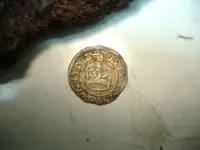
Thanks Jeff, you are right! What a cool find! I could not believe my eyes, at first I thought he must have meant Lancaster UK, not Lancaster PA but nooooo! I see that it was found near an old iron works? I wonder just how old that iron works IS? Especially considering that Lancaster county was not settled before 1717. Here is a description of PA written in 1751:
Michael Schlatter's Description of Pennsylvania
Written at Amsterdam, June, 1751
"Pennsylvania, lying in the northern part of America, is a country of no small compass. It lies in a healthy climate; it is not merely inhabitable, but very much inhabited, not only by the ancient dwellers in the land, but also by thousands who have emigrated thither from Europe and still arrive every year. It extends toward the north to the five largest inland seas known in the world, along the course of which it is not difficult to reach the celebrated Mississippi River, down which one can sail to the Gulf of Mexico.
"Since the time when the English have taken possession of Pennsylvania, and the country has been peopled from various European nations, it has been divided into nine cantons, these called counties. The most important towns, as they have been built successively, are:
1. Philadelphia, consisting at present of 2,300 houses, mostly of stone.
2. New Castle, consisting of 240 houses, mostly of stone, and lying from Philadelphia distant 40 miles.
3. Chester, consisting of 120 houses, lying 10 miles distant from New Castle.
4. Germantown, consisting of 250 houses, lying 6 miles from Philadelphia.
5. Lancaster, consisting of 500 houses, lying from Germantown 63 miles.
6. York, consisting of 190 houses, lying from Lancaster 23 miles.
7. Reading, lately built, consisting of 60 houses, lying 60 miles from York.
"In the whole of Pennsylvania, according to estimation, there are 190,000 souls, in which the pagan inhabitants are not included. Of these, it is estimated 90,000 are Germans;... These are scattered through all the cantons or counties; still they have more especially settled down in the counties of Philadelphia, Bucks, Lancaster, York, and Chester."
There were Dutch settlers arriving 1630, and Swedes soon after (they fought a war over the region) but prior to this time the first documented European visitor was Captain John Smith in the early 1600s so....how did a 1520 Polish silver coin end up there? I would sure want to do a lot more detecting that area!
Oroblanco