What's new

Mesoamerican artifact 2 - a Veracruz? urn

MetFreeman

Greenie
Joined
Jun 23, 2026
Messages
13
Reaction score
34
Golden Thread
0
Hi,
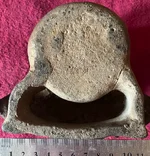
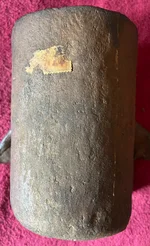
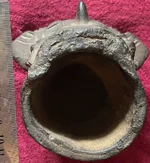
This is another item I would like to ask your help with. An intro is here. I am very confident the urn is genuine and stylistically I think it is from Veracruz.
What I was not able to do at all is dating - the full range of almost 1k years is open for me.
The height is some 6 inches, some decorations are broken off and there is an old collection stamp.
(I moved this thread from a wrong forum)
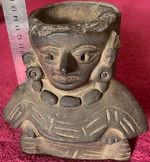
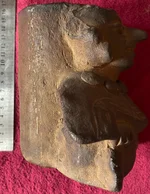
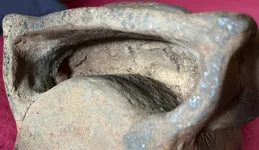
IMG_8346.webpIMG_8347.webpIMG_8348.webpIMG_8349.webpIMG_8350.webpIMG_8352.webpIMG_8354.webpIMG_8355.webp
 
Hi,
This is another item I would like to ask your help with. An intro is here. I am very confident the urn is genuine and stylistically I think it is from Veracruz.
What I was not able to do at all is dating - the full range of almost 1k years is open for me.
The height is some 6 inches, some decorations are broken off and there is an old collection stamp.
(I moved this thread from a wrong forum)
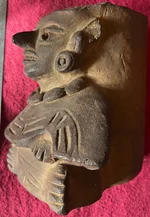
View attachment 2266771View attachment 2266772View attachment 2266773View attachment 2266774View attachment 2266775View attachment 2266776View attachment 2266777View attachment 2266778
Vercruz culture time period: Flourished during the Classic and Late Classic periods (approx. 300–900 CE) along the central Gulf Coast of Mexico.Classic Veracruz culture funerary traditions feature hollow terracotta vessels, large effigy urns, and rich ossuaries rather than the standard stamped urns seen in neighboring Oaxaca.

But I am not sure it is Veracruz because parts of the design feature are stamped in clay. It certainly looks old, and I hazard a guess it is a real Funerary urn - Zapotec culture, Mexico - 600-900 AD, but there are some really good fakes out there that are hard to distinguish between real and fake. To complicate things, both cultures overlapped with each other around the same time period.

Screenshot 2026-09-27 235002.webp


Screenshot 2026-09-27 235136.webp


Screenshot 2026-09-27 235257.webp


Crow
 
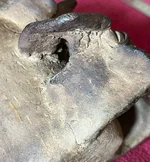
Thank you. This one is indeed very similar structurally. But the face is (to my very newb taste) Zapotec. The face in mine, specifically the the long pointy nose, open lips, triangular shape, I have seen in Veracruze ones. Here is one example I found. What do you think?
 
well, this is my 2 cents... one thing to look for, does it copy features of genuine objects.... if it does, that suggests fake, items should be stylistically similar not copies. Another consideration is artistry... is the piece obviously cruder in execution, does it show lack of skill. The other thing I would add is.. the "HOW" it is made, I do ceramics so I have insider knowledge of how things should be constructed, what come first, next etc... what sorts of tools were used, how were the lines inscribed, on and on. Your piece should seem to "made" the same, not just look the same. The last thing I would say is take any "damage" very seriously, does it seem intentional, what caused it, is it recent, how do the patinas match up?

in the past I have had pieces authenticated by sending images to experts in museums that have deep knowledge in a specific area, museums in Peru, Mexico, etc.
 
well, this is my 2 cents... one thing to look for, does it copy features of genuine objects.... if it does, that suggests fake, items should be stylistically similar not copies. Another consideration is artistry... is the piece obviously cruder in execution, does it show lack of skill. The other thing I would add is.. the "HOW" it is made, I do ceramics so I have insider knowledge of how things should be constructed, what come first, next etc... what sorts of tools were used, how were the lines inscribed, on and on. Your piece should seem to "made" the same, not just look the same. The last thing I would say is take any "damage" very seriously, does it seem intentional, what caused it, is it recent, how do the patinas match up?

in the past I have had pieces authenticated by sending images to experts in museums that have deep knowledge in a specific area, museums in Peru, Mexico, etc.
I also do pottery, but it is not of much help here. Even a forger would have to follow a logical process (unless it is a total lapse like mold or wheel making something that should be coiled etc.). It could be useful if we knew that the piece supposedly comes from the same workshop/artist as a verified piece and then we could have higher demands. But different artists would have their own processes, same as they do today. At least that is how I see things, in general. If these peoples were stricter on procedures than a technology would require, that I don't know.
I can say it is low fired though, that is also fine.
I think only TL would be definite but again, I am ok with my confidence in the originality of it and CROWs example further supports it. I am mainly interested in identification / dating.
 

Users who are viewing this thread

Back
Top Bottom