
You are using an out of date browser. It may not display this or other websites correctly.
You should upgrade or use an alternative browser.
You should upgrade or use an alternative browser.
metal bullion
- Thread starter kaloy
- Start date

Bigcypresshunter
Sapphire Member
- Joined
- Dec 15, 2004
- Messages
- 27,124
- Reaction score
- 3,351
- Golden Thread
- 0
- Location
- South Florida
- Detector(s) used
- 70's Whites TM Amphibian, HH Pulse, Ace 250
- Primary Interest:
- Beach & Shallow Water Hunting
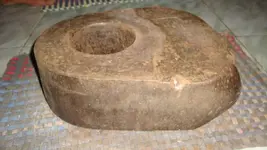
I think someone has been trying to cut it in an attempt to determine what kind of metal it is. Apparently the OP doesnt believe the item has any antique value but the OP believes the metal has bullion melt value.. We shouldnrt have to guess at all this but we were given very little to work with. May be a language problembradyboy said:looks like a counter balance - cam
been wacked a few times by a mower
 but its typical of posts from the Philippines .
Upvote
0

cw0909
Silver Member
could it be a counter weight or base to an old manual operated drill, punch press
newer versions
http://www.4startools.com/images/1288201516406569653543.jpeg
http://www.qdsyjc.com/UploadFiles/20075171025647.gif
http://www.amazon.com/Skil-3320-02-120-Volt-10-Inch-Drill/dp/B003LSSS0W?tag=treasurenet01-20
newer versions
http://www.4startools.com/images/1288201516406569653543.jpeg
http://www.qdsyjc.com/UploadFiles/20075171025647.gif
http://www.amazon.com/Skil-3320-02-120-Volt-10-Inch-Drill/dp/B003LSSS0W?tag=treasurenet01-20
Upvote
0
Bigcypresshunter
Sapphire Member
- Joined
- Dec 15, 2004
- Messages
- 27,124
- Reaction score
- 3,351
- Golden Thread
- 0
- Location
- South Florida
- Detector(s) used
- 70's Whites TM Amphibian, HH Pulse, Ace 250
- Primary Interest:
- Beach & Shallow Water Hunting
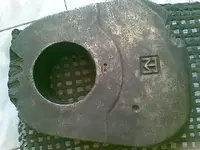
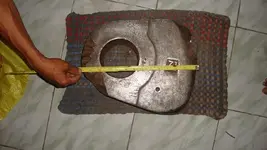
Kaloy did you test with a magnet? Did you use an Oxy Acetylene torch or just Acetylene?kaloy said:almost 12 inches in length 4 inches thick. weighing almost a hundred kilos. very hard and heat resistant(cnt be cut by acetylene torch).
Upvote
0

kaloy
Sr. Member
- #24
Thread Owner
bigcypresshunter said:Kaloy did you test with a magnet? Did you use an Oxy Acetylene torch or just Acetylene?kaloy said:almost 12 inches in length 4 inches thick. weighing almost a hundred kilos. very hard and heat resistant(cnt be cut by acetylene torch).
its non magnetic. but there's a little magnetic attraction at the side of the hole....
i used an oxyacetylene torch,i guessed so... (if the oxyacetylene torch you are referring to is the torch with two separate tank, one for the acetylene and one for the oxygen).....
Upvote
0

steelheadwill
Gold Member
- Joined
- Jan 2, 2010
- Messages
- 6,690
- Reaction score
- 716
- Golden Thread
- 1
- Location
- New Castle NH.
- 🥇 Banner finds
- 1
- Detector(s) used
- Brain eyes ears and nose
- Primary Interest:
- Other
Looks rather like a hammer from a car shredder 
and at 440 lbs, seems to fit.
those holes certainly look like fine balancing, as in crank lobe for large diesel..
I've seen pistons as large as trash cans
and at 440 lbs, seems to fit.
those holes certainly look like fine balancing, as in crank lobe for large diesel..
I've seen pistons as large as trash cans
Upvote
0
kaloy
Sr. Member
- #26
Thread Owner
bigcypresshunter said:I think someone has been trying to cut it in an attempt to determine what kind of metal it is. Apparently the OP doesnt believe the item has any antique value but the OP believes the metal has bullion melt value.. We shouldnrt have to guess at all this but we were given very little to work with. May be a language problembradyboy said:looks like a counter balance - cam
been wacked a few times by a mower
bigcy,
yes, we've tried to cut a sample of the metal for lab assay but for a 3rd world country, it's tough finding a good and reliable lab.. thaT's where we've tried cutting it with acetylene but no success... we used a sander (a layman's term here in our country i dont know the right term for it. sorry. you're right its language prob) to cut it
do you have info on the common alloys of thullium?
Upvote
0
kaloy
Sr. Member
- #27
Thread Owner
bigcypresshunter said:OMG can we see some more pics? Front and back at least is standard procedure. Where did you find it? This is kinda like pulling teeth.kaloy said:almost 12 inches in length 4 inches thick. weighing almost a hundred kilos. very hard and heat resistant(cnt be cut by acetylene torch).Are you from the Phillipines? Please read: http://forum.treasurenet.com/index.php/topic,259110.0.html
send more pics next time sorry
Upvote
0
kaloy
Sr. Member
- #28
Thread Owner
steelheadwill said:Looks rather like a hammer from a car shredder
and at 440 lbs, seems to fit.
those holes certainly look like fine balancing, as in crank lobe for large diesel..
I've seen pistons as large as trash cans
maybe... if the info we got based on the initial report from the U.P lab is correct, why is it that the metal has thullium in it if it use for mere balancing...
Upvote
0
Bigcypresshunter
Sapphire Member
- Joined
- Dec 15, 2004
- Messages
- 27,124
- Reaction score
- 3,351
- Golden Thread
- 0
- Location
- South Florida
- Detector(s) used
- 70's Whites TM Amphibian, HH Pulse, Ace 250
- Primary Interest:
- Beach & Shallow Water Hunting
You can add pictures to this thread at any time. The sooner the better before members lose interest. It may also help to tell us where and how you obtained this item.kaloy said:bigcypresshunter said:OMG can we see some more pics? Front and back at least is standard procedure. Where did you find it? This is kinda like pulling teeth.kaloy said:almost 12 inches in length 4 inches thick. weighing almost a hundred kilos. very hard and heat resistant(cnt be cut by acetylene torch).
send more pics next time sorry
Acetylene when combined with oxygen (2 tanks) burns at a temperature of 3200 °C to 3500 °C (5800 °F to 6300 °F), highest among commonly used gaseous fuels. http://en.wikipedia.org/wiki/Oxy-fuel_welding_and_cutting
Check the melting points of all the known elements... Apparently you are looking to sell it as scrap metal. I think you used a grinder. There is also a way to check density by placing in water but I cant remember how its done. Someone else may know.
It will also help to post the lab reports. Holding back information does not help. It is best to tell us everything you know. Simply posting a pic of one side, with no size reference, no information about testing or grinding or where you found it. You were making it very hard for us to help. Thanks for responding.
Upvote
0

Monty
Gold Member
- Joined
- Jan 26, 2005
- Messages
- 10,752
- Reaction score
- 170
- Golden Thread
- 0
- Location
- Sand Springs, OK
- Detector(s) used
- ACE 250, Garrett
- Primary Interest:
- All Treasure Hunting
Probably bicenthrillium carbonate. Notice how the metal is sheared off rather than worn. That means it is a very hard substance. This was a metal perfected by the Nazis during WWII that would withstand the reentry into earth's atmosphere with a high explosive impact head on a V2 rocket. Several of these rockets were given to the Japanese after it looked like Germany was out of the war. This is all true except the part that I made up. I don't have a clue what it really is. Monty
Upvote
0
Bigcypresshunter
Sapphire Member
- Joined
- Dec 15, 2004
- Messages
- 27,124
- Reaction score
- 3,351
- Golden Thread
- 0
- Location
- South Florida
- Detector(s) used
- 70's Whites TM Amphibian, HH Pulse, Ace 250
- Primary Interest:
- Beach & Shallow Water Hunting
This is an interesting item but Im losing interest without proper cooperation and full disclosure. Threads like these just fade away. It might as well be Bicenthrillium Carbonate.
Upvote
0
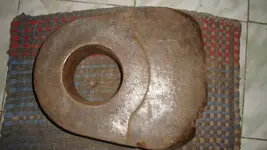
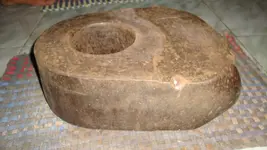
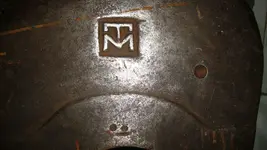
kaloy
Sr. Member
- #35
Thread Owner
itbigcypresshunter said:This is an interesting item but Im losing interest without proper cooperation and full disclosure. Threads like these just fade away. It might as well be Bicenthrillium Carbonate.
I dont have the paper of the lab result. my friend who brought the sample to the lab just phoned me and told me that it is 50%thullium. the 0ther 50% is not yet known.
the japanese buried these metals, we found these metals in one of our dug sites.
any other info about this bicenthrillium carbonate that you were mentioning/ thanks
Upvote
0
Bigcypresshunter
Sapphire Member
- Joined
- Dec 15, 2004
- Messages
- 27,124
- Reaction score
- 3,351
- Golden Thread
- 0
- Location
- South Florida
- Detector(s) used
- 70's Whites TM Amphibian, HH Pulse, Ace 250
- Primary Interest:
- Beach & Shallow Water Hunting
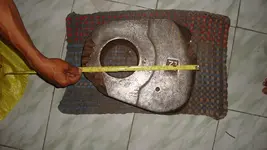
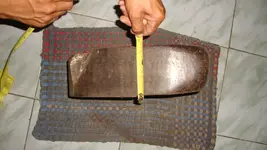
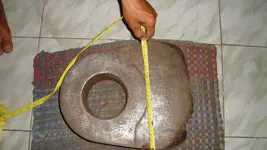
Thanks for the great pics. It may renew some interest.kaloy said:I dont have the paper of the lab result. my friend who brought the sample to the lab just phoned me and told me that it is 50%thullium. the 0ther 50% is not yet known.
the japanese buried these metals, we found these metals in one of our dug sites.
any other info about this bicenthrillium carbonate that you were mentioning/ thanks

Monty likes to joke and I think he was just joking about bicenthrillium carbonate.
Now that we are sure its 50 percent Thullium we have something to Google.
Upvote
0
coin1921
Full Member
- Joined
- Dec 1, 2006
- Messages
- 123
- Reaction score
- 32
- Golden Thread
- 0
- Location
- Manitoba, Canada
- Detector(s) used
- Garrett GTI 2500
Deus V 3.2
Bounty Hunter Water Detector
- Primary Interest:
- Metal Detecting
The price per kilogram has oscillated between US$ 4,600 and $13,300 in the period from 1959 to 1998 for 99.9% purity, and it was second highest for lanthanides behind lutetium.[7][8]
@ 50% of 100 kilo's, that is a good payday.
@ 50% of 100 kilo's, that is a good payday.
Upvote
0
Bigcypresshunter
Sapphire Member
- Joined
- Dec 15, 2004
- Messages
- 27,124
- Reaction score
- 3,351
- Golden Thread
- 0
- Location
- South Florida
- Detector(s) used
- 70's Whites TM Amphibian, HH Pulse, Ace 250
- Primary Interest:
- Beach & Shallow Water Hunting
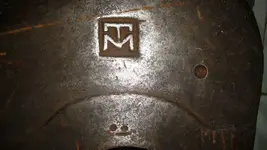
I hope you dont mind, I resized some of your latest pics for those of us with laptops and small screens. It appears to be a large lobe from a very large diesel engine camshaft perhaps. It looks as if I can see some wear and maybe it needed replaced.
Im curious where did you find it?
It looks as if I can see some wear and maybe it needed replaced.Im curious where did you find it?
Attachments
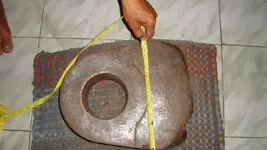
Upvote
0
Bigcypresshunter
Sapphire Member
- Joined
- Dec 15, 2004
- Messages
- 27,124
- Reaction score
- 3,351
- Golden Thread
- 0
- Location
- South Florida
- Detector(s) used
- 70's Whites TM Amphibian, HH Pulse, Ace 250
- Primary Interest:
- Beach & Shallow Water Hunting
Upvote
0
Bigcypresshunter
Sapphire Member
- Joined
- Dec 15, 2004
- Messages
- 27,124
- Reaction score
- 3,351
- Golden Thread
- 0
- Location
- South Florida
- Detector(s) used
- 70's Whites TM Amphibian, HH Pulse, Ace 250
- Primary Interest:
- Beach & Shallow Water Hunting
Here are some facts on Thullium but I found nothing yet about use in camshaft lobes. The element symbol is Tm and I wonder if that is what the "lab" was looking at. Did they offer to buy it or have you tried to sell it?
http://www.facts-about.org.uk/science-element-thulium.htm
Common Uses of Thulium
Lasers
Power for portable x-ray machines
The Properties of the Element Thulium
Name of Element : Thulium
Symbol of Element : Tm
Atomic Number: 69
Atomic Mass: 168.9342 amu
Melting Point: 1545.0 °C - 1818.15 °K
Boiling Point: 1727.0 °C - 2000.15 °K
Number of Protons/Electrons: 69
Number of Neutrons: 100
Crystal Structure: Hexagonal
Density @ 293 K: 9.321 g/cm3
Color: silverish
Did they offer to buy it or have you tried to sell it?http://www.facts-about.org.uk/science-element-thulium.htm
Common Uses of Thulium
Lasers
Power for portable x-ray machines
The Properties of the Element Thulium
Name of Element : Thulium
Symbol of Element : Tm
Atomic Number: 69
Atomic Mass: 168.9342 amu
Melting Point: 1545.0 °C - 1818.15 °K
Boiling Point: 1727.0 °C - 2000.15 °K
Number of Protons/Electrons: 69
Number of Neutrons: 100
Crystal Structure: Hexagonal
Density @ 293 K: 9.321 g/cm3
Color: silverish
Upvote
0


Featured Treasure Finds
Featured Treasure Finds
Similar threads

- Replies
- 3
- Views
- 380

- Replies
- 5
- Views
- 329

- Replies
- 4
- Views
- 460
Users who are viewing this thread
Total: 1 (members: 0, guests: 1)













Latest Discussions
-
-

-

-
 Opinion on the age and value of this bookcase with glass doors.
- Latest: FreeBirdTim
-
 So, if one had a broken leg out metal detecting or just general work on a mine could this happen today?
- Latest: ConceptualizedNetherlandr
