What's new

Misconceptions in the Language Usage of the 1810-1820

Sure.
A remuda of riding horses 2 per man. Then draft animals per wagon? Plus spares.
Plus grain. Or else rest at almost every decent grazing area. Of which there won't be enough quiet unnoticed ones.
Plus shoeing and maintaining harness of the draft stock and maintaining wagons. Not having them stolen at night or killed.
While the horses/mules could be eaten the party size would be demanding for groceries. Firearms to secure meat? Good way to get noticed.
Set up shop for weeks on end to scratch in the dirt or rest hungry overworked stock? What rich pocket of nonmigratory/nomadic game did they settle in unnoticed? Well monied Virginians did all that work and still hid the evidence of any buffalo they quietly killed ?

Say/guess a minimum of 75 equestrian animals. Passed off as a hunting party?
Besides the man and beast grocery requirements , you need meat you already have it.
You want to kill animals you don't have back East you don't need a wagon West to the ocean almost to do it.
During the alleged perilous adventure there were still woods bison and elk East of the Mississippi.
Once across the river numbers increased.


The tale isn't bad. But designed either by committee of cheap novel readers ; or a bottle a day of inspiration slightly plagiarized for multiple days. Nothing wrong with making up a story depending on the purpose.

When Morris is introduced the failed attempt at being clandestine is introduced and it gets worse from there. Logistics of outfitting the multiple trips , sustaining their crews and stock, and likelihood of going unnoticed seem to escape the author.
Networking with stock exchange or replacement and securing needed staples at intervals all expose traffic.
Then were the dwellings and camps along travel routes that would not miss the traffic of 75 plus sets of four feet and wagon rumbles and the attendant dust.
More than just homestead dogs would whistle.
Off trail discreet movement of such a party? Not hardly very farly.
It’s likely that numerous groups set out for the west, embarking on their journeys with hope and ambition, only to vanish without a trace, leaving behind no word of their fate. One notable example is the infamous Beale Party, whose story has become a haunting symbol of the perils faced by those daring enough to seek new beginnings in uncharted territory. These expeditions, filled with dreams of prosperity and exploration, often ended in mystery, echoing the risks and uncertainties that accompanied the westward expansion.
 
It’s likely that numerous groups set out for the west, embarking on their journeys with hope and ambition, only to vanish without a trace, leaving behind no word of their fate. One notable example is the infamous Beale Party, whose story has become a haunting symbol of the perils faced by those daring enough to seek new beginnings in uncharted territory. These expeditions, filled with dreams of prosperity and exploration, often ended in mystery, echoing the risks and uncertainties that accompanied the westward expansion.
Indeed.
Speaking of chilling.
1753820984291.webp

1753821061092.webp
 
Sure.
A remuda of riding horses 2 per man. Then draft animals per wagon? Plus spares.
Plus grain. Or else rest at almost every decent grazing area. Of which there won't be enough quiet unnoticed ones.
Plus shoeing and maintaining harness of the draft stock and maintaining wagons. Not having them stolen at night or killed.
While the horses/mules could be eaten the party size would be demanding for groceries. Firearms to secure meat? Good way to get noticed.
Set up shop for weeks on end to scratch in the dirt or rest hungry overworked stock? What rich pocket of nonmigratory/nomadic game did they settle in unnoticed? Well monied Virginians did all that work and still hid the evidence of any buffalo they quietly killed ?

Say/guess a minimum of 75 equestrian animals. Passed off as a hunting party?
Besides the man and beast grocery requirements , you need meat you already have it.
You want to kill animals you don't have back East you don't need a wagon West to the ocean almost to do it.
During the alleged perilous adventure there were still woods bison and elk East of the Mississippi.
Once across the river numbers increased.


The tale isn't bad. But designed either by committee of cheap novel readers ; or a bottle a day of inspiration slightly plagiarized for multiple days. Nothing wrong with making up a story depending on the purpose.

When Morris is introduced the failed attempt at being clandestine is introduced and it gets worse from there. Logistics of outfitting the multiple trips , sustaining their crews and stock, and likelihood of going unnoticed seem to escape the author.
Networking with stock exchange or replacement and securing needed staples at intervals all expose traffic.
Then were the dwellings and camps along travel routes that would not miss the traffic of 75 plus sets of four feet and wagon rumbles and the attendant dust.
More than just homestead dogs would whistle.
Off trail discreet movement of such a party? Not hardly very farly.
I have always thought that since they hired guides, they would have taken the safest route to santa fe and would have lived off the land with a good idea where to water, graze animals, and sleep. Since route had been developed by Spaniards and traders, they could have used wagons; however, once they headed north to hunt buffalo, im not sure they used wagons but rather pack mules.

When returning to VA, they would have taken the direct route and head east using pack mules leaving wagons at the mine since they become a breakdown liability. They loaded the mules lighter than necessary for speed and knowing if some died they could spread their load to others.

They had to be more careful at the beginning of the return due Indians and why the whole group escorted them until they were safe. Since there were two successful deposits, it would seem they had a good idea when to break into 2s and 3s to avoid detection.

So I contend they could have made the trip back and forth gaining experience with each trip.

There may be documented accounts that prove or disprove my thoughts; however, I dont see any red flags in this part of the Beale story so I don't plan on pursuing these accounts. If I did...I would.
 
BTW, could the guides have been french and found it necessary to improvise while traveling west where they learn the term stampede from locals in Santa fe?
 
I have always thought that since they hired guides, they would have taken the safest route to santa fe and would have lived off the land with a good idea where to water, graze animals, and sleep. Since route had been developed by Spaniards and traders, they could have used wagons; however, once they headed north to hunt buffalo, im not sure they used wagons but rather pack mules.

When returning to VA, they would have taken the direct route and head east using pack mules leaving wagons at the mine since they become a breakdown liability. They loaded the mules lighter than necessary for speed and knowing if some died they could spread their load to others.

They had to be more careful at the beginning of the return due Indians and why the whole group escorted them until they were safe. Since there were two successful deposits, it would seem they had a good idea when to break into 2s and 3s to avoid detection.

So I contend they could have made the trip back and forth gaining experience with each trip.

There may be documented accounts that prove or disprove my thoughts; however, I dont see any red flags in this part of the Beale story so I don't plan on pursuing these accounts. If I did...I would.
Heck that's better logic than the Beale papers.

I wasn't aware they used guides.

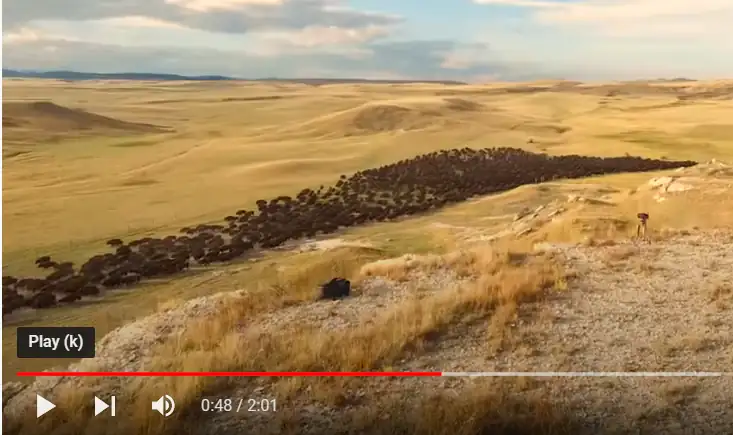
Buffalo hunts depending on (participants) did entail wagons. Big creatures.
Besides a wagon would allow me to race from my trampled steed to stand upon and scream like a girl during the early part of the stampede. Maybe the wagon could carry a lunch and parasol as well while watching the herd pass through..

 
Heck that's better logic than the Beale papers.

I wasn't aware they used guides.

Buffalo hunts depending on (participants) did entail wagons. Big creatures.
Besides a wagon would allow me to race from my trampled steed to stand upon and scream like a girl during the early part of the stampede. Maybe the wagon could carry a lunch and parasol as well while watching the herd pass through..

Beale Pamphlet 1885

Guides: The company being formed, we forthwith commenced our preparations, and, early in April, 1817, left old Virginia for St. Louis, Mo., where we expected to purchase the necessary outfits, procure a guide and two or three servants, and obtain such information and advice as
might be beneficial hereafter.

Return to VA: The whole party were to accompany me for the first five hundred miles, when all but ten would return, these latter to remain with me to the
 

"New France."
Approximately 200–500 documented French expeditions traveled to the Louisiana Territory (part of New France) before 1803, including major exploratory missions (e.g., La Salle, Iberville, Bienville), numerous fur trading parties, Jesuit missionary groups, and military/colonial efforts to establish forts and settlements. The estimate is approximate due to incomplete records and the informal nature of many trading and missionary groups. Most activity occurred between 1682 and 1762, with reduced French-led expeditions under Spanish rule (1762–1800).

Approximately 300–700 documented American groups—including exploratory expeditions, fur trading parties, settler groups, military units, and missionary/immigrant societies—traveled west between 1803 and 1822 following the Louisiana Purchase. This estimate is based on historical records of major expeditions (e.g., Lewis and Clark, Pike), fur trade activities, early settlement in Missouri and Arkansas, and military movements. The number is approximate due to incomplete documentation of smaller groups and the early stage of westward expansion.

Just imagine the ones that were not documented for whatever reason!
 
"New France."
Approximately 200–500 documented French expeditions traveled to the Louisiana Territory (part of New France) before 1803, including major exploratory missions (e.g., La Salle, Iberville, Bienville), numerous fur trading parties, Jesuit missionary groups, and military/colonial efforts to establish forts and settlements. The estimate is approximate due to incomplete records and the informal nature of many trading and missionary groups. Most activity occurred between 1682 and 1762, with reduced French-led expeditions under Spanish rule (1762–1800).

Approximately 300–700 documented American groups—including exploratory expeditions, fur trading parties, settler groups, military units, and missionary/immigrant societies—traveled west between 1803 and 1822 following the Louisiana Purchase. This estimate is based on historical records of major expeditions (e.g., Lewis and Clark, Pike), fur trade activities, early settlement in Missouri and Arkansas, and military movements. The number is approximate due to incomplete documentation of smaller groups and the early stage of westward expansion.

Just imagine the ones that were not documented for whatever reason!

We're missing past members that had a good grasp on the multifaceted international influences and stirrings.

Very busy times. Very clever people.

Let's see ...Wars had people on courses slaloming about. Interracial commitments too. And more.
One writer put similarly it as someone moving along a saw-toothed line between opposing forces.

But those forces varied. As did what side of a real or imaginary line someone started on.

French trended Northern routes. Started early when choosing sides and warring or at least skirmishing with on behalf of newfound native allies against an originally mid to South group in charge. That stayed in charge of that region.

Some of them old members subjects included French too.
Bonaparte brothers ambitions in America and how well one was received ect..
And some almost headscratchers at times.

1753976031540.webp
 
The histories of the regions west of the Mississippi River date back to the era of New Spain, which extended west of the Rocky Mountains and from the Gulf of Mexico to Canada. James Madison, a relative of the infamous Thomas Beale from New Orleans, along with President Thomas Jefferson, believed that the Louisiana Purchase would lead to future opportunities for gold mining in that area. The Transcontinental Treaty was very close in time lines with the Beale Papers episode.
 
Frances Madison was the sister of James Madison Sr. (President James Madison's father) and married Tavener Beale I in 1741 Full text of "Colonial families of the United States descended from the immigrants who arrived before 1700, mostly from England and Scotland, and who are now represented by citizens of the following names, Bell, Beal, Bale, Beale, Beall / from data collected and edited by Lieut.-Colonel Fielder M. M. Beall.". After Tavener Beale's death around 1756-1760, Frances Madison Beale became the second wife of Jacob Hite in 1760, according to Genealogy.


So the connection is that Frances Madison Beale was President James Madison's aunt - she was his father's sister. Frances Madison Beale Hite was born on March 6, 1726, daughter of Ambrose Madison and Frances Taylor. Frances Madison Hite (Beale) (1749 - c.1776) - Genealogy, making her part of the same Madison family line that produced the future president.


This means the Beale family was indeed connected to James Madison through marriage - his aunt Frances married into the Beale family first, then later into the Hite family. Tragically, Frances Madison Beale Hite and her second husband, Jacob Hite, were murdered by Indians during the Revolutionary War, along with several children. Capt George Hite (1761 - 1816)

I find it interesting that James Madison and Thomas Beale were related, especially since a Thomas Beale was hunting in the same area where the U.S. was negotiating a treaty with Spain. Was this really a hunting trip?
 
Frances Madison was the sister of James Madison Sr. (President James Madison's father) and married Tavener Beale I in 1741 Full text of "Colonial families of the United States descended from the immigrants who arrived before 1700, mostly from England and Scotland, and who are now represented by citizens of the following names, Bell, Beal, Bale, Beale, Beall / from data collected and edited by Lieut.-Colonel Fielder M. M. Beall.". After Tavener Beale's death around 1756-1760, Frances Madison Beale became the second wife of Jacob Hite in 1760, according to Genealogy.


So the connection is that Frances Madison Beale was President James Madison's aunt - she was his father's sister. Frances Madison Beale Hite was born on March 6, 1726, daughter of Ambrose Madison and Frances Taylor. Frances Madison Hite (Beale) (1749 - c.1776) - Genealogy, making her part of the same Madison family line that produced the future president.


This means the Beale family was indeed connected to James Madison through marriage - his aunt Frances married into the Beale family first, then later into the Hite family. Tragically, Frances Madison Beale Hite and her second husband, Jacob Hite, were murdered by Indians during the Revolutionary War, along with several children. Capt George Hite (1761 - 1816)

I find it interesting that James Madison and Thomas Beale were related, especially since a Thomas Beale was hunting in the same area where the U.S. was negotiating a treaty with Spain. Was this really a hunting trip?
I found Tavenor Beale JR's will at the Fincastle court house. He died 5 jun 1810 before the 1810 census was taken. The names highlighted in green are his children who do show up in 1810. Thomas Beale Sr did not show up because he was in new orleans which was not part of the 1810 census.

I used Tavenors will to identify his children (including Thomas Beale Sr) and filled in missing info using familysearch.org.

The connection to the Madisons is with Tavenor Beale Sr.

Here is the beale genealogy from Botetourt county VA .
 

Attachments

I found Tavenor Beale JR's will at the Fincastle court house. He died 5 jun 1810 before the 1810 census was taken. The names highlighted in green are his children who do show up in 1810. Thomas Beale Sr did not show up because he was in new orleans which was not part of the 1810 census.

I used Tavenors will to identify his children (including Thomas Beale Sr) and filled in missing info using familysearch.org.

The connection to the Madisons is with Tavenor Beale Sr.

Here is the beale genealogy from Botetourt county VA .
The copy of his will is faded and hard to read so I transcribed it and attached it to an earlier post.

I also put together a timeline for both Thomas Beale Sr and Jr and compared the two lives with the timeline of the Beale treasure story. Both men were in New Orleans when the story places Thomas Beale out west mining gold and siler. I attached the timeline to a previous post.
 
The histories of the regions west of the Mississippi River date back to the era of New Spain, which extended west of the Rocky Mountains and from the Gulf of Mexico to Canada. James Madison, a relative of the infamous Thomas Beale from New Orleans, along with President Thomas Jefferson, believed that the Louisiana Purchase would lead to future opportunities for gold mining in that area. The Transcontinental Treaty was very close in time lines with the Beale Papers episode.
Did you try decoding Cipher 1 or 3 using the 1819 Adams-Onis treaty?
 
The copy of his will is faded and hard to read so I transcribed it and attached it to an earlier post.

I also put together a timeline for both Thomas Beale Sr and Jr and compared the two lives with the timeline of the Beale treasure story. Both men were in New Orleans when the story places Thomas Beale out west mining gold and siler. I attached the timeline to a previous post.
According to the Beale story, TB left Lynchburg in March of 1820. Lynchburg is 1900 miles. Typical travel was 25 miles/day. That means it took 2.5 months to get to the mine. If you include a stop in st louis for provisions, TB would arrive at the mine about July 1st. The story confirms he arrived in Summer and things were progressing nicely.

New Orleans court records indicate TB Jr was by his father's side when he died in September 1820. The distance to new orleans is 1500 miles and would have taken 2 months. This means that TB had to leave for new orleans mid July 1820...basically as soon as he arrived at the mine.

The question is...how was TB notified that he needed to go to new orleans since they would have kept there location a secret?
How long did it taken to get the message to TB since there was no telegraph at the time.
 
Last edited:
According to the Beale story, TB left Lynchburg in March of 1820. Lynchburg is 1900 miles. Typical travel was 25 miles/day. That means it took 2.5 months to get to the mine. If you include a stop in st louis for provisions, TB would arrive at the mine about July 1st. The story confirms he arrived in Summer and things were progressing nicely.

New Orleans court records indicate TB Jr was by his father's side when he died in September 1820. The distance to new orleans is 1500 miles and would have taken 2 months. This means that TB had to leave for new orleans mid July 1820...basically as soon as he arrived at the mine.

The question is...how was TB notified that he needed to go to new orleans since they would have kept there location a secret?
How long did it taken to get the message to TB since there was no telegraph at the time.
If you look closely, you'll find that there are more than three individuals named Thomas Beale in New Orleans. Notably, one Thomas Beale, who served as the register of wills, died of yellow fever in the 1820s. Additionally, if someone goes missing out west, the law requires them to be absent for a specific number of years before they can be declared legally dead. Check the records of Celest Beale, the wife of Captain Thomas Beale; she had a document signed stating that Captain Thomas Beale died in 1818, but the Beale estate was not settled until seven years later.

However, all of this might be irrelevant, as the entire story about a hunting trip appears to be a cover for something else. Beale had access to New Orleans from St. Louis by steamboat, allowing him to move between both locations quickly and easily. Although the Santa Fe Trail was not open for wagon travel until the 1820s, it was frequently used before that time.

Ultimately, none of these details are of much significance; the key point is that the cipher will be fully decoded and verified in the next few years.

I have been reviewing these items for years. While it's nice to have a backstory and discuss who, what, and where, only the decoded ciphers will provide what is truly needed. I noticed that The Beale Papers have been made into videos on YouTube in the 2025 version.
 
If you look closely, you'll find that there are more than three individuals named Thomas Beale in New Orleans. Notably, one Thomas Beale, who served as the register of wills, died of yellow fever in the 1820s. Additionally, if someone goes missing out west, the law requires them to be absent for a specific number of years before they can be declared legally dead. Check the records of Celest Beale, the wife of Captain Thomas Beale; she had a document signed stating that Captain Thomas Beale died in 1818, but the Beale estate was not settled until seven years later.

However, all of this might be irrelevant, as the entire story about a hunting trip appears to be a cover for something else. Beale had access to New Orleans from St. Louis by steamboat, allowing him to move between both locations quickly and easily. Although the Santa Fe Trail was not open for wagon travel until the 1820s, it was frequently used before that time.

Ultimately, none of these details are of much significance; the key point is that the cipher will be fully decoded and verified in the next few years.

I have been reviewing these items for years. While it's nice to have a backstory and discuss who, what, and where, only the decoded ciphers will provide what is truly needed. I noticed that The Beale Papers have been made into videos on YouTube in the 2025 version.
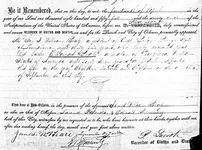
You are correct that Thomas Beale Sr estate wasn't settled until several years after his death in 1830; however, his probate record (attached) indicates TB Sr transferred his estate to Thomas Beale Jr in 1819, TB Jr took control and operated the estate until TB Jrs death in 1823. This puts TB Srs death between these two dates. Although not conclusive, TB with yellow fever falls within these dates so there is reason to think they are the same person.

I also attached death record for TB Sr from 1855 which is an affidavit by TB Srs son, James William Beale age 35 (1820), stating TB Sr died at the age 47 in 1818. Since James William Beale was born about 1820, his statement cannot be a first hand account which seriously questions the accuracy of his statement...he was born two years after his dad's death.

Personally, I believe the probate record to be the better source since 1830 is closer to when TB Sr died and based on first accouts (i.e., his wife Celes Beale) and why I believe neither man could have participated in the hunting/mining operation out west.
 

Attachments

Last edited:
If you look closely, you'll find that there are more than three individuals named Thomas Beale in New Orleans. Notably, one Thomas Beale, who served as the register of wills, died of yellow fever in the 1820s. Additionally, if someone goes missing out west, the law requires them to be absent for a specific number of years before they can be declared legally dead. Check the records of Celest Beale, the wife of Captain Thomas Beale; she had a document signed stating that Captain Thomas Beale died in 1818, but the Beale estate was not settled until seven years later.

However, all of this might be irrelevant, as the entire story about a hunting trip appears to be a cover for something else. Beale had access to New Orleans from St. Louis by steamboat, allowing him to move between both locations quickly and easily. Although the Santa Fe Trail was not open for wagon travel until the 1820s, it was frequently used before that time.

Ultimately, none of these details are of much significance; the key point is that the cipher will be fully decoded and verified in the next few years.

I have been reviewing these items for years. While it's nice to have a backstory and discuss who, what, and where, only the decoded ciphers will provide what is truly needed. I noticed that The Beale Papers have been made into videos on YouTube in the 2025 version.
With regards to the steam boats...you are correct that there were steam boats operating from new orleans to st louis which could have made it easier/faster for TB to travel between the two towns. However, the trip still took 10 to 12 days and you might have to wait up to a week for the next boat becausemost of the steamboas were operating on the lower Mississippi where the water depth was higher. You needed a lower Kiel to operate to st. Louis.

Altogether, you might take week off, maybe two, to travel from the mine to new orleans which still makes it unlikely that TB Jr was part of the mining operation.

He would have had to leave within a week or two after arriving at the mine in 1820 in order for TB Jr to get back to new orleans to be present when his father died in September.

I find it unlikely that someone could have gotten word to him from new orleans to an unknown location within those 2 or 3 weeks.
 
If the TB with yellow fever is indeed TB Sr...one dies from yellow within 7 to 14 days which means TB Jr would have had to already be in NOLA to be present at the time of his father's death and not out west mining gold.
 
Please don't get me wrong...i do believe that TB Jr is the person described in the Beale Treasure Story; he just never went west but rather NOLA.

That doesn't mean the cipher 1 and 3 are made up. They could very well be real and can be solved but they won't lead to a treasure.
 
More thoughts...TB Sr realizes he's dying and wants to tell his son.
If TB Jr is the same TB in the story who stayed the winter in Lynchburg, his son would not be in NOLA so he would have send word somehow...but where?
Lynchburg? Botetourt county, VA? St Louis? The secret mine north of Santa Fe?

If TB Sr sent word anywhere other than the mine, TB Jr would never get word.

To send word out west would take longer than the trip made by TB Jr since it would have been be sent to a location and wait for someone from the party to pick it up.

So the message would almost have to be sent before TB Jr left Lynchburg in order for it to arrive at the camp when TB Jr arrives in the summer of 1820.

It is possible that TB Sr didn't know his son left camp to bury the treasure near Buford's and sent word he was dying out west. The message could have been picked up and waiting for TB Jr when he arrived. So he could have headed immediately to NOLA.

So...could he have got to NOLA to be with his father when he died as suggested by the probate record.
 

Users who are viewing this thread

Back
Top Bottom