Mike, you've given this explanation before (more than once) and it's a logical rationalization. Here are a couple more questions. (By the way, we're talking only about Arizona, not Brazil, Philippines, or elsewhere).
If the Jesuits were so good at accumulating and hiding valuables in southern Arizona, yet all traces from within the brothers' quite capable organization of the alleged caches were lost or were forgotten, then where did all the waybills, documents, stories, descriptions, et al, of the hidden wealth come from? If non-Jesuits remaining in Arizona (Natives, Spanish, church associates) were privy to the secrets, then why wouldn't any of them or their descendants have recovered the loot? If these folks had good information (they likely would have been involved in the capers), it seems to me recoveries would have been made shortly after the expulsion by those in the know when the intel was fresh.
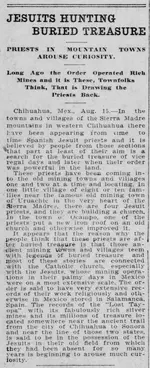
Of course, it's possible recoveries were actually made hundreds of years ago by these remaining people. That said, then what about all the "evidence" that forms the motivation for today's seekers of the caches? That "evidence" - like all "evidence" of hidden treasure - are quite likely outright fabrications or have been corrupted to the point where it's worthless. Rumors, newspaper adventure yarns (ha!), fake documents, and the like may have been presented to gain notoriety (frequently the case due to human nature), but essentially have become campfire stories. The stories may be based on some old truths, yes, but the results of folks' many years of searching seem to speak for themselves. Humans will always be cannon fodder for "authentic treasure maps" and such.
Bottom line. If the alleged caches existed, IMO they were likely recovered either by people in the know in the 18th century or by the Jesuits after their ban was lifted. Or, on the other hand, if the Jesuits' Arizona mining activities were highly exaggerated from the git-go, there may not have been significant caches at all.