What's new

Oxbow

T Witko

Sr. Member
Joined
Jul 22, 2010
Messages
432
Reaction score
727
Golden Thread
0
Location
North Dakota
Primary Interest:
Other
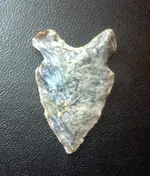
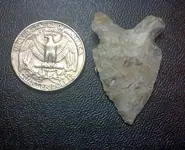
Out this afternoon and this. It's the only Oxbow that I've found and it's never ceases to amaze me that I find pieces like this. This one is very heavily patinated KRF.
 

Attachments

  • 2012-11-01_23-03-14_796-1.webp
    2012-11-01_23-03-14_796-1.webp
    289.4 KB · Views: 158
  • 2012-11-01_23-01-41_249-1.webp
    2012-11-01_23-01-41_249-1.webp
    417 KB · Views: 149
Upvote 0
Congratulations, that's a very nice Oxbow!
 
I do not know much about the Dakotas, but that looks kind of like a transitional paleo point. Is it?? Sweet find. I have never seen one like it.
 
Just a beautiful Oxbow, nice patina on the one side. :thumbsup:
 
i think oxbow is 4000-6000 years BP

correction: the oxbow has a time frame that falls 69% 3000-5000yrs BP
15% is more recent than3000 yrs BP
16% falls between 5000-6000 yrs BP
this info applies to a study in eastern montana
i am guessing that it would be similar for ND

that is a real nice one
 
Last edited:
This point has fascinated me. Internet info. on these points is rather limited. My understanding is, these points aren't as old as many, but rare. I have read on one site that these were heat treated points. I could find no reinforcement for that, but it seems logical to me. By that, I mean the patina on Kelly's find is different than the patina on most KRF pieces that I have seen. I'm wandering if anyone knows for sure about the patina pictured here. Is it from heat treating or did I read a bunch of bull jive?? The one drawback Internet research has, nothing is referenced.
 
I do not know much about the Dakotas, but that looks kind of like a transitional paleo point. Is it?? Sweet find. I have never seen one like it.

I don't know about "paleo transitional" but I've read that they're dated to 3800-5500 years BP.

Steve has found a few of these but this is my first.
 
Last edited:
T Witko said:
I don't know about "paleo transitional" but I've read that they're dated to 3800-5500 years BP.

Ok so archaic. Cool find. Hardly any info could be found on this point. I had never heard of one. You have been bringing it to the table brother!!
 
You lucky dog. I am going Sat and hope to find one myself. (cotton field)
 
I would def call that a hardaway if i found it in my spots, beautiful point!
 
birdpointgriswold said:
I would def call that a hardaway if i found it in my spots, beautiful point!

That was my thought at first glance as well.
 
Cool find T Witko, can't believe the stuff you guys find almost everyday.
 
This point has fascinated me. Internet info. on these points is rather limited. My understanding is, these points aren't as old as many, but rare. I have read on one site that these were heat treated points. I could find no reinforcement for that, but it seems logical to me. By that, I mean the patina on Kelly's find is different than the patina on most KRF pieces that I have seen. I'm wandering if anyone knows for sure about the patina pictured here. Is it from heat treating or did I read a bunch of bull jive?? The one drawback Internet research has, nothing is referenced.

I'm not sure that it's known why patina happens. We commonly find cores and just hunks of flint are patinated as well as artifacts that are and aren't. On some pieces, especially scraper you can see that they've been made from material that made fr wom material that was patinated before the piece was made. We also find pieces like this that became patinated after being made. I read somewhere that during a site excavation near here, half of a patinated spear point was found in one area of the site and later the other half in another area of the site that had none. It was thought that material like this just naturally become patinated by the reaction with other minerals after a long period of time but then you'd think all the material would be. Some is some isn't.
 
super point, it looks to be very old. much older than most of what you find.
 
I'm not sure that it's known why patina happens. We commonly find cores and just hunks of flint are patinated as well as artifacts that are and aren't. On some pieces, especially scraper you can see that they've been made from material that made fr wom material that was patinated before the piece was made. We also find pieces like this that became patinated after being made. I read somewhere that during a site excavation near here, half of a patinated spear point was found in one area of the site and later the other half in another area of the site that had none. It was thought that material like this just naturally become patinated by the reaction with other minerals after a long period of time but then you'd think all the material would be. Some is some isn't.

Heat may also be a factor, as being in or near a campfire.
 
heat usely change the color , makes it prettyer.and makes it flake better.
I never seen heat give flint patina
if it gets to hot it with fire pop the flint
but you never know everthing,and that mite be a great test to do on a nice peace of unpatina kRF
just to see what happens
 
i belive heat would change the color all the way thu,not just on the skin
 
Nice find... It sure does have a heavy patinantion...
 

Users who are viewing this thread

Latest Discussions

Back
Top Bottom