What's new

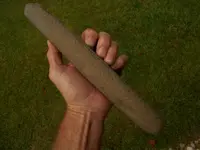
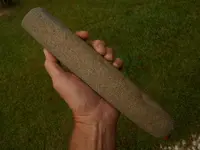
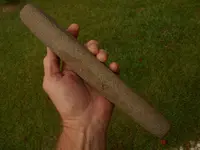
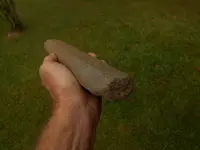
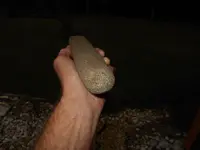
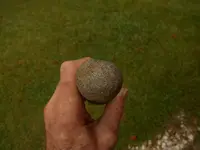
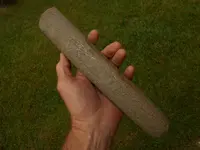
Pestle From Lake Martin--S.W. Coosa County, Alabama

Tdog

Silver Member
Joined
May 30, 2019
Messages
2,864
Reaction score
5,272
Golden Thread
0
Location
East Central Alabama
Primary Interest:
Relic Hunting
I found this piece in 2007. I searched long and hard for it's counterpart but couldn't find it. It's probably buried in the vicinity somewhere unless someone else picked it up. Thanks for lookin'.
 

Attachments
  • DSCN1478.webp
    DSCN1478.webp
    389.6 KB · Views: 121
  • DSCN1479.webp
    DSCN1479.webp
    361.2 KB · Views: 83
  • DSCN1480.webp
    DSCN1480.webp
    386.6 KB · Views: 95
  • DSCN1481.webp
    DSCN1481.webp
    385.8 KB · Views: 96
  • DSCN1483.webp
    DSCN1483.webp
    300.3 KB · Views: 85
  • DSCN1483a.webp
    DSCN1483a.webp
    148.9 KB · Views: 84
  • DSCN1484.webp
    DSCN1484.webp
    254.5 KB · Views: 88
Upvote 0

Thats really cool, I have seen similar pieces refered to as a roller pestle, or rolling pin. I would love to find one myself.
 
Its just a hand worn rock Terry!
 
What an awesome piece to have
 
I wonder if it was like a roller pestle and with that flat spot they could mash things,double duty? Sweet pestle
 
I wonder if it was like a roller pestle and with that flat spot they could mash things,double duty? Sweet pestle

Thanks for replying. It appears that the flat surface is wear from back-and-forth usage and the rounded end worn from rotating and mashing/pounding. The opposite end looks like wear from pounding. Not 100% sure though.
 
Last edited:
Waere you thinking there was a bowl to go with it?
 
Great find!

Can you tell what it is made of?

Do you suppose stone pestles and grinding stones left a lot of stone grit in whatever was being mashed?
 
Can you tell what it is made of?

Do you suppose stone pestles and grinding stones left a lot of stone grit in whatever was being mashed?

Thanks for your interest. I believe it is granite and yes I've always thought that there would be grit left in the food they were processing with these primitive tools.
 
Great find!

Can you tell what it is made of?

Do you suppose stone pestles and grinding stones left a lot of stone grit in whatever was being mashed?

No doubt about it. Many Years ago while volunteering at a local dig with my son, we recovered a molar. It was worn perfectly flat. Just a few years ago they were moving dirt for a new development here in town. The scraper operator exposed to complete skeletons. Literally took the dirt right off them exposing them just about completely. A friend of mine talked to him soon after the incident and he said one of the first things he noticed were their teeth were worn pretty much flat.
 
Tdog, very cool find.

Not sure about your area, but there is a transition area where ancient groups started shifting away from flat-ish metate style stones to larger wooden mortars, bedrock mortars, or stone bowls/mortars. They usually processed corn while it was soft and then dried the mush into flour vs drying the corn and then making flour.
 
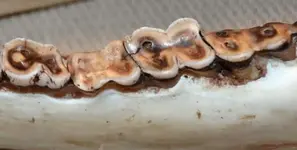
Here is a picture of a the teeth from a very old deer, human teeth can get even more worn and polished by the time they are older. Polished smooth and glassy like an agate or granite countertop.

7526CC80-CB5D-46F6-B841-F6D543759CC8.webp
 
Is there any consensus that these stone tools were sometimes used to smooth-out the insides of bowls as a finishing step before employing wooden pestles?
 
Last edited:
That’s one heck of a nice find!
 
Is there any consensus that these stone tools were sometimes used to smooth-out the insides of bowls as a finishing step before employing wooden pestles?

People still use them in the Caribbean. Depending on the wood, big ones (maybe holding a 5 gallon bucket of stuff or more) are usually hollowed out with an adze, burned, and then worked smooth.

Some places still use stone pestles for really pulverizing stuff, and wood for smashing softer stuff. It depends on what they are making.
 
Great Find! :thumbsup:
Looks like it was used as a pestle and a mono,
which is not unusual.
 
I have always read that Native Americans had very poor teeth due to eating food which had been processed with stone tools. Many lived to be very old, but their teeth were worn down flat.
 

Users who are viewing this thread

Back
Top Bottom