What's new

Stone tool identifical for dummies

johnger1

Jr. Member
Joined
May 14, 2013
Messages
94
Reaction score
13
Golden Thread
0
Primary Interest:
All Treasure Hunting
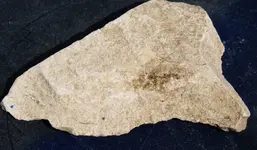
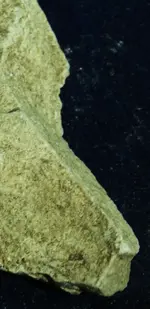
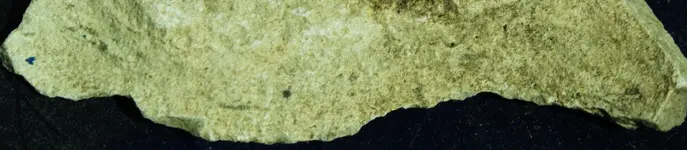
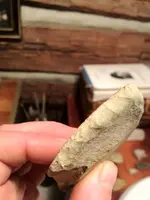
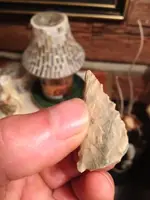
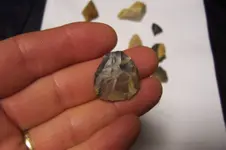
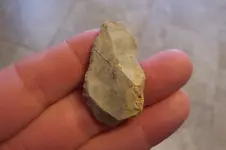
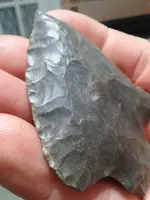
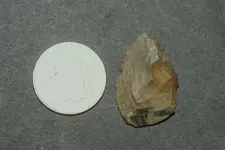
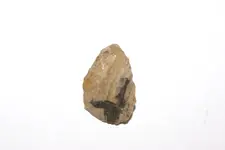
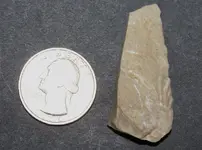
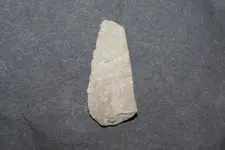
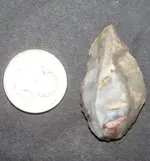
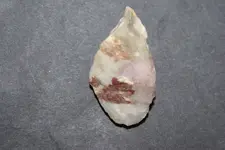
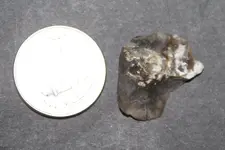
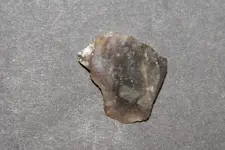
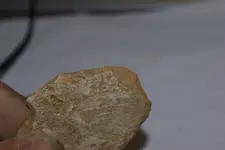
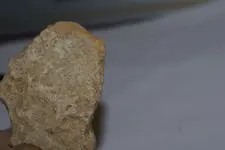
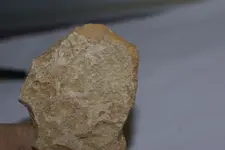
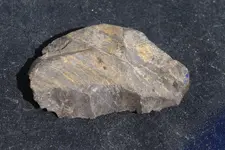
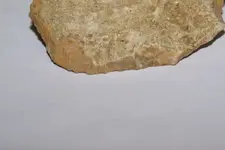
I have a question about secondary flaking. I think I understand what I'm looking at . The first photo shows an example of secondary flaking, I think. The second set I'm not sure. Are there variations of secondary flaking methods and if so how do they differ? I cropped out the sections that I have questions about. Thanks again
DSC09653.webpDSC09664.webpDSC09664A.webpDSC09664B.webpDSC09665.webpDSC09665A.webp
 
Upvote 0
The fist step in making a finished stone tool involves percussion flaking.. simply put... striking one stone with another.
Secondary flaking is a final shaping ..thinning.. and sharpening of the tool done with direct pressure usually done with antler or hardened bone.
It leaves a ripple effect on edges and visible tracks on the surface of the stone.
In short... it's "fine tuning" and evidence that the stone was purposely shaped.
 
Last edited:
Secondary flaking is your fine sharp edge work. I think your first piece is a quarry blank. If so, secondary flaking wouldn't be of the norm. I'll see if I can post a pic of something with notable secondary flaking.

image-43528501.webp

That isn't the best example, I'll try later to find better.
 
That first pic could have used a little more contrast. The rock itself looks like it was shaped through flaking, on the lower section of the rock there's three chips removed that produce that rippled affect.I don't k now how well in came accross on the photo. If it's not , I believe you, I'll keep looking. I'm a hands on kind of guy, looking at all the pictures in the world, isn't the same as seeing it myself. I'd like to see an example,I'll send some of what I've found on my end. I'm going through a box of small edged rocks. The edges are made without secondary flaking,but they're thinner than a razor blade and as sharp, would they be considered finished tools? Or is secondary flaking required to make it a tool. I'm learning new terms, quarry blanks, preforms etc. that seem to describe rocks I've found , which is making alot of this fall into place. Thanks again.
 
Eventually you will find a nice finished artifact and you will realize how noticeable it is.
If you have to ponder over a few possible chips.. and it didn't come from a site that produces other finished stone tools it's probably just random natural chips on a stone.
If its flaked on both sides to produce an edge it's highly probable ..otherwise unifacial pieces that aren't obvious and not from a known site are most likely natural.
 
I here what you're saying. I'm just surface collecting, I find concentrations of of what i think are artifacts, But not sure if its a site or not. I did some reading last night, and this area where I live, has a long documented history of prior inhabitation. The earliest know sites, occured during a transistionary period when the food source was changing from big game to a primarily seafood and gathering of nuts and berries,etc.. Radiocarbon dating indicated 7,000 years as the earliest date. I'm bad, I don't remember if that was 7,000B.C. or 7000 years ago. I'll have to read it again. But, this area continued to be occupied, until the spanairds(spelling)hauled the local inhabitants off the missions, where they learned of christianity, and died from infectious disease. It seemed like a long span of years, I didnt know how tools may have changed, I was interested in learning if there were variations during this time period.
 
Yup.. sounds like archaic to contact.
If I were you I'd look in plowed fields along "old water" or creeks and streams where there are areas that collect gravel.
Any site that was more than a camp on the way to something else was associated with water.. at least every site I've been on has been.
 
I have some with a darker stone you might be able to see more of the flaking. All personal finds by me. You can click on these pics twice and they will enlarge for a closer view. Some of these actually show just work on the edges. Hope this helps.
 

Attachments

  • 100_2744.webp
    100_2744.webp
    127.9 KB · Views: 108
  • 100_3034.webp
    100_3034.webp
    112.6 KB · Views: 96
  • 100_3067.webp
    100_3067.webp
    138.5 KB · Views: 92
  • 100_2552.webp
    100_2552.webp
    190.5 KB · Views: 92
ForumRunner_20130523_222012.webp
Happy hunting
 
Last edited:
I see the difference, in the first photo, the three ridges are from the initial shaping process, but lacks any secondary flaking. So maybe a blank not a finished tool. That makes sense. Thanks
 
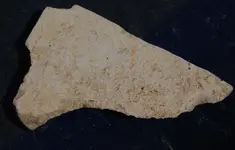
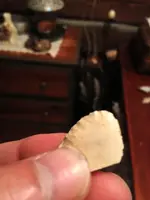
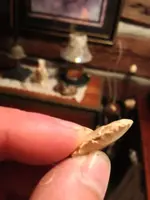
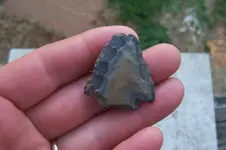
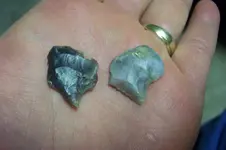
Nice artifacts. I posted some rocks that I found, which are similiar to yours.`Could you point out the differences between the two? I'm not sure I'm seeing the secondary in pics 1,3 & 4. It's subtle, but I think I see it, in the second pic the flaking is more pronounced. Does flaking vary betwen artifacts, or is there some standardized size? Also, is secondary flaking used on all edged artifacts, or only certain ones, and is it material specific? I found some rocks recently that look like the edges have been worked, but they look different than what I've seen so far. Is this a form of secondary flaking, a different method all together, or a random act of nature.Thanks for your help.
DSC00011.webpDSC00013.webp
DSC00016.webpDSC00017.webp
DSC00020.webpDSC00021.webp
DSC00022.webpDSC00023.webp
DSC09776a.webpDSC09775a.webpDSC09774a.webpDSC09772a.webpDSC09770a.webpDSC09778a.webp
 
The fist step in making a finished stone tool involves percussion flaking.. simply put... striking one stone with another.
Secondary flaking is a final shaping ..thinning.. and sharpening of the tool done with direct pressure usually done with antler or hardened bone.
It leaves a ripple effect on edges and visible tracks on the surface of the stone.
In short... it's "fine tuning" and evidence that the stone was purposely shaped.


well said gator
i like your new avatar


those two pieces look like spoke shaves to me
 
Thanks Steve.
 
Thanks for the input.Which two pieces look like spoke shaves?
 

Users who are viewing this thread

Back
Top Bottom