You are using an out of date browser. It may not display this or other websites correctly.
You should upgrade or use an alternative browser.
You should upgrade or use an alternative browser.
Wednesdays Plow-Damaged Finds
- Thread starter Americus
- Start date

ncnurseryman
Hero Member
- Joined
- Jul 28, 2013
- Messages
- 803
- Reaction score
- 443
- Golden Thread
- 0
- Location
- north carolina
- Primary Interest:
- All Treasure Hunting
One for each hour. Sounds and looks good to me.

monsterrack
Silver Member
- Joined
- Apr 15, 2013
- Messages
- 4,429
- Reaction score
- 5,831
- Golden Thread
- 0
- Location
- Southwest Mississippi
- Detector(s) used
- Garrett, and Whites
- Primary Interest:
- All Treasure Hunting
Yea I like those odds, 3 in 3 hrs and they don't look bad for the plow to have hit them. Nice finds

outlawatheart
Hero Member
- Joined
- Jan 19, 2011
- Messages
- 815
- Reaction score
- 874
- Golden Thread
- 0
- Location
- Hamilton County IL.
- Detector(s) used
- White's DFX Spectrum
center one is nice and big! Keepers.

rock
Gold Member
Those look like my finds, lol. Im actually excited when I find them due to not finding many perfect ones. I enjoy all of your post Americus. You getting any rain? Poured for 2 days here.

larson1951
Silver Member
- Joined
- Apr 8, 2009
- Messages
- 4,974
- Reaction score
- 3,894
- Golden Thread
- 0
- Location
- North Dakota
- Detector(s) used
- tesoro
- Primary Interest:
- Other
very nice but how do we ever know if it is plow damage?

quito
Silver Member
- Joined
- Mar 31, 2008
- Messages
- 4,638
- Reaction score
- 4,844
- Golden Thread
- 0
- Location
- south dakota
- Detector(s) used
- good eyes
very nice but how do we ever know if it is plow damage?
Amen. Not saying it can't or don't ever happen, but from my experience of hunting fields that have been in production for about 100 years or more, I can say very few small artifacts show any sign of implement damage. I do see evidence of a disc strike frequently on larger stones in the filed, and they just scratch or gouge them, rarely busting them up. Oftentimes, we can see the rusted iron marks (iron deposits) on stone because the metal from the implement left material behind rather than damaging the stone.
I just brought a few rocks in to thaw out, it be minus 12 yet here. I'll put up some pictures later of some stones that have taken multiple strikes over the years.

GatorBoy
Gold Member
- Joined
- May 28, 2012
- Messages
- 14,812
- Reaction score
- 6,156
- Golden Thread
- 0
- Primary Interest:
- All Treasure Hunting
Amen. Not saying it can't or don't ever happen, but from my experience of hunting fields that have been in production for about 100 years or more, I can say very few small artifacts show any sign of implement damage. I do see evidence of a disc strike frequently on larger stones in the filed, and they just scratch or gouge them, rarely busting them up. Oftentimes, we can see the rusted iron marks (iron deposits) on stone because the metal from the implement left material behind rather than damaging the stone.
I just brought a few rocks in to thaw out, it be minus 12 yet here. I'll put up some pictures later of some stones that have taken multiple strikes over the years.
It might have to do with the fact that the large majority of points and scrapers out your way are so small they wouldn't get caught by the machinery.... simply go through it with the rest of the soil and small Stones.
I would also venture to say the majority of the artifacts you find in your area are less than 1000 years old probably less than 500 years old and have much less patina to be damaged for it to be readily visible
Last edited:
quito
Silver Member
- Joined
- Mar 31, 2008
- Messages
- 4,638
- Reaction score
- 4,844
- Golden Thread
- 0
- Location
- south dakota
- Detector(s) used
- good eyes
Here are some examples of the damage farm machinery most commonly does to the rocks we have around here.
IMHO most of the time, when plowing the stones get pushed out of the way by the large amount of dirt being heaved up ahead of the plow and the few pieces that are actually running though the earth
Now the discs roll more across the surface, and there are many more pieces in contact with the earth and the stones are likely to suffer damage from this operation since they can be compressed between the earth and disc. I'd venture to say just about everyone of the strikes pictured came from a disc judging from the width of the damage.
This guy took several strikes, and only suffered damage to one edge of the hole.
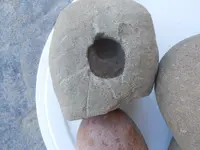
'
The scratches are all the damage this piece took from several strikes.

The brown streaks are rust from the metal left behind from implement strikes.
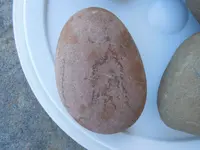
IMHO most of the time, when plowing the stones get pushed out of the way by the large amount of dirt being heaved up ahead of the plow and the few pieces that are actually running though the earth
Now the discs roll more across the surface, and there are many more pieces in contact with the earth and the stones are likely to suffer damage from this operation since they can be compressed between the earth and disc. I'd venture to say just about everyone of the strikes pictured came from a disc judging from the width of the damage.
This guy took several strikes, and only suffered damage to one edge of the hole.
'
The scratches are all the damage this piece took from several strikes.
The brown streaks are rust from the metal left behind from implement strikes.
quito
Silver Member
- Joined
- Mar 31, 2008
- Messages
- 4,638
- Reaction score
- 4,844
- Golden Thread
- 0
- Location
- south dakota
- Detector(s) used
- good eyes
In the interest of a little more understanding of the topic at hand I thought i'd share this.
This is frame from one site I hunt. It is a 20 acre site, where a friend of mine grows vegetables for his roadside market. His particular farming practice is different than most now days in that since he doesn't spray chemicals, he cultivates. This practice leads to far more chances of any artifacts being struck by the machinery since he is regularly weeding, and he has some serious stuff for the doing that job. I'd say he goes over this ground at least a half a dozen times more per year than any other farmer in the area. LOL, in fact when I got him interested in artifacts himself a few years ago, he put on his ripper, and plowed the ground both directions 2 years in a row. I told him to leave it alone and let the dirt we have get washed for a few years before he does it again, 2 dry years haven't helped a lot though yet.
Now, I didn't flip any pieces over, but I don't see one piece with damage that I would readily attribute to any farm implement.
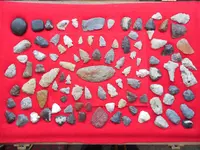
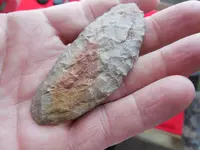
Now, this little 4" knife, is a different story. In front of my friends market, between the hi-way and store he has a small garden plot where he plants a few veg's I'd say some are for snacking on, and a few of the more popular items that may sell out and save him a trip back to the field while he is open. This portion is to small for his normal tillage, so this plot gets the old walk behind roto-tiller treatment, and has got it since the early 70's. Well I found this on the surface a few years back, and it only has one nick out of the edge. Now you would think with all that tilling there would be nothing left of this piece wouldn't you?
This is frame from one site I hunt. It is a 20 acre site, where a friend of mine grows vegetables for his roadside market. His particular farming practice is different than most now days in that since he doesn't spray chemicals, he cultivates. This practice leads to far more chances of any artifacts being struck by the machinery since he is regularly weeding, and he has some serious stuff for the doing that job. I'd say he goes over this ground at least a half a dozen times more per year than any other farmer in the area. LOL, in fact when I got him interested in artifacts himself a few years ago, he put on his ripper, and plowed the ground both directions 2 years in a row. I told him to leave it alone and let the dirt we have get washed for a few years before he does it again, 2 dry years haven't helped a lot though yet.
Now, I didn't flip any pieces over, but I don't see one piece with damage that I would readily attribute to any farm implement.
Now, this little 4" knife, is a different story. In front of my friends market, between the hi-way and store he has a small garden plot where he plants a few veg's I'd say some are for snacking on, and a few of the more popular items that may sell out and save him a trip back to the field while he is open. This portion is to small for his normal tillage, so this plot gets the old walk behind roto-tiller treatment, and has got it since the early 70's. Well I found this on the surface a few years back, and it only has one nick out of the edge. Now you would think with all that tilling there would be nothing left of this piece wouldn't you?
quito
Silver Member
- Joined
- Mar 31, 2008
- Messages
- 4,638
- Reaction score
- 4,844
- Golden Thread
- 0
- Location
- south dakota
- Detector(s) used
- good eyes
Ooops, I guess the black stone upper left corner has been struck. Dang!!
rock
Gold Member
I do believe the soil would make a huge difference as to how the disc and plow work against the stones and artifacts. I know the soil here is hard as a rock in the summer and with no rain in the winter also. I would venture to guess if the plow or disc was to crack the soil while in use it could very well have the same effect on a thin blade with no cortex on it. Its just guessing though and makes sense to me. If there is a thin rock in concrete and the concrete cracks the stone will crack with it. If the soil is a softer type I would then guess the rocks will move with ease.

bci101tractors
Hero Member
Those are some great finds Americus...congrats.
Love those scrapers.
Love those scrapers.
quito
Silver Member
- Joined
- Mar 31, 2008
- Messages
- 4,638
- Reaction score
- 4,844
- Golden Thread
- 0
- Location
- south dakota
- Detector(s) used
- good eyes
I do believe the soil would make a huge difference as to how the disc and plow work against the stones and artifacts. I know the soil here is hard as a rock in the summer and with no rain in the winter also. I would venture to guess if the plow or disc was to crack the soil while in use it could very well have the same effect on a thin blade with no cortex on it. Its just guessing though and makes sense to me. If there is a thin rock in concrete and the concrete cracks the stone will crack with it. If the soil is a softer type I would then guess the rocks will move with ease.
I get ya rock, soil does make a difference. I'm just gonna say that if the soil is as hard as a rock or concrete, you are not going to get an implement pulled behind a tractor to penetrate it. I just showed the marks they will leave. So, how hard does the soil really get?.... Keep in mind, I'm a concrete contractor in farm country, that has dug holes in alfalfa fields, i know what hard things are.
GatorBoy
Gold Member
- Joined
- May 28, 2012
- Messages
- 14,812
- Reaction score
- 6,156
- Golden Thread
- 0
- Primary Interest:
- All Treasure Hunting
Not that I want to get into this but you showed the marks left on sedimentary rock... that type of stone will react very differently to an impact.
You do know that right?
Farm machinery breaks points and tools it's no mystery.
Marks that look like rust is also commonly found on Flint artifacts that are nowhere near farm machinery
You do know that right?
Farm machinery breaks points and tools it's no mystery.
Marks that look like rust is also commonly found on Flint artifacts that are nowhere near farm machinery
quito
Silver Member
- Joined
- Mar 31, 2008
- Messages
- 4,638
- Reaction score
- 4,844
- Golden Thread
- 0
- Location
- south dakota
- Detector(s) used
- good eyes
Not that I want to get into this but you showed the marks left on sedimentary rock... that type of stone will react very differently to an impact."
You do know that right?
Farm machinery breaks points and tools it's no mystery.
Marks that look like rust is also commonly found on Flint artifacts that are nowhere near farm machinery
If you didn't want to chime in, you would have stayed out, you're not gonna fool me.
Yep, softer stone will react differently. That's part of the reason I showed more than one type of stone. The soft stone had material came off with the strike, the hard stone took on some metal.
I came right out and said it happens, implements do cause damage. Just not as often as some people think.
Yes, the Iron oxides in the soil will leave similar stains. But I bet they don't regularly appear in thin lines where they aren't getting stuck by tillage.
GatorBoy
Gold Member
- Joined
- May 28, 2012
- Messages
- 14,812
- Reaction score
- 6,156
- Golden Thread
- 0
- Primary Interest:
- All Treasure Hunting
Being softer isn't really what makes a difference.. Flint being cryptocrystalline Quartzsite transfers impact energy in a completely different way.
And like has been mentioned before when there is abundant patina on a piece it's very easy to know if it has been broken recently or in the distant past
And like has been mentioned before when there is abundant patina on a piece it's very easy to know if it has been broken recently or in the distant past
- #20
Thread Owner
Those look like my finds, lol. Im actually excited when I find them due to not finding many perfect ones. I enjoy all of your post Americus. You getting any rain? Poured for 2 days here.
I had 3.2 inches in my rain guage this morning.




Featured Treasure Finds
Featured Treasure Finds
Similar threads

- Replies
- 1
- Views
- 387

- Replies
- 2
- Views
- 583


- Replies
- 5
- Views
- 646
Users who are viewing this thread
Total: 1 (members: 0, guests: 1)