Re: *** THE CLUE
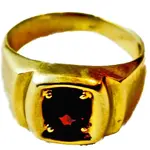
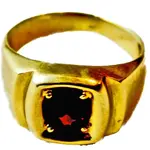
the lure of these stories, is based on human psychology: The mind wants SO HARD to believe they're true, "lest you be left out". So we tend to simply believe it, because it's in print. After 35 yrs. in this hobby, I've seen firsthand how these things evolve: Even in my short time, here's an example of how such things start: True story: A guy is working a sidewalk demolition site, in an old-town district. He finds a V-nickel, barber, etc.... And he also finds an old owl-shaped amulet, with some sort of jewels for the eyes. He shows the construction workers (as a courtesy, since they'd given him permission work around them). As he shows them the owl-charm thing, he muses to them "it might be gold, and if so, then the jewels in they eyes might be precious stones perhaps, etc..".
That night, my friend got a closer look at the owl charm thing, and discovered that it was not gold, but was in fact, pot metal. And the red jewel things were nothing but colored glass. It was just period costume jewelry.
The next day, my friend was back out working this on-going project, when he spotted a tractor driver eyeing him intently. This was a worker who had not been there the previous day. After awhile, the worker's curiosity got the better of him, so he came to talk to my friend. He told my friend, that a guy had been here the previous day, finding scores of old coins, and a solid gold pendant thing! At first, my friend was caught off gaurd, when he heard that something gold had been found, thinking that perhaps someone else had come by later or something? As the two men talked, the tractor driver added that the gold pendant thing was "shaped like an owl, and had diamonds or something in the eye". At that moment, my friend realized that it was himself that the worker was talking about, and no, the object was junk, and not gold, etc... He tried to correct the worker, that the coins were only a few, and not "handfuls", and no, the owl thing was costume jewelry, and not gold. But the worker could not be dissuaded! He was confident that my friend was mistaken. How did he know? Because at the water cooler discussion that morning, his fellow workers WHO WERE EYE WITNESSES, told him so. And how can you argue with employees who were right there to see it unfold?
You see how the human mind wants so hard to believe? Now, take this psychology, and apply it to all the treasure stories you read in those old legend magazines. Ask yourself, for each and every clue: "how do they know?" Even stuff from period newspapers is subject to however a reporter hears and interprets things. And his "eyewitnesses" ....... who's to say they didn't pocket things, and simply tell their boss "gee boss, the bandit got away?" Or who's to it wasn't all an inside insurance-racket, and no cash register really left the store to begin with? There's oodles of other explanations, but the human mind simply can't believe them, "lest we be left out".
Thus, whenever onlookers come spin tales of sure-fire treasures off in some lake or cave or whatever, I sometimes take them with a grain of salt, unless they are first person accounts. If it's the "so & so, told so & so, who told so & so, who heard if first hand from his uncle bob, that so & so buried a jar of coins at such & place", I usually save my time