Lanny in AB
Gold Member
Tips and little stories for anyone that wants to learn a bit more about chasing the gold. Whether you're a rookie or a Sourdough (a Pro), you might find something to read. My main thread, http://www.treasurenet.com/forums/metal-detecting-gold/69-bedrock-gold-mysteries.html on the metal detecting for gold page has been up for many years, and it has some tips too along with many, many stories of me out chasing the gold, but it takes a long time to wade through all of the almost 80 pages now.
So, I thought I'd start a thread over here dedicated to more of the tips and techniques on how to find gold, and I may transfer some tips from my older thread over to here as well.
Essential gold fact.
(This fact is one that's often ignored, if not undervalued or forgotten in the rush to find the gold.)
Gold fact: Gold is heavy.
Rookie prospector fact: Most rookies forget this.
Prospecting reality: many "seasoned" prospectors forget this.
Prospecting mantra: never forget that gold is heavy.
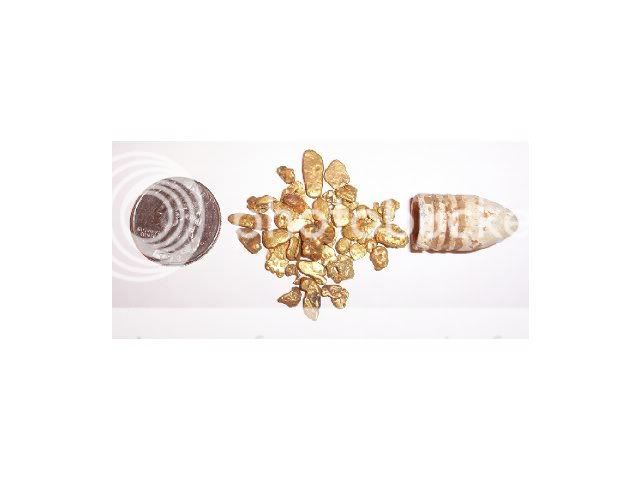
(Yes, lead is heavy too, but gold is nearly twice as heavy as lead (19320 kg/cu.m VS 11340 kg/cu.m).
For example, if you want to look for gold in a stream, don't start digging in a sandbar. Don't start digging in clay or mud. While it's true that gold will stick to clay, usually if you dig a bunch of clay, you'll get a lot of clay in your pan. . . .
Look at the stream and see where the bigger stuff is collecting.
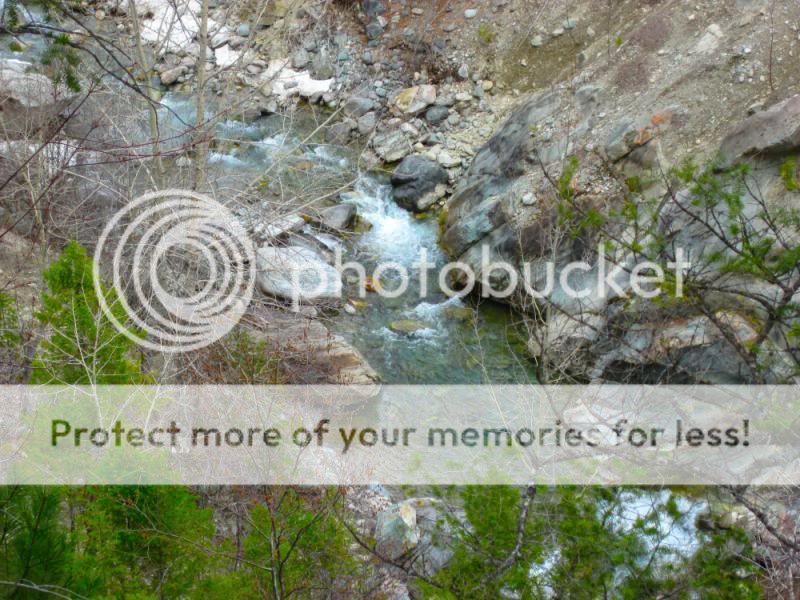
If you're in an area where there's flour gold (glaciated gold that's been hammered and ground to a powder consistency), look for gravel bars where the rocks are fist-sized and larger. Why? Specific gravity rules specify that if the stream was traveling with enough velocity to carry rocks fist-sized and larger, flour gold was also traveling with them (if there's gold in the stream). Remember? Gold is heavy, so it takes force from water velocity to move it during a flood or during high water. (This also applies to bench deposits and old channels.)
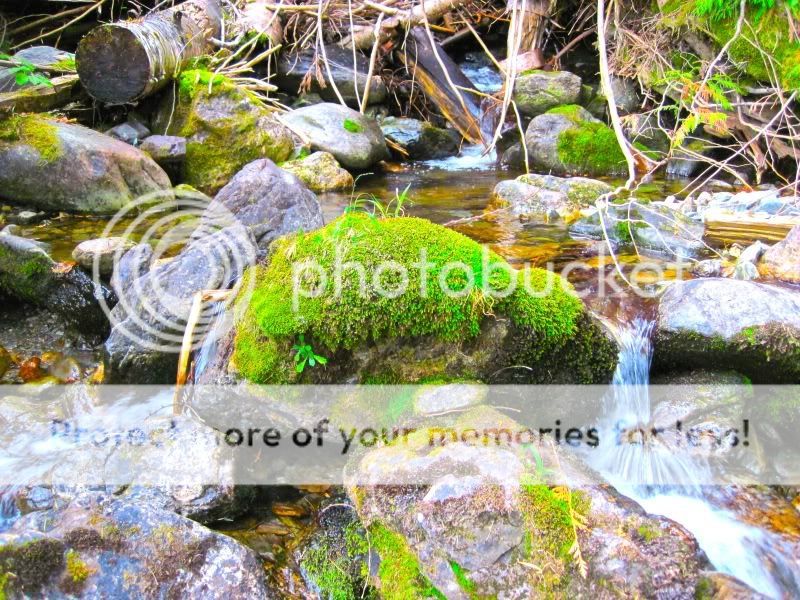
If you're in an area where there's flake and picker gold (or maybe even nuggets), look for a place in the stream where rocks the size of couch cushions or big round watermelons or trashcans were moving during high water. Then, get a vantage point where you can look downstream to see if there's any pattern to their disposition. (I'm referring where the stream is fairly shallow to bedrock or hardpan as the bigger rocks won't disappear as they sink themselves with the stratifying action of the stream. Big, wide, slow moving streams that are deep to bedrock sometimes won't follow the same rules.) Look downstream and if you can see the big rocks lined out (running in a consecutive line downstream from each other) in a linear pattern, each following the others downstream, I'd get in those rocks and start digging. Why? Gold is heavy. Just think about the energy involved in the stream velocity that moved those rocks: pickers and flakes and maybe nuggets were running with that big stuff. Dig, dig, dig. Test, test, test.
Flashback time: When I was working with a large placer operation and they'd hit large boulders (the size of your couch at least, not the cushions), and we were working ground where nuggets were common, everyone would get excited about the possibilities. (I say possibilities because sometimes Mother Nature plays tricks and only drops the big boulders because she shifted the gold run off somewhere else.) So, when those big boulders were moved out of the way, everyone would get down in the pit after the machines were shut down for the day to start panning. (I'd often be panning the material as we went down as well to keep the feedback going to the excavator operator to let him know what size of gold, or how much gold was showing in the pan at the various levels, or in the varying layers of materials as they changed from level to level.)
On one unforgettable day, the gold run was so heavy after the big rocks were moved that we walked along the face of the wall where it met the bedrock (from about two feet above and down to the bedrock that is), and we were able to see the nuggets packed in the gravel and then flick them out of the wall into a pan!
Now I know that some of you are going to think that I was smoking cheap crack, and that there's no way anything like that could ever be possible, but I was there and it happened anyway. Moreover, once you've seen pay with that much gold in it, and once you've experienced a sight like that, you can never forget it either. There was so much gold in the pay layer that because the boss was gone to town for supplies, the sluice crew messed up and fed the sluice at the wrong rate (they fed it as if they were running normal material). The boss arrived back in camp just as the run ended and the crew was just shutting down the wash-plant. To his horror when the water stopped flowing, there were nuggets all the way from the header boxes right to the end of the last riffle in both sluices, and this was a big wash-plant!
So, as you undoubtedly remember (by now in this post) that gold is heavy, what do you think was happening while the nuggets were being deposited all the way to the last riffle in the sluices?
That's right, the nuggets were going over the end of the sluice and heading down into the settling ponds too. What a fiasco! I'll not bore you with the colorful adjectives the boss launched at the sluice crew.
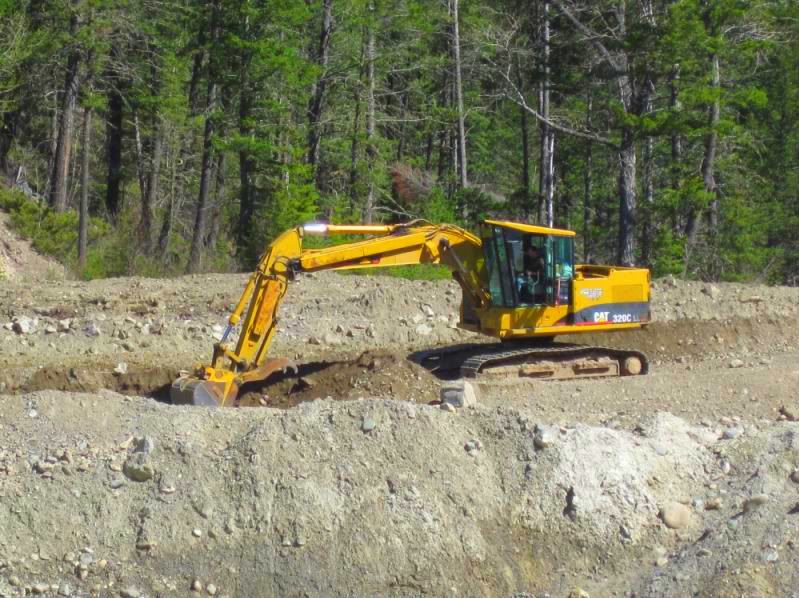
But, what an unimaginable sight regardless. Nuggets from the header boxes all the way to the last riffle!! I had my video camera with me and wanted so badly to shoot video of the sluices; moreover, I had my regular camera with me and wanted to shoot some stills as well, but the investor wouldn't let me do it. He was quite an uptight fellow, to say the least.
Some other miners were working their way down the mountain along our road on their way to cross the river with their equipment, so they could get started on running dirt at their claim. They stopped by to see how things were going. Their jaws hit the ground, hard. They'd never seen the like, and I certainly never have since. Pounds and pounds of beautiful nuggets, with pounds and pounds of galena in all different sizes left to be separated from the gold. (What a pain that was as you can't remove galena with magnets, so it's hard to speed up the cleanup process.)
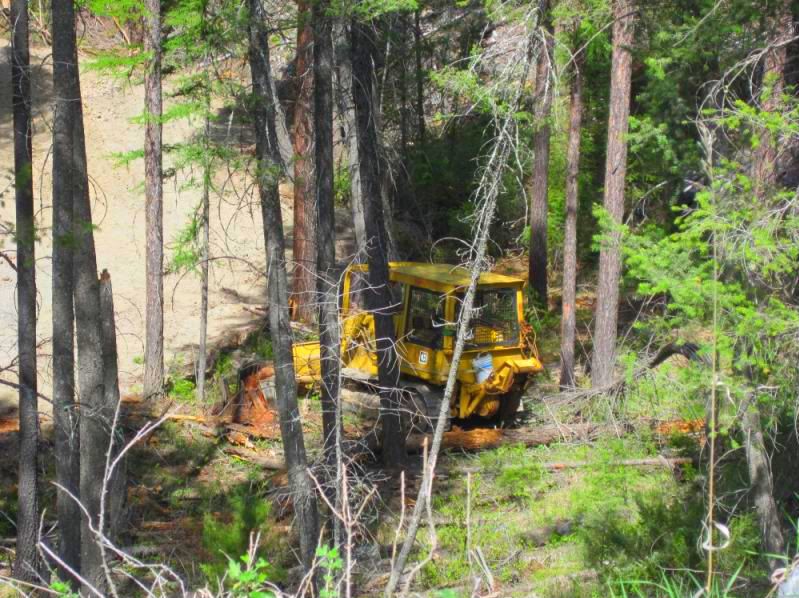
So, when you're looking for gold, think heavy. Try to think heavy thoughts because gold certainly thinks that way. Moreover, if you're working a stream where it's shallow to bedrock, always, always check the bedrock very carefully. Why? As gold is heavy, and as the stream materials are constantly agitated by the water, the gold will continue to drop through the liquified, moving materials of the stream to eventually come to rest. Why does it stop? It hits something that won't move or give way, and in the case of bedrock, it meets all of the immovable object criteria.
While dredging, I've had to pry enough nuggets from cracks and crevices to know how well fractured or rough bedrock works when it comes to stopping gold.
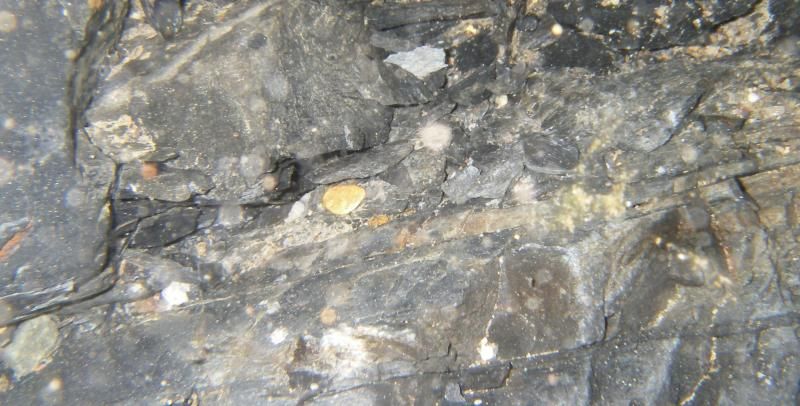
(Note: I shot this picture with an underwater camera (the glacial melt water is crystal clear and bone-chilling cold). It's a nugget that's sitting on the bedrock, and the water is moving along at a really good clip. I'd just finished moving and then carefully sucking all of the surrounding material away from the nugget on the bedrock with the dredge nozzle kept far enough away to only move the lighter material. The natural velocity of the water was not a factor when it came to the specific gravity of that chunk of gold: that nugget would not move after it was uncovered! It sat right there. If you look around, you'll see other gold resting in the stream run as well.)
Fun fact: while dredging, I've disturbed gold on the bedrock, but because gold is so heavy, the velocity of the stream drags (and I do mean drags) it along the bedrock until it reaches a crevice, and the gold disappears right quick I can tell you! If it's a good sized nugget, once you uncover it, that sassy chunk of gold will sit there in the water right tight on the bedrock waiting for you to make a move. That's how well gold can resist the velocity of the water. That's why some writers say that gold is "lazy". It's so sluggish because due to its specific gravity that it takes the shortest route between two points. So, if you're in an area with coarse gold, always remember this weighty fact as you're plotting where to test your stream materials. In your head, draw some imaginary lines (straight lines) from point A to point B.
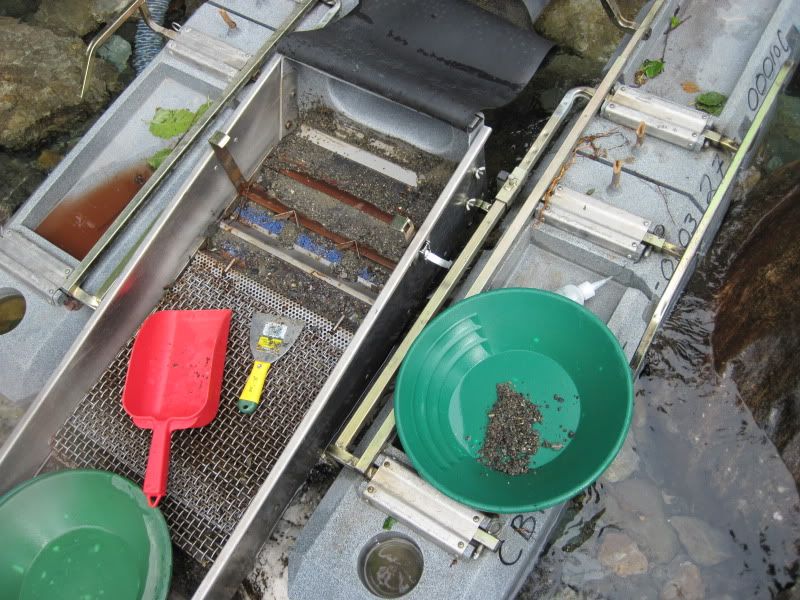
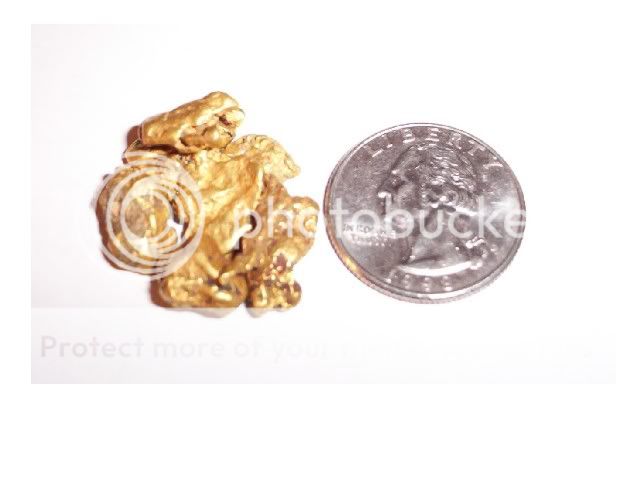
Go to bed tonight reviewing the fact that gold is heavy: almost twenty times as heavy as the water that's transporting it, and almost ten times heavier than the other materials the stream's water is moving along with the gold. Knowing this may just have you rethinking things the next time you're out working a stream where it's shallow to bedrock (or other stream deposits as well).
All the best,
Lanny
http://www.treasurenet.com/forums/metal-detecting-gold/69-bedrock-gold-mysteries.html
By the way, it's far too cold here right now to chase the gold. So, since I'm snowbound, I'll kick out a few posts from time to time, and at other times I may get a chance to post a few more as well.

So, I thought I'd start a thread over here dedicated to more of the tips and techniques on how to find gold, and I may transfer some tips from my older thread over to here as well.
Essential gold fact.
(This fact is one that's often ignored, if not undervalued or forgotten in the rush to find the gold.)
Gold fact: Gold is heavy.
Rookie prospector fact: Most rookies forget this.
Prospecting reality: many "seasoned" prospectors forget this.
Prospecting mantra: never forget that gold is heavy.

(Yes, lead is heavy too, but gold is nearly twice as heavy as lead (19320 kg/cu.m VS 11340 kg/cu.m).
For example, if you want to look for gold in a stream, don't start digging in a sandbar. Don't start digging in clay or mud. While it's true that gold will stick to clay, usually if you dig a bunch of clay, you'll get a lot of clay in your pan. . . .
Look at the stream and see where the bigger stuff is collecting.

If you're in an area where there's flour gold (glaciated gold that's been hammered and ground to a powder consistency), look for gravel bars where the rocks are fist-sized and larger. Why? Specific gravity rules specify that if the stream was traveling with enough velocity to carry rocks fist-sized and larger, flour gold was also traveling with them (if there's gold in the stream). Remember? Gold is heavy, so it takes force from water velocity to move it during a flood or during high water. (This also applies to bench deposits and old channels.)
If you're in an area where there's flake and picker gold (or maybe even nuggets), look for a place in the stream where rocks the size of couch cushions or big round watermelons or trashcans were moving during high water. Then, get a vantage point where you can look downstream to see if there's any pattern to their disposition. (I'm referring where the stream is fairly shallow to bedrock or hardpan as the bigger rocks won't disappear as they sink themselves with the stratifying action of the stream. Big, wide, slow moving streams that are deep to bedrock sometimes won't follow the same rules.) Look downstream and if you can see the big rocks lined out (running in a consecutive line downstream from each other) in a linear pattern, each following the others downstream, I'd get in those rocks and start digging. Why? Gold is heavy. Just think about the energy involved in the stream velocity that moved those rocks: pickers and flakes and maybe nuggets were running with that big stuff. Dig, dig, dig. Test, test, test.

Flashback time: When I was working with a large placer operation and they'd hit large boulders (the size of your couch at least, not the cushions), and we were working ground where nuggets were common, everyone would get excited about the possibilities. (I say possibilities because sometimes Mother Nature plays tricks and only drops the big boulders because she shifted the gold run off somewhere else.) So, when those big boulders were moved out of the way, everyone would get down in the pit after the machines were shut down for the day to start panning. (I'd often be panning the material as we went down as well to keep the feedback going to the excavator operator to let him know what size of gold, or how much gold was showing in the pan at the various levels, or in the varying layers of materials as they changed from level to level.)
On one unforgettable day, the gold run was so heavy after the big rocks were moved that we walked along the face of the wall where it met the bedrock (from about two feet above and down to the bedrock that is), and we were able to see the nuggets packed in the gravel and then flick them out of the wall into a pan!
Now I know that some of you are going to think that I was smoking cheap crack, and that there's no way anything like that could ever be possible, but I was there and it happened anyway. Moreover, once you've seen pay with that much gold in it, and once you've experienced a sight like that, you can never forget it either. There was so much gold in the pay layer that because the boss was gone to town for supplies, the sluice crew messed up and fed the sluice at the wrong rate (they fed it as if they were running normal material). The boss arrived back in camp just as the run ended and the crew was just shutting down the wash-plant. To his horror when the water stopped flowing, there were nuggets all the way from the header boxes right to the end of the last riffle in both sluices, and this was a big wash-plant!
So, as you undoubtedly remember (by now in this post) that gold is heavy, what do you think was happening while the nuggets were being deposited all the way to the last riffle in the sluices?
That's right, the nuggets were going over the end of the sluice and heading down into the settling ponds too. What a fiasco! I'll not bore you with the colorful adjectives the boss launched at the sluice crew.

But, what an unimaginable sight regardless. Nuggets from the header boxes all the way to the last riffle!! I had my video camera with me and wanted so badly to shoot video of the sluices; moreover, I had my regular camera with me and wanted to shoot some stills as well, but the investor wouldn't let me do it. He was quite an uptight fellow, to say the least.
Some other miners were working their way down the mountain along our road on their way to cross the river with their equipment, so they could get started on running dirt at their claim. They stopped by to see how things were going. Their jaws hit the ground, hard. They'd never seen the like, and I certainly never have since. Pounds and pounds of beautiful nuggets, with pounds and pounds of galena in all different sizes left to be separated from the gold. (What a pain that was as you can't remove galena with magnets, so it's hard to speed up the cleanup process.)

So, when you're looking for gold, think heavy. Try to think heavy thoughts because gold certainly thinks that way. Moreover, if you're working a stream where it's shallow to bedrock, always, always check the bedrock very carefully. Why? As gold is heavy, and as the stream materials are constantly agitated by the water, the gold will continue to drop through the liquified, moving materials of the stream to eventually come to rest. Why does it stop? It hits something that won't move or give way, and in the case of bedrock, it meets all of the immovable object criteria.
While dredging, I've had to pry enough nuggets from cracks and crevices to know how well fractured or rough bedrock works when it comes to stopping gold.

(Note: I shot this picture with an underwater camera (the glacial melt water is crystal clear and bone-chilling cold). It's a nugget that's sitting on the bedrock, and the water is moving along at a really good clip. I'd just finished moving and then carefully sucking all of the surrounding material away from the nugget on the bedrock with the dredge nozzle kept far enough away to only move the lighter material. The natural velocity of the water was not a factor when it came to the specific gravity of that chunk of gold: that nugget would not move after it was uncovered! It sat right there. If you look around, you'll see other gold resting in the stream run as well.)
Fun fact: while dredging, I've disturbed gold on the bedrock, but because gold is so heavy, the velocity of the stream drags (and I do mean drags) it along the bedrock until it reaches a crevice, and the gold disappears right quick I can tell you! If it's a good sized nugget, once you uncover it, that sassy chunk of gold will sit there in the water right tight on the bedrock waiting for you to make a move. That's how well gold can resist the velocity of the water. That's why some writers say that gold is "lazy". It's so sluggish because due to its specific gravity that it takes the shortest route between two points. So, if you're in an area with coarse gold, always remember this weighty fact as you're plotting where to test your stream materials. In your head, draw some imaginary lines (straight lines) from point A to point B.


Go to bed tonight reviewing the fact that gold is heavy: almost twenty times as heavy as the water that's transporting it, and almost ten times heavier than the other materials the stream's water is moving along with the gold. Knowing this may just have you rethinking things the next time you're out working a stream where it's shallow to bedrock (or other stream deposits as well).
All the best,
Lanny
http://www.treasurenet.com/forums/metal-detecting-gold/69-bedrock-gold-mysteries.html
By the way, it's far too cold here right now to chase the gold. So, since I'm snowbound, I'll kick out a few posts from time to time, and at other times I may get a chance to post a few more as well.

Last edited:
Upvote
0