What's new

Mi-Wok (CA) Indians

TerryC

Gold Member
Joined
Jun 26, 2008
Messages
7,855
Reaction score
11,225
Golden Thread
0
Location
Yarnell, AZ
Detector(s) used
Ace 250 (2), Ace 300, Gold Bug 2, Tesoro Cortes, Garrett Sea Hunter, Whites TDI SL SE, Fisher Impulse 8, Minelab Monster 1000, Minelab CTX3030, Falcon MD20, Garrett Pro-pointer, Calvin Bunker digger.
Primary Interest:
Metal Detecting
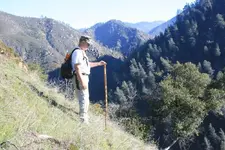
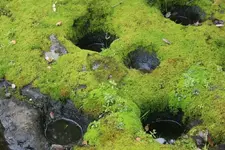
Very near the Collierville Power site, on Clark Flat, was an old Mi-Wok village. It must have been very large. Judy and I found at least 44 of these "grain grinding" holes in the bedrock, in a small area, at the Stanislaus River. There may be more. The site is less than a mile from the house.... straight down the mountain... as evidenced by the second pic, of me, almost to the site. We will be exploring more. TTC
 

Attachments

  • IMG_1235.webp
    IMG_1235.webp
    163.3 KB · Views: 495
  • IMG_0696.webp
    IMG_0696.webp
    138.4 KB · Views: 487
Thanks for sharing, I had heard about one place called (Grinding Rock State Park) is that in your area?
Also Beautiful place for exploring. :thumbsup:

Fossis...................
 
Looks like a cool place, hope you find something.
 
fossis said:
Thanks for sharing, I had heard about one place called (Grinding Rock State Park) is that in your area?
Also Beautiful place for exploring. :thumbsup:

Fossis...................

This is not the state park you talk of. I've not been there. This site probably included the area now taken up by the power plant and the raceway. TTC

 
cup-marked stones!

A great way to eliminate unhealthy energies. usually found in clusters.

I bet there's a stream underneath or nearby that leads to a river.
 
plehbah said:
vibes said:
cup-marked stones!

A great way to eliminate unhealthy energies. usually found in clusters.

I bet there's a stream underneath or nearby that leads to a river.

Yes!

Ignore the science and twirl!

Wheeeeee!

Consequences be damned!

wow. Why is it that so many of you on this site are so f'in nasty to me? Again, wow. If you desire the science all you had to say was please.
 
Hi, Terry, Interesting looking holes in the rock, there.They must have had a rough job getting those holes
in that rock. I would like to see how they did it. Nice looking area around there. Probably a good variety
of wildlife, too, I'll bet.
Thanks for sharing
Ray
 
Actually I think that those 'grain grinding' holes are a natural occuring phenomenon. When washed down by water a harder stone would settle into a natural depression and the continued grinding motion would form the hole. As one stone wore out another would fall in and replace it, and the process would continue.
 
karenray08 said:
Hi, Terry, Interesting looking holes in the rock, there.They must have had a rough job getting those holes
in that rock. I would like to see how they did it. Nice looking area around there. Probably a good variety
of wildlife, too, I'll bet.
Thanks for sharing
Ray

Those holes were worn into the rock for the purpose of grinding foods such as acorns and grains for the tribes consumpsion. A grinding stone was pounded onto the foodstuff. We found 44 but I'm sure there are more. This village may have occupied this site for hundreds of years. TTC

 
Thank-you for the info I thought that was it but, I wasn't sure! :icon_sunny:
 
TerryC wrote: "Those holes were worn into the rock for the purpose of grinding foods such as acorns and grains for the tribes consumpsion. A grinding stone was pounded onto the foodstuff. We found 44 but I'm sure there are more. This village may have occupied this site for hundreds of years. TTC"

We have those same holes, the pipes may extend five or six feet and sometimes burrow their way through a boulder. The area you speak of, exists below a dam?
 
Likely Guy said:
TerryC wrote: "Those holes were worn into the rock for the purpose of grinding foods such as acorns and grains for the tribes consumpsion. A grinding stone was pounded onto the foodstuff. We found 44 but I'm sure there are more. This village may have occupied this site for hundreds of years. TTC"

We have those same holes, the pipes may extend five or six feet and sometimes burrow their way through a boulder. The area you speak of, exists below a dam?

These are not pipes... or "holes". Most are less than 8" deep. If a bunch are found together, a large shallow "bowl" appears with them, also formed into the rock. The village is (was) located on a flat plateau above the river. No dams or evidence of contemporary blasting to form them. The "holes" are well documented in publications of the area indians. TTC

 
TerryC said:
Likely Guy said:
TerryC wrote: "Those holes were worn into the rock for the purpose of grinding foods such as acorns and grains for the tribes consumpsion. A grinding stone was pounded onto the foodstuff. We found 44 but I'm sure there are more. This village may have occupied this site for hundreds of years. TTC"

We have those same holes, the pipes may extend five or six feet and sometimes burrow their way through a boulder. The area you speak of, exists below a dam?

These are not pipes... or "holes". Most are less than 8" deep. If a bunch are found together, a large shallow "bowl" appears with them, also formed into the rock. The village is (was) located on a flat plateau above the river. No dams or evidence of contemporary blasting to form them. The "holes" are well documented in publications of the area indians. TTC

I'd be most interested to have a 'link' to that info. When I can get there (because of snow), I'd like to post some photos of ours. Like you said "Most are less than 8" deep. If a bunch are found together, a large shallow "bowl" appears with them, also formed into the rock." It all sounds/seems to be the same.

All the best to you.
 
Likely Guy said:
TerryC said:

Likely Guy said:
TerryC wrote: "Those holes were worn into the rock for the purpose of grinding foods such as acorns and grains for the tribes consumpsion. A grinding stone was pounded onto the foodstuff. We found 44 but I'm sure there are more. This village may have occupied this site for hundreds of years. TTC"

We have those same holes, the pipes may extend five or six feet and sometimes burrow their way through a boulder. The area you speak of, exists below a dam?

These are not pipes... or "holes". Most are less than 8" deep. If a bunch are found together, a large shallow "bowl" appears with them, also formed into the rock. The village is (was) located on a flat plateau above the river. No dams or evidence of contemporary blasting to form them. The "holes" are well documented in publications of the area indians. TTC

I'd be most interested to have a 'link' to that info. When I can get there (because of snow), I'd like to post some photos of ours. Like you said "Most are less than 8" deep. If a bunch are found together, a large shallow "bowl" appears with them, also formed into the rock." It all sounds/seems to be the same.

All the best to you.

Hi Guy,
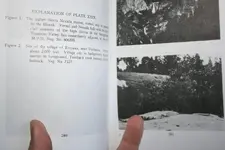
The first pic shows a publication (I have) about the indians, first written in 1922. The second pic describes the site of an indian village, including "mortar" built into the rock, like the ones here. Google up MIWOK, MI-WUK, and other spellings for an abundance of info. Thanks... TTC
 

Attachments

  • IMG_1371.webp
    IMG_1371.webp
    79.7 KB · Views: 337
  • IMG_1373.webp
    IMG_1373.webp
    48.4 KB · Views: 347
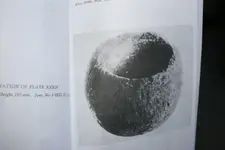
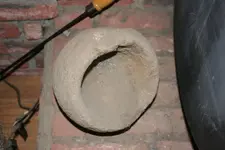
Here's a pic, from the above publication, showing a portable mortar. The second pic is of a mortar Judy's dad found on the property about 50 years ago. Virtually identical! Judy THOUGHT the item was from the indians... the pic confirmed it! TTC
 

Attachments

  • IMG_1375.webp
    IMG_1375.webp
    29.3 KB · Views: 351
  • IMG_1374.webp
    IMG_1374.webp
    42.8 KB · Views: 344
Actually Terry, the one her dad found was the first ashtray I made in pottery class. I was so ashamed of the final product I tossed it out on that ol' piece of property thinking it would never be found.............................. ;D
 

Users who are viewing this thread

Back
Top Bottom