Crow
Silver Member
- Joined
- Jan 28, 2005
- Messages
- 4,771
- Reaction score
- 13,628
- Golden Thread
- 0
- Location
- In a tax haven some where
- Detector(s) used
- ONES THAT GO BEEP! :-)
- Primary Interest:
- Other
Gidday Amigos pull up pew and have few beers around the fire I av a yarn for ya.....
My favorite pirate yarn is story is the zombie pirate from hell. As legends say the pirate that would just not die...Pam keyes tells the story below better than old crow below....
Enjoy amigos.
When notorious Gulf Coast pirate William Mitchell came back from the dead in 1835, he looked like a zombie from Hell.
One-eyed, the man was covered with horrible scars, evidence of many deep and dangerous wounds he had suffered in his life.
The worst of these the grey-haired 56-year-old bore in the front of his neck, where it appeared at some time a boarding pike or bayonet had been thrust completely through. According to the Philadelphia Herald of Oct.. 30, 1837, the pirate also “had a wound in the back of his neck, a musketball in his fore shoulder, had lost the calf of his leg from a splinter, and was otherwise marked upon his arms and legs.” Mitchell obviously had led a very hard “second life” after reportedly dying in 1821 on Great Corn Island off the Mosquito Coast in the Caribbean.
Several newspapers carried reports of his death in 1821. The Watchman of Montpelier, Vt. said in its August 7, 1821 edition that Capt. Mitchell had died on the first of May, and that he was “generally known by the term Pirate Mitchell as he has been several years privateering and pirating in the Gulf of Mexico, and on the coasts of South America. He was born at Bath, in England, and was several years an officer in the Spanish [Patriot] service.”
Much of the intervening time between 1821 and 1835 Mitchell had spent in various prisons, including at Norfolk, and the last two years at Philadelphia, where he was convicted on charges claimed by his wife of bigamy and assault and battery. He said he had wanted to keep her as a “Key West wife” since his legal wife (in New York) refused to accompany him, but apparently the second wife resisted. (Nov. 4, 1837, Gloucester Telegraph, Gloucester, Mass.)
Released from prison at Philadelphia on June 23, 1837, the ever-enterprising Mitchell soon got a ship, a long black schooner called the Blooming Youth, and began to try to recoup his treasure, buried on an island in the Bahamas. He was stymied in this effort late in November 1837 when the captain of the Revenue Cutter Dexter captured him and his six man crew on suspicion of piracy. Mitchell was taken to Mobile, but soon released. He had been suspected of having attacked the packet ship Susquehanna near the New Jersey coast earlier, but there was no proof.
By 1838, he was operating off Key West, attacking Spanish shipping in the vicinity, smuggling slaves into the coastal areas. He visited Mobile frequently. The June 25, 1838 Mobile newspaper said Mitchell had died as the result of a bullet wound suffered in an escape attempt from the city jail.
“Mitchell, well known about our city as ‘The Pirate,” died this morning about 6 o’clock. Several days ago, he was imprisoned for a riot, and by some means made his escape. He was retaken yesterday and bound, but whilst on his way to the prison, he managed to unloose himself. In securing him, he made resistance, and the guard was obliged to shoot him down. He died from the wound received….He was notorious for having been engaged in several acts of piracy and it was supposed that he commanded the much dreaded ‘low, black schooner’ which overhauled the Susquehanna. At the time of his escape, he held a privateering commission in the service of Texas; and his purpose was to get on board of a boat at the wharf, and to reach a vessel lying at the Balize ready for the expedition. He had several companions leagued with him.” (July 2, 1838, Charleston Courier, S.C.)
This second “death” of Mitchell was no more true than the first, as the Charleston newspaper learned to its chagrin via the next day’s paper from Mobile that the obituary was a hoax perpetrated by one of Mitchell’s friends.
“The individual [Mitchell] whom we unceremoniously shot yesterday, is still among the living. There is no death so easy as that perpetrated by a newspaper. One has but to scribble off a few words and presto! an unhappy mortal is whisked off to eternity without having time to change his clothes for the journey. We beg ‘the Pirate’s’ pardon, and hope he may live a thousand years, and each day grow a better man.
“The best of the joke is, some of our enthusiastic phrenologists applied immediately for the head of the deceased,’ reported the Mobile newspaper. The jailer received the men with some consternation, told them to wait, and relayed their request to his prisoner, Mitchell, coming back with the answer “that Mr. Mitchell had use for his head-that he was very sorry to disappoint the gentlemen-hoped that they would not take it ill for refusing such a trifling request-but as they were the first comers, he should be happy to give them the preference, when he could conveniently dispense with the use of a head.” (July 3, 1837, Charleston Courier.)
Of course, newspapers throughout the United States reprinted the story of Mitchell’s death, but very few published the story of the fact that the second death, like the first, was a hoax.
to be continued.....
 Ah time for a brew....
Crow
My favorite pirate yarn is story is the zombie pirate from hell. As legends say the pirate that would just not die...Pam keyes tells the story below better than old crow below....
Enjoy amigos.
When notorious Gulf Coast pirate William Mitchell came back from the dead in 1835, he looked like a zombie from Hell.
One-eyed, the man was covered with horrible scars, evidence of many deep and dangerous wounds he had suffered in his life.
The worst of these the grey-haired 56-year-old bore in the front of his neck, where it appeared at some time a boarding pike or bayonet had been thrust completely through. According to the Philadelphia Herald of Oct.. 30, 1837, the pirate also “had a wound in the back of his neck, a musketball in his fore shoulder, had lost the calf of his leg from a splinter, and was otherwise marked upon his arms and legs.” Mitchell obviously had led a very hard “second life” after reportedly dying in 1821 on Great Corn Island off the Mosquito Coast in the Caribbean.
Several newspapers carried reports of his death in 1821. The Watchman of Montpelier, Vt. said in its August 7, 1821 edition that Capt. Mitchell had died on the first of May, and that he was “generally known by the term Pirate Mitchell as he has been several years privateering and pirating in the Gulf of Mexico, and on the coasts of South America. He was born at Bath, in England, and was several years an officer in the Spanish [Patriot] service.”
Much of the intervening time between 1821 and 1835 Mitchell had spent in various prisons, including at Norfolk, and the last two years at Philadelphia, where he was convicted on charges claimed by his wife of bigamy and assault and battery. He said he had wanted to keep her as a “Key West wife” since his legal wife (in New York) refused to accompany him, but apparently the second wife resisted. (Nov. 4, 1837, Gloucester Telegraph, Gloucester, Mass.)
Released from prison at Philadelphia on June 23, 1837, the ever-enterprising Mitchell soon got a ship, a long black schooner called the Blooming Youth, and began to try to recoup his treasure, buried on an island in the Bahamas. He was stymied in this effort late in November 1837 when the captain of the Revenue Cutter Dexter captured him and his six man crew on suspicion of piracy. Mitchell was taken to Mobile, but soon released. He had been suspected of having attacked the packet ship Susquehanna near the New Jersey coast earlier, but there was no proof.
By 1838, he was operating off Key West, attacking Spanish shipping in the vicinity, smuggling slaves into the coastal areas. He visited Mobile frequently. The June 25, 1838 Mobile newspaper said Mitchell had died as the result of a bullet wound suffered in an escape attempt from the city jail.
“Mitchell, well known about our city as ‘The Pirate,” died this morning about 6 o’clock. Several days ago, he was imprisoned for a riot, and by some means made his escape. He was retaken yesterday and bound, but whilst on his way to the prison, he managed to unloose himself. In securing him, he made resistance, and the guard was obliged to shoot him down. He died from the wound received….He was notorious for having been engaged in several acts of piracy and it was supposed that he commanded the much dreaded ‘low, black schooner’ which overhauled the Susquehanna. At the time of his escape, he held a privateering commission in the service of Texas; and his purpose was to get on board of a boat at the wharf, and to reach a vessel lying at the Balize ready for the expedition. He had several companions leagued with him.” (July 2, 1838, Charleston Courier, S.C.)
This second “death” of Mitchell was no more true than the first, as the Charleston newspaper learned to its chagrin via the next day’s paper from Mobile that the obituary was a hoax perpetrated by one of Mitchell’s friends.
“The individual [Mitchell] whom we unceremoniously shot yesterday, is still among the living. There is no death so easy as that perpetrated by a newspaper. One has but to scribble off a few words and presto! an unhappy mortal is whisked off to eternity without having time to change his clothes for the journey. We beg ‘the Pirate’s’ pardon, and hope he may live a thousand years, and each day grow a better man.
“The best of the joke is, some of our enthusiastic phrenologists applied immediately for the head of the deceased,’ reported the Mobile newspaper. The jailer received the men with some consternation, told them to wait, and relayed their request to his prisoner, Mitchell, coming back with the answer “that Mr. Mitchell had use for his head-that he was very sorry to disappoint the gentlemen-hoped that they would not take it ill for refusing such a trifling request-but as they were the first comers, he should be happy to give them the preference, when he could conveniently dispense with the use of a head.” (July 3, 1837, Charleston Courier.)
Of course, newspapers throughout the United States reprinted the story of Mitchell’s death, but very few published the story of the fact that the second death, like the first, was a hoax.
to be continued.....
Ah time for a brew....Crow
Last edited:


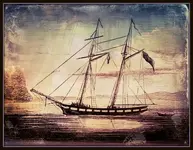



 ,,,the brokers got paid good commission from the pirate chiefs based on the settled amount hence thier motivation for a higher deal..I am not sure but I think they demanded some money from the negotiators representing the insurance companies as well...the brokers were in the resort city of Mombasa Kenya ..I picture high level negotiators arriving in Mombasa and going to the beach resort area to their hotels to plan their high level operation... and according to thier instruction would then meet the broker probably in some back room of a cafe just like the movies
  ,,after the negotiations the money used to be dropped by planes on the sea near the seized ship in convenient containers for the pirates to pick ..these were conducted by yet another kind of security companies that specialize on such things (probably were hired by the negotiating firms that in turn were hired by the insurance companies) ... then once the pirates in the sea secured the money and confirmed that to their chief, they then would be instructed to disembark from the ship and the hijack situation would come to an end...the pirate chief would get millions...the broker would get a hefty commission..the negotiators and the security company that dropped the money would get a hefty payment..the company would get its ship and cargo...and the foot soldier pirates would get paid though quite small compared to the pirate chief...the loosing guys were the insurance companies...that was the model roughly,,,at times scores of ships from different companies were seized at the same time and were under negotiations simultaneously in Mombasa with brokers and that resort beach city was crowded with different high level negotiators representing different insurance companies ... some could even be handling cases of more than one ship at the same time .,,it was reminiscent of Lisbon in the WW2 era (Portugal was neutral along with Spain) as it was teeming with spies of all sorts (spies of allied countries and Nazis) who crowded the hotels and cafes of the city...Mombasa in those years was quite a scene I imagine ....