What's new

Rediscovery of an Apache-Buried Mine

geronimosgold

Greenie
Joined
Apr 4, 2026
Messages
12
Reaction score
42
Golden Thread
0
Hi all,

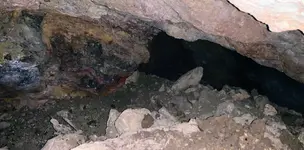
I’m posting this because I’m looking for advice, insight, and help from anyone interested in the history, geology, or excavation side of this. My family has spent four generations secretly excavating a mine believed to have been buried in 1886 by the Apache Indians. Over the past century, we’ve uncovered mining tools, human remains, and a large column of mining waste left by 1800s miners—evidence that ties together several long-standing legends.

We believe this is:
  • Ben Sublett’s Lost Gold Mine
  • The Apache mine which Geronimo placed in the Guadalupe Mountains and described as “the richest in the western world.”
  • The Spanish Lost San Antone Mine (1600s) – Known by many other Spanish names
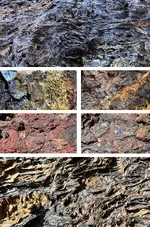
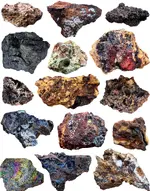
W.C. Jameson, the #1 treasure author in America, searched for this site for sixty years. I took him to it last year, and he verified it as the mine he spent his life looking for. A veteran gold geologist, Mark Abrams, has also reviewed the site and supports the findings. The rocks that exist here, buried by the Apaches and formed through hydrothermal activity, were thought not to exist anywhere in this mountain range. This site consists of multiple, deep hydrothermal conduits which were purposely buried and extend for up to hundreds of feet deep. Within one of these, a human skeleton was found beneath 80 feet of mining debris and Apache fill dirt. The legendary stories of Guadalupe gold over the past 400 years appear to converge at this single site, located near the exact center of the Guadalupe Mountains.

I have documented all of this in a book that is available for free on Apple Books, and released this week: The Lost Gold of Geronimo. W.C. Jameson wrote the foreword.

This is still an ongoing effort. My family has excavated up to 2,000 tons of Apache-placed material, and there is still more to uncover. I’m now the last in my family able to carry this forward, and I’m currently working through the Forest Service process required to continue excavation. Over the decades, we’ve narrowed down where to dig based on historical accounts and the site’s geology, but I’d really value input from others on whether that approach makes sense. From a geology standpoint, I’ve continued running tests and building a body of evidence, but it feels like more work is needed to fully understand the system. The rocks show signatures that appear to be impossible without magma, while at the same time containing minerals typically associated with brine-driven systems—almost as if these conduits hosted multiple phases of hydrothermal activity over time.

I'd like to collaborate with others and discuss with anyone who's interested.

- Robert Cline
 

Attachments
  • 19-Joels-Well.webp
    19-Joels-Well.webp
    370.1 KB · Views: 373
  • 23-Collage2.webp
    23-Collage2.webp
    1.2 MB · Views: 218
  • 24-Whole-Rocks.webp
    24-Whole-Rocks.webp
    1.8 MB · Views: 224
  • 54-Map.webp
    54-Map.webp
    131.4 KB · Views: 206
  • 60-Ore-Body.webp
    60-Ore-Body.webp
    401.8 KB · Views: 210
  • 65-Excavation4.webp
    65-Excavation4.webp
    783.6 KB · Views: 216
Last edited:

This sounds like the mine referred to by Nino in his book "The first hundred years of Nino Cochise".
My family are all from Bisbee and had a little history with the Chiricahua's at the turn of the century.
Very fascinating!
 
Interesting! It seems Nino was ten years old when Geronimo ordered the burial of the Guadalupe mine. Since Nino lived in Mescalero Apache land in the right time period, that book could very well contain some details related to the Guadalupe site. I'm going to check this out. My main sources thus for have been W.C. Jameson, Patrick Dearen, Thomas Penfield, and John D. Mitchell, but I'm always looking for more history, as these accounts have thus far been surprisingly helpful in narrowing down where to dig. Thank you for the reference.
 
He said they have been working it over a century - relax Columbo

Read the OP again Dumbo.

The OP says: "My family has spent four generations secretly excavating a mine believed to have been buried in 1886 by the Apache Indians. Over the past century, we’ve uncovered mining tools, human remains,"
 
Let me clarify, because that is a great question. :-) The skeleton was found in 1965 by my grandfather and his dad. Quoting from my book:

Four cavers from the National Geographic Society came across Joel and Edward at the site while human vertebrate bones were casually sitting on their truck. United States Geological Survey (USGS) ranger Andy Komensky requested the remains, and Joel, showing incredible nerve, struck a deal: some of the bones would be handed over in exchange for keeping the information private. Such a conversation between a civilian and authoritative figure over human remains would be unthinkable today. While this seems like impressive negotiating, the authorities later seized the rest of the skeleton, and Komensky went on to write multiple letters divulging sensitive information about the family’s findings.

If you're interested, the skeleton is believed to be Frenchy (a legendary character discussed in the book Coronado's Children by J. Frank Dobie), who disappeared while visiting Ben Sublett's mine. Based on this, Ranger Komensky wrote a public letter where he disclosed my family's claim as the Lost Sublett Mine. However, his letter didn't get much publicity. After all, claiming to know the location of a lost gold mine doesn't cause people to grab shovels and run towards it. :)

- Robert
 
Let me clarify, because that is a great question. :-) The skeleton was found in 1965 by my grandfather and his dad. Quoting from my book:


If you're interested, the skeleton is believed to be Frenchy (a legendary character discussed in the book Coronado's Children by J. Frank Dobie), who disappeared while visiting Ben Sublett's mine. Based on this, Ranger Komensky wrote a public letter where he disclosed my family's claim as the Lost Sublett Mine. However, his letter didn't get much publicity. After all, claiming to know the location of a lost gold mine doesn't cause people to grab shovels and run towards it. :)

- Robert


Excellent!
 
Excellent!
I can’t let the “Dumbo” insult stand. The OP and you quoted “"My family has spent four generations secretly excavating a mine believed to have been buried in 1886 by the Apache Indians. Over the past century, we’ve uncovered mining tools, human remains,"

So that means it’s been 100 years of digging I.E. a century. Likely the OP isn’t here to say they found remains. Turns out it was 60 years ago and a different generation did what they were supposed to do.

I figured it happened long ago and that is what was revealed.

Interested to hear the rest of the story.
 
Let me clarify, because that is a great question. :-) The skeleton was found in 1965 by my grandfather and his dad. Quoting from my book:


If you're interested, the skeleton is believed to be Frenchy (a legendary character discussed in the book Coronado's Children by J. Frank Dobie), who disappeared while visiting Ben Sublett's mine. Based on this, Ranger Komensky wrote a public letter where he disclosed my family's claim as the Lost Sublett Mine. However, his letter didn't get much publicity. After all, claiming to know the location of a lost gold mine doesn't cause people to grab shovels and run towards it. :)

- Robert
Welcome to the site !GREAT STORY to read ! Wish you well in your quest and I see a book or a movie coming out of this ! HOPEFULLY ! I'm going to search for your book on APPLE BOOKS !
 
The book is already done. 8-)

There is a YouTuber who wants to do a multi-part series on it which should be neat! It's nice to finally get to share the story.

Do you all have knowledge in geology? Mineralization here reaches 6,000+ ppm Molybdenum and up to 61% iron. This pairing alone doesn't seem to occur outside of porphyry systems (magmatic). Every gold pathfinder that was tested was highly elevated. A gold specialist geologist delivered a 20-page report firmly establishing the case for a magmatic system. This is the first strong evidence of magma beneath the Guadalupe Mountains. Yet, the results are still questioned. My family for decades has been accused of hauling in these rocks since they don't fit the existing model. I've been told the laboratory botched my tests, despite four independent rounds of testing.

Just recently I've paid an independent geologist to take his own samples (very expensive). I'm contemplating my next step which might be electron microscope testing (also very expensive). Any suggestions?
 
Just recently I've paid an independent geologist to take his own samples (very expensive). I'm contemplating my next step which might be electron microscope testing (also very expensive). Any suggestions?

Is there a point when you stop testing and start digging the ore?
 
Is there a point when you stop testing and start digging the ore?
I thought they already started that a century (or four generations) ago?
 
I thought they already started that a century (or four generations) ago?

It's early...still working on my first cup of coffee. Probably missed that part...
3d-funny-eyes.gif
 
It's early...still working on my first cup of coffee. Probably missed that part...View attachment 2250588
That's OK, I missed the part why they're testing anything if they've already been digging for a century. Seems like they'd have already decided whether the scratch was worth the dig.
 
😂
Let me try to clarify some things because I know all of this sounds nuts. I wouldn't believe it myself if I hadn't lived it.

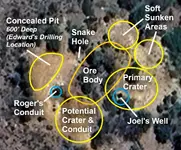
My great grandfather spent 30 years excavating the primary crater. Then another decade or so was spent clearing the hydrothermal conduit at it's floor which was full of Apache fill dirt and mining waste left by miners. This was all a distraction since early miners were just using this pit as their garbage can. I am confident, based on historical accounts and the site's geology, that the point where the crater floor meets the ore body is where the opening to the shaft containing the gold is located. Ben Sublett's son, Rolth, who was friends with my great grandfather, pointed to this area in person, and the accounts on Ben Sublett and other witnesses describe this spot in detail.

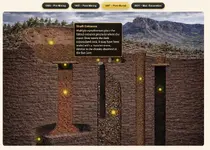
Miners in the 1880s were lifting ore from their shaft to the crater floor, crushing it, heating it, and tossing the crushed waste into the hydrothermal conduit. We found remains of their smelter and a section of a crucible here. But now that I'm within feet of reaching the right spot, the Forest Service denied my digging notice, and further action depends on proving validity of the mine once again. On my website, I built an interactive cross-section of the site so I could better describe this to folks. Attached is a screenshot of it.

To make this sound even crazier, historical accounts place $7.3 billion in Spanish bullion (forged from the mine's resources) at or near the site, and the unmined gold is expected to surpass that.

Robert
 

Attachments

  • structure.webp
    structure.webp
    500.4 KB · Views: 186
I can’t let the “Dumbo” insult stand. The OP and you quoted “"My family has spent four generations secretly excavating a mine believed to have been buried in 1886 by the Apache Indians. Over the past century, we’ve uncovered mining tools, human remains,"

So that means it’s been 100 years of digging I.E. a century. Likely the OP isn’t here to say they found remains. Turns out it was 60 years ago and a different generation did what they were supposed to do.

I figured it happened long ago and that is what was revealed.

Interested to hear the rest of the story.


You insulted me first. Thinly veiled as it were. The age/date of remains has nothing to do with laws regards reporting requirements. Once reported the authorities can figure out relevance/circumstance. The O Post didn't limit when in the last century or by whom. Now the Poster has added details. You would do better to not jump on it.
 
Hey Robert! This is so fascinating! I just purchased your paperback book on Amazon to have a physical copy and to support you as a fellow author and treasure hunter. Can't wait to read the whole story. Here's the Amazon link if others want one.

And I'm also a cartographer too if you're looking for a private map design collaboration of the mine and overall property. Love the graphics on your website: https://geronimosgold.com and that cut away illustration. Well done.

Find me at: https://www.karpovagecreative.com/custommaps

Much continued success to you!
Michael
 
Hi all,

I’m posting this because I’m looking for advice, insight, and help from anyone interested in the history, geology, or excavation side of this. My family has spent four generations secretly excavating a mine believed to have been buried in 1886 by the Apache Indians. Over the past century, we’ve uncovered mining tools, human remains, and a large column of mining waste left by 1800s miners—evidence that ties together several long-standing legends.

We believe this is:
  • Ben Sublett’s Lost Gold Mine
  • The Apache mine which Geronimo placed in the Guadalupe Mountains and described as “the richest in the western world.”
  • The Spanish Lost San Antone Mine (1600s) – Known by many other Spanish names
W.C. Jameson, the #1 treasure author in America, searched for this site for sixty years. I took him to it last year, and he verified it as the mine he spent his life looking for. A veteran gold geologist, Mark Abrams, has also reviewed the site and supports the findings. The rocks that exist here, buried by the Apaches and formed through hydrothermal activity, were thought not to exist anywhere in this mountain range. This site consists of multiple, deep hydrothermal conduits which were purposely buried and extend for up to hundreds of feet deep. Within one of these, a human skeleton was found beneath 80 feet of mining debris and Apache fill dirt. The legendary stories of Guadalupe gold over the past 400 years appear to converge at this single site, located near the exact center of the Guadalupe Mountains.

I have documented all of this in a book that is available for free on Apple Books, and released this week: The Lost Gold of Geronimo. W.C. Jameson wrote the foreword.

This is still an ongoing effort. My family has excavated up to 2,000 tons of Apache-placed material, and there is still more to uncover. I’m now the last in my family able to carry this forward, and I’m currently working through the Forest Service process required to continue excavation. Over the decades, we’ve narrowed down where to dig based on historical accounts and the site’s geology, but I’d really value input from others on whether that approach makes sense. From a geology standpoint, I’ve continued running tests and building a body of evidence, but it feels like more work is needed to fully understand the system. The rocks show signatures that appear to be impossible without magma, while at the same time containing minerals typically associated with brine-driven systems—almost as if these conduits hosted multiple phases of hydrothermal activity over time.

I'd like to collaborate with others and discuss with anyone who's interested.

- Robert Cline
looks correct but jameson is in my opinion / one to really dress up the truth to sell books. dna test on the remains would be great. everything looks correct to my eye.
 

Users who are viewing this thread

Latest Discussions

Back
Top Bottom