Thanks for the links and the PM!
From what I understand about the spread of European disease, we probably wiped out huge percentages of many tribes before we even knew about them.
I'd guess it was more than 5,000 before they did the guesstimate.
I've always been a fan of their lodges as well and Steve's posted some pretty cool links....it'd be cool to build one.
I agree that there were likely many more at one time. I also think that disease was the final blow to a culture and population already in decline. Competing tibes adopted the horse and began direct trade with fur traders much sooner then the Mandan. Once their enemy's were mobile and had access to superior weapons and material, it was to late for the Mandan.
The following was taken from this website
Historic Sites - Fort Abraham Lincoln Foundation
On-a-Slant Mandan Village
Long before Lewis and Clark ventured up the Missouri River in 1804, the Mandan people had been thriving on a very productive agricultural lifestyle in the Heart River area. For most of a thousand years, the Mandan (Nu'eta) called the region home, living in a succession of earthlodge villages. Rich in culture and tradition, Mandan men hunted buffalo and other game, while women grew several varieties of corn, squash and beans. Food surpluses and more-or-less permanent settlements led to trade with other Native American nations and the Mandan became central to an ancient inter-tribal trade network.
Around 1575, families from three nearby villages came to build a fortified village on a tract of gentle sloping land located on the west bank of the Missouri River, about a mile south of its confluence with the Heart River. This is the village known to history as On-a-Slant.
In 1781, the Mandan of On-a-Slant village suffered greatly during a smallpox epidemic that swept from Mexico to Canada and from the Mississippi to the Pacific coast. The last chief of On-a-Slant, Good Boy, rallied the survivors and joining with survivors from other villages, moved north to establish a city near their Hidatsa allies, near what is now the Knife River Indian Villages National Historic Site.
The Mandan of On-a-Slant Village left a legacy that still lives on as interpretive guides take you through six reconstructed earthlodges, in an effort to tell the Mandan story.


 2012-10-30_15-50-37_359-1.webp209 KB · Views: 140
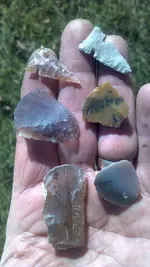 2012-10-30_15-51-54_900-1.webp229.4 KB · Views: 119
 2012-10-30_17-00-38_83-1.webp102.5 KB · Views: 119
 2012-10-30_17-04-48_20-1.webp114.4 KB · Views: 120
 2012-10-30_15-48-41_132-1.webp137.7 KB · Views: 136
 2012-10-30_15-49-23_856-1.webp161.9 KB · Views: 110