What's new

1786 vermont real or fake

bula

Hero Member
Joined
Mar 13, 2008
Messages
606
Reaction score
3
Golden Thread
0
Location
southern utah
Detector(s) used
White MXT
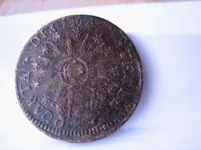
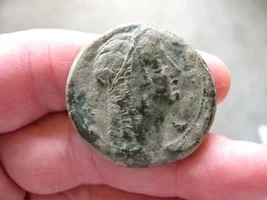
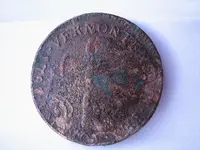
I went out yeaterday & found this coin it is a 1786 vermont. I have never seen one of these so I would like some input on how to tell if it is real. I have seen some coins that are copy but they alway's have copy stamped into them.
 

Attachments
  • IMG_1123.webp
    IMG_1123.webp
    632.9 KB · Views: 1,637
  • IMG_1124.webp
    IMG_1124.webp
    261.1 KB · Views: 1,620
Upvote 0

hogge said:
As for the Ryder 7 in my avatar........120.4 grains and 27.3 mm. Great detail on yours also, but the weight is way off. With such great looking detail left, I think the heated peroxide should be used. You see how well mine came out. As Don said, highly unusual to be found so far west, but NOT to say it isn't real. ALL MY COPPERS GO INTO PEROXIDE!! The only ones I don't do, are the so far pitted ones that I feel are not going to get any better, but worse! Also found a Ryder 6 at the same spot, that I did sell. I think better pics, after cleaning should tell the tale. JMO

But there doesn't really seem to be much corrosion on it... almost looks as if it was cleaned. (I'd say it was) That blueish green if often a sign of chemical, either something that was in the ground, or done after finding. I don't think peroxide would hurt it, but I use caution when I see blue, or orange on a coin or button. There's lots to compare for an ID as is, it's the weight thing that matters more than seeing what else is on the coin anyway.
 
After contacting a few colonial collectors who are rather knowledgeable, they all concur the weight if correct without a doubt points to it being a cast counterfeit/electrotype. The edges of the coin must be looked at carefully, and if the finder probably scraped a bit off one the edge, he might find it is not solid copper. The cast counterfeits used lead/tin/zinc in varying amounts with the copper for the cast copies.

I believe the only question left is whether it is a contemporary counterfeit or a more modern times reproduction. If older, it would still be considered a collectible I believe.

Hogge, maybe Tony C could shed light on this coin, I have already been in contact with a few of the other biggies in the hobby but not him.

Don
 
Don in SJ said:
After contacting a few colonial collectors who are rather knowledgeable, they all concur the weight if correct without a doubt points to it being a cast counterfeit/electrotype. The edges of the coin must be looked at carefully, and if the finder probably scraped a bit off one the edge, he might find it is not solid copper. The cast counterfeits used lead/tin/zinc in varying amounts with the copper for the cast copies.

I believe the only question left is whether it is a contemporary counterfeit or a more modern times reproduction. If older, it would still be considered a collectible I believe.

Hogge, maybe Tony C could shed light on this coin, I have already been in contact with a few of the other biggies in the hobby but not him.

Don
I'll give him a call on this tomarrow. He is closed on Mondays. He still has a copper he is trying to figure out for me anyways. I'm sure when I tell him about this one, he'll get on the site and check it out for Bula. :thumbsup:
 
As much as I would love this thing to be the real deal, I think you are most likely right. I took an old large cent & tested it with the md & it rings up in the same range as a quarter with my MXT vdi 86, then I tried the vermont & it rings in at vdi 46. I did not think about this earlyer because there was some can slaw by the coin when I found it.
 
bula said:
As much as I would love this thing to be the real deal, I think you are most likely right. I took an old large cent & tested it with the md & it rings up in the same range as a quarter with my MXT vdi 86, then I tried the vermont & it rings in at vdi 46. I did not think about this earlyer because there was some can slaw by the coin when I found it.
That should be it right there. I remember mine was dead on copper, with NO movement on the scale at all. My brother in laws CFT. 8 Real was on "Pull Tab".
 
hogge said:
bula said:
As much as I would love this thing to be the real deal, I think you are most likely right. I took an old large cent & tested it with the md & it rings up in the same range as a quarter with my MXT vdi 86, then I tried the vermont & it rings in at vdi 46. I did not think about this earlyer because there was some can slaw by the coin when I found it.
That should be it right there. I remember mine was dead on copper, with NO movement on the scale at all. My brother in laws CFT. 8 Real was on "Pull Tab".


Maybe, but not proof, and I can prove it. I found a couple Ships Colonies tokens a few years back that were MUCH lower on the detector than what they usually ring in at. I thought for sure they couldn't be copper, and finally after a couple years of not knowing I contacted a collector I know and he said if I had genuine brass (or other metal) tokens they would be unique and worth a good sum. The things were far from beautiful so finally I decided to nic the edge and sure enough they were copper. On the Explorer digital readout the reading is usually 28, and I had one that was reading 6, but still copper. Why, I have no idea, but that's how it went.

For the record it would make perfect sense the heavy Vermont reads lower because the metal probably is mixed. But like I said, the detecting ID is not proof.
 
The lettering and spacing of is perfect, as far as I can see. I could see only one small difference between the two posted obverses, and the red book which was the positioning of the land in relation to the "M" no doubt just the variety.
As stated above (in so many words) these were mostly made on less than perfect planchets, I guess that could explain the different metal / alloy / detector readingings ? However remains, it is still substancially overweight, and at least a 1MM too big.

It looks very real, but too big is not a good sign.

The further it goes, the more red flags appear, starting with IP's observance of a slightly strange color.

Stay tuned.
 
Rick (Nova Scotia) said:
The lettering and spacing of is perfect, as far as I can see. I could see only one small difference between the two posted obverses, and the red book which was the positioning of the land in relation to the "M" no doubt just the variety.
As stated above (in so many words) these were mostly made on less than perfect planchets, I guess that could explain the different metal / alloy / detector readingings ? However remains, it is still substancially overweight, and at least a 1MM too big.

It looks very real, but too big is not a good sign.

The further it goes, the more red flags appear, starting with IP's observance of a slightly strange color.

Stay tuned.

Another thing I noticed is the lettering in the word "Quarta" looks a little more thin on the genuine one.... But I haven't looked any further than the pics on this thread.
 
'Very Scarce'
Love those words!
best wishes on your Find! :thumbsup:
 
Real or counterfeit I just want to say thanks for all the help & interest.
 
Bula,
I found a New Jersey copper back in the early 80's in Nevada and 1700's coins here in Cedar, I'm sure it's real, nice find! Kane 23
 
Can you give some details such as what else have you found in that location--was this the only find with significant age? At what depth did you find it? Etc., etc. Thanks, gg
 
Is there any indication that any coins were minted those first 4 months, before the weight was amended?
If so, then the weight would be right on.....
I am no expert about any American coins.....give me a call if you find a holed coin.......but, noone seemed to address
the first 4 months.
Its a good find, no matter what. Got my fingers croxxed for you.....
 
The weight change was in 1785 before any coins were minted. Even if there were, the coin in question is a 1786.
 
Several of my collector friends who know Vermont coppers have said, it is a counterfeit and most likely a cast counterfeit, the letters are mushy, the weight and diameter way out of whack. The only thing not known, is if it is contemporary counterfeit or a more modern one. All State coppers were either cast counterfeited or electrotyped at one time or another. The fellow who said he found a NJ in Nevada in the 80s, I would love to see a decent photograph of the coin, since I have been doing a survey on them for many years and if that is a legit one it would be the first one west of the Mississippi reported in my survey. However, I suspect that too might be a counterfeit, but you never know till seen.

Don
 
Is there any way to tell the difference?
 
I have read some of your posts/replies to posts, Don. You are the research man, for sure.
Love what you are doing, as far as density of finds per area, etc. Great stuff. :thumbsup:
 
ggossage said:
Can you give some details such as what else have you found in that location--was this the only find with significant age? At what depth did you find it? Etc., etc. Thanks, gg


The majority of the hunters in Utah are extremely secretive they don't usually give out much info. Well see if he responds to your Q.
 
bula said:
Is there any way to tell the difference?

I was hoping Hogge would have gotten an answer from Tony C who has authored a very good book on Vermont Coppers, I can not say what to look for on this coin, and perhaps they cannot either by photo alone, other than that it is not an authorized issue.

I also do not know if a contemporary one would have value, I would think so, but again, out of my area of expertise when talking value in this particular area. I know if I found it I would like to know if it is an older counterfeit or more modern, say 1800s to 1900s would be considered modern in this case. To be contemporary it would have to been made and circulated in the same time frame of the authorized ones in general.

contemporary counterfeit: an unauthorized coin made close to the date that appears on the coin.


Don
 

Users who are viewing this thread

Back
Top Bottom