What's new

Little Arrowheads

quito

Silver Member
Joined
Mar 31, 2008
Messages
4,638
Reaction score
4,844
Golden Thread
0
Location
south dakota
Detector(s) used
good eyes
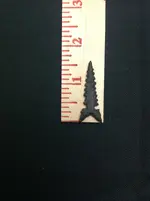
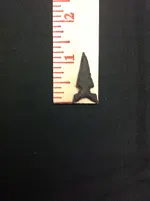
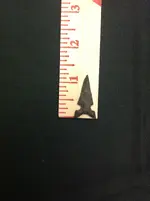
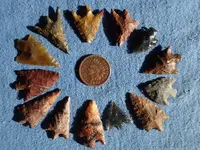
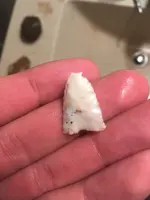
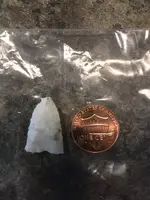
Kinda cool they could be so small.

Lets see your little guys.

DSCN3327.webp
 
Upvote 0
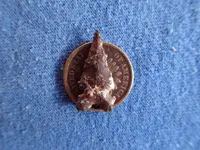
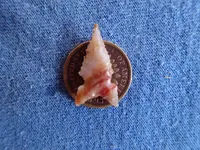
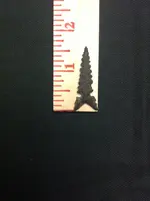
Grim those are some super nice points, but this little black serrated one has to be one of he nicest ones I have seen , that’s a killer point somebody had some skills to make that.

Thanks. It is a really nice Point. What makes it even better is those two in that post and these two here were gifts from the Secret Santa I run on arrowheadology.com.
 

Attachments

  • image.webp
    image.webp
    387.6 KB · Views: 104
  • image.webp
    image.webp
    425.8 KB · Views: 78
  • image.webp
    image.webp
    433.7 KB · Views: 81
  • image.webp
    image.webp
    438.1 KB · Views: 78
Last edited:
Thanks. It is a really nice Point. What makes it even better is those two in that post and these two here were gifts from the Secret Santa I run on arrowheadology.com.

That’s a hell of a nice Christmas gift especially for a secret Santa .... so did they include any info about them ? Are they somebody’s personal finds or modern made ?
 
The point that Quito has made several times is valid, these tiny points have been found and recorded hundreds of times in archaeological excavations of bison kills. They may not have dropped a bison bull with one shot instantly, but they clearly worked as part of a hunting strategy.

As far as killing birds and fish, there are easier ways to get a lot of protein with nets and sticks.
 
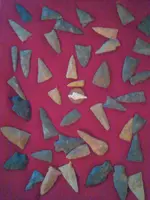
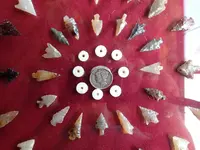
KIMG0656.webpThese are the smallest ones I have. The 2 in the center are pretty tiny. My younger brother found them at Windmillers farm along the Scioto River in Franklin Co. Ohio. Most of these points are from there with a few found further south in Pickaway Co.
 
Are any of you guys bow hunters? Any that are can attest that the most effective way to kill a deer or other large game is to put a projectile through one or both of the animal’s lungs. These little points would have been very effective killers.

Archery or at-atl or spear hunting tools are not designed to knock an animal down in it’s tracks. To be effective this type of hunting tool’s job is to cause the animal to bleed out or to die from damage to vital organs such the heart, lungs, liver, stomach, intestines or a major artery or vein. I imagine that native Americans were reasonably effective at killing large game but I bet they also wounded and failed to quickly kill quite often as well. That’s the nature of archery etc. and to be effective a hunter needs to be proficient at getting close to game and then making a good “shot” and lastly good at blood trailing and/or searching for the wounded and dying animal. A perfectly placed point (however small) will cause a deer sized animal to die in well under a minute. Marginally placed projectiles (single lung penetration, liver, stomach, intestines etc take hours or even days but are still effective.
 
Are any of you guys bow hunters? Any that are can attest that the most effective way to kill a deer or other large game is to put a projectile through one or both of the animal’s lungs. These little points would have been very effective killers.

Archery or at-atl or spear hunting tools are not designed to knock an animal down in it’s tracks. To be effective this type of hunting tool’s job is to cause the animal to bleed out or to die from damage to vital organs such the heart, lungs, liver, stomach, intestines or a major artery or vein. I imagine that native Americans were reasonably effective at killing large game but I bet they also wounded and failed to quickly kill quite often as well. That’s the nature of archery etc. and to be effective a hunter needs to be proficient at getting close to game and then making a good “shot” and lastly good at blood trailing and/or searching for the wounded and dying animal. A perfectly placed point (however small) will cause a deer sized animal to die in well under a minute. Marginally placed projectiles (single lung penetration, liver, stomach, intestines etc take hours or even days but are still effective.

And I also think it was the good hunters, maybe the old timers, who would use these Archer, imagine the dude carrying these and only these, they had to be confident, eh?
 
Are any of you guys bow hunters? Any that are can attest that the most effective way to kill a deer or other large game is to put a projectile through one or both of the animal’s lungs. These little points would have been very effective killers.

Archery or at-atl or spear hunting tools are not designed to knock an animal down in it’s tracks. To be effective this type of hunting tool’s job is to cause the animal to bleed out or to die from damage to vital organs such the heart, lungs, liver, stomach, intestines or a major artery or vein. I imagine that native Americans were reasonably effective at killing large game but I bet they also wounded and failed to quickly kill quite often as well. That’s the nature of archery etc. and to be effective a hunter needs to be proficient at getting close to game and then making a good “shot” and lastly good at blood trailing and/or searching for the wounded and dying animal. A perfectly placed point (however small) will cause a deer sized animal to die in well under a minute.

Marginally placed projectiles (single lung penetration, liver, stomach, intestines etc take hours or even days but are still effective.
Marginally placed projectiles (single lung penetration, liver, stomach, intestines etc take hours or even days but are still effective.

This is true but there is an exception with the American Bison which was one of the largest big game animals most often sought by the Great Plains hunters. The largest vital organ of a bison targeted by Plains hunters was its lungs. It did not matter which side, a lung shot with an arrow or atlatl dart would kill a bison in short order.

The reason being:
The American bison has an absence of anatomical separation of the two hemithoraxes (lung cavity). This anatomical anomaly helped the Indians of the Great Plains to thrive on hunting bison, which can be agile and reach speeds as high as 40 miles (65 km) per hour. An arrow or a single wound to the thorax frequently resulted in bilateral tension pneumothoraxes and the incapacitation of the bison.

A pneumothorax is an abnormal collection of air in the pleural space between the lung and the chest wall allowing the lungs to collapse. In the bison’s case with a puncture to one lung would allow both lungs to collapse. In this situation the bison does not bleed to death but suffocates because of one small arrow point.

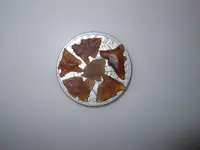
Some central Great Plains Nebraska/Kansas arrow pints, personal finds.
 

Attachments

  • ArrowPts6.webp
    ArrowPts6.webp
    389.3 KB · Views: 92
Marginally placed projectiles (single lung penetration, liver, stomach, intestines etc take hours or even days but are still effective.
This is true but there is an exception with the American Bison which was one of the largest big game animals most often sought by the Great Plains hunters. The largest vital organ of a bison targeted by Plains hunters was its lungs. It did not matter which side, a lung shot with an arrow or atlatl dart would kill a bison in short order.

The reason being:
The American bison has an absence of anatomical separation of the two hemithoraxes (lung cavity). This anatomical anomaly helped the Indians of the Great Plains to thrive on hunting bison, which can be agile and reach speeds as high as 40 miles (65 km) per hour. An arrow or a single wound to the thorax frequently resulted in bilateral tension pneumothoraxes and the incapacitation of the bison.

A pneumothorax is an abnormal collection of air in the pleural space between the lung and the chest wall allowing the lungs to collapse. In the bison’s case with a puncture to one lung would allow both lungs to collapse. In this situation the bison does not bleed to death but suffocates because of one small arrow point.

Some central Great Plains Nebraska/Kansas arrow pints, personal finds.

Excellent information....I wasn’t aware that Bison had only one lung cavity. With all of the anatomy and physiology I’ve studied I’m surprised! Thanks.

Beautiful frame of points there too!!
 
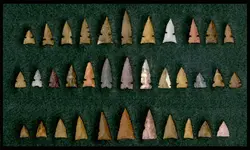
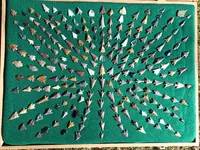
A large percentage of my personal finds are small arrow points all of this frame are from one site N. California.
 

Attachments

  • PC120046.webp
    PC120046.webp
    337.3 KB · Views: 82
  • PC120047.webp
    PC120047.webp
    398.4 KB · Views: 83
  • PC120035.webp
    PC120035.webp
    400 KB · Views: 87
  • PC120042.webp
    PC120042.webp
    410.5 KB · Views: 79
  • PC120058.webp
    PC120058.webp
    419.6 KB · Views: 81
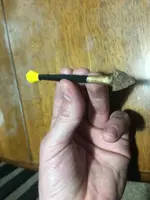
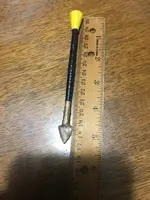
I was told by a Archy that they believed these I find were used in a Blow Dart in my area. What yall think Dart or Arrow?
Pics help

I have used tips this size for a blowgun I made. It is very very effective! Including a mature rooster pheasant. Penetrated clear through to the fletch. I have always believed these small tips could be used anciently for blowguns. Incredibly deadly on small birds,frogs, and rabbits. IMG_0304.webpIMG_0304.webp
 
I've never heard of Native Americans using blow guns. While possible it's most likely not accurate.
 
I've never heard of Native Americans using blow guns. While possible it's most likely not accurate.

I’ve never heard of them being used either.

It’s easy to understand the thinking tho as common as the bird point mentality is.
 
Sounds feasible. Still no proof other than taking the author of these articles word for it. Maybe someone has found one that survived?
 
Sounds feasible. Still no proof other than taking the author of these articles word for it. Maybe someone has found one that survived?

Pheasable for sure. And not too hard to believe in my opinion. They would have been a great tool to the natives.
 
birdie 1.webpbirdie.webp

So far this is the only Bird Point I have found. These were defiantly used to hunt deer or even larger animals.
 
The encyclopedia Britannica quotes a Captain Bossu who wrote a book " Travels through Louisiana " as stating the Choctaws were adept at using a long blowgun for hunting. He wrote that in the late 1700's so it seems that some Native Americans did use blow guns. I think that is very interesting and am glad it was mentioned in this thread. I learned something I never knew.��
 
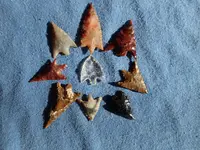
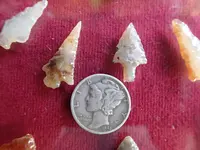
Some little points from the north west part of my collection.
 

Attachments

  • P5220733.webp
    P5220733.webp
    338.4 KB · Views: 76
  • P5220738.webp
    P5220738.webp
    377.7 KB · Views: 75

Users who are viewing this thread

Latest Discussions

Back
Top Bottom