What's new

North East Florida Treasure....Please help me identify these coins...

AdamBuchanan

Jr. Member
Joined
Jun 22, 2010
Messages
85
Reaction score
5
Golden Thread
0
Location
Keystone Heights, FL
Detector(s) used
Excal II, Whites IDX Pro
Primary Interest:
All Treasure Hunting
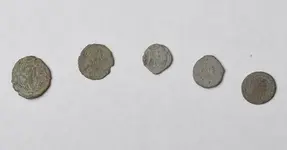
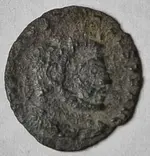
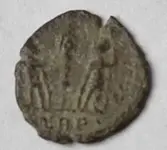
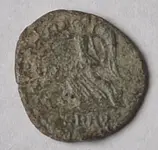
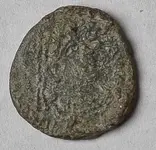
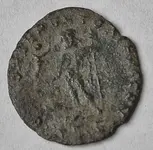
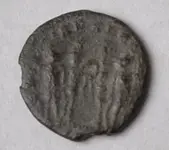
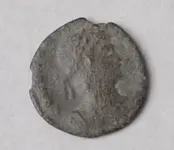
Hello, a few days ago, I hunted an old camp in North Florida , in past hunts I've found silver quarters, silver dimes, and rings due to the high usage of the camp .. I hit an area in which I dug five coins in which I know are old however cannot date them.. I went back today with my dad .. he found 9 more of these type coins in which we have no idea how old they are.. Here are the five from the first hunt a few days ago..there are single photos of the best coins that my dad found today.. I hunt with the PRL whites, my dad uses the Whites Eagle SL II, any and all help would be great..
 

Attachments

  • untitled-20-1.webp
    untitled-20-1.webp
    7.2 KB · Views: 2,073
  • untitled-1-1.webp
    untitled-1-1.webp
    14.3 KB · Views: 2,939
  • untitled-6-1.webp
    untitled-6-1.webp
    6.1 KB · Views: 2,932
  • untitled-5-1.webp
    untitled-5-1.webp
    11.4 KB · Views: 2,919
  • untitled-4-1.webp
    untitled-4-1.webp
    26.6 KB · Views: 2,936
  • untitled-3-1.webp
    untitled-3-1.webp
    17.3 KB · Views: 2,892
  • untitled-8-1.webp
    untitled-8-1.webp
    7.2 KB · Views: 2,916
  • untitled-9-1.webp
    untitled-9-1.webp
    6.6 KB · Views: 2,875
A couple questions: what's a Paw Paw (grandfather) saw someone else use that term here. Where the coins made of metal? What happened to the coins, beads, etc? Interesting story!
 
Upvote 0
Adam:
Where is the reverse pic of image 6-1 and what letters can you read in the exergue. I can read only "AP" in the middle of what appears to be four letters. Thanks,
Don.....
 
Upvote 0
Lets not jump to conclusions that Romans discovered America lol or they were brought in by Spanish explorers. These coins are 2nd to 4th century AD. He said he finds silver coins and the camp has high usage so anything is possible.
 
Upvote 0
The surprising thing to me about alot of these ancient coins is how cheap they can be bought. It's very possible that some kid had them & lost them or that they were buried intentionally by a detecting club. I have bought a few of these on Ebay in bulk just for fun and they are generally available in uncleaned condition for 2-3 bucks each. Still a cool find and an interesting mystery as to how they got there.
 
Upvote 0
I remember hearing years ago about a Roman coin being found at a (Boyscout) camp. The most reasonable and simplest explanation is that a young camper brought the coins (perhaps borrowed or "borrowed" from a parent/relative) to show to friends and lost it/them. After WW II I believe it has been quite easy and relatively inexpensive to buy common Roman/ancient coins. My nephew got a set for Xmas a few years back called "Dirty Old Coins" (not terribly expensive) which included ancient coins - God only knows where they are - probably in my Mom's front yard waiting to be found by some detectorist 100 years from now!
 
Upvote 0
Lol a Paw Paw is Grandfather a maw maw is Grandmother. Paw Paw is also a fruits thing, pawpawresearch.com. He asked his dad later around the 60's and they didn't know what happened to the artifacts. The doctor probably kept the pieces or split them with the sheriff. A family member he said went to an estate sale of the doctors when he passed, and said their where lots of human skulls and bones? so a likely possibility. The coins where from what he remembers was a brownish metal and penny to nickel size. I don't think Roman's discovered America, but the Spanish Explorer thing could work. Chris after all was Italian!.
 
Upvote 0
Not trying to say the Romans discovered America, just mearly pointing out that Roman coins pop up from time to time, In 1886, the remains of a shipwreck was found in Galveston Bay, Texas. Its construction is typically Roman.

Roman pottery was unearthed in Mexico that, according to its style, has been dated to the second century A.D. In 1966, a man named Manfred Metcalf stumbled upon a stone in the state of Georgia that bears an inscription that is very similar to ancient writing from the island of Crete called "Cretan Linear A and B writing."
These are all facts, unexplained yes but still facts.

Warren Cook:...The most significant pattern in ancient coin finds, as Epstein admits, is
their nonrandom distribution [Cook points out that almost no reports came
from the West Coast, for example], which belies the collectors' losses
theory. That many were found far inland ... from Texas eastward argues
against modern loss and in favor of penetration of North America's great
rivers..."

There are plenty more theories about Ancient coin finds in America, some for and some against :dontknow: I suppose until someone actually finds a Roman hoard of coins put there deliberetly, and still in contex...we will proberbly never know :-\

Seems we have been here before :) http://forum.treasurenet.com/index.php?topic=157773.0

SS
 
Upvote 0
I gotta go but Ill check back later. You guys from Europe are the ancient coin experts and more familiar with them. You dig them all the time so Ill be curious to see if they are real. :dontknow:
 
Upvote 0
clearly roman coins no doubt -- now the big question is how they got there?--- if the camp site was heavily used as you your self say it was

--some one might have brought "hot goods" there -- say a stolen coin collection and sorted thru them ( with the useless romans discarded )--- or maybe they simply brought coins to show off to others and lost them -- or heck roman sailors lost long ago swept ashore by storms lost em (gotta put it on the highly remote but "possible list")
 
Upvote 0
trixie charger said:
The Native American Mound story peaked my curiosity. My Paw Paw would tell me stories about when he was young in West Virginia. In 1939 he was 7yr old, he would play in the crawl space under their house. He was digging to make a larger play area and about a foot down he started finding beads and strings of leather, then arrowheads. He kept digging and found a small pouch with odd coins, a axe head then he found a bone which later he found out was femur. He got scared and got his dad, he called the doctor/coroner/mortician they where one in the same back there and the sheriff. The house had been in the family sense the late 1700's we think 1789 not positive. So whatever was there was already there when the house was built. They exhumed the body and the artifacts and it was a Native American burial site, they took everything and {there is no way to be sure} told them they thought maybe 1400's. I showed Paw Paw the pictures of the coins and some others, the only one he remembers is the first Pic which is also the one Timekiller posted. If this is correct and the estimated timeline is close then would history be wrong? or if correct then maybe Christopher Columbus {1492} brought them for trade with the Natives?. My grate Grandfather was white and my grate Grandmother was Cherokee maybe they circulated through the Tribes and got distributed throughout North America.
Neat story, :thumbsup: I wonder though if some of these finds are not decorative buttons from the 18th
century.Cause they did make that same coin I posted as a button also.And would date 18th century.


Circa late 18th century

Description: A die-stamped two-piece copper-alloy button with separate soldered wire shank (now missing). The button is in the form of a coin of the Roman period, depicting a right-facing, laureate bust of Septimius Severus. The back of the button has a reversed impression of the bust, caused by the manufacturing process.

The excavation of the now famous towns of Herculaneum and Pompeii in 1738 and 1748 stimulated an interest throughout the world in classical art. Buttons in the form of Roman coins date mainly from the second half of the 18th century and are, no doubt, a reflection of this interest.


http://www.ukdfd.co.uk/ukdfddata/showrecords.php?product=27943&cat=104
 

Attachments

  • 12878238781287767692md_finds_126_copy[1].webp
    12878238781287767692md_finds_126_copy[1].webp
    11.5 KB · Views: 1,574
  • 12878239411287767692md_finds_130_copy[1].webp
    12878239411287767692md_finds_130_copy[1].webp
    10.4 KB · Views: 1,572
Upvote 0
Well we know the Vikings were in North America long before Columbus. The Vikings being contemporaneous with the later Romans, engaging them in battle and invading lands formerly held by the Romans could have easily had many Roman/ancient coins to use as trade with the Indians they encountered here. We have pre-historic proof from the "Ice Man" discovered in the Swiss/Italian Alps that trade even in prehistoric times took place over a vast distance (some of his possessions came from far away). It's not unreasonable to expect the Indians to have traded goods they received from the Vikings over vast distances and over many centuries. This would explain the fewer such finds on the West Coast as this would be the furthest point from where the source would have been. I don't buy the theory that any ancient cultures were here before the Vikings except for pre-historic cultures that came over the land bridge from Asia some of which became what we call the indigenous South/Central Americans and the Indians. There were likely several pre-historic cultures that made the crossing (pre-historic Caucasian looking skeletal remains were discovered on the West Coast that seemed to pre-date the earliest Indians, but Indian tribes and some of our ridiculous laws to "protect" their remains barred scientists from examining them as the Indians legally laid claim to the bones and re-buried them), but this was way before coins. Seems reasonable that our Indians moved some of these ancient coins and artifacts over vast distances over hundreds of years and many of the coins are just simply modern drops. The folks that find them have an obligation to notify folks that can properly document and study the strata from whence they came and not simply put them in their pocket and walk off -- too much valuable data are lost!
 
Upvote 0
Thanks for the help there SS,Cause I don't know to much about roman coins myself.I could had stayed up all night trying to match them but knew you guy's could do it faster this morning once you saw them. :thumbsup:
Also welcome to tnet AdamBuchanan! Neat first post. :wink:
 
Upvote 0
Erik in NJ said:
A couple questions: what's a Paw Paw (grandfather) saw someone else use that term here. Where the coins made of metal? What happened to the coins, beads, etc? Interesting story!

This is one of the better topics with excellant historic facts....

Erik...As a kid, we found Pawpaws in the woods...and if we ate too many we got a good case of the skids...(Pawpaw, Paw Paw, Papaw, Poor Man's Banana, Hoosier Banana, etc)
 
Upvote 0
Stefen,

Thanks - never saw a pawpaw, but like singing the song with my 3 year old daughter! ;D Didn't know the terms Paw Paw/Maw Maw either - thx TC!
 
Upvote 0
southern terms of endearment commonly used for a grandpa / grandma --- paw paw ==(daddy or mothers daddy) and maw maw (mother of daddy or mother) --- since paw is daddy and maw is mother --paw paw means ---daddy /daddy* and maw maw means mother / mother *

pe paw and me maw are also terms used by some southerners as well.

of course there is the paw paw tree -- which bears fruit --and the old southern song "picking up paw paws putting them in the basket"
 
Upvote 0
What about "maw paw" and "paw maw" :dontknow:

Sorry 4 the aside folks!
 
Upvote 0
erik a paw maw -- is a unfiltered cigerette (pall mall) -- douwn chew kno nottin
 
Upvote 0
Ivan - one word: :laughing9: .... Actually I thought it was what use guyz say when u want someone to refill ur cup of coffee "paw maw, po-leeze" ;D
 
Upvote 0
1st - Diocletian AE Antoninianus. Lyons mint. IMP C C VAL DIOCLETIANVS P F AVG, radiate, draped & cuirassed bust right / IOVI TVTATORI AVGG, Jupiter standing left holding Victory on globe and sceptre, eagle at foot, P in ex
http://wildwinds.com/coins/ric/diocletian/RIC_0051.jpg


2nd - Valentinian I AE3. D N VALENTINI-ANVS P F AVG, diademed draped & cuirassed bust right / SECVRITAS REIPVBLICAE, Victory advancing left, holding wreath & palm. Can't quite work out the mint but see a similar example:
http://wildwinds.com/coins/ric/valentinian_I/_siscia_RIC_007a.3.jpg


3rd - Constantine Era - GLORIA EXERCITVS, 2 soldiers either side of 1 labarum.

4th - Constantine II as Caesar AE3. c330-33AD. CONSTANTINVS IVN NOB C, laureate and cuirassed bust right / GLORIA EXERCITVS, two soldiers either side of two standards. But yours has the wreath between standards. seen it but can't find this match, see similar with wreath missing:
http://wildwinds.com/coins/ric/constantine_II/_constantinople_RIC_vII_074.jpg
 
Upvote 0
AdamBuchanan said:
Here are three others.. the condition is worse.. but still a coin but you just can't tell whats what on it.. The coins on the Whites Eagle II Sl are hitting on 25 to 51 range.. We aren't sure on the metal make up..

Top one with reverse below it, is most likely (bottom one without reverse image is :dontknow: ) :

Valentinian I, AE3. D N VALENTINI-ANVS P F AVG, pearl diademed, draped, cuirassed bust right / GLORIA RO-MANORVM, Emperor advancing right holding labarum and dragging captive.
http://wildwinds.com/coins/ric/valentinian_I/_aquileia_RIC_007a.jpg
Example of the reverse type & most likely Emperor, not the exact match/mint
 
Upvote 0

Users who are viewing this thread

Latest Discussions

Back
Top Bottom