"Only" a "Fool Believes" he has figured it all "Out" a "Wise Man Knows" he has "Not"!
I have a couple questions for you Robot as you seem to think you have this all figured out.
1) How could the money pit be built in secrecy during the time period you suggest? It would have taken a fairly long time to do all that digging by hand. You really think a giant construction project like this would not have been reported by the locals? The island is a stone's throw from the mainland.
2) The coconut fibre found on or near the island predates your timeframe by at least a few hundred years. I can understand a discrepancy of maybe a hundred years if the fibre had been stockpiled, but not one this big.
3) Why go through the trouble of building an incredible vault if you are going to come back for the treasure in a few years? Why not just leave it there? It's not like they really needed it. The revolution was won by a bunch of poor farmers!
1)
The Freemasons could have used a small work force to start and prepare the preliminary work for the “Oak Island’s Tunnels and Shaft” with knowledge and instructions supplied from past “Enlightened Patrons”.
Work may have been done during the day under the guise of scraping the hull of a ship.
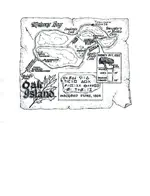
The original discovers had reported locating a large bolder in “Smith’s Cove” with a “hand forged iron ring-bolt” inserted in it.
This “ring” was only visible at low tide and may have been used by seafarers to moor and careening "heaving down" their boats.
It would have made a good and accepted moorage for sea boats, due to its proximity to the mainland and the large tide variance in Mahone Bay.
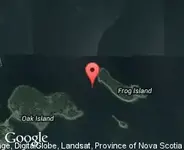
I would “Imagine” that when the main “Flotilla of Ships” arrived, they would have moored farther out to sea, with some of the workforce camped on “Frog Island” and only those day workers doing impending work located on “Oak Island”.
The positioning of these islands (especially Frog Island) to the Mainland offered a reduced exposure to locals seeing any lights, unless someone at night had gone out to sea or avoided and bypassed the posted Sentries on these Islands.
During the 18th Century and without electricity, locals tended not to go out or stray far from their lodgings at night.
Lights seen at night were usually attributed to some sort of encampment or worse, part of evil folk lore.
There was only one need for the “Freemasons” to work at night on “Oak Island” and that was to set their markers or relocate these markers if they had been tampered with.
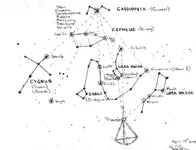
The Celestial Settings of these markers would have been done at “Midnight during the Autumn Equinox” and the use of lanterns would have been necessary.
The Original Discoverers stated sightings to have occurred when the lights from the “American Navy” and “American Freemason Workers” were seen with their recovery mission.
These American Ships were safely venturing into British waters protected under the “Treaty of Amity 1794” with the full approval of President George Washington and the Freemasons controlling the Royal Navy out of Halifax.
Their brief stop at “Oak Island” was to “Open” the “Treasure Vault” and “Remove” the “Freemason’s Treasures”.
The “Entry” to the “Treasure Vault” was “Concealed” and its “Contents” were “Whisked” away to their “New Protected Home”.
2)
How 14th Century Fiber and 18th Century Items could be Compatible
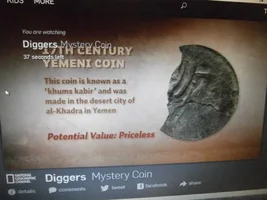
Yes, the argument of the Coconut Fiber carbon dating has been a stumbling block with my theory.
All the wood samples carbon dated support my theory's 18th Century time period.
All the items found on the island support my theory's 18th Century time period.
But how could 2 or maybe 3 carbon testings’ (if the Lagina brothers claim to having done one) all arrive with the 14th century as the probable date for this fiber?
It was not until I reread R.V. Harris’s letter August 19th, 1966 where he presumed the massive amount of Coconut Fiber came from the West Indies that I realized I had overlooked another possibility.
This was the probability that these Coconut Fibers did indeed come from the West Indies and not from the Caribbean and Central America.
Where I was wrong was in presuming that in the 18th century there was an industry in the Caribbean and Central America producing Coconut Fibers and these Fibers came from this part of the World.
It makes more sense that the Coconut Fiber Industry was only in Malaysia.
Spanish ships from the West Indies would cart supplies and trade to Havana and off load and store this packing material prior to taking the gold shipments back to Spain.
The Keppels would have had boat loads of this material stored at Havana, readily available for their plans at Oak Island.
This allows for the carbon dating of the Coconut Fibers to be 14th Century, while all other stated items found (Wood Pieces and Wood Platforms, Block and Tackle, Cornish Poll-Pick, Ax, Scissors, Shoe, Parchment Paper, Ruler, Anchor Flute, Nails, Metal Fragments, Chain, Boatswain Whistle, Wrought Iron Stove, and Navy Button) to be compatible with the 18th Century, and conform with the Freemasons as builders of The Money Pit at Oak Island.
This allows for the Scientist who documented the history of the Coconut Seed to be correct in that although the Coconut Tree arrived in the Caribbean during the 16th Century there was not a flourishing Coconut Fiber Industry outside of Malaysia prior to the 1700's ad.
This theory would still disqualify Vikings, Knights Templar and Druids as possible builders, as they did not have access to this quantity of fibers in their time period from the West Indies.
3)
The "Freemason's Treasure Vault" was not built to "House Funds" for "America's Fight for Independence from England", but to "Guard" the "Entrusted Treasures" of the "Freemasons" which had been accumulated over the "Centuries"and to "Establish" future "Free Masonry" in the "New World".
The "Freemasons" were unaware of how long a time period would be required until a "Safe Haven" was once again established in "Washington".