What's new

Question for Treasure Seekers?

Ok I would just like to know your primary motivation.

#1. Is it for collecting as many relics as you can get for the museum for show?

#2. Is it Because no one knows the history of the town and are trying to piece it together archaeologically by identifying the chronology and type of the relics?
 
Goodyguy said:
Ok I would just like to know your primary motivation.

#1. Is it for collecting as many relics as you can get for the museum for show?

#2. Is it Because no one knows the history of the town and are trying to piece it together archaeologically by identifying the chronology and type of the relics?

To me anything other than #2. is not a good enough reason to prevent treasure hunting.

Quesnel Forks is the oldest ghost town in British Columbia. There have be excavations by the community long before there was a museum, actually the museum was created to house the artifacts. The people of this community are trying to piece the history of Quesnel Forks properly.
 
Goodyguy, when you mentioned 'primary motivation', I don't know if you mean either having the town designated a heritage site or hosting a MD'ing competition.

The reason for heritage designation is to protect the material history of the site. As it's on crown land there's technically nothing we can do to prevent the buildings from being torn down for firewood or anything else equally devastating. (Not to equate MD'ing with anything like that.) Once it is designated MD'ing would be banned as a result. It's not the reason for having it designated.

By hosting a competition it would simply provide a last opportunity for the metal detecting community before the designation happens. I don't know if I answered your question or not. If not please reply and I'll try again.
 
Many years ago a landslide changed the course of the river and because of that, the river undercut the banks and a large section of the ghost town including some buildings went into the river and were forever lost.

Grants were obtained from the Government to relocate some of the buildings to try and save as much of the history as was possible. These grants later paid for workers to try and stabilize some of the buildings and try to "rebuild" some of them to give people a better look at what those buildings originally looked like.

Allot of work has gone into that ghost town to try and keep the history alive instead of letting it slip away and be lost forever.

People like Likely Guy are trying to preserve the history of Quesnel Forks for future generations to learn upon.
 
I think you have a noble cause there and with it, the usual headaches.

People are people and come in all sorts. Most I've seen on this forum are decent folk. Gypsy Heart has a very good point. Some simple signage asking for donations of finds would go a long way. I personally would donate to a local musem...if they asked and somehow I knew they were seeking artifacts.

Of course...you will always have the bad apples, the vandals, the people that just don't care.

Too often, historic sites disappear into oblivion and from your photos, this site is well worth preserving.
Up here, there is a ghost town without any buildings at all...and they posted it "No Metal detecting".To what purpose does that serve? Save what's in the ground for future generations to walk over?

Common sense needs to prevail. Nothing in the ground is worth squat as long as it remains in the ground...especially when no one even knows it's there. When you walk in an old yard or historic site....do you pause to reflect and say to yourself, "Oh, I must be standing on someones silverware set." or "I bet I'm walking over a cast iron door to a pot belly stove."
No...no one thinks that way. They simply are taking in the sights.
It's the metal detectorists that know stuff lays hidden in the ground and unearth it for people to reall enjoy it.

Vandals seem to be your biggest culprits right now...your signs for paint ball usage proves my point. It must be a common occurance to have to make a sign for it...and a whole jail was taken? That wasn't any detectorist.

Again....welcome the detectorist and ask for their assistance in your worthy cause....it'll go a long way.

Al
 
deepskyal said:
.and a whole jail was taken? That wasn't any detectorist.

You're right, no detectorist took the jail but another community who wanted to use the jail in their ghost town. So they took it all apart and moved it to their ghost town and let it sit under a tarp still unassembled until it rotted into the ground and now nothing is left.

When the community last had an excavation, areas were squared off and every time anything was found, it was sketched, location was copied, cataloged, and the utmost care is taken into removing the item.

For someone who is just a treasure seeker might come in, find an item, and to them it's only a pocket watch or a small medicine bottle from an old ghost town, whereas for the community that pocket watch might have been "so and so's" watch given to him by his wife and that medicine bottle might have belonged to "dr so and so". Of course those sorts of items could only be identified depending on where they are found. Then from there they could be cataloged and then placed into the museum along with the history of the owner of said item, which in turn shows visitors on how things look and how people lived during those years.
 
Drache said:
deepskyal said:
.and a whole jail was taken? That wasn't any detectorist.

You're right, no detectorist took the jail but another community who wanted to use the jail in their ghost town. So they took it all apart and moved it to their ghost town and let it sit under a tarp still unassembled until it rotted into the ground and now nothing is left.

When the community last had an excavation, areas were squared off and every time anything was found, it was sketched, location was copied, cataloged, and the utmost care is taken into removing the item.

For someone who is just a treasure seeker might come in, find an item, and to them it's only a pocket watch or a small medicine bottle from an old ghost town, whereas for the community that pocket watch might have been "so and so's" watch given to him by his wife and that medicine bottle might have belonged to "dr so and so". Of course those sorts of items could only be identified depending on where they are found. Then from there they could be cataloged and then placed into the museum along with the history of the owner of said item, which in turn shows visitors on how things look and how people lived during those years.

Well said. :)

In my opinion, working With archaeologists is one of the most Rewarding things a detectorist can do. I have helped on several occasions, and felt a real sense of pride as a result. It is one thing to feed one's ever-hungry personal collection of items. It is a far better thing to help with our understanding of these items in context, and preserve them where they can be seen and enjoyed by all.

It is a matter of conscience which I--and I suspect others--have struggled with. The compulsion to collect versus the desire to share. In my experience, sharing with property owners, taking my collection to middle schools and doing presentations, and donating to museums has been a wonderful experience.

On the one hand, donating to large museums can be very frustrating--since there is no guarantee that your item will ever be displayed. The line of thought there could just as easily run like this: "If the find I made is going to sit in a dusty box in a corner somewhere, then it might as well sit in My dusty box in My corner." But the impression I get from the museum at your ghost town is that it is a small one, and that any items found during such an event will get displayed for others to enjoy.


And this makes such a possibility much more attractive.


Best Wishes,


Buckleboy
 
If I understand correctly it is the towns heritage that is at stake and the good people of the town want the memory of the old townsite preserved for the common interest.

In that case I believe you have an excellent idea to have it listed as a Historical site to prevent it's destruction. And I think the whole town should want to pitch in and help collect artifacts for the museum. That is a very worthwhile cause and I think you could count on the Treasurenet Metal detecting community to help you in any way.

I know I would like to pitch in and help and I'm sure others would as well. I have 3 extra metal detectors to loan out and a Whites two box for me. Have you got Camping facilities nearby?

Goodyguy~
 
Great I'll see If I can get the first week of August off work.

I also have Archaeological dig experience and equipment for digging and screening and cleaning artifacts.

Goodyguy~

P.S.
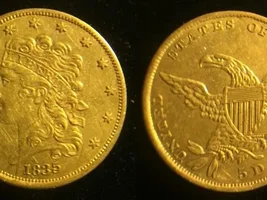
Artifacts are one thing but If I find a cache of gold or coins, then it's finders keepers right? ;D
 
Goodyguy said:
Great I'll see If I can get the first week of August off work.

I also have Archaeological dig experience and equipment for digging and screening and cleaning artifacts.

Goodyguy~

P.S.
Artifacts are one thing but If I find a cache of gold or coin, then it's finders keepers right? ;D

Actually there is a legend of a missing bag of gold dust buried under a tree, but that is supposed to be somewhere across the river (there used to be a really old bridge). I think the only real coins we are worried about are the old chinese coins but if a huge cache of them was discovered I'm pretty sure that a good deal could be worked out, and as for gold, well that's not really historical is it? :wink:

Almost everyone in the town is trying to protect this ghost town because yes, it is apart of our heritage and history for the community.

For anyone who wants a little light reading on this ghost town:
http://en.wikipedia.org/wiki/Quesnel_Forks,_British_Columbia
 
Nice Article
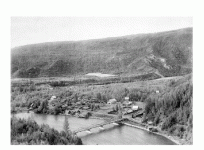
Has the area changed much from this picture taken in 1885?
 

Attachments

  • Quesnel_Forks.gif
    Quesnel_Forks.gif
    110.5 KB · Views: 224
Goodyguy said:
Nice Article
Has the area changed much from this picture taken in 1885?

Believe it or not I was actually going to type that out incase someone asked but Likely Guy would be better to answer that question. Most of the buildings are gone, bridge is gone, and as for the land, allot of it was washed out due to the river changing course because of the landslide. My guess would be about at least half the town has been "washed away" and only a handful of buildings remain.
 
First off I have to add, the '1885' photo was actually taken in about 1899. There's a later photo taken from the same spot that show's more 'development', as well as another from the year before. This was taken during the big days of hydraulic mining (which was the town's second 'boom'). As Drache says, yes about half of that town site has since been wiped out by the river, but only the buildings closest to it. Now what remains, remains, supported at times by new material. The whole site is in a delicate balance and has been threatened many times.

Today, there are about 20 buildings in various states of (dis)repair as well as the oldest cemetery in these parts.

About Likely and some info and photos on Quesnel Forks: http://www.likely-bc.ca/index.html

I was going to supply some decent websites about the site, but the aren't any. (my fault)

Best book about the place: 'Gold and Grand Dreams' by Marie Elliott, Horsdaal & Schubert Publishers, 2000.

Any questions, please forward.
 

Users who are viewing this thread

Back
Top Bottom