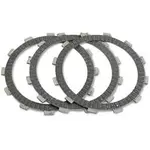
Today I found this strange iron ring; it is about 7 inches across and 1/8" thick. I couldn't find any markings on it. The location could date back to the late 1800s. Any ideas?
I think BigCy is correct. I looks like a clutch separator plate. Those come in many different sizes and tooth counts. Agree it does look like a conduit piece too. The stamping is fine blanked, as opposed to a conduit which is less precise. Only know this because I am a driveline engineer.
I think BigCy is correct. I looks like a clutch separator plate. Those come in many different sizes and tooth counts. Agree it does look like a conduit piece too. The stamping is fine blanked, as opposed to a conduit which is less precise. Only know this because I am a driveline engineer.
Is it possible to briefly explain the differences between stamping and fineblanking?
Im always interested in learning how metals are manufactured and it helps with identification.
As described in the link, fine blanking provides a better sheared surface than a standard stamped part. A normal stamped part does not control the sheared surface due to tolerances on the punch die, press tonnage, etc.. This results in metal rollover on the punch side of the cut. The metal actually breaks instead of shears. The edge can end up rough. This is what they call die break. Fine blanking is more expensive than normal stamping and typically not as fast. Clutch plates are fine blanked because the surface finish on the sheared edge is important for the function of the clutch. These plates need to slide smoothly in the carriers when the clutch is applied.