What's new

The Treasure of Captain William Kidd.

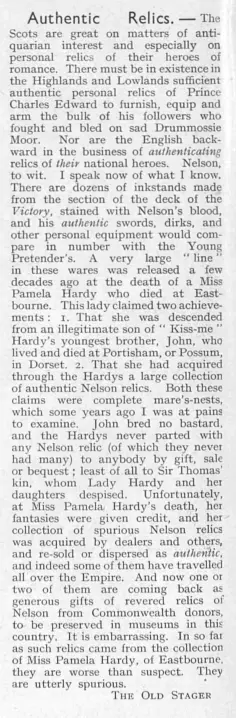
Decent source mentioning the fabricated provenance of Lord Nelson objects said to have been sold by Pamela Hardy:

1752753694223.webp

- The Sphere (25 October 1947)

However, the writer does not appear to have realised Hardy never existed.
No birth/death records of her and there are no records of her living in Eastbourne.
 
View attachment 2217154

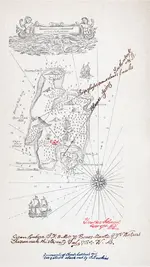
Dear esteemed members of Treasure Net. Can I please have your honest opinion on whether you believe the Kidd/Palmer charts were 'modeled' on Robert L Stevenson's map pictured above or not? Thank you.
-Randawg72.
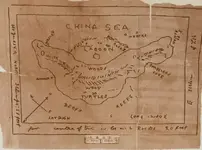
Clearly not. Inspired maybe but the design differs in many parts.

  • the Palmer maps are sketches not nautical charts. they do not show the shape of the hills and other features as is is typical for a nautical chart to identify a ship's position and bearing in relation to the coast.
  • they are drawn very differently without any soundings, tidal flats, inlets and artistic additions.
  • Parts are clearly disproportionate and showing quite small details while others on both ens of the island vary in the different maps.
  • the instructions use nautical terminology but clearly not written in the way a chart like the treasure island one would show them.
  • the shape in any case has nothing in common.
 
However, the writer does not appear to have realised Hardy never existed.
No birth/death records of her and there are no records of her living in Eastbourne.
I found this street address in a newspaper for Pamela Hardy:

Lushington Road

1752756559449.webp

Eastbourne Chronicle (10 December 1932)

Can anyone search property records of that specific street address?

I do not think it is a coincidence that Lewis Carroll author of Alice's Adventures in Wonderland stayed at the same street in Eastbourne (7 Lushington Road) and this suggests the hoaxer was pointing to Hardy being a fictional character. Surely if Pamela Hardy lived at this street there would be records? Crow, however, showed no Pamela Hardy was registered as living at an address in Eastbourne and there is no record of her death, but I would like to see the property records for that street. Can anyone help?
 
I found this street address in a newspaper for Pamela Hardy:

Lushington Road

View attachment 2217198
Eastbourne Chronicle (10 December 1932)

Can anyone search property records of that specific street address?

I do not think it is a coincidence that Lewis Carroll author of Alice's Adventures in Wonderland stayed at the same street in Eastbourne (7 Lushington Road) and this suggests the hoaxer was pointing to Hardy being a fictional character. Surely if Pamela Hardy lived at this street there would be records? Crow, however, showed no Pamela Hardy was registered as living at an address in Eastbourne and there is no record of her death, but I would like to see the property records for that street. Can anyone help?
Could it be that Hardy was her maiden-name and she used it just to sell in the auctions for its relation to Lord Nelson?
 
Could it be that Hardy was her maiden-name and she used it just to sell in the auctions for its relation to Lord Nelson?
It that was true there would surely be a mention in a newspaper or record somewhere when Hardy was discussed but there is nothing. Combined with the fact we know the Hardy provenance for certain objects was fabricated - points to her being imaginary as well.
 
It that was true there would surely be a mention in a newspaper or record somewhere when Hardy was discussed but there is nothing.
If the auctioneer was too lazy to checkout that lady why would you expect more from a newspaper? Standards may have been higher then today but I still would discount this as an argument!
Combined with the fact we know the Hardy provenance for certain objects was fabricated - points to her being imaginary as well.
With so many object auctioned (all at Christie's?) one would assume the auctioneer would check her out at least. Its possible to with one or two objects but with so many - hard to neglegt imagine.
 
If the auctioneer was too lazy to checkout that lady why would you expect more from a newspaper? Standards may have been higher then today but I still would discount this as an argument!

With so many object auctioned (all at Christie's?) one would assume the auctioneer would check her out at least. Its possible to with one or two objects but with so many - hard to neglegt imagine.
The items at that auction were not stated to have been directly sold by Pamela Hardy. She is described as the former owner but I suspect the seller/vendor who put them up for auction was Arthur Hill Cutler. This is more evidence she never existed because the items were sold by someone else, who made her up and fabricated the provenance of the items to trace back to Lord Nelson. I looked at other newspaper articles and Hardy is never said to be the seller at the auctions, rather, each time she sold the objects to another seller or vendor (usually anonymous) who auctioned the items.

Western Morning News (6 December 1932)

1752769979995.webp


The following article notes a collection was sold by a "well-known Eastbourne trader" (Cutler?).

1752770176065.webp

Eastbourne Chronicle (10 December 1932)

I also find this highly suspicious, we are told the vendor who sold these items at auction, having bought them from Pamela Hardy wants to remain anonymous. The obvious reason for that is if their name was mentioned they could be questioned about the existence of Hardy.

1752770466715.webp

1752770502349.webp

Hampshire Telegraph (9 December 1932)

"Miss Pamela Hardy of Eastbourne, sold them to the present vendor, who prefers to remain anonymous."

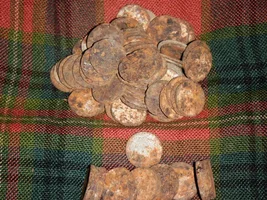
Edit: A photo of the items mentioned above which were auctioned.

1752771370179.webp

1752771420965.webp

1752771443793.webp

1752771487069.webp
 
Last edited:
Vice-Admiral Sir Thomas Masterman Hardy, 1st Baronet, GCB Hardy 1769–1839 Birth 5 APR 1769 • Kingston Russell House, Long Bredy, Dorset, England Death 20 SEP 1839 • Greenwich, Royal Borough of Greenwich, Greater London, England.

When he was not killing Frenchmen he was breeding. He was married three times. He had six daughters. their family history is recorded.he had one son and six daughters.


First marriage Mary Ann Johnson in 1790– Death Unknown produced a son and daughter.

George Hardy born 1793 who died in united states.

Elizabeth Rudd (1795–) Abt. 1795 • Portsea, Hampshire, England


Second marriage in 1897 Anne Louisa Emily Anne Berkeley 1788–1877 Birth 19 MAR 1788 • Berkeley, Gloucestershire or Huntington, Sussex, England Death 2 NOV 1877 • Hampton Court, Middlesex or Kingston, Surrey

Emily Georgina Masterman (1809–1887) Death 8 Apr or Jun 1887 • Newbury, Berkshire

Louisa Georgiana Hardy (1808–1875) 7 December 1808 • Newlington, Sussex, England. Death of Louisa Georgiana Hardy (1808–1875) 17 Dec 1875 • Hampton Court, London Borough of Richmond upon Thames, Greater London, England

Lady Mary Charlotte Hardy (1813–1896) 20 March 1813 • Putney, Surrey, England

Third marriage. Eleanor Slegg 22 Mar 1828 • St George the Martyr, Queen Square, England ABT. 1800 Death Unknown

Eleanor Hardy (1833–) 1833 • kent, england

Mary Ann Hardy (1834–) abt 1834 • Lambeth, London, England

In all the descendants there are no Pamela Hardy.

No family connection what so ever.

Crow
 
The items at that auction were not stated to have been directly sold by Pamela Hardy. She is described as the former owner but I suspect the seller/vendor who put them up for auction was Arthur Hill Cutler. This is more evidence she never existed because the items were sold by someone else, who made her up and fabricated the provenance of the items to trace back to Lord Nelson. I looked at other newspaper articles and Hardy is never said to be the seller at the auctions, rather, each time she sold the objects to another seller or vendor (usually anonymous) who auctioned the items.

Western Morning News (6 December 1932)

View attachment 2217217

The following article notes a collection was sold by a "well-known Eastbourne trader" (Cutler?).

View attachment 2217218
Eastbourne Chronicle (10 December 1932)

I also find this highly suspicious, we are told the vendor who sold these items at auction, having bought them from Pamela Hardy wants to remain anonymous. The obvious reason for that is if their name was mentioned they could be questioned about the existence of Hardy.

View attachment 2217219
View attachment 2217220
Hampshire Telegraph (9 December 1932)

"Miss Pamela Hardy of Eastbourne, sold them to the present vendor, who prefers to remain anonymous."

Edit: A photo of the items mentioned above which were auctioned.

View attachment 2217225
View attachment 2217226
View attachment 2217227
View attachment 2217228

The telescope far different from the one painted in 1834.

Screenshot 2025-07-18 114816.webp


You think if he was having painting done for posterity that he would of been painted holding Nelson's telescope to signify here was there at the battle of Trafalgar?

I guess it hard for some people to man up and face the facts. Pride is a dangerous emotion they drown themselves chasing fantasy. Treasure legends are fascinating but they consume people who become too obsessed by them. It will eat and devour them. I have seen it time and time. gain. There is whole industry that fakes artifacts.

If you are really interested in finding treasure pick up all the treasure hunting books and tip them all into the bin.


It you want to get to closer to the truth look up Paul Lorrain (died 7 October 1719) was, for twenty-two years, the secretary, translator, and copyist for Samuel Pepys, and became well known as the Ordinary (chaplain) of Newgate Prison by standardising the publication of the gallows confessions of condemned prisoners.

Screenshot 2025-07-18 175443.webp


He succeeded Samuel Smith, who died on 24 August 1698, as Ordinary of Newgate Prison, being appointed in September 1698. From his appointment until 1719 he compiled the official accounts of the dying speeches of criminals condemned to capital punishment and oversaw their printing in broadsheets; 48 of these broadsheets are in the British Museum. The confessions, to which are prefixed abstracts of Lorrain's 'funeral sermons,' are generally headed ''The Ordinary of Newgate, his Account of the Behaviour, Confession, and last Speech of X.,' &c. They were issued at eight o'clock on the morning following the execution, and signed Paul Lorrain, the public being warned against counterfeits and unauthorized accounts.

This not kidds account below. But an example what to look for. Kidd folio is only one of 48 folios. There is on on Kidd rarely seen.

Screenshot 2025-07-18 175817.webp


Lorrain standardised the layout of the Confessions, and zealously promoted the sale of his versions over competing unofficial broadsheets. He also benefited greatly from the publications, receiving some £200 per annum income from them, as compared with his remuneration as Ordinary, which with privileges amounted to some £65 per annum.

Among the most notorious felons whom Lorrain attended to the scaffold were Captain Kidd (May 1701) The confessions, to which are prefixed abstracts of Lorrain's 'funeral sermons,' are generally headed ''The Ordinary of Newgate, his Account of the Behaviour, Confession, and last Speech of Captain William Kidd. is in British Museum. The British Museum does hold some items related to Captain Kidd, though it's not a dedicated exhibit.The Museum's collection includes items related to Kidd's life and activities, but details about these specific items are not readily available. ItS like pulling teeth to get an answer out of them.

Read that account you might discover how much BS has been said about William Kidd over the years by treasure book Authors..

Crow
 
Last edited:
Clearly not. Inspired maybe but the design differs in many parts.

  • the Palmer maps are sketches not nautical charts. they do not show the shape of the hills and other features as is is typical for a nautical chart to identify a ship's position and bearing in relation to the coast.
  • they are drawn very differently without any soundings, tidal flats, inlets and artistic additions.
  • Parts are clearly disproportionate and showing quite small details while others on both ens of the island vary in the different maps.
  • the instructions use nautical terminology but clearly not written in the way a chart like the treasure island one would show them.
  • the shape in any case has nothing in common.
Hubert Palmer had 27 editions/reprints of Treasure Island in his book collection (he mentioned this is a private letter G. J. Bath owns or has read). There were presumably different versions of the island map in these various editions/reprints. I would need to go through them all. The original map of the island was lost when Stevenson sent it to his London publisher (Cassell); a replacement was then made by John Bartholomew. My understanding is the first edition of Treasure Island included it as a frontispiece in 1883. Between 1883 and 1934, what were the variations of the map? [1934 was the first colour version by Monro Scott Orr and you can see clear differences, see below].

1752838851386.webp


The colour version by Orr (1934):

1752839249024.webp


Thomas Nelson & Sons, 1930

1752839383115.webp
 

Attachments

  • 1752839462134.webp
    1752839462134.webp
    600.2 KB · Views: 45
Could it be that Hardy was her maiden-name and she used it just to sell in the auctions for its relation to Lord Nelson?

As an update, I have now found an auction record (1930) which states Hardy was not married ("Miss")
["Miss" of course is traditionally used for unmarried women]:

1752842496610.webp


Pamela Hardy is mentioned in a few other auction records:

So I think it is proven beyond reasonable doubt she is fictional. No records exist of her living in Eastbourne and no birth/death records; she would not be under a different name either since at least one of the auction records state she was a "Miss" (no adopted married name).
 
So Edmunds is mistaken. Skelton only ever saw and examined a single map in 1950 and any photographic copies were not made for Palmer who died the previous year (but presumably Elizabeth Dick, his housekeeper). Note Skelton only became Superintendent of the Map Room at the British Museum in 1950 (a year after Palmer died), so this is further evidence Edmunds got it wrong. The idea Skelton was "privately commissioned by Palmer in the 1930's" is unsubstantiated and clearly erroneous. Skelton first began working in the Map Room from 1945/1946 and he was promoted to Superintendent in 1950 (until retiring in 1967). Edmunds did not even do basic research on this.
Research you say? Raleigh A Skelton began his career at the British Museum in 1931. And Skelton served with the Royal Artillery during WWII and he was stationed in Austria until 1947. You got one thing correct, he resumed working at the British Museum after the war and was promoted to Superintendent of the Map Room in 1950.
(ref: The Monuments Men Foundation: https://www.monumentsmenandwomenfnd...BYTr2hgoqC2ezoq3Ii96OvBe8Ifgbyx1LkAZGdVnNfCgA)
Finally, more than one map copy and the Yunnan Parchment had the British Museum ruler/label or name next to it but this is meaningless as already explained because anyone could have put that there without any map or parchment entering the British Museum. This point was made by Peter Barber of the Map Library: "The [British Museum] label could, however, have been obtained by the photographer without the map ever having entered the Museum."
So a fake rubber stamp bearing The British Museum name is all part of the elaborate conspiracy and hoax? 🙄
 
Research you say? Raleigh A Skelton began his career at the British Museum in 1931. And Skelton served with the Royal Artillery during WWII and he was stationed in Austria until 1947. You got one thing correct, he resumed working at the British Museum after the war and was promoted to Superintendent of the Map Room in 1950.
(ref: The Monuments Men Foundation: https://www.monumentsmenandwomenfnd...BYTr2hgoqC2ezoq3Ii96OvBe8Ifgbyx1LkAZGdVnNfCgA)
Skelton had nothing to do with the British Museum Map Room before 1945/1946. While he worked in the British Museum years before (he joined the staff in 1931), he did so in a different department i.e., as Assistant Keeper of the Department of Printed Books. Your dates are wrong; he was not stationed in Austria until 1947. He was secretary of the Hakluyt Society from 1946 to 1966 meaning he must have been back in London in 1946, and probably was working at the Map Room the previous year, shortly after World War II ended. The President of the Hakluyt Society in 1945 was Edward Lynam, Superintendent of the Map Room at the British Museum (Skelton replaced him in 1950). So as usual, your information is embarrassingly wrong. It is clear from the available timeline that Edmunds statements are also incorrect. Skelton only gained an international reputation as an expert in maps during the 1950s.

1753018998553.webp

1753019129070.webp

"Raleigh Ashlin Skelton", Helen Wallis
Transactions of the Institute of British Geographers, No. 58 (Mar., 1973), pp. 139-148

So a fake rubber stamp bearing The British Museum name is all part of the elaborate conspiracy and hoax? 🙄
No. It means someone not from the museum put the stamp/ruler there. As already noted, the British Museum has no records of any of the maps nor produced an official report. Anything Skelton said was "off-the-record" (even Edmunds agrees whatever Skelton said was in private but he is wrong about the date [Skelton examined one of the maps in 1950, not the 1930s]). As for conspiracy theories, you are literally a conspiracy theorist yourself since you are claiming (without evidence) the British Museum had access to the Kidd-Palmer maps despite there are no records and multiple staff have denied having knowledge of the maps entering the British Museum Map Room.

1753019431389.webp

::)
 
Last edited:
No. It means someone not from the museum put the stamp/ruler there.
For what it is worth, I believe the person most likely responsible for this deception was Rupert Furneaux.

He used it for two covers for his book The Money Pit Mystery.

1753022041220.webp

1753022087947.webp


Furneaux erroneously claimed in his book that Skelton concluded the maps were genuine (he did no such thing [all he said is one of the map parchments looked to be early 18th century; this is not the same as the maps being drawn then]) and that the maps "were photographed at the British Museum by infra-red process" (dubious at best). It appears he went as far as to mislead people by putting the British Museum stamp/ruler next to a photographic copy of one of the maps and then put it on his book cover to sell more copies by duping gullible people into thinking the British Museum had actually authenticated the maps, even though the museum has no records/knowledge of the maps.
 
Last edited:
For what it is worth, I believe the person most likely responsible for this deception was Rupert Furneaux.

He used it for two covers for his book The Money Pit Mystery.

View attachment 2217598
View attachment 2217599

Furneaux erroneously claimed in his book that Skelton concluded the maps were genuine (he did no such thing [all he said is one of the map parchments looked to be early 18th century; this is not the same as the maps being drawn then]) and that the maps "were photographed at the British Museum by infra-red process" (dubious at best). It appears he went as far as to mislead people by putting the British Museum stamp/ruler next to a photographic copy of one of the maps and then put it on his book cover to sell more copies by duping gullible people into thinking the British Museum had actually authenticated the maps, even though the museum has no records/knowledge of the maps.
Great addition to this thread.

Only piece I don’t get it the china sea reference. Island looks like a dead ringer for OI.
 
For what it is worth, I believe the person most likely responsible for this deception was Rupert Furneaux.

Worth? So now you've changed your primary suspect to Rupert Furneaux? After posting "The hoaxer (evidence points to Arthur Hill Cutler)" (post #599), and you even implicated Hubert Palmer "..this suggests Palmer was involved in the hoax" (post #540).
Or maybe they were all co-conspirators to this elaborate deception? 😂
 
Worth? So now you've changed your primary suspect to Rupert Furneaux? After posting "The hoaxer (evidence points to Arthur Hill Cutler)" (post #599), and you even implicated Hubert Palmer "..this suggests Palmer was involved in the hoax" (post #540).
Or maybe they were all co-conspirators to this elaborate deception? 😂
Please do read what he has posted and it is better to have a fair discussion here and for what I can see he is a very knowledgeable person who greatly contributes.
believe the person most likely responsible for this deception was Rupert Furneaux.
 
Please do read what he has posted and it is better to have a fair discussion here and for what I can see he is a very knowledgeable person who greatly contributes.

Hi Bocaj,
I do not believe in conspiracy theories. I have read cryptid's posts and he seems to be repeating the same theories over and over. I already explained why the British Museum has no record of the charts (post #614). Furneaux was obsessed with Oak Island. He wrote the "Mystery of Oak Island" in 1972. Why would he forge a treasure chart in 1934, and then wait 38 years to publish a picture of it on the cover of a book? Cryptid's contributions have been noted, but they consist mostly repetitive static and unsupported nonsense.
 
Hi Bocaj,
I do not believe in conspiracy theories. I have read cryptid's posts and he seems to be repeating the same theories over and over. I already explained why the British Museum has no record of the charts (post #614). Furneaux was obsessed with Oak Island. He wrote the "Mystery of Oak Island" in 1972. Why would he forge a treasure chart in 1934, and then wait 38 years to publish a picture of it on the cover of a book? Cryptid's contributions have been noted, but they consist mostly repetitive static and unsupported nonsense.
I think you misunderstand him - he didn't say he forged the map but published the map with that ruler and his conclusions about their authenticity proved. That's all.

I do at least share your idea that it is not proved that those maps are a total fabrication. But I still read and I am very interested what others have to say about it. Cryptid and Crow have both helped a lot to clarify the history of those maps. From that I do believe as I did before that Cutler was not a trustworthy seller of antiquities and all objects coming from him are of questionable authenticity at most. That said I doubt he did create those maps. Used them - yes. maybe copied them and added some details to associate them with Kidd.

When it comes to antique or art dealers you have to understand the business. Pamela Hardy may simply be a code for goods of questionable origin (stolen, etc). Quite possible everyone involved did know this but it served every ones interest not to ask questions. It does not necessary mean the goods themself are not authentic.

I do respect those who come to the conclusion that they are fake - still I am not convinced myself...
 
Last edited:
Worth? So now you've changed your primary suspect to Rupert Furneaux? After posting "The hoaxer (evidence points to Arthur Hill Cutler)" (post #599), and you even implicated Hubert Palmer "..this suggests Palmer was involved in the hoax" (post #540).
Or maybe they were all co-conspirators to this elaborate deception? 😂
Furneaux never had access to a single Kidd-Palmer map and he only ever claimed to have photographic copies ("I possess copies of all four charts, which were made by infra-red photography after Palmer's death in 1950" [The Great Treasure Hunts, 1969 p. 21]). Why would I change my "primary suspect" to Furneaux? You continue to make one blunder after another and spout nonsense. I doubt Furneaux had any correspondence with Palmer or Cutler. He only became interested in the maps after Palmer's death and first mentioned the maps in 1953 [a private letter to Wilkins] and 1954 [Fact, Fake, Or Fable?]. Wilkins was not on friendly terms with him.

It was presumably Dick who made the first map copies, directly or indirectly (sources suggest she hired a journalist to assist her) after Palmer's death and this is supported by newspaper articles around the same time (1951) which mention Dick put photographic copies of one or more maps in a Singapore bank. Howlett claimed he got Skelton in the mid-1950s to privately make photographic copies and he had personal access to "enlarged photographs", but this remains unsubstantiated. Regardless, we know from a private letter Skelton sent to Furneaux in 1965, he only examined a single map, the Skeleton Map ("Key Chart"), so if he did make copies, including enlarged photographs, it was only of one map and he did this in 1950 (not the mid-1950s) as confirmed in the letter. While there controversially does exist a photographic copy of the Skeleton Map with the British Museum ruler/stamp (and others), there is no evidence it entered the British Museum. This has long been pointed out by staff from the Map Library (formerly Map Room).

There are clear differences to various drawings/photographic copies of the Skeleton Map:

1753121157600.webp


Compare this drawing to the photographic copy you yourself posted:

1753121392154.webp


The original had apparently faded in the section I highlighted in red, but someone used photographic enlargement and claims to have restored the faint/disappearing squiggles in the photographic copy. This alteration to the map is not said to have introduced new content but restored fading ink squiggles but this is somewhat questionable since we cannot now compare it to the original map. I believe it is most likely a photographic copy made by Dick (sometime between 1949 and 1951), however, the ruler/stamp was likely added years later by Rupert Furneaux in the 1960s or early 1970s; it appeared on the front cover of his 1972 book The Money Pit Mystery. Furneaux also drew himself or got someone to draw two of the maps which were published in the book. His drawing of the Coral Island Map is slightly different to original map (certain text is not legible in the original). Overall, there are photographic copies as well as copies of reproductions, redrawings, and not all of them are identical but some are different. Both Edmunds and Bath quote a note on the photographic copy with the British Museum ruler/stamp:

The original of this chart has become badly discoloured with age and is now partially illegible. The copy was constructed by means of an accurate tracing of a photographic enlargement (magnification x2) of the original, verified by reference to the original and to enlarged photographs therof taken under infa-red and ultra-violet light.
This makes sense if the map was fading but we cannot rule out mistakes with the touch up since we do not have access to the original to compare with hence why I said "Death Valley" could possibly have been on the original Skeleton Map - look where the squiggles faded (red box). There is actually a "V" there in the purported restoration. The original map (Wilkins saw) could have read "DV" [Death Valley], instead of the squiggle and "V". This is only a possibility, by no means am I saying it is very probable.

1753123551832.webp


Summary:
  • Elizabeth Dick or someone on her behalf (a journalist) made photographic copies of the Kidd-Palmer maps (after Palmer's death) between 1949 and 1951.
  • In 1950, Skelton received a single map that he was granted access to examine (Skeleton Map). It was likely Dick who gave him this map to examine (and presumably photograph) since at that time it was in her possession and she had not sold it.
  • Anthony Howlett claims Skelton made photographic copies in the mid-1950s but this claim is dubious.
  • Someone at some point made copies with photographic enlargement to restore faint/disappearing squiggles or illegible text but this has confusingly led to there being different map versions and redrawings in books and across the internet.
  • The British Museum has no knowledge of the maps and no records (what Skelton did in 1950 when examining the Skeleton Map was "off-the-record"). The controversial photo of the Skeleton Map (see above) with a British Museum stamp/ruler was most probably taken outside of the museum and evidence points to Rupert Furneaux, who stated he owned photographic copies of all the maps "made by infra-red photography after Palmer's death". He put it on his book cover in 1972.
 

Attachments

  • 1753115934643.webp
    1753115934643.webp
    34.4 KB · Views: 44
Last edited:

Users who are viewing this thread

Back
Top Bottom