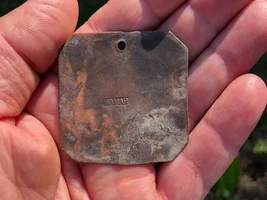
One thing I think everyone here can agree on, William Kidd was proverbially thrown under a Bus. He was made an example of by the powers scrambling to protect their reputations in the political power play of the Wigs and Tories.
Crow
The secret partnership of Captain William Kidd and Captain Henry Every
A basic summery.
In July 1689 William Kidd was working as part of the crew on a twenty gunned French privateer called the Le Sainte Rose at Boa Vista, located on the West coast of Africa. The famous French Admiral Jean Du Casse sent out an urgent rallying secret message for all armed French ships in the area to join his assembled fleet at a secret location. The Admiral’s clandestine secret mission was to take a strong fleet (with many troops below decks) to make a surprise attack on the Leeward Islands and later the Caribbean Sea. The English and Danish (English allies) colonies there would naturally be totally unaware of the imminent state of war, and that the powerful French invasion squadron was already rapidly approaching across the South Atlantic Ocean with the full intention of spreading out capturing and then occupying several ports simultaneously.
As a prudent precaution the English and Dutch members on board the Le Sainte Rose were essentially enemies and were suddenly treated as prisoner’s because a state war with France was soon to be announced, but, they were not confined below deck. The 22- ship strong fleet attacked the English held Fort Charles by a land force comprised of armed seamen, and skeleton crews were left to guard the anchored ships. Captain Kidd organised a secret surprise coup, the England and Danish seamen armed with bailing pins used as clubs quickly overcame the French guards without a shot fired, and they allowed their former shipmates to swim to the nearest French ship. With a strong tail wind blowing they quietly hoisted sail and by cutting the straining anchor cable they rapidly escaped in a desperate action commonly known as to “Cut and run”.
Captain Kidd later successfully alerted the Leeward Islands and the news spread rapidly to the Caribbean Sea, and his swift action saved thousands of lives. Captain Kidd later joined (as a commissioned privateer) the defence squadron which was being rapidly assembled by Governor Christopher Codrington, he was the Commander in Chief of the English forces in the Caribbean Sea and the Leeward Islands.
In the ensuing battle for (the formerly French) island of St Martin’s the defending squadron was led by Colonel Thomas Henson. After a devastating battle they were about to be beaten when night fell. Captain Kidd personally proposed a do or die plan that relied on swift action and the element of surprise, it was unanimously agreed, it was a complete deviation from the standard two lines of battle that they were losing.
At the first glimmer of dawn the next day Captain Kidd’s ship actually rushed to the front to lead, with all guns run out he the swiftly charged silently into battle head on against the still sleeping French crews, this unexpected attack caused panic and their ships to retreat in confusion, consequently tales of Captain Kidd’s inspiring gallantry l spread to legendary status, and Governor Codrington mentioned Captain Kidd’s impressive valour in dispatches to England describing him as Quote, "A mighty Man".
Later on finally returning to his home port of New York in March 1691 Captain Kidd later lent his full assistance to Colonel Henry Sloughter, he supplied him with guns and ammunition to try and put down the Jacob Leister rebellion, and he was later handsomely paid for his valuable services. The officially appointed governor Colonel Ingoldsby arrived the next day and Leister immediately surrendered.
Captain Kidd’s exploits in serving king and country became stuff of legend, 1/ in stealing a French war ship, then 2/ in alerting The Virgins Islands and Caribbean Sea to the terrifying threat of invasion, thereby saving thousands of lives. 3/ then in leading the small English squadron to the famous victory over the vastly superior French force and saving several hundred more lives, and 4/ later in New York suppressing a rebellion. It should have all earned him a knighthood and the king was certainly kept well informed of his exploits in dispatches.
In 1690 the Scotsman Captain Kidd was still wallowing in his fame as a renowned war hero at the Island of Saint Thomas, with his Danish friends who held him in great esteem. Before returning to his home port of New York, he was soon to meet with Captain Henry Every who wished to make him a business proposition. Later in Campeachy Bay which is located in the great Bay of Mexico, Captain Kidd agreed became the secret partner of Captain Henry Every who’s own story is amazing, and he was the mastermind behind an amazing covert operation and the secret construction of the unique mine beneath Oak Island.
---------------------------------------------------------------------------------------------------------------------
To set the record straight Captain William Kidd was NOT convicted of piracy, he was convicted and hanged for the false charge of wilfully murdering the mutinous gunner William Moore, of which he was totally innocent. Moore was only temporally stunned by a blow to his head when Kidd hurled a wooden bucket at him to silence his loud attempts to instigate a full scale mutiny. Many sea captains felt that Captain Kidd’s action was fully justified in suppressing a mutiny by any means, it was a serious hanging offence.
The ships cabin boy (who they forgot to coerce) nervously testified in court that William Moore actually recovered from the blow that knock him out, and that he was already very ill during the incident. Also that Moore finally died several days later of a deadly fever like many of the other crewmen on board. The anxious cabin boy’s submitted testimony was considered to be frivolous by the honourable presiding judge and therefore it was adjudged to be inadmissible.
Oak Island Sage


 that doesn't apply here, in this case - I know I'm right.