What's new

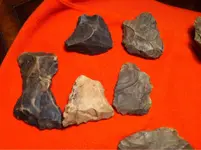
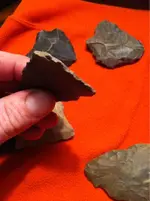
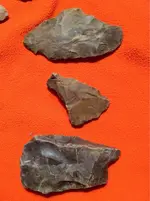
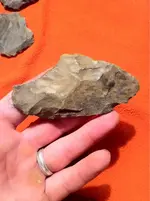
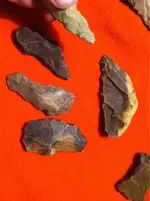
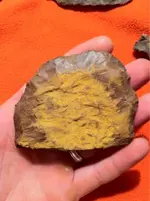
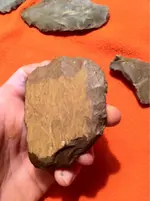
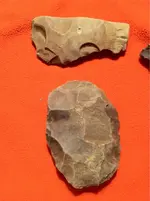
Todays finds were alright

painterx7

Silver Member
Joined
Jul 20, 2013
Messages
2,894
Reaction score
2,579
Golden Thread
0
Primary Interest:
All Treasure Hunting
Some scrapers ,flake knives , broke blade , small ax, awesome side scraper
 

Attachments

  • image-2724708254.webp
    image-2724708254.webp
    49.3 KB · Views: 107
  • image-2259135436.webp
    image-2259135436.webp
    37.7 KB · Views: 111
  • image-2794358705.webp
    image-2794358705.webp
    73.2 KB · Views: 115
  • image-2311104424.webp
    image-2311104424.webp
    51 KB · Views: 105
  • image-588346327.webp
    image-588346327.webp
    59.1 KB · Views: 108
  • image-1359602818.webp
    image-1359602818.webp
    46 KB · Views: 104
  • image-3043553850.webp
    image-3043553850.webp
    40.7 KB · Views: 101
  • image-2100181456.webp
    image-2100181456.webp
    57.2 KB · Views: 101
Upvote 0
Idk for sure but I think pieces that were heat treated when they were treated probably were going to receive pressure flaking ?
 
Heat treating really took off in the middle archaic.
It's seen in some earlier contexts but was very prolific in the archaic.
As far as being technical... flint is just a word used to describe cryptocrystaline quartzite.
It's just a word.. no different than chert or chalcedony.. crystal size and and/or how thoroughly the silicate replaced the limestone is the only difference...its the same material.
Calling one piece of the same material flint or chert is no different than calling a sub a hogie.
 
Last edited:
All Geologist refer flint and all the other close pieces just as quartz. I have found in this type of forum (arrowhead types) we actually call them by different names. We actually break them down in different family groups but all actually go back to the main lithic as quartz.
 
painterx7, To answer your question. I heat treat certain rocks before pressure flaking. I can't think of another reason to heat treat rock. But, there are some rocks that pressure flake easier after being soaked in water with no heat needed. Every rock is different. An example of that is some of the Flint Ridge material. I gave a nice chunk of rock to a friend that is an expert flint knapper. It was already on the glossy side when I gave it to him and my thoughts were the piece had been heat treated already. I spoke with my buddy later in the week about the rock and he said he was still soaking it in a bucket of water.

And to add to this, my knapping instructor knaps a lot of foreign rock out of India, Australia and some islands that take heat up to 650 degrees before it can be knapped.
 
Last edited:
Thanks that is some awesome information very helpful in the learning process I think I'm going to start flint knapping
 
I dont know the process of it but have heard of some putting the rocks in their house oven to cook them.
 
Only knappers with understanding wives do that Rock!!

The easiest way is to buy a turkey roaster at a yard sale for cheap and them youtube for instruction on how to.
 

Users who are viewing this thread

Back
Top Bottom