What's new

What ya think?

Status
Not open for further replies.

rock

Gold Member
Joined
Aug 25, 2012
Messages
14,751
Reaction score
8,933
Golden Thread
0
Location
South
Detector(s) used
Coin Finder
Primary Interest:
All Treasure Hunting
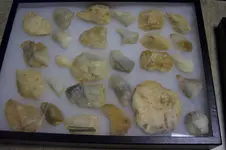
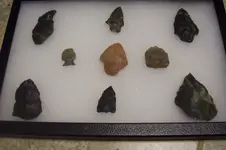
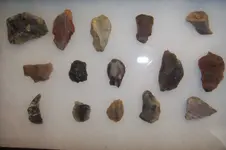
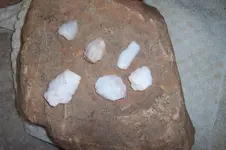
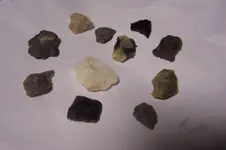
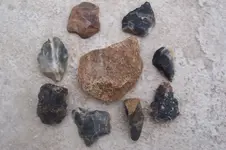
Ive been thinking on this for a while now. Why would there be so many tools like scrapers and knifes in one spot? I am leaning towards these type of spots to be a kill spot. Which means they killed a animal and then cleaned it for process and then carried it back to camp to eat. Well I have found spots with just tools and maybe 1 or 2 damaged points in the general area. My question is this.......do you think they just cleaned the animal and left their tools in the kill spot or do you believe they carried all of their tools with them back to camp? I am thinking they could make tools fast and just left them and made more later as needed. I am sure they had some favorites and hung onto them. Here are some I have found in the same spot. Each pic is a different spot. Id like to hear some theories on this as to what everyone has to say.
 

Attachments
  • 100_3151.webp
    100_3151.webp
    277.2 KB · Views: 259
  • 100_2962.webp
    100_2962.webp
    179.7 KB · Views: 248
  • 100_2968.webp
    100_2968.webp
    171.3 KB · Views: 249
  • 100_3058.webp
    100_3058.webp
    112.2 KB · Views: 258
  • 100_3054.webp
    100_3054.webp
    301.1 KB · Views: 233
  • 100_2857.webp
    100_2857.webp
    91.7 KB · Views: 244
Upvote 0

One stratified site does not set any rules about the post-glacial topography of the SE USA. Finding an Archaic point on the surface does not say anything complex about its earlier deposition. My guess is that that stratified site was built by human hands, as occupants freshened up a funky living-surface by carting in loads of new dirt. That is how Florida kitchen middens were built -- by burying the funky food remains and human waste with fresh sand.

Rocks don't swim through the dirt. Rocks are found where they were last deposited by some external force which might be human, or glacial, or gravity, or storm-surge, or - in a relatively small percentage of cases in Post-Glacial times - by existing streams and rivers. (Remember, we're talking rocks, not silt.)

You can find bars in the Peace River, for example, with cobblestones then gravel then sand. These bars are believed to have been built up by strong flood surges in the river channel over time. Cobblestones are the first to fall out of suspension, sand the last. But, you don't see this phenomenon in farm fields. Water-saturated bottomland does not produce stones swimming for higher ground. Aggregation and sorting of stones requires a strong current over some time.

I found a stemmed archaic point in my front yard which had about six inches of topsoil over limestone at the time. The point was not lost five thousand years ago on some higher point of land (I live on the highest point around). No, in any reasonable scenario, it was lost right there in what is now my front yard and was locked into the sod for these thousands of years. The contours of Florida have not changed much in the last 10,000 years. The dissection of the Ocala Uplift took millions of years.

This is another instance in which g.boy let his imagination get out ahead of his facts.
 
"That's exactly why many projectile points are found on hilltops.. the erosion is sped up there."

That's interesting.

I always thought it was because the hill tops were good vantage points and were regularly occupied by the natives that littered the place up with their flint. Soil motion could bring them to the surface too.
 
Somebody said several posts back that each of us were speaking the truth as it relates to different circumstances .... that I think sums it up.
 
Flint was too hard to come by, in my opinion ,they would never intentionally leave it behind.

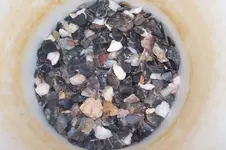
I am not bragging cause I wish each piece of this flint in the bucket was whole. This is my waist bucket its 1.5 inches deep rite now. I use a 5 gallon bucket because there is so much worked flint that is broken. There is 1 field where it is plowed and there is nothing but raw quartz and flint nodules in the whole field. It is amazing and the pieces are large flint. Oh found this in 6 months.
 

Attachments

  • 100_3236.webp
    100_3236.webp
    244.5 KB · Views: 102
Last edited:
Somebody said several posts back that each of us were speaking the truth as it relates to different circumstances .... that I think sums it up.

Would you mind copying and pasting the post? I can't find it.
 
I've got to say.. you sure put a shine on informational tirds.. remind me of a used car salesman.
That six inches of soil that was left on top of that limestone was the result of large-scale erosion.
That's exactly why many projectile points are found on hilltops.. the erosion is sped up there.

There is no way to know if there were ever more than six inches of soil on top of my hill. Maybe it was a "bald" for hundreds of thousands of years, maybe it had sixteen inches of soil within the last ten thousand years. My guess is that the hilltop has stayed pretty much the same for the past ten thousand years (until I built on it) because Florida in general has remained much the same for that period. That is, the weather (with cycles of wet and dry), the flora, and the fauna have been stable. Because this is Florida, there has been plenty of groundcover to inhibit erosion.

What we can say for certain is that large pieces of worked chert don't migrate on their own through the soil here or anywhere. You find 'em where they were dropped or thrown or moved by machine, with few exceptions already noted.
 
How can you just dismiss the fact that many localities do not support the stratification of artifacts.
Your simply speaking incorrectly.
 
i think everyone is right,it is hard to imagine 1000 years let alone 15 to 20 thousand,gator is giving real good thoughts,a tornado could of picked them up hundreds of times,they could of grown with a tree a hundred foot high,than rotted out to were they are now.or rock it could be what is left over from a kill site,find the big broken ones that are there also if a kill site should be more than just those little things,but harry is most likely dead on,found years ago by a head hunter trying to hide the fact that points were there,we should be nicer to each other.

There you go quito
The simple fact is the older the artifact the deeper it usually is unless an outside force has changed the land above it... or natural forces have moved it upward.. in that case an entire layer of material often moves with it... unless it creates a hill the only way that can happen is for the material above to be displaced to the sides.
 
Last edited:
There you go quito

Umm, you sure know how to stretch things if this is support for the truth YOU speak. Well, unless you just want to believe and fall back on his comment about everyone being right.

quote_icon.png
Originally Posted by jamey

i think everyone is right,it is hard to imagine 1000 years let alone 15 to 20 thousand,gator is giving real good thoughts,a tornado could of picked them up hundreds of times,they could of grown with a tree a hundred foot high,than rotted out to were they are now.or rock it could be what is left over from a kill site,find the big broken ones that are there also if a kill site should be more than just those little things,but harry is most likely dead on,found years ago by a head hunter trying to hide the fact that points were there,we should be nicer to each other.
 
Go on one...just one..archaeological dig... with credited professionals.
Just one.
 
Remember its a discussion.
 
Go on one...just one..archaeological dig... with credited professionals.
Just one.

Are you stuck in I can't really reply?

If going on a dig will make me an educated "archie" like you, I will never go on one!
 
I know it didnt, lol. I laugh when I read a response like that. He might of typed it to be funny.
 
How old are the points you have found at that site rock?
If your finding early archaic artifacts you will need to keep in mind that 8-9 thousand years ago most of Georgia was covered with a giant hardwood forest...if middle archaic.. the climate had changed to the point that mostly pine forests covered the area. Its nothing like out west.
Imagine all the generations of root systems of large trees just to name one aspect of how the deposition of artifacts can change. Thousands of years worth.
These people are talking like stratified sites are everywhere.
Just the opposite is true... in fact they are comparatively rare as opposed to lithic scatters and deposits.
There is endless information out there the back up exactly what I'm saying... yet several on this thread want to type a whole lot with nothing offered to back up their claims other than statements like "it's my guess"
Take a look at that field you walk..at the time it was cleared for farming it was covered with trees..all with root systems... now imagine what the ground would look like after they were all torn up by equipment.
Do you really think flakes of stone would be right where someone left them several thousand years ago.
 
Last edited:
We know, but most of us are trying to keep it an intelligent one.

Soil currents didn't pile up your rocks rock.

What say you.. oh intellectual one...what sat you?
You want to hint that what I say is unintelligent .. well?

Just trying to show some the forest through the trees.
 
Last edited:
Are you stuck in I can't really reply?

If going on a dig will make me an educated "archie" like you, I will never go on one!

By the way.. nowhere was it said that I am an "archie" but see how quickly misinterpretation can spread.
 
By the way.. nowhere was it said that I am an "archie" but see how quickly misinterpretation can spread.

Nope, but you did try to get me to think I may be chatting with one ie you. You think I pulled it out of thin air?

Gee I hope you removed text in attemp to cover your rear.
 
What say you.. oh intellectual one...what sat you?
You want to hint that what I say is unintelligent .. well?

I say that rocks rocks were there because that was very near where someone worked with lotsa rocks. Not put there by soil currents. And I don't need to hint. Spouting off about those soil currents that deposit rocks like water currents was not exactly brilliant. The sooner you admit you may have exaggerated a bit, the easier it will be.
 
I spoke of a long term larger picture that is absolutely true.
I also gave info to back that up.
I also added a multitude of other scenarios that likley took part.
I described the reasoning behind my statements...you have provided nothing...nothing but what you think.
You went as far as making pokes at spelling.. still provided no info.. you said that what I say is ridiculous ..still no info to the contrary .
Now you use the words very near..what does that mean...100 yards..10 feet..? The idea that flakes of stone as small as rock has posted are all gathered together on the surface of a plowed field because that is right where someone chipped stone thousands of years ago.. is almost impossible ...yet that is what you stated and proceeded to call my thoughts... "formally educated" by the way..rediculous.
Wow. Really?
You should study what I've presented here..it may help you locate artifacts in the future...unless you just look for things a couple hundred years old..in which case I have furniture in my house that age.
 
Last edited:
Status
Not open for further replies.

Users who are viewing this thread

Latest Discussions

Back
Top Bottom