What's new

Found a piece of paper in a book dated 1886. Need help.

Roger Mn.

Silver Member
🥇 Charter Member
Joined
Aug 18, 2007
Messages
3,860
Reaction score
1,939
Golden Thread
3
Location
Rochester,Minnesota
🥇 Banner finds
3
Detector(s) used
Minelab Etrac

Nokta marko simplex
Primary Interest:
Metal Detecting
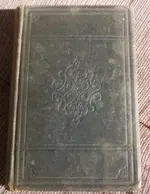
This book was giving to me some years ago and read very little.
The book is Portland in the Past by William Goold. Printed for the author by B.Thurston & co. Portland, Maine 1886.
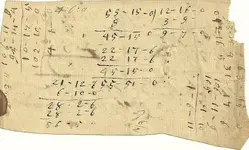
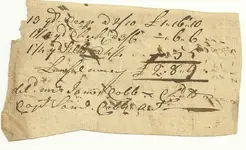
I found this piece of paper inside the book and not sure what it is or if it was written by Capt Cobb or someone else.
Any help appreciated. This book can be read online.
roger
 

Attachments
  • scan0001.webp
    scan0001.webp
    200.4 KB · Views: 1,225
  • scan0002.webp
    scan0002.webp
    197.1 KB · Views: 1,184
  • April 12, 013.webp
    April 12, 013.webp
    26.9 KB · Views: 1,205
Upvote 0

The reverse with the numbers appears to be calculations of some sort in Pounds, shillings and pence. At first, I was thinking of navigation in degrees minutes and seconds, but realized the second number never got above 20 (20 shillings to a pound).

Alan
 
AMorgan said:
The reverse with the numbers appears to be calculations of some sort in Pounds, shillings and pence. At first, I was thinking of navigation in degrees minutes and seconds, but realized the second number never got above 20 (20 shillings to a pound).

Alan
Thanks. I was thinking a deck hand calculating his pay. I'm not sure of the spelling if it is "lanfue money" Maybe adding up pay to spend when reaching land.
 
I think it is "lawful money".

I believe there is a "Capt. James Cobb" involved, whoever he is.

:)
 
it's a receipt:

13 yd Dross? @ 2/10 L 1"16"10
17/3 yd Cheeby? @ 3/6 6" 6
1 1/4 yd ____ @ 4/4 5" 5

Lawful money L 2.89
deld. [delivered] ___ James Cobb -- Child of
Capt Saml. Cobb ___

sorry, I don't have a pound sign readily available.
Hope this helps, neat bit of history
Tigger
 
Hi, my very first post. I have never MD'ed. Just got one and hope to get out soon to use it here N VA.
Tigger is correct, it is a receipt. However, some of his translation is a bit off. Using the words that are legible you can see that the first item begins with a 'c' and ends with a 'p' (See the word Capt at bottom). The word looks like 'crop' or 'crap'. It is probably an archaic word for some type of cloth. The second item appears to be 'cheek'. The chee is clear and the last letter appears to be a 'k'. I came to this conclusion based on the third word which seems to be 'silk'. I have collected and sold autographs and documents for years and I do legal research which requires looking at old documents and find that if you look at the words you can read, you can sometimes decipher the others. Hope this helps.

FYI - to get the £ sign you press ALT 156 (I have a list of most foreign letters and symbols and what ALT combo creates them)

Cheers,

Michael
(Springfield, VA)
 
Looks to me that the reciept may be much older than the book it was in. By 1866 folks in the US wouldn't be paid in pounds i wouldn't think. There is a Capt. Samuel Cobb dating back to the Revolutionary war and there are others after that. Interesting piece for sure.
 
TITLEMSTR said:
Hi, my very first post. I have never MD'ed. Just got one and hope to get out soon to use it here N VA.
Tigger is correct, it is a receipt. However, some of his translation is a bit off. Using the words that are legible you can see that the first item begins with a 'c' and ends with a 'p' (See the word Capt at bottom). The word looks like 'crop' or 'crap'. It is probably an archaic word for some type of cloth. The second item appears to be 'cheek'. The chee is clear and the last letter appears to be a 'k'. I came to this conclusion based on the third word which seems to be 'silk'. I have collected and sold autographs and documents for years and I do legal research which requires looking at old documents and find that if you look at the words you can read, you can sometimes decipher the others. Hope this helps.

FYI - to get the £ sign you press ALT 156 (I have a list of most foreign letters and symbols and what ALT combo creates them)

Cheers,

Michael
(Springfield, VA)


I agree with Michael! I've read a lot of census over the years, but was not familiar with the terms listed, so just threw out a guess, to get the discussion started.
I'm guessing it's old fabric terminology, but my huge Websters isn't helping. If you care to pursue it, you could try a British dictionary, the older and bigger, the better. Or if you have a local museum with a fabric conservator, they may be able to help.
Tigger
 
At first I thought he might be running a "sports book." Then then I am not sure what they would have been betting on then....
 
Tigger said:
it's a receipt: Thanks Tigger.This was a big help. I'll Have to look up Dross and Cheeby.

13 yd Dross? @ 2/10 L 1"16"10
17/3 yd Cheeby? @ 3/6 6" 6
1 1/4 yd ____ @ 4/4 5" 5

Lawful money L 2.89
deld. [delivered] ___ James Cobb -- Child of
Capt Saml. Cobb ___

sorry, I don't have a pound sign readily available.
Hope this helps, neat bit of history
Tigger
 
TITLEMSTR said:
Hi, my very first post. I have never MD'ed. Just got one and hope to get out soon to use it here N VA.
Tigger is correct, it is a receipt. However, some of his translation is a bit off. Using the words that are legible you can see that the first item begins with a 'c' and ends with a 'p' (See the word Capt at bottom). The word looks like 'crop' or 'crap'. It is probably an archaic word for some type of cloth. The second item appears to be 'cheek'. The chee is clear and the last letter appears to be a 'k'. I came to this conclusion based on the third word which seems to be 'silk'. I have collected and sold autographs and documents for years and I do legal research which requires looking at old documents and find that if you look at the words you can read, you can sometimes decipher the others. Hope this helps.

FYI - to get the £ sign you press ALT 156 (I have a list of most foreign letters and symbols and what ALT combo creates them)

Cheers,

Michael
(Springfield, VA)
Thanks TITLEMSTR. Congratulations on your first post. I'm not good at research and I tried looking up Captian Cobb to see If I could see some writing of Cobb's to try to match it but didn't get there. Roger
 
WilliamBoyd said:
I think it is "lawful money".

I believe there is a "Capt. James Cobb" involved, whoever he is.

:)
Thanks WilliamBoyd.
 
stewystarr said:
Looks to me that the receipt may be much older than the book it was in. By 1866 folks in the US wouldn't be paid in pounds i wouldn't think. There is a Capt. Samuel Cobb dating back to the Revolutionary war and there are others after that. Interesting piece for sure.
Thanks stewystarr. I was thinking this was older and someone used it as a bookmark.
roger
 
What a neat thing to find! I'd hold on to that for sure.

Nana
 
looks like a old british seaman had a past "reciept" against his wages --for slop chest items ( looks like either cloth for making clothing with or as a gift for a lady freind maybe since cloth is measured in yards *) and a bit of local cash aka "lawful money "-- gotten from james cobb ( the capts samual cobbs son) -- it appears that that he used the reciept as a book mark in the book that he was reading -- a popular past time at sea during down time was reading for those that could read -- the fellow was most likely using the rear of it to keep his on "tally" of the money spent in the slop chest and of draws to be sure it all added up in the end (some capts would try to cheat illitterate seaman out of ther rightfully due wages at the pay off claiming he bought things he did not or took draws that he did not )

pounds -shilling - pence --- 240 pence to the pound sterling / 20 shillings (s) to the pound (L) --thus 1 shilling was 12 pennys or in plural (pence) d was also sometimes used when writing -- so L 4 6s 3 p --four pounds 6 shillings and 3 pence ( can also be a d instead of P)

as a former 27 year merchant mariner --I am well aware of the slop chest and draws system used by vessels --
money was deducted from his wages owed "on the books" * against what he got from the slop chest , also draws for money to spend in port was also drawn against wages due * -- the final accounting and moneys owed was done at pay off at the voyages end --but a the capt had a running tally "in the books" that was kept to know if you had any money to buy things with ( in the slop chest / or for taking draws) normally the capt ran the slop chest making a tidy sum in the process often --- often items were heavily "marked up" to make the capt a tidy profeit --by law capts were only supposed tio mark up item by 10 % but to get around that -- many capts often bought shoody goods and marked the books as if better quality items were bought at a higher cost * thus their "10%" legal allowed mark up was really much more -- say you say you bought 100 lbs of best quality tobbaco ( normally cost say $5 a lb -- but you really got poor quality tobbaco at say 2.25 bucks a lb ) by writing it up as if you bought the good stuff at $5 per pound "on the books" with the 10 % "mark up allowance" --you could sell it to the crew for 5.50 a lb --on the books-- thus doubling your money --and of course the hard up seaman -- having nothing esle to smoke bought the cheap tobacco and smoked it , and knew better than to complain about it since --the capt ran the slop chest --saying something "bad' about it was libel to get you flogged or on the capts "s" list --and at sea a capt is no one to be at odds with as the deck is stacked all in his favor 110%
 
Nana40 said:
What a neat thing to find! I'd hold on to that for sure.

Nana
Thank you Nana.
 
ivan salis said:
looks like a old british seaman had a past "reciept" against his wages --for slop chest items ( looks like either cloth for making clothing with or as a gift for a lady freind maybe ) -- bought from capt cobb -- it appears that that he used the reciept asa book mark in the book that he was reading -- a popular past time at sea during down time was reading for those that could read -- the fellow was most likely using the rear of itto keep his on "tally" of the money spent in the slop chest and of draws to be sure it all added up in the end (some capts would try to cheat illitterate seaman out of ther rightfully due wages at the pay off claiming he bought things he did not or took draws that he did not )

pounds -shilling - pence --- 240 pence to the pound sterling / 20 shillings (s) to the pound (L) --thus 1 shilling was 12 pennys or in plural (pence) d was also sometimes used when writing -- so L 4 6s 3 p --four pounds 6 shillings and 3 pence ( can also be a d instead of P)

as a former 27 year merchant mariner --I am well aware of the slop chest and draws system used by vessels --
money was deducted from his wages owed "on the books" * against what he got from the slop chest , also draws for money to spend in port was also drawn against wages due * -- the final accounting and moneys owed was done at pay off at the voyages end --but a the capt had a running tally "in the books" that was kept to know if you had any money to buy things with ( in the slop chest / or for taking draws) normally the capt ran the slop chest making a tidy sum in the process often --- often items were heavily "marked up" to make the capt a tidy profeit --by law capts were only supposed tio mark up item by 10 % but to get around that -- many capts often bought shoody goods and marked the books as if better quality items were bought at a higher cost * thus their "10%" legal allowed mark up was really much more -- say you say you bought 100 lbs of best quality tobbaco ( normally cost say $5 a lb -- but you really got poor quality tobbaco at say 2.25 bucks a lb ) by writing it up as if you bought the good stuff at $5 per pound "on the books" with the 10 % "mark up allowance" --you could sell it to the crew for 5.50 a lb --on the books-- thus doubling your money --and of course the hard up seaman -- having nothing esle to smoke bought the cheap tobacco and smoked it , and knew better than to complain about it since --the capt ran the slop chest --saying something "bad' about it was libel to get you flogged or on the capts "s" list --and at sea a capt is no one to be at odds with as the deck is stacked all in his favor 110%
Thanks ivan salis. I think you are right on the money. This is very interesting.
I did a little research and found that there was a Captain Jabez Cobb 1798-1805.
On the receipt above it looks like it says" Capt. I am. Cobb Jabet " instead of "Jabez".
roger
 
£1 (pound) 16 Shilling & 10 Pence is the first line. So its old British pre-decimal money :icon_thumright:
 

Users who are viewing this thread

Back
Top Bottom