Tylocidaris
Jr. Member
Sheldon J, if someone wants to Believe this is a fossil heart, then there is nothing that can be said to sway them otherwise. They will always "beg the question". From their lack of specific expertise, they could continue to hold their beliefs based on an incomplete understanding of what is involved in the "fossilization" process. Looking at this rock with "heart colored glasses" can happen to doctors, nurses, butchers, or hunters, but that doesn't make it a fossil heart. So, all of those opinions combined still leave us at square one.
On the other hand, if someone wants to know what this "heart shaped" rock is, then they should start trying to identify the type of rock. What are that type of rock's characteristics? What kind of minerals is it made of? How do they weather over time? Does the density typically vary in this type of rock; etc.? These are the questions that can give us the answer to "what is it?" Flint, or chert, jasper, agates and other "rocks" have amazing "internal" structures due to different densities in a given specimen. They weather into spectacularly unusual forms, but in the end they are just cool rocks. I don't think the paleontologist you mentioned is "jealous"; assuming he heard the story of how it was found, there's not much reason for him to see it. He's an expert at what it takes to form a fossil. He probably has expertise in geology. A randomly found cobble that "looks like" something is not uncommon. I hope to see some expert evidence of what kind of rock it is.
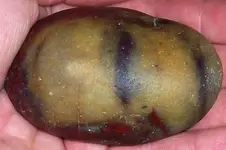
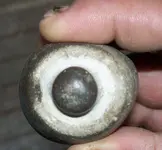
Now, does anyone want to buy a fossilized T-Rex eyeball?
On the other hand, if someone wants to know what this "heart shaped" rock is, then they should start trying to identify the type of rock. What are that type of rock's characteristics? What kind of minerals is it made of? How do they weather over time? Does the density typically vary in this type of rock; etc.? These are the questions that can give us the answer to "what is it?" Flint, or chert, jasper, agates and other "rocks" have amazing "internal" structures due to different densities in a given specimen. They weather into spectacularly unusual forms, but in the end they are just cool rocks. I don't think the paleontologist you mentioned is "jealous"; assuming he heard the story of how it was found, there's not much reason for him to see it. He's an expert at what it takes to form a fossil. He probably has expertise in geology. A randomly found cobble that "looks like" something is not uncommon. I hope to see some expert evidence of what kind of rock it is.
Now, does anyone want to buy a fossilized T-Rex eyeball?