
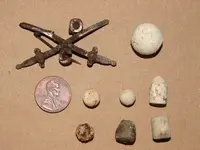
Went to a local park but ended up going to an area that I had detected before but did not put much time into it and never really found anything. I ended up finding some lead and a pin. I found all the lead pretty deep. Some of the smaller ones were close to 9 inches. Found the pin in the same area. Dont know if it's more modern or something from the civil war era too. I have searched on Google but cant find anything. Any ideas. Thanks.
You are using an out of date browser. It may not display this or other websites correctly.
You should upgrade or use an alternative browser.
You should upgrade or use an alternative browser.
Help with ID on military looking pin
- Thread starter Bill_S
- Start date

SODABOTTLEBOB
Silver Member
TCG ~
Cool ... Go team Go!
I realize the main goal of this thread is to help identify Bill_S's pin. But since there is a possibility of the original letters/numbers having been replaced, I feel the next best thing is to identify the pin I found, which appears to be original and fully intact. I believe the W. VA. pin will identify Bill_S's pin, at least in regards as to what "type" of pins they are. Hopefully the individual you contacted will have the correct answer. Because I sure don't! I'm still guessing!
Respectfully,
SBB
Cool ... Go team Go!
I realize the main goal of this thread is to help identify Bill_S's pin. But since there is a possibility of the original letters/numbers having been replaced, I feel the next best thing is to identify the pin I found, which appears to be original and fully intact. I believe the W. VA. pin will identify Bill_S's pin, at least in regards as to what "type" of pins they are. Hopefully the individual you contacted will have the correct answer. Because I sure don't! I'm still guessing!
Respectfully,
SBB
Upvote
0
SODABOTTLEBOB
Silver Member
~ Request to anyone who wishes to address it ~
I'm really trying hard to understand all of this Union Rank ~ Regiment ~ Lodge stuff, but I seem to be having some difficulty grasping it. Let's say a particular lodge has 100 members, which probably is not enough men to form a regiment. So does this mean that "multiple" lodges within a given state got together to form a regiment and then met ocassionally at some agreed upon location to do there regimental stuff? Thus making lodge numbers and regiment numbers different? Or did each lodge have there own regiment?
Someone please explain to me just how this all worked.
Thanks a lot.
SBB
I'm really trying hard to understand all of this Union Rank ~ Regiment ~ Lodge stuff, but I seem to be having some difficulty grasping it. Let's say a particular lodge has 100 members, which probably is not enough men to form a regiment. So does this mean that "multiple" lodges within a given state got together to form a regiment and then met ocassionally at some agreed upon location to do there regimental stuff? Thus making lodge numbers and regiment numbers different? Or did each lodge have there own regiment?
Someone please explain to me just how this all worked.
Thanks a lot.
SBB
Upvote
0

Bigcypresshunter
Sapphire Member
- Joined
- Dec 15, 2004
- Messages
- 27,124
- Reaction score
- 3,351
- Golden Thread
- 0
- Location
- South Florida
- Detector(s) used
- 70's Whites TM Amphibian, HH Pulse, Ace 250
- Primary Interest:
- Beach & Shallow Water Hunting
Just so there is no misunderstanding, I dont think anyone ever said or implied that they didnt appreciate someone elses research or that anyone should quit. No need to blow out of proportion a simple request to stay on topic. When this is done and over dont forget to give credit to SoMdRelicHunter. Many of us guessed it was fraternal but I think it was SMRH that solved the clamshells and pointed us in the Knights of Pythias direction..
I hope you guys solve the missing letters/numbers. Maybe the C will be for Cavalry afterall.
I hope you guys solve the missing letters/numbers.
Maybe the C will be for Cavalry afterall.
Upvote
0
allan
Hero Member
you are doing great, soooo the numbers replaced thing got me thinking and I decided to do some heavy reading here http://www.archive.org/stream/ahistoryjasperc00unkngoog/ahistoryjasperc00unkngoog_djvu.txt now it seems in the later years of the 19th and into the 20th century there were "sham battle's" acted out in towns and area's in missouri and elswhere by groups of all types , I gleaned a few paragraphs from the link above and put them on the enclosed notepad. reading the notepad will enlighten us on a few facts and how things may have been modified. is this the answer to the pin Bill S. found? maybe or maybe not but it is worth a read for all interested or you can choose to read the whole thing as it has a few interesting stories on early missouri life and you will see reference to Sedalia.also it gives a few hints for md'ers in the area 
sorry for the huge post but I didn't know how to convert from txt to an acceptable file type
Second Regiment Organized into Two Battalions — ^Lettebs Replace
Old Names — ^PmsT Appearance at St. Louis — The First Regi-
mental Camp — Camp Cunningham, August 15-22, 1897 — Sham
Battle — Carthage Honors Her Dead — The United Confederate
Veterans — Semi-Military Societies — The Third Regiment, U. R.
K. P. — ^Patriarchs Militant, I. O. O. F.
Following the reorganization of the Carthage Light Guard, seven
companies of the National Ouard were quickly organized in Southwest
Missouri, and on October 9, 1890, the officers of the several companies
elected the following officers for the Second Regiment, Missouri National
Quard : Colonel, W. E. Caffee, of the Carthage Light Guard ; lieutenant
colonel, A. B. Deggins, Springfield Rifles; major, Heniy Allen, Sedalia
Rifles.
Second Organized into Two Battalions
The Joplin Light Infantry, Company G, was mustered December 30,
1890, and completed the organization of the regiment, which was now
divided into battalions, in accordance with the new United States
army drill regulations.
Major Allen, of Sedalia, having resigned, an election was ordered
for two majors for the First and Second battalions, respectively. H. H.
Mitchel, of Nevada, was chosen major of the First Battalion, and Captain
F. E. Williams, of the old Joplin Rifles, was elected major of the Sec-
and Battalion.
Letters Replace Old Names
The local names were now dropped and 'the several organizations
designated by letters. In assigning the letters priority was given to the
company in the order of its organization. The companies were desig-
nated as follows : Company A, Carthage Light Guard ; Company B, But-
ler Rifles; Company C, El Dorado Guard; Company D, Sedalia Rifles;
Company E, Pierce City Guards ; Company F, Springfield Rifles ; Com-
pany G, Joplin Light Infantry, and Company H, Nevada Light Infantry.
Company C was disbanded shortly after the organization of the
regiment, and the company which was mustered at Lamar took its letter
and place in the First Battalion. The Second, Major William Battaban, comprised Companies A, E, P and 6. The old Springfield Rifles
was disbanded in 1894 and a company, at Clinton, took its place. In
1896 the Springfield company was reorganized and came into the regi-
ment as Company K.
In making ap his staff, Colonel Caffee called to his assistance the
following who had served with him in the old Light Guard: Captain
and Adjutant, J. M. McMillen; Captain and quartermaster, A. B.
Deutsch; Captain and judge advocate, J. W. Halliburton. Lieutenant
Harrington, of the Light Guard, was named by Brigadier General
Milton Moore as one of his aide-de-camp, with the rank of major.
First Appearance at St, Louis
The Second Regiment made its first appearance at St. Louis in
February, 1891, upon the occasion of General Sherman's funeraL Com-
pany G from Joplin, having the greatest number of men in line of any
comi>any attending the last sad rites held over the body of the great
soldier.
The First Regimental Camp
This was held at Kellogg Springs, near Carthage, July 17-20, 1892,
and was named in honor of the regimental commander, Camp Caffee.
The camp was a very successful one, about ninety per cent of the rank
and file being in attendance. The military manoeuvers very greatly
improved the efficiency of the regiment, as well as furnishing the boys
with a most delightful outing.
Camp Caffee presented a striking contrast to damp Allen, which
was held at Carthage in July, 1884, and which was mentioned in our
Military chapter of the eighties. At Camp Allen there was a great
variety of equipments, each company being clothed with a different uni-
form, but at Camp Caffee the entire regiment wore the blue of the
United States army, the uniforms and equipment having been furnished
by the United States government ; the expenses of the camp, transpor-
tation, etc., were paid by the state. To give an idea of the magnitude
of the camp, we present the following figures which represent a por-
tion of the daily rations furnished the men : The commissary depart-
ment issued each day, among other items, 600 pounds of fresh beef, 600
I>ounds of corned beef, 600 pounds of ham and 350 loaves of bread, as
staples, with coffee, tea, butter, eggs, etc., on the side. The Second
Regiment also participated in state camps at Lake Contrary and St.
Joseph, and held regimental camps at Springfield, Sedalia, Lamar and
Joplin. We make mention here of the Joplin camp, because it is one
of the Jasper county events and because it was the last one held before
the regiment was called into the service of the United States in the
Spanish- American war.
Camp Cunningham, August 15-22, 1897
The Second Regiment went into camp at Joplin for a week's school
of instruction August 15, 1897, and the ''meet" was named in honor of
Mayor Cunningham, who extended the regiment a right royal welcome
342 HISTORY OP JASPER COUNTY
and issued a proclamation asking the citizens to join with the city offi-
cials in making the stay of the guardsmen a pleasant one. Nine com-
panies were in attendance: Company A, Carthage, Capt. Jno. A. Mc-
Millen ; Company B, Butler, Captain V. L. Johnson ; Company C, Lamar,
Capt. P. M. Thorp; Company D, Sedalia, Capt. George S. Edmondson;
.Company E, Pierce City, Capt. W. A. Raupp; Company F, Clinton,
Capt. A. C. Landon; Company G, Joplin, Capt. Robt. A. Spear; Com-
pany H, Nevada, Capt. George B. Cawswell; Company K, Springfield,
Capt. A. B. Deggins; regimental band, Joplin, T. J. Hughs, director.
A full complement of regimental officers were present, the field and
staflf being: Colonel commanding, W. K. Caflfee, Carthage; lieutenant
colonel, H. C. Demuth, Sedalia; major First Battalion, H. H. Mitchell,
Nevada; major Second Battalion, P. E. y/^illiams, Joplin; adjutant,
Capt. J. M. McMillen, Carthage; quarter master, Capt. A. B. Deutsch,
Carthage; judge advocate, Capt. Jno. W. Halliburton, Carthage; sur-
geoUy Maj. C. Crawford, Nevada; assistant surgeon, Capt. Wm. G.
Cowan; ordnance officer, Capt. A. V. Adams, Butler; commissary, Capt.
J. L. Saunders, Pierce City.
Captains Geo. H. Roach and W. A. Mason of the Seventeenth In-
fantry Regiment, U. S. A., and Lieutenant Osborn, Third United States
Cavalry, were detailed to inspect the camp and assist in the instruction
of the 500 guardsmen in attendance. ban, comprised Companies A, E, P and 6. The old Springfield Rifles
was disbanded in 1894 and a company, at Clinton, took its place. In
1896 the Springfield company was reorganized and came into the regi-
ment as Company K.
In making ap his staff, Colonel Caffee called to his assistance the
following who had served with him in the old Light Guard: Captain
and Adjutant, J. M. McMillen; Captain and quartermaster, A. B.
Deutsch; Captain and judge advocate, J. W. Halliburton. Lieutenant
Harrington, of the Light Guard, was named by Brigadier General
Milton Moore as one of his aide-de-camp, with the rank of major.
First Appearance at St, Louis
The Second Regiment made its first appearance at St. Louis in
February, 1891, upon the occasion of General Sherman's funeraL Com-
pany G from Joplin, having the greatest number of men in line of any
comi>any attending the last sad rites held over the body of the great
soldier.
The First Regimental Camp
This was held at Kellogg Springs, near Carthage, July 17-20, 1892,
and was named in honor of the regimental commander, Camp Caffee.
The camp was a very successful one, about ninety per cent of the rank
and file being in attendance. The military manoeuvers very greatly
improved the efficiency of the regiment, as well as furnishing the boys
with a most delightful outing.
Camp Caffee presented a striking contrast to damp Allen, which
was held at Carthage in July, 1884, and which was mentioned in our
Military chapter of the eighties. At Camp Allen there was a great
variety of equipments, each company being clothed with a different uni-
form, but at Camp Caffee the entire regiment wore the blue of the
United States army, the uniforms and equipment having been furnished
by the United States government ; the expenses of the camp, transpor-
tation, etc., were paid by the state. To give an idea of the magnitude
of the camp, we present the following figures which represent a por-
tion of the daily rations furnished the men : The commissary depart-
ment issued each day, among other items, 600 pounds of fresh beef, 600
I>ounds of corned beef, 600 pounds of ham and 350 loaves of bread, as
staples, with coffee, tea, butter, eggs, etc., on the side. The Second
Regiment also participated in state camps at Lake Contrary and St.
Joseph, and held regimental camps at Springfield, Sedalia, Lamar and
Joplin. We make mention here of the Joplin camp, because it is one
of the Jasper county events and because it was the last one held before
the regiment was called into the service of the United States in the
Spanish- American war.
Camp Cunningham, August 15-22, 1897
The Second Regiment went into camp at Joplin for a week's school
of instruction August 15, 1897, and the ''meet" was named in honor of
Mayor Cunningham, who extended the regiment a right royal welcome
342 HISTORY OP JASPER COUNTY
and issued a proclamation asking the citizens to join with the city offi-
cials in making the stay of the guardsmen a pleasant one. Nine com-
panies were in attendance: Company A, Carthage, Capt. Jno. A. Mc-
Millen ; Company B, Butler, Captain V. L. Johnson ; Company C, Lamar,
Capt. P. M. Thorp; Company D, Sedalia, Capt. George S. Edmondson;
.Company E, Pierce City, Capt. W. A. Raupp; Company F, Clinton,
Capt. A. C. Landon; Company G, Joplin, Capt. Robt. A. Spear; Com-
pany H, Nevada, Capt. George B. Cawswell; Company K, Springfield,
Capt. A. B. Deggins; regimental band, Joplin, T. J. Hughs, director.
A full complement of regimental officers were present, the field and
staflf being: Colonel commanding, W. K. Caflfee, Carthage; lieutenant
colonel, H. C. Demuth, Sedalia; major First Battalion, H. H. Mitchell,
Nevada; major Second Battalion, P. E. y/^illiams, Joplin; adjutant,
Capt. J. M. McMillen, Carthage; quarter master, Capt. A. B. Deutsch,
Carthage; judge advocate, Capt. Jno. W. Halliburton, Carthage; sur-
geoUy Maj. C. Crawford, Nevada; assistant surgeon, Capt. Wm. G.
Cowan; ordnance officer, Capt. A. V. Adams, Butler; commissary, Capt.
J. L. Saunders, Pierce City.
Captains Geo. H. Roach and W. A. Mason of the Seventeenth In-
fantry Regiment, U. S. A., and Lieutenant Osborn, Third United States
Cavalry, were detailed to inspect the camp and assist in the instruction
of the 500 guardsmen in attendance. ban, comprised Companies A, E, P and 6. The old Springfield Rifles
was disbanded in 1894 and a company, at Clinton, took its place. In
1896 the Springfield company was reorganized and came into the regi-
ment as Company K.
In making ap his staff, Colonel Caffee called to his assistance the
following who had served with him in the old Light Guard: Captain
and Adjutant, J. M. McMillen; Captain and quartermaster, A. B.
Deutsch; Captain and judge advocate, J. W. Halliburton. Lieutenant
Harrington, of the Light Guard, was named by Brigadier General
Milton Moore as one of his aide-de-camp, with the rank of major.
First Appearance at St, Louis
The Second Regiment made its first appearance at St. Louis in
February, 1891, upon the occasion of General Sherman's funeraL Com-
pany G from Joplin, having the greatest number of men in line of any
comi>any attending the last sad rites held over the body of the great
soldier.
The First Regimental Camp
This was held at Kellogg Springs, near Carthage, July 17-20, 1892,
and was named in honor of the regimental commander, Camp Caffee.
The camp was a very successful one, about ninety per cent of the rank
and file being in attendance. The military manoeuvers very greatly
improved the efficiency of the regiment, as well as furnishing the boys
with a most delightful outing.
Camp Caffee presented a striking contrast to damp Allen, which
was held at Carthage in July, 1884, and which was mentioned in our
Military chapter of the eighties. At Camp Allen there was a great
variety of equipments, each company being clothed with a different uni-
form, but at Camp Caffee the entire regiment wore the blue of the
United States army, the uniforms and equipment having been furnished
by the United States government ; the expenses of the camp, transpor-
tation, etc., were paid by the state. To give an idea of the magnitude
of the camp, we present the following figures which represent a por-
tion of the daily rations furnished the men : The commissary depart-
ment issued each day, among other items, 600 pounds of fresh beef, 600
I>ounds of corned beef, 600 pounds of ham and 350 loaves of bread, as
staples, with coffee, tea, butter, eggs, etc., on the side. The Second
Regiment also participated in state camps at Lake Contrary and St.
Joseph, and held regimental camps at Springfield, Sedalia, Lamar and
Joplin. We make mention here of the Joplin camp, because it is one
of the Jasper county events and because it was the last one held before
the regiment was called into the service of the United States in the
Spanish- American war.
Camp Cunningham, August 15-22, 1897
The Second Regiment went into camp at Joplin for a week's school
of instruction August 15, 1897, and the ''meet" was named in honor of
Mayor Cunningham, who extended the regiment a right royal welcome
342 HISTORY OP JASPER COUNTY
and issued a proclamation asking the citizens to join with the city offi-
cials in making the stay of the guardsmen a pleasant one. Nine com-
panies were in attendance: Company A, Carthage, Capt. Jno. A. Mc-
Millen ; Company B, Butler, Captain V. L. Johnson ; Company C, Lamar,
Capt. P. M. Thorp; Company D, Sedalia, Capt. George S. Edmondson;
.Company E, Pierce City, Capt. W. A. Raupp; Company F, Clinton,
Capt. A. C. Landon; Company G, Joplin, Capt. Robt. A. Spear; Com-
pany H, Nevada, Capt. George B. Cawswell; Company K, Springfield,
Capt. A. B. Deggins; regimental band, Joplin, T. J. Hughs, director.
A full complement of regimental officers were present, the field and
staflf being: Colonel commanding, W. K. Caflfee, Carthage; lieutenant
colonel, H. C. Demuth, Sedalia; major First Battalion, H. H. Mitchell,
Nevada; major Second Battalion, P. E. y/^illiams, Joplin; adjutant,
Capt. J. M. McMillen, Carthage; quarter master, Capt. A. B. Deutsch,
Carthage; judge advocate, Capt. Jno. W. Halliburton, Carthage; sur-
geoUy Maj. C. Crawford, Nevada; assistant surgeon, Capt. Wm. G.
Cowan; ordnance officer, Capt. A. V. Adams, Butler; commissary, Capt.
J. L. Saunders, Pierce City.
Captains Geo. H. Roach and W. A. Mason of the Seventeenth In-
fantry Regiment, U. S. A., and Lieutenant Osborn, Third United States
Cavalry, were detailed to inspect the camp and assist in the instruction
of the 500 guardsmen in attendance. The following will give an idea of the daily routine of the men in
camp — the' camp regulations: first call, 5:25 a. m. ; reveille, 5:40 a. m.;
assembly, 5:45 a. m. ; mess, 6.00 a. m. ; police, 6.30 a. m. ; sick call,
t):40 a. m. ; assembly, 6:50 a. m. ; adjutant's call, 6:55 a. m. ; guard
mount, 9:45 a. m. ; company drill, 10:05 a. m. ; officers' call, 11:30 a. m.
mess, noon; first sergeant's call, 12:45 p. m. ; battalion drill, 1 :00 p. m.;
mess, 5:45 p. m.; dress parade, 6:45 p. m.; call to quarters, 10:15 p.
m. ; taps, 10 :30 p. m.
After battalion drill in the afternoon the men were at liberty to rest
and enjoyed themselves seeing the sights about the mines and other
points of interest. Each evening in front of headquarters tent the regi-
mental band gave a concert and every evening the camp was thronged
with visitors from the city.
The third day of the camp the entire regiment visited Lakeside park
and gave an exhibition drill in the evening, after which dancing was
indulged in until a late hour.
Friday was ladies' day and the camp was visited by hundreds of
the ladies of Joplin, Webb City, Carterville, Carthage and other points.
Sham Battle
Friday afternoon, in place of the regular dress parade, a sham battle
was had and instruction given in skirmish battle formation. The
battle was witnessed by a large number of citizens. Major Mitchell.
First Battalion, and Major Williams, of the Second, commanded the
.opposing forces, and the fighting was very realistic.
HISTORY OF JASPER COUNTY
343
The Second Battalion garrisoned a hastily constructed fort at the
east end of Cox park and the First Battalion was the attacking party,
which opened the fight by firing upon a skirmish line which had been
thrown out by the Second Battalion and after the exchange of a few
shots the skirmishers retired to the fort and the battle was on. A
terrific fusilade of musketry was now kept up for half an hour or more,
after which the attacking party charged the garrison in the fort. The
battle was so fierce that the parties engaged in a hand-to-hand fight. A
truce was now had and the belligerents carried from the field the
wounded (?) and injured (?) soldiers, after which the fight was
resumed. The First Battalion again charged the Second, which re-
treated, and it looked as if the attacking party would take the fort^
when Major Williams, Sheridan-like, rallied the fieeing Second and
drove the First Battalion off the field.
The Spanish-American War
The Second Regiment went to the front at the first call of President
McKinley for volunteers and, after being in camp a short time at
Color Guard op Second Missouri Volunteer Infantry
At Camp Churchman near Atlanta, Georfria, Spanish-American War.
Jefferson Barracks, was sent with the main army to the south, and was
stationed at the big camp at Chattanooga; later at Lexihgtoii, Ken-
tucky, Atlanta, Georgia, and other southern points. The Second Regi-
ment was one of the best among the volunteer troops and was f requefatly
complimented by the United States army oflScers for its splendid disci-
pline and military bearing. Colonel Andrews, of the Thirteenth United
States Infantry, who was sent to inspect the Second, with other regi-
ments, in his report of the inspection, said, **That the Second Missouri
Regiment was more like the United States army ought to be than the
regulars themselves, because of the personnel of the oflScers and men.''
Said he: **The discipline is excellent and the men are among the very
best citizens in private life.*'
344 HISTORY OF JASPER COUNTY
Adjutant McMillen and Quartermaster Deutsch both were called
home before the close of the war on account of business, and Lieutenant
John Bailey, of Company A, became regimental adjutant.
The Fifth Regiment, Missouri United States Volunteers, of which
command Hon. Chas. H. Morgan was the lieutenant coionel, contained,
among its commands, Company G, from Jasper county. This com-
pany was made up almost entirely, of men from the rural districts and
they were unusually strong and husky. The company was commanded
by the following oflScers: Captain, George Whitsett, Carthage; first
lieutenant, Russell Garrison, mine superintendent, Webb City; second
lieutenant, Freeman Rowe, mine superintendent, Webb City.
Company O made a most excellent record in camp, and after the
war Captain Whitsett was sent to the Philippines as judge of one of
the military districts, where he made an enviable reputation as a jurist
A company of the Sixth Missouri, United States Volunteers, was
partly made up of Jasper county men — ^First Lieutenant J. J. Nelson
and sixty men enlisting at Webb City. We were unable to secure a copy
of the company roster of the above organizations, the adjutant general
informing the writer that his o£Bce force was so limited that time could
not be given to the copy of the names.
Carthage Honors Heb Dead
Among the soldiers who went to the front in the Spanish- American
war with Company A, was Sergeant Charles Wood, who died at Camp
Chickamauga, stricken with fever. The body of the sergeant was sent
home for burial and was accompanied by a detachment of Company A.
The funeral occurred July 14, 1898, and was largely attended, the
business of the city having ^been suspended during the hour of the
funeral.
In the funeral cortege were the ex-members of the Carthage Light
Guard, under command of Capt. Geo. H. Thomas; the Modem Wood-
men, of which lodge he was a member, and the Sons of Veterans.
Semi-mhjtary Societies
As in the 'Eighties the Twelfth Regiment Select Knights A. 0. U.
W., comprising four Jasper county legions, had won great distinction as
a semi-military organization, so in the 'nineties the Uniformed Bank of
the Knights of Pythias and the Patriarchs Militant of the Independent
Order of Odd Fellows, through the regimental organization of each of
these two great societies, brought the red plumed Knights and the gal-
lant chivalry into prominent notice.
Although each of these two regiments contained companies in other
counties than Jasper, both were largely officered by Jasper county cit
izens and, as South Western Missouri organizations, each played a
prominent part in the social and fraternal life of the county.
HISTORY OF JASPER COUNTY 345
The Third Regiment, U. R. K. P.
In 1890 there came to Carthage in t^e employ of the Frisco Railway
Company and in the capacity of district freight agent, Carl Gray, a
young man of great energy and executive ability who, through rapid
promotion, reached the high station of vice president and general man-
ager of the great 'Frisco system and who now is the general manager of
the Northern Pacific. Young Gray, who was a graduate of a military
academy, of military ancestry and a great lover of military manoeuvres
was the organizer and father of the Uniformed Rank of the Knights of
Pythias in Southwestern Missouri, and it was his energy and Pythian
activity more than any other one factor which popularized the military
branch of that fraternity during the early and middle 'nineties.
At the organization of Carthage Division No. 34 of the U. R. K. P.,
Sir Knight Gray was chosen captain commanding and, figuratively
speaking, put Carthage on the fraternal map by the splendid manoeuvres
of his division. Following the appearance of Captain Gray's command,
divisions of the Uniform Rank were organized at Webb City, and Jop-
lin and these, together with divisions at Monett, Aurora, Nevada, and
North and South Springfield, made up the Third Regt. of which Cap^
Gray was unanimously elected colonel, Julius Finke, of Webb City,
lieutenant colonel ; and Joel T. Livingston, of Joplin, major of the Second
Battalion. Robert Robyn, of Carthage was appointed adjutant. The uni-
form of the Knights of Pythias during the 'nineties was, in the opinion
of the author, the most attractive and knightly looking equipment that
that body has ever worn. It was a decided improvement over the one
worn by the Knights during the 'seventies and early 'eighties and far
more attractive than the present.
The uniformed knights of the 'nineties were dressed in black broad-
cloth, coat of Prince Albert military cut, white helmet with red plume
and the sword belt of red leather, and the buttons, trappings and other
accoutrements silver mounted with white metal trimmings. The regi-
ment numbered four hundred men, and it was an imposing sight to see
this splendid organization in regimental formation.
The Third Regiment, as a whole, participated in the Knights of Pyth-
ias Fourth of July celebration at Monet in 1892, the national encamp-
ment at Kansas City, at the laying of the corner stone of the Jasper
county court house ; and a number of other public events. The regiment
appeared at its best in Kansas City, at the supreme encampment, held
in August, 1892, at which gathering it was designated by General Car-
naham, commanding the U. R. K. P., to act as the ofBcial escort for the
delegates to the supreme lodge, and as such led the way to the place
where that august body assembled to legislate for the order.
The regiment did not compete for any of the prizes at the national
encampment, but all three of the Jasper county companies won prizes
that year at some one of the different gatherings they attended, and
each reflected great credit on its home lodge.
346 HISTORY OP JASPER COUNTY
In 1897 Colonel Gray was transferred to Wichita, Kansas, and the
Third Regiment fell into a state of inactivity until 1902, when it was re-
organized, and will be spoken of in our fraternal events of the last
decade.
Patriarchs Militant, I. O. 0. F.
In 1893 the six cantons located in the western border counties, from
Kansas City to Joplin, were organized into a regiment and Dr. M. T.
Balsley, of Joplin, was elected lieutenant colonel commanding. Colonel
Balsley made a vigorous commander and by a sfystematic effort built up
a fine command which, on a number of occasions, attracted the favorable
attention of not only the Odd Fellows, but of the public at large.
Jasper county's interest in the cantons is largely centered in Can-
ton Lincoln, of Joplin, which is especially mentioned in the history of
that city.
The Patriarchs of the Odd Fellows is to that order what Knights Tem-
plarism is to Masonry, only that the military idea is more predominant,
the several cantons being organized into regiment and brigades.
The word canton is a Swiss word and means a company of soldiers.
Patriarch-Militants is a compound word and has a double meaning —
Patriarch being a ruler and militant indicating ready for the fight. The
Patriarch Militant must be a wise ruler and a good soldier.
The United Confederate Veterans
Jasper county 's Camp No. 522, United Confederate Veterans, was or-
ganized May 22, 1894, with forty charter members. The camp has had
on its rolls 174 veterans of the Confederate army, but death and removals
from the county has cut down the present membership to 72.
At the oBganization of the camp, Q. R. Hill was chosen commander
and held the oflSce until the annual election of 1905, when he was suc-
ceeded by C. C. Catron, who held the position until his death on De-
cember 25, 1910. Z. H. Lowdermilk, post department conmiander, was
called to the post of commander and at this writing is still the com-
Qiander of the camp.
Jno. W. Halliburton was elected adjutant of the camp, at the date of
•its muster-in, and has filled the position with such care that the camp
would never let him resign and he has held this important post through
the sixteen years of the society's existence
W. E. Hall, who was a resident of Jasper county during the war and
•one of the first to enlist in the regiment which the county sent to the
front, was elected the first treasurer of the camp and held the position
until his death in July, 1907, when he was succeeded by Jacob Litteral,
who still holds the post.
Previous to the organization of the camp the ex-Confederate veterans
of Jasper county raised $1,000 toward the building of the Confederate
Home at Higginsville, and since then has contributed $775 toward its
maintenance. In addition to the above, the camp has contributed the
HISTORY OP JASPER COUNTY 347
following sum : $100 toward erecting the monument at the Confederate
cemetery, Springfield ; $100 toward building the Confederate monument
at Palmyra and a like sum toward erecting the Confederate monument
at Neosho. Eight members of the Jasper county camp have been sent
to the Home at Higginsville, and six ex-Confederate veterans, not mem-
bers of the Jasper county camp, have been sent to the Confederate Home
and have been cared for by the Jasper county veterans who wore the
gray.
The Jasper county camp of United Confederate Veterans has enjoyed
an annual picnic and reunion each year since its organization, and at
these gatherings the members have lived over the old days that tried
men's souls and have, in memory, sat around the camp fire and re-
counted the pleasures and the sorrows, the hardships and the recreations
of the soldier's life.
The Jasper county camp has twice been honored by the state organiza-
tion by choosing a Jasper county citizen for the important post of de-
partment commander. At the state reunion in 1907 Z. H. Lowdermilk
of Joplin was elected major general commanding the department of
Missouri, and at the next annual meeting Jno. W. Halliburton, of Carth-
age, was chosen to preside over the veterans. This was considered
a most extraordinary compliment to the Jasper county camp to have
twice in succession one of its members called to the highest office in the
state organization; a compliment which, however, was well deserved,
for the two men mentioned have both given much of their time to the or-
ganization which has so signally honored them. We append here a roster of the Jasper county camp, correct to De-
cember 31, 1911:
Name Bank and Command
Z. H. Lowdermilk, Co. H, 2 N. C. Infy.
W. E. Johnson, Lieut., Talbott Begt:, Baines Brig.
T. B. Wormington, Lieut., Co. B, 3 Mo. Cav.
Harris E. Hatcher, Lieut., Co. A, 1 Batt., Shelby's Brig.
J. W. Halliburton, private, Williams' Cav. Begt., Shelby's Brig.
Jacob Litteral, Co. D, Gordon's Begt., Mo. Cav.
George Burgoon, Co. A, 10 Tex. Cav.
B. A. Scott, Co. A, Livingston's Batt.
James C. Talbott, Co. D, 10 Mo. Infy.
Wm. H. Price, Co. K, 8 Mo. Infy.
W. B. McNew, Co. D, 2 Tenn cav
348 HISTORY OP JASPER COUNTY
Naine Rank and Command
W. N. Blanton, Co. G, 15 Ark.
Benj. F. Hatcher, Co. A, Brice's Batt.
S. H. Webb., Co. H, 8 Tenn. Cav.
A. M. Payne, Co. P, 3 Mo. Infy.
T. P. Pryor, Co. B, Black's Regt., Mo. Infy.
John Arey, Co. H, 12 Va. Cav.
Geo. P. C. Corl, Co. B, 2 N. C. Cav.
Perdinand Osment, Co. B, Price's Batt., Mo.
Jonathan Loveless, Co. A, 2 Tex. Light Infy.
A. B. Moore, Co. I, 18 Tenn. Infy.
R. C. Priend, Co. A, Williams Ky. Co.
J. W. Stich, Collins' Batt. Brig.
G. P. Smith, Walker's Regt., Taylor's Brig.
J. H. Lyon, Co. B, 13 Ga. Pickett's Div.
E. T. Rhea, Co. H, 3 Tenn.
J. M. Daugherty, Co. A, 39 Tenn. Infy.
H. H. Dunning, Co. K, 16 Mo. Infy.
Geo. Randall, Co. D, 37 Tenn. Infy.
J. M. Bridges, Co. D, 2 Regt., Shelby's Cav.
Thomas MoflFett, private, Holland's Co., Texas Rangers.
P. P. Langston, private.
Abe Cox, private.
J. H. Gist, Co. A, Michael's Regt., Jeflf. Thos. Brig.
L. C. Gilbreath, Co. P, 10 Mo. Cav.
J. W. Aylor, Co. A, Prindle's Batt., Sharp Shooters, Mo.
George Little
C. S. Clover.
Alex. Campbell, Co. A., 8 Ark. Infy.
James Porter, Co. B, 3 Mo. Cav.
P. J. Haaelwood, Co. A., 11 Mo. Infy.
John LaPever, Co. C, 11 Mo. Infy.
B. M. Wilson, Co. A, 11 Mo. Infy.
L. B. Stevens, Co. A, 11 Mo. Infy.
Lee Taylor, Co. A, Brook's Regt., Pagan's Brig.
Richard D. Pallis, Co. B, 2 Mo. Infy.
J. A. Broadhurst, Co. P, 2 Mo. Cav.
W. E. Reynolds, Co. A, Stone's Cav., Cabelle Brig.
T. W. Irwin, GriflSns Revir's Regt., Clark's Brig.
0. P. Arnold, Co. I, 4 Mo. Cav.
A. W. Carmen, Co. I, Green's Infy Mo.
J. M. Johnson, Co. I, 2 Mo. Cav.
A. H. McCune, Co. E, McQowan's Regt.
E. L. Howard, Co. A, Todd's Regt.
G. R. Hill, Co. B, 31 Mo. Cav.
A. P. Lomax, Co. E, 39 N. C. Infy.
David Allen, 3 Mo. Battery.
HISTORY OP JASPER COUNTY 349
Name Rank and Command
W. R. Calfee, Co. E, 17 Va. Cav.
T. W. Cunningham, Co. I, 6 Mo. Infy.
J. E. Spiva, Co. I, 3 Mo. Cav.
W. P. Phelps, 8 Ky. Cav.
M. A. Waldron, Co. D, 28 Va., Gamett's Brig.
Jas. 0. N. Gilbert, Co. B, 7 Ark. Infy., Harden 's Brig.
S. S. Nix, Co. G, 7 Ky. Infy.
W. D. Boggs, Co. H, 13 Va. Infy.
William Seaton, Co. D, 17 Tenn. Infy.
Fred A. Smith, Co. E, Williams' Regt., Shelby's Brig.
John D. James, Gun's Regt., Adams Brig.
sorry for the huge post but I didn't know how to convert from txt to an acceptable file type
Second Regiment Organized into Two Battalions — ^Lettebs Replace
Old Names — ^PmsT Appearance at St. Louis — The First Regi-
mental Camp — Camp Cunningham, August 15-22, 1897 — Sham
Battle — Carthage Honors Her Dead — The United Confederate
Veterans — Semi-Military Societies — The Third Regiment, U. R.
K. P. — ^Patriarchs Militant, I. O. O. F.
Following the reorganization of the Carthage Light Guard, seven
companies of the National Ouard were quickly organized in Southwest
Missouri, and on October 9, 1890, the officers of the several companies
elected the following officers for the Second Regiment, Missouri National
Quard : Colonel, W. E. Caffee, of the Carthage Light Guard ; lieutenant
colonel, A. B. Deggins, Springfield Rifles; major, Heniy Allen, Sedalia
Rifles.
Second Organized into Two Battalions
The Joplin Light Infantry, Company G, was mustered December 30,
1890, and completed the organization of the regiment, which was now
divided into battalions, in accordance with the new United States
army drill regulations.
Major Allen, of Sedalia, having resigned, an election was ordered
for two majors for the First and Second battalions, respectively. H. H.
Mitchel, of Nevada, was chosen major of the First Battalion, and Captain
F. E. Williams, of the old Joplin Rifles, was elected major of the Sec-
and Battalion.
Letters Replace Old Names
The local names were now dropped and 'the several organizations
designated by letters. In assigning the letters priority was given to the
company in the order of its organization. The companies were desig-
nated as follows : Company A, Carthage Light Guard ; Company B, But-
ler Rifles; Company C, El Dorado Guard; Company D, Sedalia Rifles;
Company E, Pierce City Guards ; Company F, Springfield Rifles ; Com-
pany G, Joplin Light Infantry, and Company H, Nevada Light Infantry.
Company C was disbanded shortly after the organization of the
regiment, and the company which was mustered at Lamar took its letter
and place in the First Battalion. The Second, Major William Battaban, comprised Companies A, E, P and 6. The old Springfield Rifles
was disbanded in 1894 and a company, at Clinton, took its place. In
1896 the Springfield company was reorganized and came into the regi-
ment as Company K.
In making ap his staff, Colonel Caffee called to his assistance the
following who had served with him in the old Light Guard: Captain
and Adjutant, J. M. McMillen; Captain and quartermaster, A. B.
Deutsch; Captain and judge advocate, J. W. Halliburton. Lieutenant
Harrington, of the Light Guard, was named by Brigadier General
Milton Moore as one of his aide-de-camp, with the rank of major.
First Appearance at St, Louis
The Second Regiment made its first appearance at St. Louis in
February, 1891, upon the occasion of General Sherman's funeraL Com-
pany G from Joplin, having the greatest number of men in line of any
comi>any attending the last sad rites held over the body of the great
soldier.
The First Regimental Camp
This was held at Kellogg Springs, near Carthage, July 17-20, 1892,
and was named in honor of the regimental commander, Camp Caffee.
The camp was a very successful one, about ninety per cent of the rank
and file being in attendance. The military manoeuvers very greatly
improved the efficiency of the regiment, as well as furnishing the boys
with a most delightful outing.
Camp Caffee presented a striking contrast to damp Allen, which
was held at Carthage in July, 1884, and which was mentioned in our
Military chapter of the eighties. At Camp Allen there was a great
variety of equipments, each company being clothed with a different uni-
form, but at Camp Caffee the entire regiment wore the blue of the
United States army, the uniforms and equipment having been furnished
by the United States government ; the expenses of the camp, transpor-
tation, etc., were paid by the state. To give an idea of the magnitude
of the camp, we present the following figures which represent a por-
tion of the daily rations furnished the men : The commissary depart-
ment issued each day, among other items, 600 pounds of fresh beef, 600
I>ounds of corned beef, 600 pounds of ham and 350 loaves of bread, as
staples, with coffee, tea, butter, eggs, etc., on the side. The Second
Regiment also participated in state camps at Lake Contrary and St.
Joseph, and held regimental camps at Springfield, Sedalia, Lamar and
Joplin. We make mention here of the Joplin camp, because it is one
of the Jasper county events and because it was the last one held before
the regiment was called into the service of the United States in the
Spanish- American war.
Camp Cunningham, August 15-22, 1897
The Second Regiment went into camp at Joplin for a week's school
of instruction August 15, 1897, and the ''meet" was named in honor of
Mayor Cunningham, who extended the regiment a right royal welcome
342 HISTORY OP JASPER COUNTY
and issued a proclamation asking the citizens to join with the city offi-
cials in making the stay of the guardsmen a pleasant one. Nine com-
panies were in attendance: Company A, Carthage, Capt. Jno. A. Mc-
Millen ; Company B, Butler, Captain V. L. Johnson ; Company C, Lamar,
Capt. P. M. Thorp; Company D, Sedalia, Capt. George S. Edmondson;
.Company E, Pierce City, Capt. W. A. Raupp; Company F, Clinton,
Capt. A. C. Landon; Company G, Joplin, Capt. Robt. A. Spear; Com-
pany H, Nevada, Capt. George B. Cawswell; Company K, Springfield,
Capt. A. B. Deggins; regimental band, Joplin, T. J. Hughs, director.
A full complement of regimental officers were present, the field and
staflf being: Colonel commanding, W. K. Caflfee, Carthage; lieutenant
colonel, H. C. Demuth, Sedalia; major First Battalion, H. H. Mitchell,
Nevada; major Second Battalion, P. E. y/^illiams, Joplin; adjutant,
Capt. J. M. McMillen, Carthage; quarter master, Capt. A. B. Deutsch,
Carthage; judge advocate, Capt. Jno. W. Halliburton, Carthage; sur-
geoUy Maj. C. Crawford, Nevada; assistant surgeon, Capt. Wm. G.
Cowan; ordnance officer, Capt. A. V. Adams, Butler; commissary, Capt.
J. L. Saunders, Pierce City.
Captains Geo. H. Roach and W. A. Mason of the Seventeenth In-
fantry Regiment, U. S. A., and Lieutenant Osborn, Third United States
Cavalry, were detailed to inspect the camp and assist in the instruction
of the 500 guardsmen in attendance. ban, comprised Companies A, E, P and 6. The old Springfield Rifles
was disbanded in 1894 and a company, at Clinton, took its place. In
1896 the Springfield company was reorganized and came into the regi-
ment as Company K.
In making ap his staff, Colonel Caffee called to his assistance the
following who had served with him in the old Light Guard: Captain
and Adjutant, J. M. McMillen; Captain and quartermaster, A. B.
Deutsch; Captain and judge advocate, J. W. Halliburton. Lieutenant
Harrington, of the Light Guard, was named by Brigadier General
Milton Moore as one of his aide-de-camp, with the rank of major.
First Appearance at St, Louis
The Second Regiment made its first appearance at St. Louis in
February, 1891, upon the occasion of General Sherman's funeraL Com-
pany G from Joplin, having the greatest number of men in line of any
comi>any attending the last sad rites held over the body of the great
soldier.
The First Regimental Camp
This was held at Kellogg Springs, near Carthage, July 17-20, 1892,
and was named in honor of the regimental commander, Camp Caffee.
The camp was a very successful one, about ninety per cent of the rank
and file being in attendance. The military manoeuvers very greatly
improved the efficiency of the regiment, as well as furnishing the boys
with a most delightful outing.
Camp Caffee presented a striking contrast to damp Allen, which
was held at Carthage in July, 1884, and which was mentioned in our
Military chapter of the eighties. At Camp Allen there was a great
variety of equipments, each company being clothed with a different uni-
form, but at Camp Caffee the entire regiment wore the blue of the
United States army, the uniforms and equipment having been furnished
by the United States government ; the expenses of the camp, transpor-
tation, etc., were paid by the state. To give an idea of the magnitude
of the camp, we present the following figures which represent a por-
tion of the daily rations furnished the men : The commissary depart-
ment issued each day, among other items, 600 pounds of fresh beef, 600
I>ounds of corned beef, 600 pounds of ham and 350 loaves of bread, as
staples, with coffee, tea, butter, eggs, etc., on the side. The Second
Regiment also participated in state camps at Lake Contrary and St.
Joseph, and held regimental camps at Springfield, Sedalia, Lamar and
Joplin. We make mention here of the Joplin camp, because it is one
of the Jasper county events and because it was the last one held before
the regiment was called into the service of the United States in the
Spanish- American war.
Camp Cunningham, August 15-22, 1897
The Second Regiment went into camp at Joplin for a week's school
of instruction August 15, 1897, and the ''meet" was named in honor of
Mayor Cunningham, who extended the regiment a right royal welcome
342 HISTORY OP JASPER COUNTY
and issued a proclamation asking the citizens to join with the city offi-
cials in making the stay of the guardsmen a pleasant one. Nine com-
panies were in attendance: Company A, Carthage, Capt. Jno. A. Mc-
Millen ; Company B, Butler, Captain V. L. Johnson ; Company C, Lamar,
Capt. P. M. Thorp; Company D, Sedalia, Capt. George S. Edmondson;
.Company E, Pierce City, Capt. W. A. Raupp; Company F, Clinton,
Capt. A. C. Landon; Company G, Joplin, Capt. Robt. A. Spear; Com-
pany H, Nevada, Capt. George B. Cawswell; Company K, Springfield,
Capt. A. B. Deggins; regimental band, Joplin, T. J. Hughs, director.
A full complement of regimental officers were present, the field and
staflf being: Colonel commanding, W. K. Caflfee, Carthage; lieutenant
colonel, H. C. Demuth, Sedalia; major First Battalion, H. H. Mitchell,
Nevada; major Second Battalion, P. E. y/^illiams, Joplin; adjutant,
Capt. J. M. McMillen, Carthage; quarter master, Capt. A. B. Deutsch,
Carthage; judge advocate, Capt. Jno. W. Halliburton, Carthage; sur-
geoUy Maj. C. Crawford, Nevada; assistant surgeon, Capt. Wm. G.
Cowan; ordnance officer, Capt. A. V. Adams, Butler; commissary, Capt.
J. L. Saunders, Pierce City.
Captains Geo. H. Roach and W. A. Mason of the Seventeenth In-
fantry Regiment, U. S. A., and Lieutenant Osborn, Third United States
Cavalry, were detailed to inspect the camp and assist in the instruction
of the 500 guardsmen in attendance. ban, comprised Companies A, E, P and 6. The old Springfield Rifles
was disbanded in 1894 and a company, at Clinton, took its place. In
1896 the Springfield company was reorganized and came into the regi-
ment as Company K.
In making ap his staff, Colonel Caffee called to his assistance the
following who had served with him in the old Light Guard: Captain
and Adjutant, J. M. McMillen; Captain and quartermaster, A. B.
Deutsch; Captain and judge advocate, J. W. Halliburton. Lieutenant
Harrington, of the Light Guard, was named by Brigadier General
Milton Moore as one of his aide-de-camp, with the rank of major.
First Appearance at St, Louis
The Second Regiment made its first appearance at St. Louis in
February, 1891, upon the occasion of General Sherman's funeraL Com-
pany G from Joplin, having the greatest number of men in line of any
comi>any attending the last sad rites held over the body of the great
soldier.
The First Regimental Camp
This was held at Kellogg Springs, near Carthage, July 17-20, 1892,
and was named in honor of the regimental commander, Camp Caffee.
The camp was a very successful one, about ninety per cent of the rank
and file being in attendance. The military manoeuvers very greatly
improved the efficiency of the regiment, as well as furnishing the boys
with a most delightful outing.
Camp Caffee presented a striking contrast to damp Allen, which
was held at Carthage in July, 1884, and which was mentioned in our
Military chapter of the eighties. At Camp Allen there was a great
variety of equipments, each company being clothed with a different uni-
form, but at Camp Caffee the entire regiment wore the blue of the
United States army, the uniforms and equipment having been furnished
by the United States government ; the expenses of the camp, transpor-
tation, etc., were paid by the state. To give an idea of the magnitude
of the camp, we present the following figures which represent a por-
tion of the daily rations furnished the men : The commissary depart-
ment issued each day, among other items, 600 pounds of fresh beef, 600
I>ounds of corned beef, 600 pounds of ham and 350 loaves of bread, as
staples, with coffee, tea, butter, eggs, etc., on the side. The Second
Regiment also participated in state camps at Lake Contrary and St.
Joseph, and held regimental camps at Springfield, Sedalia, Lamar and
Joplin. We make mention here of the Joplin camp, because it is one
of the Jasper county events and because it was the last one held before
the regiment was called into the service of the United States in the
Spanish- American war.
Camp Cunningham, August 15-22, 1897
The Second Regiment went into camp at Joplin for a week's school
of instruction August 15, 1897, and the ''meet" was named in honor of
Mayor Cunningham, who extended the regiment a right royal welcome
342 HISTORY OP JASPER COUNTY
and issued a proclamation asking the citizens to join with the city offi-
cials in making the stay of the guardsmen a pleasant one. Nine com-
panies were in attendance: Company A, Carthage, Capt. Jno. A. Mc-
Millen ; Company B, Butler, Captain V. L. Johnson ; Company C, Lamar,
Capt. P. M. Thorp; Company D, Sedalia, Capt. George S. Edmondson;
.Company E, Pierce City, Capt. W. A. Raupp; Company F, Clinton,
Capt. A. C. Landon; Company G, Joplin, Capt. Robt. A. Spear; Com-
pany H, Nevada, Capt. George B. Cawswell; Company K, Springfield,
Capt. A. B. Deggins; regimental band, Joplin, T. J. Hughs, director.
A full complement of regimental officers were present, the field and
staflf being: Colonel commanding, W. K. Caflfee, Carthage; lieutenant
colonel, H. C. Demuth, Sedalia; major First Battalion, H. H. Mitchell,
Nevada; major Second Battalion, P. E. y/^illiams, Joplin; adjutant,
Capt. J. M. McMillen, Carthage; quarter master, Capt. A. B. Deutsch,
Carthage; judge advocate, Capt. Jno. W. Halliburton, Carthage; sur-
geoUy Maj. C. Crawford, Nevada; assistant surgeon, Capt. Wm. G.
Cowan; ordnance officer, Capt. A. V. Adams, Butler; commissary, Capt.
J. L. Saunders, Pierce City.
Captains Geo. H. Roach and W. A. Mason of the Seventeenth In-
fantry Regiment, U. S. A., and Lieutenant Osborn, Third United States
Cavalry, were detailed to inspect the camp and assist in the instruction
of the 500 guardsmen in attendance. The following will give an idea of the daily routine of the men in
camp — the' camp regulations: first call, 5:25 a. m. ; reveille, 5:40 a. m.;
assembly, 5:45 a. m. ; mess, 6.00 a. m. ; police, 6.30 a. m. ; sick call,
t):40 a. m. ; assembly, 6:50 a. m. ; adjutant's call, 6:55 a. m. ; guard
mount, 9:45 a. m. ; company drill, 10:05 a. m. ; officers' call, 11:30 a. m.
mess, noon; first sergeant's call, 12:45 p. m. ; battalion drill, 1 :00 p. m.;
mess, 5:45 p. m.; dress parade, 6:45 p. m.; call to quarters, 10:15 p.
m. ; taps, 10 :30 p. m.
After battalion drill in the afternoon the men were at liberty to rest
and enjoyed themselves seeing the sights about the mines and other
points of interest. Each evening in front of headquarters tent the regi-
mental band gave a concert and every evening the camp was thronged
with visitors from the city.
The third day of the camp the entire regiment visited Lakeside park
and gave an exhibition drill in the evening, after which dancing was
indulged in until a late hour.
Friday was ladies' day and the camp was visited by hundreds of
the ladies of Joplin, Webb City, Carterville, Carthage and other points.
Sham Battle
Friday afternoon, in place of the regular dress parade, a sham battle
was had and instruction given in skirmish battle formation. The
battle was witnessed by a large number of citizens. Major Mitchell.
First Battalion, and Major Williams, of the Second, commanded the
.opposing forces, and the fighting was very realistic.
HISTORY OF JASPER COUNTY
343
The Second Battalion garrisoned a hastily constructed fort at the
east end of Cox park and the First Battalion was the attacking party,
which opened the fight by firing upon a skirmish line which had been
thrown out by the Second Battalion and after the exchange of a few
shots the skirmishers retired to the fort and the battle was on. A
terrific fusilade of musketry was now kept up for half an hour or more,
after which the attacking party charged the garrison in the fort. The
battle was so fierce that the parties engaged in a hand-to-hand fight. A
truce was now had and the belligerents carried from the field the
wounded (?) and injured (?) soldiers, after which the fight was
resumed. The First Battalion again charged the Second, which re-
treated, and it looked as if the attacking party would take the fort^
when Major Williams, Sheridan-like, rallied the fieeing Second and
drove the First Battalion off the field.
The Spanish-American War
The Second Regiment went to the front at the first call of President
McKinley for volunteers and, after being in camp a short time at
Color Guard op Second Missouri Volunteer Infantry
At Camp Churchman near Atlanta, Georfria, Spanish-American War.
Jefferson Barracks, was sent with the main army to the south, and was
stationed at the big camp at Chattanooga; later at Lexihgtoii, Ken-
tucky, Atlanta, Georgia, and other southern points. The Second Regi-
ment was one of the best among the volunteer troops and was f requefatly
complimented by the United States army oflScers for its splendid disci-
pline and military bearing. Colonel Andrews, of the Thirteenth United
States Infantry, who was sent to inspect the Second, with other regi-
ments, in his report of the inspection, said, **That the Second Missouri
Regiment was more like the United States army ought to be than the
regulars themselves, because of the personnel of the oflScers and men.''
Said he: **The discipline is excellent and the men are among the very
best citizens in private life.*'
344 HISTORY OF JASPER COUNTY
Adjutant McMillen and Quartermaster Deutsch both were called
home before the close of the war on account of business, and Lieutenant
John Bailey, of Company A, became regimental adjutant.
The Fifth Regiment, Missouri United States Volunteers, of which
command Hon. Chas. H. Morgan was the lieutenant coionel, contained,
among its commands, Company G, from Jasper county. This com-
pany was made up almost entirely, of men from the rural districts and
they were unusually strong and husky. The company was commanded
by the following oflScers: Captain, George Whitsett, Carthage; first
lieutenant, Russell Garrison, mine superintendent, Webb City; second
lieutenant, Freeman Rowe, mine superintendent, Webb City.
Company O made a most excellent record in camp, and after the
war Captain Whitsett was sent to the Philippines as judge of one of
the military districts, where he made an enviable reputation as a jurist
A company of the Sixth Missouri, United States Volunteers, was
partly made up of Jasper county men — ^First Lieutenant J. J. Nelson
and sixty men enlisting at Webb City. We were unable to secure a copy
of the company roster of the above organizations, the adjutant general
informing the writer that his o£Bce force was so limited that time could
not be given to the copy of the names.
Carthage Honors Heb Dead
Among the soldiers who went to the front in the Spanish- American
war with Company A, was Sergeant Charles Wood, who died at Camp
Chickamauga, stricken with fever. The body of the sergeant was sent
home for burial and was accompanied by a detachment of Company A.
The funeral occurred July 14, 1898, and was largely attended, the
business of the city having ^been suspended during the hour of the
funeral.
In the funeral cortege were the ex-members of the Carthage Light
Guard, under command of Capt. Geo. H. Thomas; the Modem Wood-
men, of which lodge he was a member, and the Sons of Veterans.
Semi-mhjtary Societies
As in the 'Eighties the Twelfth Regiment Select Knights A. 0. U.
W., comprising four Jasper county legions, had won great distinction as
a semi-military organization, so in the 'nineties the Uniformed Bank of
the Knights of Pythias and the Patriarchs Militant of the Independent
Order of Odd Fellows, through the regimental organization of each of
these two great societies, brought the red plumed Knights and the gal-
lant chivalry into prominent notice.
Although each of these two regiments contained companies in other
counties than Jasper, both were largely officered by Jasper county cit
izens and, as South Western Missouri organizations, each played a
prominent part in the social and fraternal life of the county.
HISTORY OF JASPER COUNTY 345
The Third Regiment, U. R. K. P.
In 1890 there came to Carthage in t^e employ of the Frisco Railway
Company and in the capacity of district freight agent, Carl Gray, a
young man of great energy and executive ability who, through rapid
promotion, reached the high station of vice president and general man-
ager of the great 'Frisco system and who now is the general manager of
the Northern Pacific. Young Gray, who was a graduate of a military
academy, of military ancestry and a great lover of military manoeuvres
was the organizer and father of the Uniformed Rank of the Knights of
Pythias in Southwestern Missouri, and it was his energy and Pythian
activity more than any other one factor which popularized the military
branch of that fraternity during the early and middle 'nineties.
At the organization of Carthage Division No. 34 of the U. R. K. P.,
Sir Knight Gray was chosen captain commanding and, figuratively
speaking, put Carthage on the fraternal map by the splendid manoeuvres
of his division. Following the appearance of Captain Gray's command,
divisions of the Uniform Rank were organized at Webb City, and Jop-
lin and these, together with divisions at Monett, Aurora, Nevada, and
North and South Springfield, made up the Third Regt. of which Cap^
Gray was unanimously elected colonel, Julius Finke, of Webb City,
lieutenant colonel ; and Joel T. Livingston, of Joplin, major of the Second
Battalion. Robert Robyn, of Carthage was appointed adjutant. The uni-
form of the Knights of Pythias during the 'nineties was, in the opinion
of the author, the most attractive and knightly looking equipment that
that body has ever worn. It was a decided improvement over the one
worn by the Knights during the 'seventies and early 'eighties and far
more attractive than the present.
The uniformed knights of the 'nineties were dressed in black broad-
cloth, coat of Prince Albert military cut, white helmet with red plume
and the sword belt of red leather, and the buttons, trappings and other
accoutrements silver mounted with white metal trimmings. The regi-
ment numbered four hundred men, and it was an imposing sight to see
this splendid organization in regimental formation.
The Third Regiment, as a whole, participated in the Knights of Pyth-
ias Fourth of July celebration at Monet in 1892, the national encamp-
ment at Kansas City, at the laying of the corner stone of the Jasper
county court house ; and a number of other public events. The regiment
appeared at its best in Kansas City, at the supreme encampment, held
in August, 1892, at which gathering it was designated by General Car-
naham, commanding the U. R. K. P., to act as the ofBcial escort for the
delegates to the supreme lodge, and as such led the way to the place
where that august body assembled to legislate for the order.
The regiment did not compete for any of the prizes at the national
encampment, but all three of the Jasper county companies won prizes
that year at some one of the different gatherings they attended, and
each reflected great credit on its home lodge.
346 HISTORY OP JASPER COUNTY
In 1897 Colonel Gray was transferred to Wichita, Kansas, and the
Third Regiment fell into a state of inactivity until 1902, when it was re-
organized, and will be spoken of in our fraternal events of the last
decade.
Patriarchs Militant, I. O. 0. F.
In 1893 the six cantons located in the western border counties, from
Kansas City to Joplin, were organized into a regiment and Dr. M. T.
Balsley, of Joplin, was elected lieutenant colonel commanding. Colonel
Balsley made a vigorous commander and by a sfystematic effort built up
a fine command which, on a number of occasions, attracted the favorable
attention of not only the Odd Fellows, but of the public at large.
Jasper county's interest in the cantons is largely centered in Can-
ton Lincoln, of Joplin, which is especially mentioned in the history of
that city.
The Patriarchs of the Odd Fellows is to that order what Knights Tem-
plarism is to Masonry, only that the military idea is more predominant,
the several cantons being organized into regiment and brigades.
The word canton is a Swiss word and means a company of soldiers.
Patriarch-Militants is a compound word and has a double meaning —
Patriarch being a ruler and militant indicating ready for the fight. The
Patriarch Militant must be a wise ruler and a good soldier.
The United Confederate Veterans
Jasper county 's Camp No. 522, United Confederate Veterans, was or-
ganized May 22, 1894, with forty charter members. The camp has had
on its rolls 174 veterans of the Confederate army, but death and removals
from the county has cut down the present membership to 72.
At the oBganization of the camp, Q. R. Hill was chosen commander
and held the oflSce until the annual election of 1905, when he was suc-
ceeded by C. C. Catron, who held the position until his death on De-
cember 25, 1910. Z. H. Lowdermilk, post department conmiander, was
called to the post of commander and at this writing is still the com-
Qiander of the camp.
Jno. W. Halliburton was elected adjutant of the camp, at the date of
•its muster-in, and has filled the position with such care that the camp
would never let him resign and he has held this important post through
the sixteen years of the society's existence
W. E. Hall, who was a resident of Jasper county during the war and
•one of the first to enlist in the regiment which the county sent to the
front, was elected the first treasurer of the camp and held the position
until his death in July, 1907, when he was succeeded by Jacob Litteral,
who still holds the post.
Previous to the organization of the camp the ex-Confederate veterans
of Jasper county raised $1,000 toward the building of the Confederate
Home at Higginsville, and since then has contributed $775 toward its
maintenance. In addition to the above, the camp has contributed the
HISTORY OP JASPER COUNTY 347
following sum : $100 toward erecting the monument at the Confederate
cemetery, Springfield ; $100 toward building the Confederate monument
at Palmyra and a like sum toward erecting the Confederate monument
at Neosho. Eight members of the Jasper county camp have been sent
to the Home at Higginsville, and six ex-Confederate veterans, not mem-
bers of the Jasper county camp, have been sent to the Confederate Home
and have been cared for by the Jasper county veterans who wore the
gray.
The Jasper county camp of United Confederate Veterans has enjoyed
an annual picnic and reunion each year since its organization, and at
these gatherings the members have lived over the old days that tried
men's souls and have, in memory, sat around the camp fire and re-
counted the pleasures and the sorrows, the hardships and the recreations
of the soldier's life.
The Jasper county camp has twice been honored by the state organiza-
tion by choosing a Jasper county citizen for the important post of de-
partment commander. At the state reunion in 1907 Z. H. Lowdermilk
of Joplin was elected major general commanding the department of
Missouri, and at the next annual meeting Jno. W. Halliburton, of Carth-
age, was chosen to preside over the veterans. This was considered
a most extraordinary compliment to the Jasper county camp to have
twice in succession one of its members called to the highest office in the
state organization; a compliment which, however, was well deserved,
for the two men mentioned have both given much of their time to the or-
ganization which has so signally honored them. We append here a roster of the Jasper county camp, correct to De-
cember 31, 1911:
Name Bank and Command
Z. H. Lowdermilk, Co. H, 2 N. C. Infy.
W. E. Johnson, Lieut., Talbott Begt:, Baines Brig.
T. B. Wormington, Lieut., Co. B, 3 Mo. Cav.
Harris E. Hatcher, Lieut., Co. A, 1 Batt., Shelby's Brig.
J. W. Halliburton, private, Williams' Cav. Begt., Shelby's Brig.
Jacob Litteral, Co. D, Gordon's Begt., Mo. Cav.
George Burgoon, Co. A, 10 Tex. Cav.
B. A. Scott, Co. A, Livingston's Batt.
James C. Talbott, Co. D, 10 Mo. Infy.
Wm. H. Price, Co. K, 8 Mo. Infy.
W. B. McNew, Co. D, 2 Tenn cav
348 HISTORY OP JASPER COUNTY
Naine Rank and Command
W. N. Blanton, Co. G, 15 Ark.
Benj. F. Hatcher, Co. A, Brice's Batt.
S. H. Webb., Co. H, 8 Tenn. Cav.
A. M. Payne, Co. P, 3 Mo. Infy.
T. P. Pryor, Co. B, Black's Regt., Mo. Infy.
John Arey, Co. H, 12 Va. Cav.
Geo. P. C. Corl, Co. B, 2 N. C. Cav.
Perdinand Osment, Co. B, Price's Batt., Mo.
Jonathan Loveless, Co. A, 2 Tex. Light Infy.
A. B. Moore, Co. I, 18 Tenn. Infy.
R. C. Priend, Co. A, Williams Ky. Co.
J. W. Stich, Collins' Batt. Brig.
G. P. Smith, Walker's Regt., Taylor's Brig.
J. H. Lyon, Co. B, 13 Ga. Pickett's Div.
E. T. Rhea, Co. H, 3 Tenn.
J. M. Daugherty, Co. A, 39 Tenn. Infy.
H. H. Dunning, Co. K, 16 Mo. Infy.
Geo. Randall, Co. D, 37 Tenn. Infy.
J. M. Bridges, Co. D, 2 Regt., Shelby's Cav.
Thomas MoflFett, private, Holland's Co., Texas Rangers.
P. P. Langston, private.
Abe Cox, private.
J. H. Gist, Co. A, Michael's Regt., Jeflf. Thos. Brig.
L. C. Gilbreath, Co. P, 10 Mo. Cav.
J. W. Aylor, Co. A, Prindle's Batt., Sharp Shooters, Mo.
George Little
C. S. Clover.
Alex. Campbell, Co. A., 8 Ark. Infy.
James Porter, Co. B, 3 Mo. Cav.
P. J. Haaelwood, Co. A., 11 Mo. Infy.
John LaPever, Co. C, 11 Mo. Infy.
B. M. Wilson, Co. A, 11 Mo. Infy.
L. B. Stevens, Co. A, 11 Mo. Infy.
Lee Taylor, Co. A, Brook's Regt., Pagan's Brig.
Richard D. Pallis, Co. B, 2 Mo. Infy.
J. A. Broadhurst, Co. P, 2 Mo. Cav.
W. E. Reynolds, Co. A, Stone's Cav., Cabelle Brig.
T. W. Irwin, GriflSns Revir's Regt., Clark's Brig.
0. P. Arnold, Co. I, 4 Mo. Cav.
A. W. Carmen, Co. I, Green's Infy Mo.
J. M. Johnson, Co. I, 2 Mo. Cav.
A. H. McCune, Co. E, McQowan's Regt.
E. L. Howard, Co. A, Todd's Regt.
G. R. Hill, Co. B, 31 Mo. Cav.
A. P. Lomax, Co. E, 39 N. C. Infy.
David Allen, 3 Mo. Battery.
HISTORY OP JASPER COUNTY 349
Name Rank and Command
W. R. Calfee, Co. E, 17 Va. Cav.
T. W. Cunningham, Co. I, 6 Mo. Infy.
J. E. Spiva, Co. I, 3 Mo. Cav.
W. P. Phelps, 8 Ky. Cav.
M. A. Waldron, Co. D, 28 Va., Gamett's Brig.
Jas. 0. N. Gilbert, Co. B, 7 Ark. Infy., Harden 's Brig.
S. S. Nix, Co. G, 7 Ky. Infy.
W. D. Boggs, Co. H, 13 Va. Infy.
William Seaton, Co. D, 17 Tenn. Infy.
Fred A. Smith, Co. E, Williams' Regt., Shelby's Brig.
John D. James, Gun's Regt., Adams Brig.
Upvote
0
SODABOTTLEBOB
Silver Member
allan ~
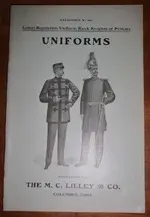
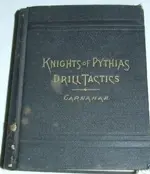
Interesting. That explains the booklet I posted for you earlier. The booklet had something to do with one of those get-togethers your article refers to. I didn't see the specific dates of the booklet mentioned, but same thing and close enough. I'm not sure if the assumption is still on a Company C connection with the pin, but I went through and copied everything that mentioned one. Unless I missed one, they are ...
Company C, El Dorado Guard
Company C, Lamar, Capt. P. M. Thorp
John LaPever, Co. C, 11 Mo. Infy.
[ The M. C. Lilley Company Made UR Uniforms and Accessories ]
Interesting. That explains the booklet I posted for you earlier. The booklet had something to do with one of those get-togethers your article refers to. I didn't see the specific dates of the booklet mentioned, but same thing and close enough. I'm not sure if the assumption is still on a Company C connection with the pin, but I went through and copied everything that mentioned one. Unless I missed one, they are ...
Company C, El Dorado Guard
Company C, Lamar, Capt. P. M. Thorp
John LaPever, Co. C, 11 Mo. Infy.
[ The M. C. Lilley Company Made UR Uniforms and Accessories ]
Attachments
Upvote
0
SODABOTTLEBOB
Silver Member
Bramblefind ~
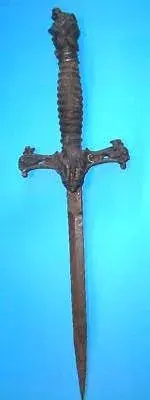
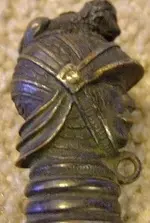
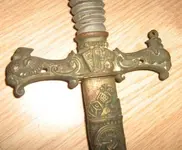
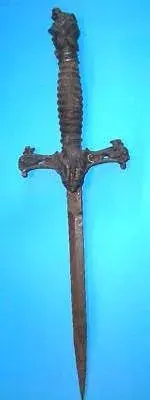
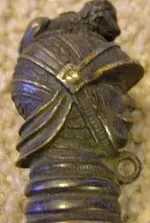
I hope you see this before you work on the last picture I posted. I found a very close match and it is a Knights of Pythias short sword/dagger afterall. The close up shown here is of one of their longer swords. But the handles are basically the same. The Close up is pictured with the blade in the sheath.
By the way, it's okay with me if you still want to enlarge and highlight the picture of sword. Either way, I thank you.
Bob
I hope you see this before you work on the last picture I posted. I found a very close match and it is a Knights of Pythias short sword/dagger afterall. The close up shown here is of one of their longer swords. But the handles are basically the same. The Close up is pictured with the blade in the sheath.
By the way, it's okay with me if you still want to enlarge and highlight the picture of sword. Either way, I thank you.
Bob
Attachments
-
 Knights of Pythias Short Sword.webp4.6 KB · Views: 359
 -
 Knights of Pythias Sword Handle Close up.webp22.1 KB · Views: 401
 -
 Knights of Pythias Sword Handle Close Up Match - Similar to Short Sword (695x575).webp45.4 KB · Views: 454
 -
 Knights of Pythias Short Sword.webp4.6 KB · Views: 343
 -
 Knights of Pythias Sword Handle Close up.webp22.1 KB · Views: 303
Upvote
0
allan
Hero Member
The Third Regiment, U. R.K. P. — ^Patriarchs Militant, I. O. O. F. >>>>independant order of oddfellows
the local names were now dropped and 'the several organizations designated by letters.
What I am saying is.. if the Carthage light guard does the "sham war" every year then 1 year they changed from "local Names " to designated letters then the members of said unit would need to get new insignia or resolder the new designation on the old set of crossed swords. So what if the WVA was some name like wilbers volunteer army from athens GA.and the 30 was the UR designation. after the change they might change the top to AGA and make the 30 into the letter A. Hypothetically of course.since the pins were not used for ordinary meetings and such that would explain the scarcity of pictures of members wearing them, if a member only got it out for drills and a once a year reenactment
NOw I know not all participants of this sham war were not all KOP UR READ THIS http://genealogytrails.com/mo/military_ng_mxb2ndInfHistory.htm so if these guys were members of the soon to be "national guard" and also members of the KOP, but were not official us military men, what insignia was used before the official formation ?
At the outbreak of the Spanish-American war the National Guard was not called as such, but the President called for 200,000 volunteers and the National Guard entered the service in this way, every officer and man in the Missouri National Guard volunteering for service. Governor Stephens announced that the Missouri National Guard would be permitted to volunteer by organizations and that he would commission their officers with the rank they held in the National Guard (thus permitting each organization to be taken intact.) The entire Second Missouri Infantry regiment, officers and men, volunteered and were mobilized at Jefferson Barracks on May 6, 1898, and duly mustered into federal service on May 12, 1898. On May 20, 1898, the regiment arrived at Chickamauga where it was assigned to the Third Brigade, Third Division, and First Army Corps and remained in the concentration camp there until August 27, 1898, when it was moved to Lexington, Ky. On November 8, 1898, it moved to Albany, Ga., and remained there until its muster out of federal service on March 3, 1899.
The following companies constituted the regiment when mustered into federal service in May, 1898:
Company A (Carthage), Captain John A. McMillan
Company B (Butler), Captain Vernon L. Johnson
Company C (Lamar), Captain Frank M. Thorpe.
Company D (Sedalia), Captain George S. Edmonson
Company E (Peirce City), Captain William A. Raupp
Company F (Clinton), Captain Asa C. Landon
Company G (Joplin), Captain Robert A. Spears
the local names were now dropped and 'the several organizations designated by letters.
What I am saying is.. if the Carthage light guard does the "sham war" every year then 1 year they changed from "local Names " to designated letters then the members of said unit would need to get new insignia or resolder the new designation on the old set of crossed swords. So what if the WVA was some name like wilbers volunteer army from athens GA.and the 30 was the UR designation. after the change they might change the top to AGA and make the 30 into the letter A. Hypothetically of course.since the pins were not used for ordinary meetings and such that would explain the scarcity of pictures of members wearing them, if a member only got it out for drills and a once a year reenactment
NOw I know not all participants of this sham war were not all KOP UR READ THIS http://genealogytrails.com/mo/military_ng_mxb2ndInfHistory.htm so if these guys were members of the soon to be "national guard" and also members of the KOP, but were not official us military men, what insignia was used before the official formation ?
At the outbreak of the Spanish-American war the National Guard was not called as such, but the President called for 200,000 volunteers and the National Guard entered the service in this way, every officer and man in the Missouri National Guard volunteering for service. Governor Stephens announced that the Missouri National Guard would be permitted to volunteer by organizations and that he would commission their officers with the rank they held in the National Guard (thus permitting each organization to be taken intact.) The entire Second Missouri Infantry regiment, officers and men, volunteered and were mobilized at Jefferson Barracks on May 6, 1898, and duly mustered into federal service on May 12, 1898. On May 20, 1898, the regiment arrived at Chickamauga where it was assigned to the Third Brigade, Third Division, and First Army Corps and remained in the concentration camp there until August 27, 1898, when it was moved to Lexington, Ky. On November 8, 1898, it moved to Albany, Ga., and remained there until its muster out of federal service on March 3, 1899.
The following companies constituted the regiment when mustered into federal service in May, 1898:
Company A (Carthage), Captain John A. McMillan
Company B (Butler), Captain Vernon L. Johnson
Company C (Lamar), Captain Frank M. Thorpe.
Company D (Sedalia), Captain George S. Edmonson
Company E (Peirce City), Captain William A. Raupp
Company F (Clinton), Captain Asa C. Landon
Company G (Joplin), Captain Robert A. Spears
Upvote
0
SODABOTTLEBOB
Silver Member
I realize this is a bit of a longshot, but I have been wondering lately if the scarcity of the pin might be because it is related to one of the Knights of Pythias "Auxiliaries?" There are several of them mentioned in the link below. One of which is ...
"The Nomads of Avrudaka"
I have just barely skimmed the surface on researching this. But there may be a clue buried here somewhere.
Check it out.
SBB
The picture below is a "Nomads of Avrudaka" emblem.
Link: http://www.indianapythias.org/aboutus.htm
Auxiliaries
Since the inception of the order, several departments and auxiliaries have been added to take care of the various demands for which there appeared to be an insistent call. In 1877 the Insurance Department was organized. The Military Department, commonly called the Uniform Rank, was officially recognized by the Supreme Lodge on November 1, 1878. The order of Pythias Sisters was founded by Joseph Addison Hill , October 23, 1888, and was officially recognized as an auxiliary of the order on August 24, 1914. The Princes of Syracuse was officially recognized as an auxiliary of the order on August 27, 1927. The Junior Order of Knights of Pythias, authorized in August 1960, was officially recognized as an auxiliary in August of 1962 and already has forty-five chapters organized with one Grand Chapter and another Grand Chapter seeking a charter. The Nomads of Avrudaka is an independent auxiliary of the Dramatic Order of the Knights of Khorrassan. The Pythian Sunshine Girls is an independent auxiliary of the Pythian Sisters.
"The Nomads of Avrudaka"
I have just barely skimmed the surface on researching this. But there may be a clue buried here somewhere.
Check it out.
SBB
The picture below is a "Nomads of Avrudaka" emblem.
Link: http://www.indianapythias.org/aboutus.htm
Auxiliaries
Since the inception of the order, several departments and auxiliaries have been added to take care of the various demands for which there appeared to be an insistent call. In 1877 the Insurance Department was organized. The Military Department, commonly called the Uniform Rank, was officially recognized by the Supreme Lodge on November 1, 1878. The order of Pythias Sisters was founded by Joseph Addison Hill , October 23, 1888, and was officially recognized as an auxiliary of the order on August 24, 1914. The Princes of Syracuse was officially recognized as an auxiliary of the order on August 27, 1927. The Junior Order of Knights of Pythias, authorized in August 1960, was officially recognized as an auxiliary in August of 1962 and already has forty-five chapters organized with one Grand Chapter and another Grand Chapter seeking a charter. The Nomads of Avrudaka is an independent auxiliary of the Dramatic Order of the Knights of Khorrassan. The Pythian Sunshine Girls is an independent auxiliary of the Pythian Sisters.
Attachments
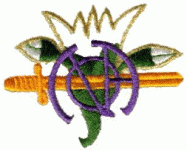
Upvote
0
SODABOTTLEBOB
Silver Member
Here's a weird item. This blurred image was the only picture of it. I think it's a Knights of Pythias buckle, but I'm not sure. It's just as big a mystery as Bill_S's pin. I searched for another one like it but struck out!
SBB
Description:
1. KO "Crossed Swords" TM
2. M "Tent" C
3. Knight "entering" the tent
4. U R
SBB
Description:
1. KO "Crossed Swords" TM
2. M "Tent" C
3. Knight "entering" the tent
4. U R
Attachments
Upvote
0

Bramblefind
Silver Member
I think that is Knights of the Maccabees.
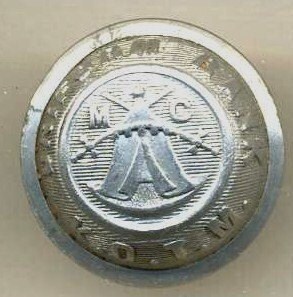
Uniform button for Knights of the Maccabees, Uniform Rank.
Upvote
0
SODABOTTLEBOB
Silver Member
And what about this crazy looking pin? I know even less about it than I do the buckle. Except that it has the FCB on it. Which we know stands for ...
Faith ~ Charity ~ Benevolence
... and is a Knights of Pythias motto. But what's up with the goat? Is it original to the pin or added later?
SBB
Faith ~ Charity ~ Benevolence
... and is a Knights of Pythias motto. But what's up with the goat? Is it original to the pin or added later?
SBB
Attachments
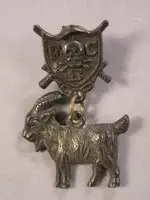
Upvote
0
SODABOTTLEBOB
Silver Member
Bramblefind ~ 
Hey! That's your goat! What gives?
Thanks. I guess those Maccabees guys had "Uniform Ranks" too. Don't you wish all "What Is It's?" were as easy to solve? Lol
SBB
Hey! That's your goat! What gives?
Thanks. I guess those Maccabees guys had "Uniform Ranks" too. Don't you wish all "What Is It's?" were as easy to solve? Lol
SBB
Upvote
0
Bramblefind
Silver Member
SODABOTTLEBOB said:Bramblefind ~
Hey! That's your goat! What gives?
Thanks. I guess those Maccabees guys had "Uniform Ranks" too. Don't you wish all "What Is It's?" were all as easy to solve? Lol
SBB
 Yes that is my goat
I think I'd call this 75% solved
 And maybe something will break next week with TheCannonballGuy's contact (or somewhere else) so we can all crack open the champagne and enjoy the Green Check ceremony.
Upvote
0
SODABOTTLEBOB
Silver Member
As Bramblefind said, this "What Is It?" is about 75% solved ~ and may be 100% solved if TheCannonballGuy's inquiry pays off ~ which I hope it does. But just in case it takes time or doesn't solve the mystery, finding a larger image of this poster may provide a clue or two. It's the only one like it I have been able to find. I'm not sure what the smaller pictures on it depict, but I thought the title on top was interesting. Heres the description that came with it ...
~ KNIGHTS of PYTHIAS EMBLEMATIC CHART ~
A framed Knights of Pythias Emblamatic chart from the Schoodic Lodge No. 129, Prospect Harbor, Maine as identified in the center in ink and print. The certificate was for George W. Colwell and dated May 4th, May 11th and May 18 of 1901. It was signed by J. F. Perry, C.C. and J. W. Noonan, K.R.S. in ink.
~ KNIGHTS of PYTHIAS EMBLEMATIC CHART ~
A framed Knights of Pythias Emblamatic chart from the Schoodic Lodge No. 129, Prospect Harbor, Maine as identified in the center in ink and print. The certificate was for George W. Colwell and dated May 4th, May 11th and May 18 of 1901. It was signed by J. F. Perry, C.C. and J. W. Noonan, K.R.S. in ink.
Attachments
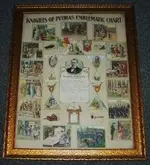
Upvote
0
SODABOTTLEBOB
Silver Member
P.S. ~
I have a confession to make. I have been aware of this poster for several days now, but wanted to keep it to myself with the hope of finding a larger image of it and possibly solving this mystery single handed. The truth is, I have spent hours looking for another, larger image of the poster without success. So my hat will be off to the person that can find one. This is not to say it will definitely show the crossed swords pin ...
... but it might!
SBB

I have a confession to make. I have been aware of this poster for several days now, but wanted to keep it to myself with the hope of finding a larger image of it and possibly solving this mystery single handed. The truth is, I have spent hours looking for another, larger image of the poster without success. So my hat will be off to the person that can find one. This is not to say it will definitely show the crossed swords pin ...
... but it might!
SBB
Upvote
0

ivan salis
Platinum Member
- Joined
- Feb 5, 2007
- Messages
- 16,836
- Reaction score
- 3,816
- Golden Thread
- 0
- Location
- callahan,fl
- Detector(s) used
- delta 4000 / ace 250 - used BH and many others too
well according button back marks M C Lilley is a 1870 's type of button back mark * but the "uniform rank" of the knights of pythias was not around till 1884 / 1888 (adopted) so the lily on it between the U / R must not be from the M C Lilley Company I guess.
Upvote
0
allan
Hero Member
Another supplier to the Knights was the Lauterer company and the old man owner has worked there 50 years and say's he has never seen that pin and they have no records of any like it, another known supplier was the Ames co. but I have not been able to find a catalog of theirs. As for researching documents I have found a great many Books and catalogs and articles on the scribd site.and I am still looking. Also some mention is made that the knights of khorrasson (Spelling wrong)Was a auxillary of the KOP that replaced the UR and lent itself more to the fun side of things, whether or not they had uniforms I do not know....yet ! I have spent the last 2 days looking into missiouri state guard /militia groups and they seem to have gotten whatever they could wherever from before the cw up till the start of the span. amer. war. and after that I have found a few references to unauthorized insignia if allowed by the local commander here is one example and the text w/ it. no luck yet on the WVA pin yet.I have looked at soo many missouri groups its amazing ! also there were european maufacturerer's of KOP item's but have yet to find one in reference to U.R. insignia/pins
This is one of several unauthorized badges worn (if allowed by the local commander) on the Class A uniform. There have been nearly 60 years of debate regarding these badges and their wear. That they exist and were worn is not in question, the question usually centers around which troops were actually qualified to wear it.
In any case, the older badges (such as this one) are VERY hard to find.
This is one of several unauthorized badges worn (if allowed by the local commander) on the Class A uniform. There have been nearly 60 years of debate regarding these badges and their wear. That they exist and were worn is not in question, the question usually centers around which troops were actually qualified to wear it.
In any case, the older badges (such as this one) are VERY hard to find.
Attachments
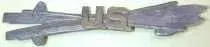
Upvote
0

nova treasure
Bronze Member
allan said:In any case, the older badges (such as this one) are VERY hard to find.
that's a WW1 Mountain Ski Troops Combat badge.
Bill
Upvote
0
allan
Hero Member
yes, good eye , I just used it as an example. since missouri's nat. guard and other groups are so varied i figured maybe a (militia)or other group joining a us military organization might have been allowed to wear such a pin.I saw a civil war pic somewhere of a mo. soldier in the civil war wearing russian shoulderboards on his uniform so maybe it is a possibility that happened up until the span. american war when the U.R. ranks were offered up to fight the war.if the pin is U.R. as we believe it to be, it can only be from 1878 or newer unless one of the regional KOP lodges had a UR named military arm with that design before the group was formed by the KOP as a whole.so I question whether one group's UR design was adopted for the entire KOP. just throwing out possible idea's since we are slowing down on new leads
Upvote
0
nova treasure
Bronze Member
I am only guessing, but it seems to be a C company medal from possibly WW1 with the numbers of the regiment. Possibly made by the fraternal group to resemble the Proficient Calvary Medal.
I know everyones extensive time and research on this has been amazing, So I hope that it will be solved with Confidence.
I know everyones extensive time and research on this has been amazing, So I hope that it will be solved with Confidence.
Upvote
0




Featured Treasure Finds
Featured Treasure Finds
Similar threads

- Replies
- 12
- Views
- 847


Users who are viewing this thread
Total: 1 (members: 0, guests: 1)














