What's new

Four Peaks Seen As One

( The entire point is that the wording of the clues is not the problem, it is how our minds interpret the words. )
( Markmar seems to miss the distinctions, along with the fact that both clues are (NOT) about the same view spot. 🤷🏼‍♂️ ).
You are making a mistake...
you are mixing the Barley and the Beans,
The Holmes clues: Go through this saddle and on up a low ridge and when you get to the highest point of the ridge you can look north and the four peaks are lined up to look like one peak. In the other direction ( you will see a high needle. ). In the canyon under you is my hidden camp. ( Waltz is giving a general description from the highest point on the top of the saddle 180 degrees view )

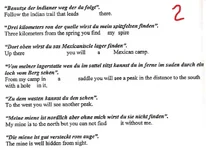
The German clues: From my Camp in a saddle you will see a peak in the distance to the South with a hole in it,
A high mountain is to the east,
A deep valley lies to the west.
in the back of him no description, he is against the saddle,
Waltz is giving a description directly in front of him from the camp on the side of the saddle below the highest point ridge,
he is not at the same LEVEL it is not the same view.
 
Last edited:
( The entire point is that the wording of the clues is not the problem, it is how our minds interpret the words. )
( Markmar seems to miss the distinctions, along with the fact that both clues are (NOT) about the same view spot. 🤷🏼‍♂️ ).
You are making a mistake...
you are mixing the Barley and the Beans,
The Holmes clues: Go through this saddle and on up a low ridge and when you get to the highest point of the ridge you can look north and the four peaks are lined up to look like one peak. In the other direction ( you will see a high needle. ). In the canyon under you is my hidden camp. ( Waltz is giving a general description from the highest point on the top of the saddle 180 degrees view )

The German clues: From my Camp in a saddle you will see a peak in the distance to the South with a hole in it,
A high mountain is to the east,
A deep valley lies to the west.
in the back of him no description, he is against the saddle,
Waltz is giving a description directly in front of him from the camp on the side of the saddle below the highest point ridge,
he is not at the same LEVEL it is not the same view.

Seems you don't pay attention reading my posts. In my previous post (#56) I wrote: " Also, in the German clue, the saddle could be something completely different landmark than the saddle described in the Holmes route/clues. " So, you are just repeating what I already wrote.
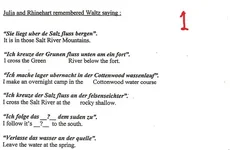
Here is the German clue as is written in books, which is related to " the hole in the mountain ":

“Von meiner lagerstatte wen du im sattel sitz kannst du in ferne im suden durch ein loch vom Berg sehen.”

You can take the text and ask a German language teacher to translate it for you. Here, in this forum, a German citizen and member of Tnet by the title " BlackLine ", did the translation for us, and wrote how there is not any word about " camp ", but about " cache ". So, the direction changes in regards to where is the cache or the camp, because they are opposte each other.

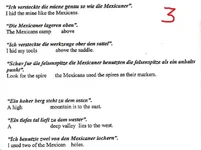
Now, from my research, the other translated clues you wrote as: "A high mountain is to the east, A deep valley lies to the west ", plus another translated clue " To the west you will see another peak ", is the view related to the long rigde which lead to the saddle from Holmes clues, as a central point of reference looking from the north.
So , to be more clear, looking to the south, east of the long ridge is a high mountain, and to the west of the long ridge is a low valley and a peak. Also, part of this view is depicted in the Waltz doodle. In the Wa;tz doodle is depicted the western side of the long ridge and the other clues written above concerning the west direction.
 
Last edited:
Here is the English translation of your text:

"From my camp, when you sit in the saddle, you can see in the distance to the south through a hole in the mountain."

Key Vocabulary Breakdown
    • Lagerstätte: Camp, campsite, or resting place (in a historical/western context). Literally means "deposit" or "site," but contextually refers to a base or camp.
    • Sattel: Saddle.
    • Loch vom Berg: Hole in the mountain (or "hole of the mountain").
 
( The entire point is that the wording of the clues is not the problem, it is how our minds interpret the words. )
( Markmar seems to miss the distinctions, along with the fact that both clues are (NOT) about the same view spot. 🤷🏼‍♂️ ).
You are making a mistake...
you are mixing the Barley and the Beans,
The Holmes clues: Go through this saddle and on up a low ridge and when you get to the highest point of the ridge you can look north and the four peaks are lined up to look like one peak. In the other direction ( you will see a high needle. ). In the canyon under you is my hidden camp. ( Waltz is giving a general description from the highest point on the top of the saddle 180 degrees view )

The German clues: From my Camp in a saddle you will see a peak in the distance to the South with a hole in it,
A high mountain is to the east,
A deep valley lies to the west.
in the back of him no description, he is against the saddle,
Waltz is giving a description directly in front of him from the camp on the side of the saddle below the highest point ridge,
he is not at the same LEVEL it is not the same view.
Hello Ponteach,
Maybe I’m remembering incorrectly, but the part of other -vs- opposite, in reference to the view directions of 4-peaks was another source for the German clue about 4-peaks and a peak with a hole through it.

I’ve looked through the forums and can only find the references you listed.

Now I don’t know what to think, other than a peak with a hole through it is clearly visible over the top of Blacktop Mesa, as the photo shows.

The view of 4-peaks looking like one peak, is there at the low ridge where the saddle ties in.

The clue I remember used the term “opposite” for the peak with the hole, and 4-peaks.

Idahodutch
 
You guys are thinking Weavers Needle when it just says a pointed peak to the south. If I’m not mistaken. So that’s how the clues get all distorted. That’s why everyone thinks the mine is to the north of WN but couldn’t find the mine.
393Stroker

When one is up where Idahodutch is speaking of, you can see the most obvious pointed peak due South - which is Weaver's Needle and there are no other pointed peaks in view once you're at that particular spot, as far as I've seen. From that one spot - you really can see Weaver's Needle to the South AND to the North - see 4 peaks that seem to line up as one. You have to be in that exact spot in order to have both Holmes and the German clues work out. This one spot, is where Idahodutch realized he was in the correct area to search. An Aha moment for him I believe.

-SpartanOC
 
Here is the English translation of your text:
"From my camp, when you sit in the saddle, you can see in the distance to the south through a hole in the mountain."

Key Vocabulary Breakdown
    • Lagerstätte: Camp, campsite, or resting place (in a historical/western context). Literally means "deposit" or "site," but contextually refers to a base or camp.
    • Sattel: Saddle.
    • Loch vom Berg: Hole in the mountain (or "hole of the mountain").
rk85044

Actually the translation of what Markmar posted in German is: "From my campsite, when you’re in the saddle, you can look through a gap in the mountain and see into the distance to the south." The difference is the later half of that sentence, "you can look through a gap in the mountain and see into the distance to the south.", as opposed to "...you can see in the distance to the south through a hole in the mountain." I used Google translation and it makes a difference in how one looks at what's being said. There are differences of what HOLE means to what a GAP means. This might confuse some.

-SpartanOC
 
393Stroker

When one is up where Idahodutch is speaking of, you can see the most obvious pointed peak due South - which is Weaver's Needle and there are no other pointed peaks in view once you're at that particular spot, as far as I've seen. From that one spot - you really can see Weaver's Needle to the South AND to the North - see 4 peaks that seem to line up as one. You have to be in that exact spot in order to have both Holmes and the German clues work out. This one spot, is where Idahodutch realized he was in the correct area to search. An Aha moment for him I believe.

-SpartanOC
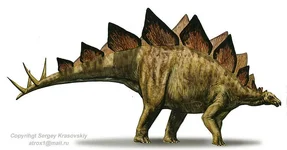
Fair enough, hope someone finds something up there. I was thinking outside the box a little. Maybe 4 Peaks Mnt. and Weavers Needle doesn’t have anything to do with it. I’m think that Waltz looked at stuff like my old man did. When you’re at the right location there are some rock formations going down the side of the canyon side like spikes on the back of a dinosaur. And the pointed peak to the south is just a smaller rock structure that is prominent. Try finding where JW went without using WN and 4 Peaks Mnt.
 

Attachments

  • IMG_0825.webp
    IMG_0825.webp
    39.9 KB · Views: 4
Fair enough, hope someone finds something up there. I was thinking outside the box a little. Maybe 4 Peaks Mnt. and Weavers Needle doesn’t have anything to do with it. I’m think that Waltz looked at stuff like my old man did. When you’re at the right location there are some rock formations going down the side of the canyon side like spikes on the back of a dinosaur. And the pointed peak to the south is just a smaller rock structure that is prominent. Try finding where JW went without using WN and 4 Peaks Mnt.
393Stroker

You are correct in your assessment regarding the NAMES of what might be 4 peaks or WN, or them not being involved at all. What might be considered WN, might just be a random peak due South, but has been confused with WN. I also agree that Waltz could have just looked around and caught a view of a "peak" due South lining up with a higher mountain looking like 4 peaks, but was just another smaller "peak" as a marker. That is very possible. Something has made Waltz' location very difficult to locate and the reasons you brought up, could be a good conclusion.

Personally, I've been there where Idahodutch found his location. I never made it up to the cliff's edge to see if a mine could be located nor did I check and see if I could see WN due South and 4 Peaks as one due North. That day when I got there, the wind was blowing pretty hard, about 30 to 40 miles an hour up on the ridge. One of the guys I was with, had difficulty in getting up there and realized it wasn't worth the risk, as he was not comfortable walking along the ridge with that kind of wind - so he quickly made his way back down. Funny thing was, you couldn't feel any wind from below the ridge. Apparently the winds builds strength as you climb up towards the ridge. Being down below and surrounded by ravines and smaller hills, seemed to have blocked most of what was blowing above.

What I CAN tell you is, I spent my time below, checking on where Waltz's camp was (now blown out due to erosion) AND Waltz' cache area - trying to remove a ton of boulders and loose dirt. The loose dirt informed me that, there was a cave in of some type (natural or manmade I could not tell) and had boulders added to the debris for a good coverage. The pile of boulders were interestingly laid out in a pattern forming a specific shape and that looked intentional. The area looked very old and there was NO evidence of anyone being up there for over 100 years. The 'Desert varnish' or Lichen was very prominent and hadn't been tampered with for a very long time, proving out to me at least, that the area was old. Once we conducted a scan of the exact spot we were interested in, proved out the presence of Au in one consecrated spot and in abundance. The scan went off the chart. With the same device, we utilized a pinpoint laser which is pretty accurate to the inch, and it too revealed the presence of Au.

So, in using the Holmes and P.C. Bicknell clues, we ended up in an area that not only played out fitting many of the clues, but resulted in the presence of Au. If it weren't for the scanner pointing to an exact location and 'ringing bells', I'm sure I'd still be out there looking aimlessly - as the area consists of nothing that would would draw in a prospector.

-SpartanOC
 
Finding beats every other theory.

The use of the german words "Lager" and "Lagerstätte" is surprisingly unclear. It changed in the 19th century with the rise of industrial mining. Before and through the 19th century the dominant meaning was just a "camp and place to rest" or "place to lay down and store something" and normal dictionaries like the Grimm brothers barely mention the connection to mining and geology. But special books do.

Moritz Ferdinand Gaetschmanns (1800-1895) in his "Sammlung bergmaennischer Ausdrücke" (collection of mining terms) , 2nd edition from 1859, has "Lagerstaette" as a "rock mass which is clearly different from the surrounding rock". "Lager" he describes as a "Lagerstaette with the same kind of layers as in the surrouding rock". Heinrich Veith needed in 1871 in his "German mining dictionary" already 1 1/2 pages about the two terms. Gaetschmann taught at a special academy from 1835 on, so most likely mining experts already used the terms when Waltz left Germany.

Both meanings are possible, and the proof could be his use of other words for his mine and his camp. Do we have the german clues here too or just in the two deleted forums?
 
Don't forget the 3 million in gold hidden in a cave at Byous Butte off Hewitt Canyon Rd. What was the price of gold in 1950? $35 a oz. Don't overlook the true history of the Superstitions! It's easy to be distracted by false history written now and in the late 1800's spouted as fact by those who found nothing. Many who have not stepped one foot into the Superstitions. Many who did searched the wrong areas following clues.
 
The four peaks look like one....does it not to any old man looking far away with poor eyesight to begin with?...After all he owned a shotgun...at least at his house.... that was used in a murder....a bit safer to shoot at something with a spray of lead.....that just a single bullet....i think he had a sense of humor...looking north...if you're not in a clear line of sight....high up in terrain.....those four peaks will always look line one...just the one in front of them...
 
Finding beats every other theory.

The use of the german words "Lager" and "Lagerstätte" is surprisingly unclear. It changed in the 19th century with the rise of industrial mining. Before and through the 19th century the dominant meaning was just a "camp and place to rest" or "place to lay down and store something" and normal dictionaries like the Grimm brothers barely mention the connection to mining and geology. But special books do.

Moritz Ferdinand Gaetschmanns (1800-1895) in his "Sammlung bergmaennischer Ausdrücke" (collection of mining terms) , 2nd edition from 1859, has "Lagerstaette" as a "rock mass which is clearly different from the surrounding rock". "Lager" he describes as a "Lagerstaette with the same kind of layers as in the surrouding rock". Heinrich Veith needed in 1871 in his "German mining dictionary" already 1 1/2 pages about the two terms. Gaetschmann taught at a special academy from 1835 on, so most likely mining experts already used the terms when Waltz left Germany.

Both meanings are possible, and the proof could be his use of other words for his mine and his camp. Do we have the german clues here too or just in the two deleted forums?
 

Attachments

  • Image2.webp
    Image2.webp
    29.9 KB · Views: 3
  • Image3.webp
    Image3.webp
    42.7 KB · Views: 3
  • Imagea4.webp
    Imagea4.webp
    34.6 KB · Views: 3
  • Image5.webp
    Image5.webp
    29.2 KB · Views: 3

Users who are viewing this thread

Back
Top Bottom