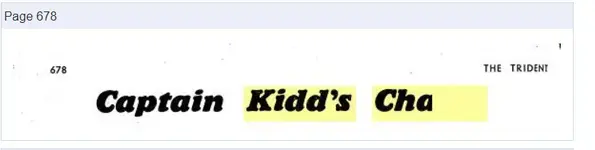
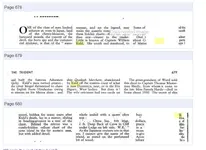
In this first of a series of about a dozen posts, I will prove Harold T. Wilkins (1935, 1936a, 1936b) account of the Kidd-Palmer maps is far more reliable than Anthony Howlett (1958) and Howlett got nearly everything wrong. My posts will caution readers who stumble across this forum thread to not trust a word said by CapnGeorge (George Edmunds) who uncritically copied Howlett and failed to do any fact-checking or verification of Howlett's claims. Edmunds is a poor researcher who dishonestly still claims Howlett's account is accurate. His book is unreliable because by admission he uncritically copied Howlett (1958) and even Howlett wrote the foreword to the book.
Sources:
* Bath, G. J. Maps, Mystery and Interpretation, 3. Interpretation: Sizing Up the Money Pit (KeyPress, 2013).
* Driscoll, Charles B. "Pirates Ahoy!", The Pittsburgh Press (6 July, 1930).
* Edmunds, George. Kidd: The Search for His Treasure (The Pentland Press, 1996).
* Howlett, Anthony. "The Mystery of Captain Kidd’s Treasure", The Wide World Magazine (October 1958).
* Wilkins, Harold T. Captain Kidd and his Skeleton Island (London: Cassell & Co., 1935)
* Wilkins, Harold T. "Maps Spur New Hunt For Kidd Treasure", Modern Mechanix (November 1936).
* Wilkins, Harold T. "Captain Kidd and his Treasure Island", The Scottish Field (December 1936), pp. 27-28.
* Wilkins, Harold T. New Facts About Mysterious Captain Kidd and His Skeleton Island Chests (Haldeman-Julius Co., 1947).
Background
Harold T. Wilkins
Wilkins (1936a, 1936b) states that in May 1932, he was invited by Hubert Palmer to his house in Eastbourne to inspect a chest (the Hardy Chest) and a few charts (maps) on parchments. This is confirmed by a private letter Palmer wrote to Wilkins that year quoted by G. J. Bath (2013, p. 27 [see below]) and an unpublished manuscript by Wilkins, quoted by Bath. A scan of a second letter (dated 13 December, 1932) Bath uploaded on his website, Palmer wrote to Wilkins, also confirms that Wilkins visited Palmer. From these two letters and an unpublished manuscript we learn that Wilkins saw or inspected at Palmer's house: (a) the Hardy Chest, (b) Dan Morgan Chest and (c) the Oak Bureau, as well as three maps from these furniture pieces. The map from the workbox was not though purchased by Palmer until the following year, so Wilkins did not see it when he first visited Palmer. We know the fourth map was acquired by Palmer in February 1933 because Wilkins (1935, p. 332, 1936b) quotes a letter Palmer sent him. Wilkins (1935, p. 334) suggests he saw the map from the workbox but this is not specifically mentioned by Palmer in any of his correspondence (if he did, it means Wilkins must have met Palmer on another occasion). Note Bath (2013, p. 25) who has access to Palmer's letters has stated Wilkins and Palmer met each other multiple times and last met in 1944. To sum up, Wilkins met Palmer in person, corresponded with him numerous times by letter between the period 1932-1945, and was one of the very few people to have access to the maps.

Anthony Howlett
In 1958, Anthony Howlett published an article on the maps in The Wide World Magazine. Unlike Wilkins, Howlett had never met or corresponded with Palmer (who died in 1949) but he claimed to have access to the maps and "all of Palmer's private papers and notes". In the foreword to Edmunds (1996), Howlett clarified this was through Elizabeth Dick who according to various newspaper reports had been Palmer's housekeeper and "nurse-companion" for the last eleven years of his life, although Bath (2013, p. 23) claims she only cared for him during his last five years. Palmer had bequeathed his house to her as well as his possessions including the furniture pieces and four maps. As I show below, with proof, Howlett gets virtually everything wrong about the maps and his account is heavily contradicted by Palmer's correspondence with Wilkins. This casts doubt that Howlett ever had access to Palmer's private papers. Bath (2013, p. 24) notes that he had asked Howlett to enquire whether he had read Palmer's letters to Wilkins but he was unhelpful. Howlett refused to discuss or clarify what Palmer's documents he had read, furthermore, George Edmunds (who uncritically copied Howlett's dubious account) never provided any evidence to Bath that Howlett had access to Palmer's files either even though in the foreword to his book, Howlett said he gave Edmunds "records". Something is very suspicious about all this - Howlett's account of the maps is demonstrably inaccurate and he failed to verify to anyone he had access to Palmer's private papers. Bath (2013) I think is too kind in his assessment of Howlett. Although recognising the reality that Howlett's article is not remotely reliable and it contains many errors (in his words "Howlett is appallingly inaccurate", [p. 23], and his article is "an extremely misleading account of the events", [p. 44]), he would naively go on to excuse Howlett on the basis "I am forced to assume that Howlett failed to find Wilkins' letters to Palmer" (pp. 25-26) because Palmer did not keep Wilkins side of the correspondence or copies of his own letters. While not implausible, Bath nonetheless believes Howlett (1958) was still relying on some of Palmer's papers as an "incomplete record" (even though there is not a shred of evidence Howlett accessed anything). In contrast, my opinion is Howlett was a liar and fraud who made up almost everything in his article but he tried to pass it off as based on Palmer's records. He did not even access an incomplete (partial) record (Bath is much too generous), rather, he accessed absolutely nothing; no record at all. Although my accusation is extreme, this is a reasonable and honestly held viewpoint since almost nothing in Howlett's article matches Palmer's correspondence with Wilkins (or as I also discovered, with Charles Driscoll), meaning he must have fabricated the account virtually ex nihilo, furthermore, Howlett refused to provide proof that he had ever accessed Palmer's private papers when asked. Edmunds has never helped in that regard either.

Hardy Chest
Wilkins (1935, pp. 316-317)

According to Wilkins, an old woman named Pamela Hardy in 1930 sold a chest to (Arthur) Hill-Cutler, the owner of an antique shop in Eastbourne. The chest was then acquired by Hubert Palmer from Cutler (in terms of chronology, Palmer first acquired the Hardy Chest before any of the other furniture pieces). The chest came with a pedigree on a letter as a record of ownership (I will not go into the details of the pedigree here) which Wilkins quotes at length. Wilkins points out that someone (he does not name but infers was either Palmer or Cutler), while touching the Hardy Chest, stumbled across a false bottom by a loose nail and there was a hidden parchment (treasure map) inside. Wilkins makes it clear the parchment from the Hardy Chest is the Coral Island Map (p. 318, 1936b), however, he mistakenly thought this map had the initials "W. K. 1669" on it. Wilkins goes on to state Hardy owned another chest of smaller size (which came with silver buttons) and died in 1931, having emigrated to Spain (p. 319). Wilkins confusion that the Coral Island Map had Kidd's initials on it can perhaps be explained by the fact he was relying on his hazy memory; there was a gap of a few years between him looking at this map and the publication of his book. Palmer also refused him permission to copy the map. In 1947, Wilkins appears to have corrected his mistake. In his description of the map in the Hardy Chest in his booklet New Facts About Mysterious Captain Kidd and his Skeleton Island Chest, he does not mention Kidd's initials on the map and accurately describes the Coral Island Map (p. 22). In an unpublished manuscript quoted by Bath (2013, p. 33), Wilkins also wrote a different date Hardy died (1928). Based on the fact Wilkins in his book wrote Hardy died a year after selling the chest, this date suggests Palmer acquired the Hardy Chest in 1927. As I show below, this is the correct and verifiable year Palmer actually acquired the Hardy Chest. It appears therefore that 1930 was a typing error in Wilkins book and he knew the correct date Palmer purchased the Hardy Chest (1927).
Howlett (1958)


As can be seen Howlett's account strongly differs to Wilkins. Howlett mentions nothing about Arthur Hill-Cutler and instead states Palmer bought the chest directly from Pamela Hardy (Wilkins, in contrast, states Hardy sold the chest to Cutler in his antique shop and Palmer acquired it from Cutler). The dates also differ, Howlett states Palmer acquired the Hardy Chest in 1931, not 1930. Another major difference is that Howlett states Palmer acquired the Hardy Chest second (after the Oak Bureau) while Wilkins, in terms of chronology or the sequence Palmer acquired the furniture pieces/maps, has Palmer first own the Hardy Chest. Yet another difference is Howlett (1958) believed the map in the Hardy Chest was the Plain Map, while Wilkins thought it was the Coral Island Map. Howlett names Palmer as the individual who discovered the map inside the chest, while Wilkins instead infers it was either Palmer or Cutler.
Reality
We now know based on a letter Palmer wrote and sent to Charles Driscoll (1930 [see below]), that Palmer acquired the Hardy Chest in 1927 and it was the first furniture piece (and map) he had purchased (not the oak bureau). I dug up an article written by Charles Driscoll in 1930 that quotes the letter Palmer sent him. Driscoll paraphrases and quotes the contents of the letter. Driscoll's article was overlooked by both Wilkins and Howlett, but this is not unexpected since it was from a local US paper Pittsburgh Press (6 July 1930) and they lived in the UK and are unlikely to have had knowledge of this American publication. Based on this article, it can be determined Wilkins (1935, 1936a, 1936b) account of the Hardy Chest is far more accurate than Howlett's (1958). Palmer noted in his letter to Driscoll that the Hardy Chest contained a Spanish knife, silver and copper coins, clay pipes, and an old sermon book; these are all listed by Wilkins (1935, p. 317) but Howlett (1958) solely mentions the sermon book. The Hardy Chest was the first furniture piece and map Wilkins acquired; we know this not only from Driscoll's article but a letter Palmer wrote to Wilkins on 11 May, 1935 quoted by Bath (2013, p. 35) and the fact Wilkins after the publication of his book drew the Coral Island map confidentially on a postcard (Palmer forbid him to publish copies of his maps but he made one sketch in private) while stating this map is the "Pamela Hardy chart". Palmer's partially quoted letter to Driscoll nor Driscoll's (1930) article mentions Arthur Hill-Cutler, however, Palmer hints he acquired the chest from Cutler since he says he handled it when he took it home (meaning he bought it somewhere else) and found the secret compartment at his home. Howlett (1958) instead stated that Hardy directly sold Palmer the chest, however, if that happened Palmer would likely have been sold the chest at his home as there was no intermediary seller at the antique shop so he would have not needed to have traveled. Instead, Palmer's letter suggests he bought the Hardy Chest from Cutler's antique shop since he had to travel home with the chest (buying it elsewhere) which matches what Wilkins says in his book. Palmer points out in his letter to Driscoll that it was himself who found the map in the secret compartment of the Hardy Chest. Although Howlett (1958) explicitly stated this, Wilkins (1935, 1936a) never denied this and inferred it was Palmer by mentioning "someone" (either Palmer or Cutler). Palmer later stated it was specifically Palmer who found the map in a 1940 article he published in American Weekly.

Finally, it should be noted that various interesting bits and bobs of information about the Hardy Chest Wilkins (1935) provides in his book are confirmed by private letters that Palmer sent him and in his unpublished manuscript that Bath owns. For example, Wilkins (1935, p. 320) noted that Palmer showed the Hardy Chest to Reginald Hall. This is verified by two letters Palmer sent Wilkins (in 1932 and 1934) quoted by Bath (2013, p. 30). This sort of information is completely absent from Howlett (1958) despite Howlett said he had access to Palmer's private papers. The evidence is pretty clear he never had access since aside from omitting lots of information (unlike Wilkins who is far more reliable in that regard) he got almost everything wrong about the Hardy Chest.

Driscoll's (1930) article:

To summarise, Wilkins (1935) got most correct about the Hardy Chest in terms of how and when Palmer came to acquire it, the map and other contents inside, and important details, while the few trivial mistakes he made he appears to have corrected in subsequent publications or what he scribbled in his private (unpublished) manuscript. In his unpublished manuscript, Wilkins knew that Palmer acquired the Hardy Chest in 1927 (I presume 1930 was a typing error in his book), while in his 1947 booklet he did not repeat his earlier error that the Coral Island Map (found in the Hardy Chest) had Kidd's initials on it (this is probably explained by the fact he drew a private sketch of the Coral Island map sometime after his book was published). Wilkins therefore got overall correct (a) the chronology/sequence i.e., the Hardy Chest was the first piece of furniture acquired by Palmer (not the Oak Bureau, wrongly stated by Howlett); (b) the date Wilkins acquired the Hardy Chest (1927 [albeit in his unpublished writings] (b) what specific map was inside the Hardy Chest (Coral Island map) and (b) how Palmer acquired the chest namely him buying it from Arthur Cutler. Howlett (1958) in contrast got (a)-(d) wrong. Suffice to say, it is doubtful Howlett accessed Palmer's private papers considering he got virtually everything incorrect. Curiously, he may have alluded to this in private correspondence to Edmunds, who reported "Howlett says that Palmer's notes on the matter were stolen after his death." (Bath 2013, p. 26). This, seems to be an exaggeration; rather what Howlett said is Palmer's scrapbooks/notes were sold after his death. According to Bath (2013, p. 34), Howlett in a private letter acknowledged that Palmer's scrapbooks had been sold at auction. Despite asserting in his 1958 article that he had full access and had read "all of Palmer's private papers and notes", he admitted in confidential quite the opposite - that Palmer's notes/scrapbooks were sold and hence missing after his death, so he never read them. I would go further to argue he had access to none of Palmer's private papers. This explains why Howlett got nearly everything wrong in his article since he made it up or was guessing at best. There is at least proof Howlett lied in his article about having full access since he admitted in private that Palmer's scrapbooks were sold.
Part II. I will reply to this post in weeks or months to cover the Oak Bureau. Thanks for reading.
Sources:
* Bath, G. J. Maps, Mystery and Interpretation, 3. Interpretation: Sizing Up the Money Pit (KeyPress, 2013).
* Driscoll, Charles B. "Pirates Ahoy!", The Pittsburgh Press (6 July, 1930).
* Edmunds, George. Kidd: The Search for His Treasure (The Pentland Press, 1996).
* Howlett, Anthony. "The Mystery of Captain Kidd’s Treasure", The Wide World Magazine (October 1958).
* Wilkins, Harold T. Captain Kidd and his Skeleton Island (London: Cassell & Co., 1935)
* Wilkins, Harold T. "Maps Spur New Hunt For Kidd Treasure", Modern Mechanix (November 1936).
* Wilkins, Harold T. "Captain Kidd and his Treasure Island", The Scottish Field (December 1936), pp. 27-28.
* Wilkins, Harold T. New Facts About Mysterious Captain Kidd and His Skeleton Island Chests (Haldeman-Julius Co., 1947).
Background
Harold T. Wilkins
Wilkins (1936a, 1936b) states that in May 1932, he was invited by Hubert Palmer to his house in Eastbourne to inspect a chest (the Hardy Chest) and a few charts (maps) on parchments. This is confirmed by a private letter Palmer wrote to Wilkins that year quoted by G. J. Bath (2013, p. 27 [see below]) and an unpublished manuscript by Wilkins, quoted by Bath. A scan of a second letter (dated 13 December, 1932) Bath uploaded on his website, Palmer wrote to Wilkins, also confirms that Wilkins visited Palmer. From these two letters and an unpublished manuscript we learn that Wilkins saw or inspected at Palmer's house: (a) the Hardy Chest, (b) Dan Morgan Chest and (c) the Oak Bureau, as well as three maps from these furniture pieces. The map from the workbox was not though purchased by Palmer until the following year, so Wilkins did not see it when he first visited Palmer. We know the fourth map was acquired by Palmer in February 1933 because Wilkins (1935, p. 332, 1936b) quotes a letter Palmer sent him. Wilkins (1935, p. 334) suggests he saw the map from the workbox but this is not specifically mentioned by Palmer in any of his correspondence (if he did, it means Wilkins must have met Palmer on another occasion). Note Bath (2013, p. 25) who has access to Palmer's letters has stated Wilkins and Palmer met each other multiple times and last met in 1944. To sum up, Wilkins met Palmer in person, corresponded with him numerous times by letter between the period 1932-1945, and was one of the very few people to have access to the maps.
Anthony Howlett
In 1958, Anthony Howlett published an article on the maps in The Wide World Magazine. Unlike Wilkins, Howlett had never met or corresponded with Palmer (who died in 1949) but he claimed to have access to the maps and "all of Palmer's private papers and notes". In the foreword to Edmunds (1996), Howlett clarified this was through Elizabeth Dick who according to various newspaper reports had been Palmer's housekeeper and "nurse-companion" for the last eleven years of his life, although Bath (2013, p. 23) claims she only cared for him during his last five years. Palmer had bequeathed his house to her as well as his possessions including the furniture pieces and four maps. As I show below, with proof, Howlett gets virtually everything wrong about the maps and his account is heavily contradicted by Palmer's correspondence with Wilkins. This casts doubt that Howlett ever had access to Palmer's private papers. Bath (2013, p. 24) notes that he had asked Howlett to enquire whether he had read Palmer's letters to Wilkins but he was unhelpful. Howlett refused to discuss or clarify what Palmer's documents he had read, furthermore, George Edmunds (who uncritically copied Howlett's dubious account) never provided any evidence to Bath that Howlett had access to Palmer's files either even though in the foreword to his book, Howlett said he gave Edmunds "records". Something is very suspicious about all this - Howlett's account of the maps is demonstrably inaccurate and he failed to verify to anyone he had access to Palmer's private papers. Bath (2013) I think is too kind in his assessment of Howlett. Although recognising the reality that Howlett's article is not remotely reliable and it contains many errors (in his words "Howlett is appallingly inaccurate", [p. 23], and his article is "an extremely misleading account of the events", [p. 44]), he would naively go on to excuse Howlett on the basis "I am forced to assume that Howlett failed to find Wilkins' letters to Palmer" (pp. 25-26) because Palmer did not keep Wilkins side of the correspondence or copies of his own letters. While not implausible, Bath nonetheless believes Howlett (1958) was still relying on some of Palmer's papers as an "incomplete record" (even though there is not a shred of evidence Howlett accessed anything). In contrast, my opinion is Howlett was a liar and fraud who made up almost everything in his article but he tried to pass it off as based on Palmer's records. He did not even access an incomplete (partial) record (Bath is much too generous), rather, he accessed absolutely nothing; no record at all. Although my accusation is extreme, this is a reasonable and honestly held viewpoint since almost nothing in Howlett's article matches Palmer's correspondence with Wilkins (or as I also discovered, with Charles Driscoll), meaning he must have fabricated the account virtually ex nihilo, furthermore, Howlett refused to provide proof that he had ever accessed Palmer's private papers when asked. Edmunds has never helped in that regard either.
Hardy Chest
Wilkins (1935, pp. 316-317)
According to Wilkins, an old woman named Pamela Hardy in 1930 sold a chest to (Arthur) Hill-Cutler, the owner of an antique shop in Eastbourne. The chest was then acquired by Hubert Palmer from Cutler (in terms of chronology, Palmer first acquired the Hardy Chest before any of the other furniture pieces). The chest came with a pedigree on a letter as a record of ownership (I will not go into the details of the pedigree here) which Wilkins quotes at length. Wilkins points out that someone (he does not name but infers was either Palmer or Cutler), while touching the Hardy Chest, stumbled across a false bottom by a loose nail and there was a hidden parchment (treasure map) inside. Wilkins makes it clear the parchment from the Hardy Chest is the Coral Island Map (p. 318, 1936b), however, he mistakenly thought this map had the initials "W. K. 1669" on it. Wilkins goes on to state Hardy owned another chest of smaller size (which came with silver buttons) and died in 1931, having emigrated to Spain (p. 319). Wilkins confusion that the Coral Island Map had Kidd's initials on it can perhaps be explained by the fact he was relying on his hazy memory; there was a gap of a few years between him looking at this map and the publication of his book. Palmer also refused him permission to copy the map. In 1947, Wilkins appears to have corrected his mistake. In his description of the map in the Hardy Chest in his booklet New Facts About Mysterious Captain Kidd and his Skeleton Island Chest, he does not mention Kidd's initials on the map and accurately describes the Coral Island Map (p. 22). In an unpublished manuscript quoted by Bath (2013, p. 33), Wilkins also wrote a different date Hardy died (1928). Based on the fact Wilkins in his book wrote Hardy died a year after selling the chest, this date suggests Palmer acquired the Hardy Chest in 1927. As I show below, this is the correct and verifiable year Palmer actually acquired the Hardy Chest. It appears therefore that 1930 was a typing error in Wilkins book and he knew the correct date Palmer purchased the Hardy Chest (1927).
Howlett (1958)
As can be seen Howlett's account strongly differs to Wilkins. Howlett mentions nothing about Arthur Hill-Cutler and instead states Palmer bought the chest directly from Pamela Hardy (Wilkins, in contrast, states Hardy sold the chest to Cutler in his antique shop and Palmer acquired it from Cutler). The dates also differ, Howlett states Palmer acquired the Hardy Chest in 1931, not 1930. Another major difference is that Howlett states Palmer acquired the Hardy Chest second (after the Oak Bureau) while Wilkins, in terms of chronology or the sequence Palmer acquired the furniture pieces/maps, has Palmer first own the Hardy Chest. Yet another difference is Howlett (1958) believed the map in the Hardy Chest was the Plain Map, while Wilkins thought it was the Coral Island Map. Howlett names Palmer as the individual who discovered the map inside the chest, while Wilkins instead infers it was either Palmer or Cutler.
Reality
We now know based on a letter Palmer wrote and sent to Charles Driscoll (1930 [see below]), that Palmer acquired the Hardy Chest in 1927 and it was the first furniture piece (and map) he had purchased (not the oak bureau). I dug up an article written by Charles Driscoll in 1930 that quotes the letter Palmer sent him. Driscoll paraphrases and quotes the contents of the letter. Driscoll's article was overlooked by both Wilkins and Howlett, but this is not unexpected since it was from a local US paper Pittsburgh Press (6 July 1930) and they lived in the UK and are unlikely to have had knowledge of this American publication. Based on this article, it can be determined Wilkins (1935, 1936a, 1936b) account of the Hardy Chest is far more accurate than Howlett's (1958). Palmer noted in his letter to Driscoll that the Hardy Chest contained a Spanish knife, silver and copper coins, clay pipes, and an old sermon book; these are all listed by Wilkins (1935, p. 317) but Howlett (1958) solely mentions the sermon book. The Hardy Chest was the first furniture piece and map Wilkins acquired; we know this not only from Driscoll's article but a letter Palmer wrote to Wilkins on 11 May, 1935 quoted by Bath (2013, p. 35) and the fact Wilkins after the publication of his book drew the Coral Island map confidentially on a postcard (Palmer forbid him to publish copies of his maps but he made one sketch in private) while stating this map is the "Pamela Hardy chart". Palmer's partially quoted letter to Driscoll nor Driscoll's (1930) article mentions Arthur Hill-Cutler, however, Palmer hints he acquired the chest from Cutler since he says he handled it when he took it home (meaning he bought it somewhere else) and found the secret compartment at his home. Howlett (1958) instead stated that Hardy directly sold Palmer the chest, however, if that happened Palmer would likely have been sold the chest at his home as there was no intermediary seller at the antique shop so he would have not needed to have traveled. Instead, Palmer's letter suggests he bought the Hardy Chest from Cutler's antique shop since he had to travel home with the chest (buying it elsewhere) which matches what Wilkins says in his book. Palmer points out in his letter to Driscoll that it was himself who found the map in the secret compartment of the Hardy Chest. Although Howlett (1958) explicitly stated this, Wilkins (1935, 1936a) never denied this and inferred it was Palmer by mentioning "someone" (either Palmer or Cutler). Palmer later stated it was specifically Palmer who found the map in a 1940 article he published in American Weekly.
Finally, it should be noted that various interesting bits and bobs of information about the Hardy Chest Wilkins (1935) provides in his book are confirmed by private letters that Palmer sent him and in his unpublished manuscript that Bath owns. For example, Wilkins (1935, p. 320) noted that Palmer showed the Hardy Chest to Reginald Hall. This is verified by two letters Palmer sent Wilkins (in 1932 and 1934) quoted by Bath (2013, p. 30). This sort of information is completely absent from Howlett (1958) despite Howlett said he had access to Palmer's private papers. The evidence is pretty clear he never had access since aside from omitting lots of information (unlike Wilkins who is far more reliable in that regard) he got almost everything wrong about the Hardy Chest.
Driscoll's (1930) article:
To summarise, Wilkins (1935) got most correct about the Hardy Chest in terms of how and when Palmer came to acquire it, the map and other contents inside, and important details, while the few trivial mistakes he made he appears to have corrected in subsequent publications or what he scribbled in his private (unpublished) manuscript. In his unpublished manuscript, Wilkins knew that Palmer acquired the Hardy Chest in 1927 (I presume 1930 was a typing error in his book), while in his 1947 booklet he did not repeat his earlier error that the Coral Island Map (found in the Hardy Chest) had Kidd's initials on it (this is probably explained by the fact he drew a private sketch of the Coral Island map sometime after his book was published). Wilkins therefore got overall correct (a) the chronology/sequence i.e., the Hardy Chest was the first piece of furniture acquired by Palmer (not the Oak Bureau, wrongly stated by Howlett); (b) the date Wilkins acquired the Hardy Chest (1927 [albeit in his unpublished writings] (b) what specific map was inside the Hardy Chest (Coral Island map) and (b) how Palmer acquired the chest namely him buying it from Arthur Cutler. Howlett (1958) in contrast got (a)-(d) wrong. Suffice to say, it is doubtful Howlett accessed Palmer's private papers considering he got virtually everything incorrect. Curiously, he may have alluded to this in private correspondence to Edmunds, who reported "Howlett says that Palmer's notes on the matter were stolen after his death." (Bath 2013, p. 26). This, seems to be an exaggeration; rather what Howlett said is Palmer's scrapbooks/notes were sold after his death. According to Bath (2013, p. 34), Howlett in a private letter acknowledged that Palmer's scrapbooks had been sold at auction. Despite asserting in his 1958 article that he had full access and had read "all of Palmer's private papers and notes", he admitted in confidential quite the opposite - that Palmer's notes/scrapbooks were sold and hence missing after his death, so he never read them. I would go further to argue he had access to none of Palmer's private papers. This explains why Howlett got nearly everything wrong in his article since he made it up or was guessing at best. There is at least proof Howlett lied in his article about having full access since he admitted in private that Palmer's scrapbooks were sold.
Part II. I will reply to this post in weeks or months to cover the Oak Bureau. Thanks for reading.
Attachments
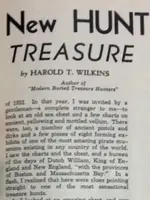
Last edited:

 This issue aside, we know with certainty Edmunds got nearly everything else wrong so it does not much matter - he is an untrustworthy source since he got the dates, sequence of discovery, and many other details incorrect about the maps. However, he has stated in this thread that he copied what Howlett (1958) wrote without fact-checking any of his claims, so this is more a case of Edmunds being a lazy and incompetent researcher rather than an outright liar. If Anthony Howlett wrote the Earth is flat, Edmunds would have likely copied and believed him. He's made it clear he irrationally blindly believed whatever Howlett told him even though he got most wrong. Not much point with trying to reason with someone with this mindset.
 I think it is likely between 1940 and 1947 he published another article on the maps.