What's new

The Treasure of Captain William Kidd.

I think it is better not to go to extreme claims (of pirates never ever burying anything). Even if true it doesn't help much in that case as mentioned it is quite special.
At some point you have to recognise that absence of evidence is evidence of absence much like Bigfoot and Loch Ness Monster.

"The only buried pirate treasure that has ever been found was found in the pages of fiction."

1778594056427.webp

1778594100132.webp

- The Evening Independent (9 June 1928)

Why do people like Randawg72 believe or say they believe (with no evidence) in the contrary? There are different possible reasons:

Sunk-Cost Fallacy: Once a person has invested a lot of time and money into searching for a pirate buried treasure they often find it difficult to stop because of loss aversion cognitive bias so they will not give up, even despite their time and money is unrecoverable and the odds are massively against them finding anything.

Escapism: Pursuing a pirate buried treasure is a form of escapism or fantasy because people tend to live mundane lives (for example, working a blue/white-collar job; it therefore fills a perceived void in a person's life and gives them a sense of adventure and thrill of the treasure hunt). In other words, the belief offers a thrilling alternative to the banality and normality of everyday life.

Unwavering belief, cognitive biases and delusion: self-explanatory. This was already touched upon by Crow but if we more harshly word things or make specific accusations, certain posters complain to the mods. That said, I think it is obvious to everyone that posters like Oak Island Sage, CapnGeorge and Randawg72 share a trait in common where they seldom, if ever, admit they are wrong, even though they have repeatedly been proven wrong and constantly are posting false information or making far-fetched claims about buried treasures and the Kidd-Palmer maps in these threads (we are expected to believe by these posters - Kidd sailed to Oak Island and buried a treasure, he drew the Kidd-Palmer maps and/or the Kidd-Palmer maps point to a treasure on Pinaki atoll or another exotic island, despite the sheer lack of evidence for any of this nonsense). Heck, in Oak Island Sage's own words: "An argument occurs when two people with opposing opinions think they are right, that doesn't apply here, in this case - I know I'm right". This mindset stems from a 'true belief' that is unwavering even in light of overwhelmingly contradictory evidence. One trait of this irrational mindset is fusion of identity and belief, consequently, criticism (albeit justified) of a true believer's view, belief or ideas are experienced by them as an existential threat to themselves, leading to extreme defensiveness or hostility hence the peculiar (and quite frankly bizarre) reaction of some of these posters to my reasonable criticisms here.
 
Last edited:
Even though Willliam Kidd was tried and convicted of piracy, he was not a typical pirate. He was actually a wealthy businessman who became a privateer and was betrayed by his business partners.
In the days before (and even after} banks, it was quite common for people to bury money.
This is proven by the many coin hoards that are discovered each year. It would have been logical for Kidd to have secreted his assets for protection during a pending criminal trial.
 
At some point you have to recognise that absence of evidence is evidence of absence much like Bigfoot and Loch Ness Monster.

Regarding so-called "buried treasure," I believe that absence of evidence is not evidence of absence. This is because, while numerous buried treasures have actually been discovered around the world, there are basically no records left for those treasures. In other words, there are no records or treasure maps indicating their existence. (Of course, there are a very small number of exceptions. However, exceptions are just exceptions.)

The following is an excerpt from my own essay:


1000000118.webp


1000000120.webp


1000000122.webp


Historians commented as follows upon the discovery of the Herefordshire hoard.
Historians of England contend that the difficulty of accounting for where, exactly, something important has been buried is one reason that Viking hoards and Roman caches of silver denarii are still there for the finding—or, for that matter, for the stealing.1

This is not exclusive to the UK.

In short, the same applies to pirate treasures. While it is possible to negate their existence based on various other elements and facts, the absence of records cannot be taken as proof that the treasure does not exist.
 

Attachments

  • 1000000120.webp
    1000000120.webp
    133.2 KB · Views: 47
Last edited:
At some point you have to recognise that absence of evidence is evidence of absence much like Bigfoot and Loch Ness Monster.

"The only buried pirate treasure that has ever been found was found in the pages of fiction."

View attachment 2253383
View attachment 2253384
- The Evening Independent (9 June 1928)

Why do people like Randawg72 believe or say they believe (with no evidence) in the contrary? There are different possible reasons:

Sunk-Cost Fallacy: Once a person has invested a lot of time and money into searching for a pirate buried treasure they often find it difficult to stop because of loss aversion cognitive bias so they will not give up, even despite their time and money is unrecoverable and the odds are massively against them finding anything.

Escapism: Pursuing a pirate buried treasure is a form of escapism or fantasy because people tend to live mundane lives (for example, working a blue/white-collar job; it therefore fills a perceived void in a person's life and gives them a sense of adventure and thrill of the treasure hunt). In other words, the belief offers a thrilling alternative to the banality and normality of everyday life.

Unwavering belief, cognitive biases and delusion: self-explanatory. This was already touched upon by Crow but if we more harshly word things or make specific accusations, certain posters complain to the mods. That said, I think it is obvious to everyone that posters like Oak Island Sage, CapnGeorge and Randawg72 share a trait in common where they seldom, if ever, admit they are wrong, even though they have repeatedly been proven wrong and constantly are posting false information or making far-fetched claims about buried treasures and the Kidd-Palmer maps in these threads (we are expected to believe by these posters - Kidd sailed to Oak Island and buried a treasure, he drew the Kidd-Palmer maps and/or the Kidd-Palmer maps point to a treasure on Pinaki atoll or another exotic island, despite the sheer lack of evidence for any of this nonsense). Heck, in Oak Island Sage's own words: "An argument occurs when two people with opposing opinions think they are right, that doesn't apply here, in this case - I know I'm right". This mindset stems from a 'true belief' that is unwavering even in light of overwhelmingly contradictory evidence. One trait of this irrational mindset is fusion of identity and belief, consequently, criticism (albeit justified) of a true believer's view, belief or ideas are experienced by them as an existential threat to themselves, leading to extreme defensiveness or hostility hence the peculiar (and quite frankly bizarre) reaction of some of these posters to my reasonable criticisms here.
Hi Cryptid1990, you have yet to produce any overwhelming contradictory evidence of my own theories, and I for one don't consider you to be an existential threat in any way shape or form, as the tennis player John Mc Enroe would say, "you cannot be serious"😆 Clearly the only person you have any regard for is yourself. You claim that you have indisputable evidence of something, but you forget to mention that the questionable evidence you present always suits your own personal egotistical assessment.
You dispute the Kidd-Palmer maps were drawn by Captain Kidd and they are false, well I've got news for you buddy, with the exception of the fabricated Mar Del versions they were drawn either by Captain Kidd or John Ware.
When it comes to deciphering the genuine China Sea Map which is 95% full of deliberately misleading information you are not in my league. Yes I have deciphered that map and I will disclose to everyone now that at no time on any Captain Kidd map does X actually mark the spot on the surface for the location of treasure below, even the original miners couldn't say where the surface position directly above the repository was. (see CAD) There is no X on the China Sea map or the Deadman Island map. now you all know why. The X drawn on a carving or rough maps are not to taken as real evidence of the treasures location.
Captain Kidd did not bury treasure on Oak Island but he did take a huge treasure there on just one occasion, to be stored by other men below ground, awaiting a melting down procedure and conversion into coinage.
The original delivery method was to use the top secret concealed entrance entrance in the woods which I have called the "Loading Shaft", and at the bottom then to follow the long railed "Access Tunnel" to reach the distant "Repository", this contained approximately a billion pounds. I am 95% sure that I can locate it now and retrieve the huge treasure, top that with your personally adjudged to be indisputable evidence.

Oak Island Sage
 
Oh bout 40 or 50 years ago a guy I knew found a lump of crusty silver coins on the banks of the Hudson in NY allegedly attributed to Kidd, but who knows. that's all the details I will tell.
 
I already explained what the Kidd-Palmer maps likely are but virtually no one listened. The problem is most posters here have a pre-conceived idea about the treasure and location of the island depicted on the maps so they are not interested in anything aside from their own pet theory and delusions (Crow touched upon this). We have seen this time and time again in these threads. Based on what people have posted here we are expected to believe:

1. Oak Island Sage: Captain Kidd drew a treasure map, traveled to Oak Island with Henry Avery, deposited a treasure underground and this somehow involved gold from the Knights Templar.
2. Randawg72: Captain Kidd drew the Kidd-Palmer maps and the treasure is buried on an island (you have not disclosed where).
3. CapnGeorge: Wilkins drew the Kidd Palmer maps but wrote instructions to a treasure on an exotic atoll from an "Anson File".
4. Gjb: The Kidd-Palmer maps and Wilkins' maps are a set of different instructions that have to be combined that lead to a buried treasure on Oak Island (although not in the money pit but somewhere else on the island).

If I post strong criticism or harsh words to describe all this utter nonsense I get reported, legally threatened, or I am described as not being "open minded enough" despite (1)-(4) have as much validity as flat-earthism or germ theory denialism. There is not much point in me explaining in detail, what the Kidd-Palmer maps actually are, when whatever I say will be ignored (as previously). But what amuses me most, is you cannot even agree among yourselves which one of your absurd pet theories is correct.
Hi Crypted 1690 Just to make it clear to you, I have never said in my life that Captain Kidd and Captain Every (or Avery as you prefer to call him.) ever sailed together to Oak Island. Your glaring error raises the question, did you actually read my book that you gave a scathing review of. :nono:

In my book I merely suggested that it is possible that the Knights Templar may have stored their own treasures in the Oak Island repository, that's because back then the subterranean flood tunnel protection system rendered it impregnable, and it still does unless you know how to deactivate it like me.:icon_thumleft:

Oak Island Sage
 
Last edited:
I already explained what the Kidd-Palmer maps likely are but virtually no one listened. The problem is most posters here have a pre-conceived idea about the treasure and location of the island depicted on the maps so they are not interested in anything aside from their own pet theory and delusions (Crow touched upon this). We have seen this time and time again in these threads. Based on what people have posted here we are expected to believe:

1. Oak Island Sage: Captain Kidd drew a treasure map, traveled to Oak Island with Henry Avery, deposited a treasure underground and this somehow involved gold from the Knights Templar.
2. Randawg72: Captain Kidd drew the Kidd-Palmer maps and the treasure is buried on an island (you have not disclosed where).
3. CapnGeorge: Wilkins drew the Kidd Palmer maps but wrote instructions to a treasure on an exotic atoll from an "Anson File".
4. Gjb: The Kidd-Palmer maps and Wilkins' maps are a set of different instructions that have to be combined that lead to a buried treasure on Oak Island (although not in the money pit but somewhere else on the island).

If I post strong criticism or harsh words to describe all this utter nonsense I get reported, legally threatened, or I am described as not being "open minded enough" despite (1)-(4) have as much validity as flat-earthism or germ theory denialism. There is not much point in me explaining in detail, what the Kidd-Palmer maps actually are, when whatever I say will be ignored (as previously). But what amuses me most, is you cannot even agree among yourselves which one of your absurd pet theories is correct.
You really should listen to yourself. "I already explained what the Kidd-Palmer maps likely are but virtually no one listened," and more to the point, "There is not much point in me explaining in detail, what the Kidd-Palmer maps actually are, when whatever I say will be ignored." We can all say that. You're not alone. You're actually the one doing precisely this to everybody else.

Don't you even recognise that you're telling everybody you're not prepared to listen to them? You declare that everything anybody else presents as hypothesis is 'nonsense'. You prove time and time again that you cannot be objective. You really do not have an open mind. To you, every hypothesis but your own is 'absurd' and a 'pet theory' when, in fact, you're presenting your own pet theory, though I don't see anybody declaring yours to be absurd. You've presented it before and I considered it then something worth thinking about. However, you wouldn't dream of extending the same courtesy to anybody else.

Your bias, your prejudice and invective would have no place at all in academic circles, it would be deemed totally unacceptable, you'd be a pariah, so why are you imposing it on everybody here? Do you consider this platform to be so intellectually inferior that you can disregard any thought of polite discussion, of productive exchange and the further development of ideas?

You simply refuse to accept that you could be wrong about anything, and that's the worst start ever. You've actually demonstrated that you're in no position to comment objectively on anybody else's work. You even told me that you're not prepared to take my work at all seriously, so how can you comment objectively on it?

I've tried to meet a fairly high standard with my work, but I know for a fact that you'll lambaste it regardless. You've already stated that I'm a crackpot and declared my work to be nonsense, yet you've never taken the trouble to look carefully at it. To you, it sounds ridiculous so it has to be ridiculous. It challenges your deeply rooted beliefs so it has to be wrong.

You don't try to improve other people's work, you just set out to destroy it by any means at your disposal, including cheap rhetoric. We've seen you in action. We know what's coming. You could change, but I feel that you won't, and I see absolutely no point in trying to discuss anything with you, particularly when it come to my work. After all, you've only just ordered a copy of my book, but you've already declared that I'm a crackpot and that my work is nonsense. Is that truly your idea of objectivity?
 
At some point you have to recognise that absence of evidence is evidence of absence much like Bigfoot and Loch Ness Monster.
I do not see that total absence of evidence that you see - I see not enough evidence for any presented theory - that is true. Also I never make up my mind unless I need to take a decision - there is no need so why decide on it?

All your points you made are valid in my opinion. They come with the bride and once you marry into researching treasure legends it is difficult to separate fact from fiction. Don't say you are not effected by this! It would be nice if everyone here would stop lecturing the others and humbly try to see the obvious - that we know little about the past no matter how deep we dig.
 
  • Like
Reactions: gjb
Regarding so-called "buried treasure," I believe that absence of evidence is not evidence of absence. This is because, while numerous buried treasures have actually been discovered around the world, there are basically no records left for those treasures. In other words, there are no records or treasure maps indicating their existence. (Of course, there are a very small number of exceptions. However, exceptions are just exceptions.)

The following is an excerpt from my own essay:

Historians commented as follows upon the discovery of the Herefordshire hoard.

This is not exclusive to the UK.

In short, the same applies to pirate treasures. While it is possible to negate their existence based on various other elements and facts, the absence of records cannot be taken as proof that the treasure does not exist.
There are ancient and medieval literary sources that mention Romans and Vikings buried treasure e.g., the 9th century CE Anglo-Saxon Chronicle (relying upon centuries earlier now lost literary sources), noted in 418 CE:

"This year the Romans collected all the hoards of gold that were in Britain; and some they hid in the earth, so that no man afterwards might find them, and some they carried away with them into Gaul."

Some Viking hoards were in fact votive or ritual deposits (rather than for safekeeping) and burial traditions are mentioned in Old Norse sagas (e.g., Heimskringla). The Vikings often placed valuables into the graves or mounds where their dead were buried. There are also examples of Vikings burying treasure for other purposes; according to Egil's Saga, Egil Skallagrímsson buried two chests of silver and gold coins (given to him by King Æthelstan). The Roman historian Dio Cassius (c. 200 CE) wrote the Dacian King Decebalus hid his monumental wealth in a riverbed (see Decebalus treasure), and so on. The historical context for many of the Roman and Viking hoards being buried was during crisis periods e.g., coin hoards buried during Boudica’s revolt. This similarly explains the Herefordshire hoard which most archaeologists now think was hidden as an emergency during the Viking-Saxon conflict. Yet when it comes to pirates from the Golden Age of Piracy (1650s-1730s), there is an absence of evidence for pirates burying treasure - both from 17th-18th century literature and the physical evidence. There is also no reason to suppose pirates would have buried treasure and reasons against believing that. Furthermore, the legends and folk tales that Kidd buried treasure, appear to have arose a century after he died especially in the Victorian era. It is telling that none of the 18th century ballads mention Kidd buried treasure. The absence of literary and physical evidence implies evidence of absence pirates buried treasure and there are no reasons for pirates to have buried treasure (unlike the Vikings or Romans as votive deposits or for safekeeping during an emergency). As for proving a negative, it depends what the threshold of proof is. Absolute certainty - no - but evidence beyond a reasonable doubt - yes. Your essay ignores the fact that ancient/medieval literature mentions that Romans, their enemies (such as Dacians), and Vikings, buried or hid in the ground treasure but when it comes to pirates (1650s-1730s) there are no literary sources.
 
What a shame !! I'm so sorry for this thread....just a disaster of he said she said blah blah blah .... any research that was productive in any way shape or form is absolutely disgraced by the blah blah blah of Wikipedia warriors.... so sad 😞 no one here will ever get up out the chair and prove anything...just another popcorn festival for those who like to dislike...no one here even knows where to start a real hunt....or which island to even begin at.....even when I put a huge red arrow pointing at a very feasible starting point that makes more since than any of this other pointless arguing. Except for a few people here....the rest sound absolutely embarrassing....good luck to all, maybe someday someone will do something about all there 100% sure theories!! I will leave you guys at the back and forth boliginia .... have at it boys....see ya !!
 
Your essay ignores the fact that ancient/medieval literature mentions that Romans, their enemies (such as Dacians), and Vikings, buried or hid in the ground treasure but when it comes to pirates (1650s-1730s) there are no literary sources.
The Spaniards vehemently declared Sir Francis Drake to be a pirate, and there's certainly at least one historical literary source (which I recall having read) stating that he buried loot when on the run from Spanish forces. This is known because people were keen to document Drake's exploits at the time (as they did concerning Sir Henry Morgan later, also a pirate according to Spain). However, was anyone similarly detailing the activities of 'real' pirates whenever and wherever they were active? It's documented that they looted, it's documented that they consumed, but who would be documenting whether they hid their loot should they have had any left to hide?

In fact, would you be saying the same thing were we discussing the buccaneers? There are contemporary sources saying that some of them amassed and secured (that is, stored and hid) great wealth, though it was admittedly the ruling elite doing the amassing at the expense of the common buccaneer (for example, Tortuga c.1650). The question is, what happened to that wealth and, more to the point, who was likely to document those who ended up with it and where it was put?
 
The question is, what happened to that wealth and, more to the point, who was likely to document those who ended up with it and where it was put?
That's the whole point I think. Pirates were not really part of civilization. They are outcasts and most of them illiterate. Don't expect much documents and no, in this case the absence of evidence doesn't say that much.

It is best to simply go to the places and start understanding their lives by living it. As we do on our voyage. We have not found any treasure yet but it is nevertheless interesting to understand those who are long dead and gone but left their deep impression on us who live in a very different world now.
 
There are ancient and medieval literary sources that mention Romans and Vikings buried treasure e.g., the 9th century CE Anglo-Saxon Chronicle (relying upon centuries earlier now lost literary sources), noted in 418 CE:


Some Viking hoards were in fact votive or ritual deposits (rather than for safekeeping) and burial traditions are mentioned in Old Norse sagas (e.g., Heimskringla). The Vikings often placed valuables into the graves or mounds where their dead were buried. There are also examples of Vikings burying treasure for other purposes; according to Egil's Saga, Egil Skallagrímsson buried two chests of silver and gold coins (given to him by King Æthelstan). The Roman historian Dio Cassius (c. 200 CE) wrote the Dacian King Decebalus hid his monumental wealth in a riverbed (see Decebalus treasure), and so on.

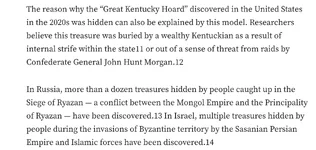
Although countless treasures have actually been discovered in the UK, such individual hoards are basically never found based on records indicating their existence or hidden locations.

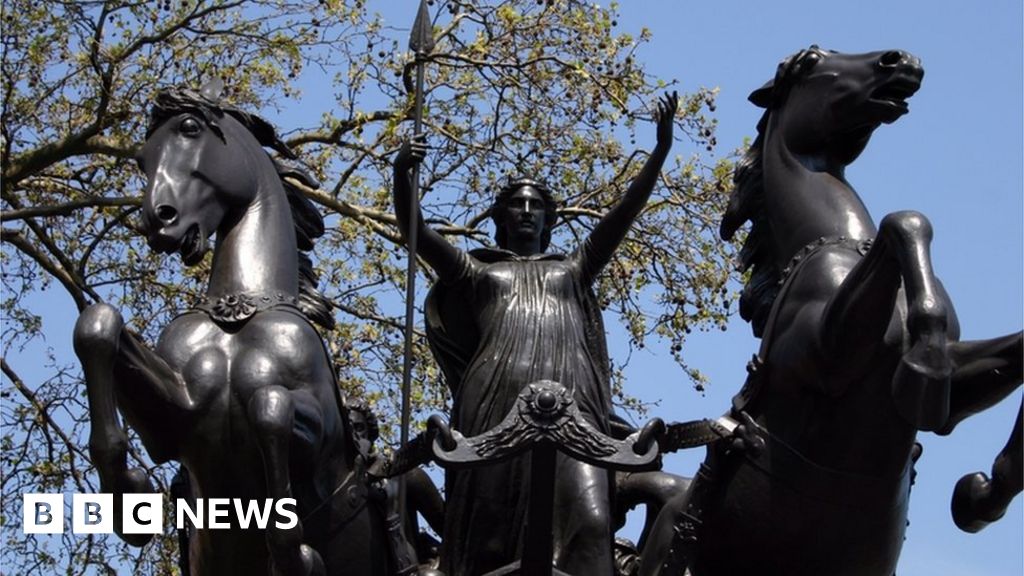
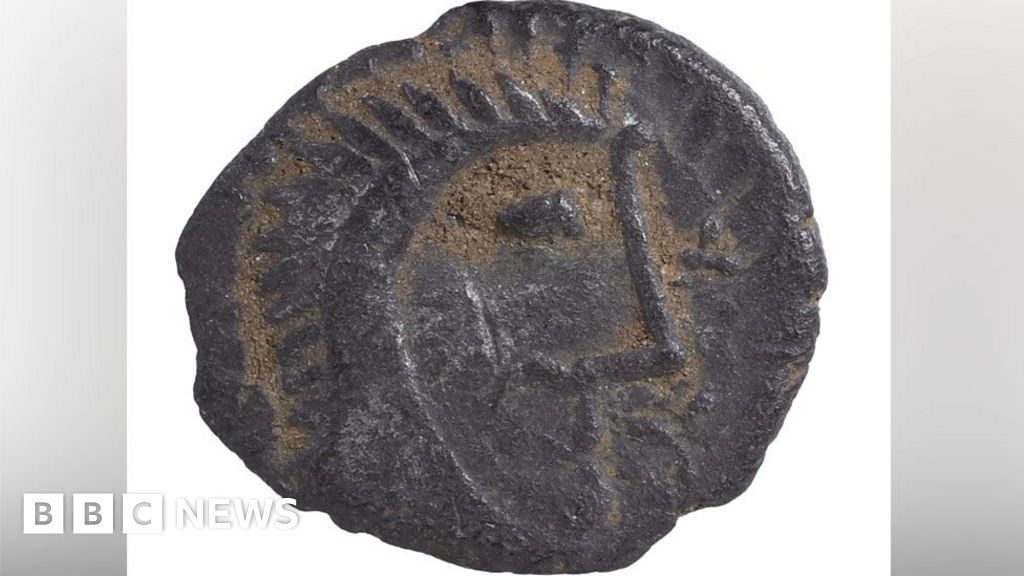
The historical context for many of the Roman and Viking hoards being buried was during crisis periods e.g., coin hoards buried during Boudica’s revolt. This similarly explains the Herefordshire hoard which most archaeologists now think was hidden as an emergency during the Viking-Saxon conflict.

My argument is that such a thing might have happened in Madagascar. In Madagascar, pirates who had settled locally with their treasures spent their days in constant conflict with the indigenous people and rival pirates. For more details, please see the following thread.


Yet when it comes to pirates from the Golden Age of Piracy (1650s-1730s), there is an absence of evidence for pirates burying treasure - both from 17th-18th century literature and the physical evidence. There is also no reason to suppose pirates would have buried treasure and reasons against believing that.

The most important point is that the pirates themselves left very few records. For example, in the case of the pirates in Madagascar, the only existing accounts are those from European sailors who visited the area, people who were taken captive by the pirates, or the governor of the neighboring island of Réunion. In other words, there are only fragmented records available. I agree that there is no physical evidence.

The absence of literary and physical evidence implies evidence of absence pirates buried treasure and there are no reasons for pirates to have buried treasure (unlike the Vikings or Romans as votive deposits or for safekeeping during an emergency).

The case of the pirates of Madagascar is different. They had a reason to bury and hide their treasure, just like the people who were terrified of the Romans, the Vikings, or Boudica's rebellion.


Your essay ignores the fact that ancient/medieval literature mentions that Romans, their enemies (such as Dacians), and Vikings, buried or hid in the ground treasure but when it comes to pirates (1650s-1730s) there are no literary sources.

As I have already written, I think we need to pay attention to the fact that only fragmented records about pirates remain. However there are documentary records stating that pirates buried and hid treasure. I posted about that in the thread you created earlier.

Furthermore, there are mostly no records regarding the specific treasures that have actually been discovered.


In most cases, there are no records left for treasures that were hastily buried during wars or conflicts.

The treasures from the time of Boudica's rebellion that you mentioned were discovered accidentally—either during archaeological excavations or by treasure hunters using metal detectors. It appears that no records of these treasures existed. They were not found using treasure maps or similar documents.


The same applies to the multiple hoards discovered in Ryazan, Russia. Those treasures were found by archaeologists investigating the ruins of Ryazan or by looters. No records of the treasures existed.


The same is true for much of the treasure hidden by the Romans and the Vikings. They are not discovered based on historical records.

The Roslin Hoard discovered in Scotland is believed to have been buried by the defeated English army during the Battle of Roslin, a clash between Scottish and English forces. No specific records indicating the existence of this hoard survived. The discoverers found it while exploring the site of the former military camp.


Exceptions like the Decebalus treasure that you introduced certainly do exist. However, it is clear that the overwhelming majority of such treasures were never recorded.
 
Last edited:
You really should listen to yourself. "I already explained what the Kidd-Palmer maps likely are but virtually no one listened," and more to the point, "There is not much point in me explaining in detail, what the Kidd-Palmer maps actually are, when whatever I say will be ignored." We can all say that. You're not alone. You're actually the one doing precisely this to everybody else.

Don't you even recognise that you're telling everybody you're not prepared to listen to them? You declare that everything anybody else presents as hypothesis is 'nonsense'. You prove time and time again that you cannot be objective. You really do not have an open mind. To you, every hypothesis but your own is 'absurd' and a 'pet theory' when, in fact, you're presenting your own pet theory, though I don't see anybody declaring yours to be absurd. You've presented it before and I considered it then something worth thinking about. However, you wouldn't dream of extending the same courtesy to anybody else.

Your bias, your prejudice and invective would have no place at all in academic circles, it would be deemed totally unacceptable, you'd be a pariah, so why are you imposing it on everybody here? Do you consider this platform to be so intellectually inferior that you can disregard any thought of polite discussion, of productive exchange and the further development of ideas?

You simply refuse to accept that you could be wrong about anything, and that's the worst start ever. You've actually demonstrated that you're in no position to comment objectively on anybody else's work. You even told me that you're not prepared to take my work at all seriously, so how can you comment objectively on it?

I've tried to meet a fairly high standard with my work, but I know for a fact that you'll lambaste it regardless. You've already stated that I'm a crackpot and declared my work to be nonsense, yet you've never taken the trouble to look carefully at it. To you, it sounds ridiculous so it has to be ridiculous. It challenges your deeply rooted beliefs so it has to be wrong.

You don't try to improve other people's work, you just set out to destroy it by any means at your disposal, including cheap rhetoric. We've seen you in action. We know what's coming. You could change, but I feel that you won't, and I see absolutely no point in trying to discuss anything with you, particularly when it come to my work. After all, you've only just ordered a copy of my book, but you've already declared that I'm a crackpot and that my work is nonsense. Is that truly your idea of objectivity?
I read The Oak Island Concealment [2023] (yesterday and today). As I suspected, total lack of evidence and idle speculation -
  • You assume there was a treasure buried or deposited on Oak Island to begin with or at least a planned deposit but you actually concede (in a [2025] article I read), there is no evidence and sceptics "very reasonably conclude that it does not [exist]".
  • You realise no treasure was ever found in the so-called Money Pit so wishfully think it must be elsewhere on the island: "it is perhaps to be hoped that there had been a deposit on Oak Island when it was not placed in the depths of this shaft".
  • There is no evidence whatsoever for a deposit outside of the Money Pit, at least you admit none has been found.
  • You assume "ground markers" (such as boulders) on Oak Island are part of a man-made "geometrical construction" and were intentionally put there (by whom exactly you do not say) in relation to a deposit (despite there is no evidence for a deposit).
  • You ignore evidence the ground markers are natural formations; instead you claim they were put there by an "originator". You arbitrarily create imaginary lines between the boulders (or other markers) on Oak Island. When you rhetorically ask what is the "purpose" of these ground markers, you overlook the most obvious answer: none. Drawing these imaginary lines is pointless.
  • You state "there should be nothing surprising about anyone burying valuables or treasure between the years 1500 and 1800" on Oak Island. Why though would this be unsurprising? There are no verified cases of pirates burying treasure in the 16th-18th centuries and you do not attempt to explain why someone would bury a treasure (during those centuries) on Oak Island.
  • Wilkins wrote in his articles and told Gilbert Hedden that his two 'Mar Del' [1935] maps were imaginary and he made up the instructions he wrote on them. However, you claim in private, he held the opposite view, and copied the instructions from somewhere. You do not provide a shred of evidence. I asked in my thread for proof but what you posted was not remotely convincing and the few words you quoted were probably taken out of context in light of your earlier book misinterpreted a letter Harold T. Wilkins' brother Gordon wrote. You repeat the same misinterpretation in your [2023] book. You quote this letter and (wrongly) interpret it as saying Gordon "lumps" Wilkins and Palmer's maps together as if he is saying they are all part of a set of instructions and these are "related to Oak Island". He says no such thing. While it is true Guy/Harold Wilkins were deluded by Hedden after he claimed the imaginary instructions relate to markers on Oak Island - Wilkins irrationally believed this was explained by a paranormal force (automatic writing) or he was the reincarnation of a pirate so the instructions were made by him not consciously. Nothing to do with him having copied the instructions from somewhere. Even after Wilkins (and seemingly his brother) came to believe this, he continued to distinguish Palmer's maps to Mar Del. Nowhere in any his writings does he say or imply the instructions he made up on the Mar Del maps were part of a set to be combined with Palmer's maps. You make this unsubstantiated claim throughout your book.
  • It is apparent that you do not actually own a letter or document by Wilkins where he explicitly stated what you are claiming. In other words, at best, you are speculating about the instructions being combined as part of a set, or worse you are making it up as you go along. Regardless, there is no evidence these instructions (Wilkins or Palmer's) relate to Oak Island. At the end of the day, all you have produced is arbitrary imaginary lines from boulders to boulders that are natural formations. There are many different imaginary lines you could draw and you can create different shapes or geometric patterns. As I said, it is arbitrary and a pointless exercise.
  • You assert Hedden was "absolutely correct that the instructions on the Wilkins map apply to oak island". In reality, Hedden admitted he could not make sense of some of the instructions. As one website notes, "he [Gilbert Hedden] could make neither heads nor tails of the last line of directions". Secondly, how did Hedden know where to start from to carry out the instructions? Hedden chose a completely arbitrary spot (one of many) on Smith’s Cove. If he had started somewhere else, he could have easily made different imaginary lines to different landmarks (ground markers). None of this is evidence, let alone proof the instructions pertain to Oak Island.
  • You repeat the dubious (highly improbable) claim that the 'John S's Rough Map' (engraved on a rummer made out of horn) is Oak Island. I showed in another thread that this map was much more likely based on Wild Cat Island from Swallows and Amazons (1930). Aside from the island's similarity in shape and topography to Wild Cat Island, both contain the same compass direction (West points North) and "John S" can also be identified as the map creator John Swallow. Furthermore, we know that 'John S's Rough Map' was created much more recently than the date carved on it (1697) because a ship drawing on the same rummer is more modern. This supports a c. 1930 date, shortly after S&A was published and the provenance of the rummer cannot be traced back before 1934.
  • You claim there were a mysterious group of treasure hunters in possession of a file that prove Wilkins copied the instructions from earlier sources that date back over a hundred years before his time. These files you say relate to Oak Island: "the maps [instructions] were taken from a file containing information about Oak Island that surfaced in the 1920s". Contents from this file you name 'Particulars'. You do not substantiate the existence of this file. No evidence at all. The file is likely imaginary and you were being fed incorrect information by a dodgy informant (who you claim to have talked to at a clandestine meeting).
Your book is very similar to CapnGeorge's Anson's Gold. He presents no evidence for his far-fetched claims either but expects his readers (like you) to believe in a mysterious and elusive file that Harold Wilkins copied his maps or instructions from. However, while you present the file owner(s) as like a secret organisation, CapnGeorge says it was an "Anson file" in the British Museum that went missing. You have complained I have described all this as nonsense but what else can I say when that is what it is? :icon_scratch:
 
Last edited:

I read The Oak Island Concealment [2023] (yesterday and today). As I suspected, total lack of evidence and idle speculation -
  • You assume there was a treasure buried or deposited on Oak Island to begin with or at least a planned deposit but you actually concede (in a [2025] article I read), there is no evidence and sceptics "very reasonably conclude that it does not [exist]".
  • You realise no treasure was ever found in the so-called Money Pit so wishfully think it must be elsewhere on the island: "it is perhaps to be hoped that there had been a deposit on Oak Island when it was not placed in the depths of this shaft".
  • There is no evidence whatsoever for a deposit outside of the Money Pit, at least you admit none has been found.
  • You assume "ground markers" (such as boulders) on Oak Island are part of a man-made "geometrical construction" and were intentionally put there (by whom exactly you do not say) in relation to a deposit (despite there is no evidence for a deposit).
  • You ignore evidence the ground markers are natural formations; instead you claim they were put there by an "originator". You arbitrarily create imaginary lines between the boulders (or other markers) on Oak Island. When you rhetorically ask what is the "purpose" of these ground markers, you overlook the most obvious answer: none. Drawing these imaginary lines is pointless.
  • You state "there should be nothing surprising about anyone burying valuables or treasure between the years 1500 and 1800" on Oak Island. Why though would this be unsurprising? There are no verified cases of pirates burying treasure in the 16th-18th centuries and you do not attempt to explain why someone would bury a treasure (during those centuries) on Oak Island.
  • Wilkins wrote in his articles and told Gilbert Hedden that his two 'Mar Del' [1935] maps were imaginary and he made up the instructions he wrote on them. However, you claim in private, he held the opposite view, and copied the instructions from somewhere. You do not provide a shred of evidence. I asked in my thread for proof but what you posted was not remotely convincing and the few words you quoted were probably taken out of context in light of your earlier book misinterpreted a letter Harold T. Wilkins' brother Gordon wrote. You repeat the same misinterpretation in your [2023] book. You quote this letter and (wrongly) interpret it as saying Gordon "lumps" Wilkins and Palmer's maps together as if he is saying they are all part of a set of instructions and these are "related to Oak Island". He says no such thing. While it is true Guy/Harold Wilkins were deluded by Hedden after he claimed the imaginary instructions relate to markers on Oak Island - Wilkins irrationally believed this was explained by a paranormal force (automatic writing) or he was the reincarnation of a pirate so the instructions were made by him not consciously. Nothing to do with him having copied the instructions from somewhere. Even after Wilkins (and seemingly his brother) came to believe this, he continued to distinguish Palmer's maps to Mar Del. Nowhere in any his writings does he say or imply the instructions he made up on the Mar Del maps were part of a set to be combined with Palmer's maps. You make this unsubstantiated claim throughout your book.
  • It is apparent that you do not actually own a letter or document by Wilkins where he explicitly stated what you are claiming. In other words, at best, you are speculating about the instructions being combined as part of a set, or worse you are making it up as you go along. Regardless, there is no evidence these instructions (Wilkins or Palmer's) relate to Oak Island. At the end of the day, all you have produced is arbitrary imaginary lines from boulders to boulders that are natural formations. There are many different imaginary lines you could draw and you can create different shapes or geometric patterns. As I said, it is arbitrary and a pointless exercise.
  • You assert Hedden was "absolutely correct that the instructions on the Wilkins map apply to oak island". In reality, Hedden admitted he could not make sense of some of the instructions. As one website notes, "he [Gilbert Hedden] could make neither heads nor tails of the last line of directions". Secondly, how did Hedden know where to start from to carry out the instructions? Hedden chose a completely arbitrary spot (one of many) on Smith’s Cove. If he had started somewhere else, he could have easily made different imaginary lines to different landmarks (ground markers). None of this is evidence, let alone proof the instructions pertain to Oak Island.
  • You repeat the dubious (highly improbable) claim that the 'John S's Rough Map' (engraved on a rummer made out of horn) is Oak Island. I showed in another thread that this map was much more likely based on Wild Cat Island from Swallows and Amazons (1930). Aside from the island's similarity in shape and topography to Wild Cat Island, both contain the same compass direction (West points North) and "John S" can also be identified as the map creator John Swallow. Furthermore, we know that 'John S's Rough Map' was created much more recently than the date carved on it (1697) because a ship drawing on the same rummer is more modern. This supports a c. 1930 date, shortly after S&A was published and the provenance of the rummer cannot be traced back before 1934.
  • You claim there were a mysterious group of treasure hunters in possession of a file that prove Wilkins copied the instructions from earlier sources that date back over a hundred years before his time. These files you say relate to Oak Island: "the maps [instructions] were taken from a file containing information about Oak Island that surfaced in the 1920s". Contents from this file you name 'Particulars'. You do not substantiate the existence of this file. No evidence at all. The file is likely imaginary and you were being fed incorrect information by a dodgy informant (who you claim to have talked to at a clandestine meeting).
Your book is very similar to CapnGeorge's Anson's Gold. He presents no evidence for his far-fetched claims either but expects his readers (like you) to believe in a mysterious and elusive file that Harold Wilkins copied his maps or instructions from. However, while you present the file owner(s) as like a secret organisation, CapnGeorge says it was an "Anson file" in the British Museum that went missing. You have complained I have described all this as nonsense but what else can I say when that is what it is? :icon_scratch:
This is plainly deceitful and totally dishonest, it’s appalling. You know full well that you've only commented on about 10% of the entire book. None of this is what the book is all about, and you damned well know it!

How can you possibly review a book and not comment on 90% of it? Just how did you think you'd get away with that? Anyone can flick through the book and immediately see your duplicity. How have you got the nerve, the audacity, to do such a thing?

The book is actually about explaining a possible meaning to the five sets of instruction on the maps, that's the 90% of the book that you've ignored, that never gets a mention. In post #938 here you actually provide a better summary of the book:

Gjb: The Kidd-Palmer maps and Wilkins' maps are a set of different instructions that have to be combined that lead to a buried treasure on Oak Island (although not in the money pit but somewhere else on the island).”

However, I'm not actually saying that there's a treasure on Oak Island, I don't know either way, simply that it looks as if a deposit was planned and explaining why I think this. That’s what the book is all about, not what you’ve commented on above, which is just background.

You’ve also posted this so-called ‘review’ completely divorced from the outline of the book provided in the complementary thread, “What happened to the Kidd-Palmer treasure maps? (#231)”, where it actually belongs. This has to have been intentional so that nobody would ask why you hadn’t addressed the subject matter of that post and of the entire book.

Furthermore, you know full well that my book has nothing to do with this specific thread, “The Treasure of Captain William Kidd,” and it obviously doesn’t belong here.

You’ve now lost all credibility with me, and I hope that the rest of the forum will finally see through you as well.

I’ve decided that I’m going to show everyone here just what you decided to ignore and keep from them. I intend to open a thread on this very forum and go through the entire process explaining how I believe the map instructions work, that is, everything that you completely left out.

I say again, your actions here are truly disgraceful.
 
You dispute the Kidd-Palmer maps were drawn by Captain Kidd and they are false, well I've got news for you buddy, with the exception of the fabricated Mar Del versions they were drawn either by Captain Kidd or John Ware.
When it comes to deciphering the genuine China Sea Map which is 95% full of deliberately misleading information you are not in my league. Yes I have deciphered that map and I will disclose to everyone now that at no time on any Captain Kidd map does X actually mark the spot on the surface for the location of treasure below, even the original miners couldn't say where the surface position directly above the repository was. (see CAD) There is no X on the China Sea map or the Deadman Island map. now you all know why. The X drawn on a carving or rough maps are not to taken as real evidence of the treasures location.
Captain Kidd did not bury treasure on Oak Island but he did take a huge treasure there on just one occasion, to be stored by other men below ground, awaiting a melting down procedure and conversion into coinage.
The original delivery method was to use the top secret concealed entrance entrance in the woods which I have called the "Loading Shaft", and at the bottom then to follow the long railed "Access Tunnel" to reach the distant "Repository", this contained approximately a billion pounds. I am 95% sure that I can locate it now and retrieve the huge treasure, top that with your personally adjudged to be indisputable evidence.

Oak Island Sage
Poe's law.
 
Although countless treasures have actually been discovered in the UK, such individual hoards are basically never found based on records indicating their existence or hidden locations.
Although there are no records that mention specific hoards in ancient/early medieval Britain, the general practice of burying wealth and treasure during wartime or times of crisis was recorded as were votive and ritual burial deposits. I already provided some of these sources. When it comes to pirates of the Golden Age of Piracy, no literary sources exist. Combined with the fact there is no physical evidence, it can at least be inferred that pirates did not bury treasure. Why would they? You have claimed "there are documentary records stating that pirates buried and hid treasure", so I took a look. Two are mentioned on Wikipedia under "Buried Treasure" including a deposition:

Regarding a 1703 deposition about the loss of pirate Thomas Tew's sloop Amity, a pardoned pirate testified that "It was said when he was at Rhoad Island that the money they had for the part owners of the Amity was buried in the ground."
First problem is this is not a direct quote from the deposition of the pardoned pirate (Samuel Stone). The paper I cannot access:

1014. xlviii. Deposition of Capt. Samuel Stone. The paper below was his handwriting which he gave to Col. Day in return for a pardon. It was said when he was at Rhoad Island that the money they had for the part owners of the Amity was buried in the ground. Capt. Tew proposed to deponent to give him Outerbridge's part of the Amity, arguing that the rest of the owners of the sloop had given him their parts, and added that if not, he should not have Outerbridge's part of the produce. The paper referred to was:—Mr. Jno. Gilbert, I verily believe my brother Richard might receive 1,500l. at least for his son's share of Capt. Tew; for I had about 500l. or more as Uncle Outerbridge has said, and his was but a third to his.
Second, if this summary is accurate about the deposition (I would still need to verify this and read the paper), it is unreliable since it is hearsay. Samuel Stone (the individual giving the sworn statement) was not testifying that he personally buried the gold, nor that he witnessed, or knew that it had been buried. It appears (if the summary is accurate) that Stone was merely testifying that he heard a rumour while in Rhode Island hence the words "it was said" and not "he said". In a modern court of law, this would be thrown out as inadmissible. Furthermore, as one website notes, by the time of the deposition (1703) nearly a decade after Tew died, "the exploits of the Amity had already passed into waterfront legend. In port cities like Newport, myths about Tew’s immense wealth grew exponentially with every passing year, heavily contaminating any recollections given under oath." I will comment about the other sources and Madagascar later in detail.
 
This is plainly deceitful and totally dishonest, it’s appalling. You know full well that you've only commented on about 10% of the entire book. None of this is what the book is all about, and you damned well know it!

How can you possibly review a book and not comment on 90% of it? Just how did you think you'd get away with that? Anyone can flick through the book and immediately see your duplicity. How have you got the nerve, the audacity, to do such a thing?

The book is actually about explaining a possible meaning to the five sets of instruction on the maps, that's the 90% of the book that you've ignored, that never gets a mention. In post #938 here you actually provide a better summary of the book:

Gjb: The Kidd-Palmer maps and Wilkins' maps are a set of different instructions that have to be combined that lead to a buried treasure on Oak Island (although not in the money pit but somewhere else on the island).”

However, I'm not actually saying that there's a treasure on Oak Island, I don't know either way, simply that it looks as if a deposit was planned and explaining why I think this. That’s what the book is all about, not what you’ve commented on above, which is just background.

You’ve also posted this so-called ‘review’ completely divorced from the outline of the book provided in the complementary thread, “What happened to the Kidd-Palmer treasure maps? (#231)”, where it actually belongs. This has to have been intentional so that nobody would ask why you hadn’t addressed the subject matter of that post and of the entire book.

Furthermore, you know full well that my book has nothing to do with this specific thread, “The Treasure of Captain William Kidd,” and it obviously doesn’t belong here.

You’ve now lost all credibility with me, and I hope that the rest of the forum will finally see through you as well.

I’ve decided that I’m going to show everyone here just what you decided to ignore and keep from them. I intend to open a thread on this very forum and go through the entire process explaining how I believe the map instructions work, that is, everything that you completely left out.

I say again, your actions here are truly disgraceful.
Thanks for proving my earlier comment:

One trait of this irrational mindset is fusion of identity and belief, consequently, criticism (albeit justified) of a true believer's view, belief or ideas are experienced by them as an existential threat to themselves, leading to extreme defensiveness or hostility hence the peculiar (and quite frankly bizarre) reaction of some of these posters to my reasonable criticisms here.
For the record, I did actually comment "on the 90%" when I mentioned "imaginary lines". Most of the book contains drawings of pointless imaginary lines that are arbitrary. I am not sure what else you expected me to say. :dontknow:
 
Last edited:

Can't help myself: there is a vision of being an in asylum where everyone is a patient including the doctors. Actually they are the ones who are beyond any cure. So there isn't much use to reason with them.

Well I think it is best to enjoy the absurdities and learn. Not many do - but listen to people who gone down the rabbit hole and some valuable information can come out of it. Just don't bother about the rest. Don't try to provoke them. Seriously. The truth in most matters is hurting too much and that is a fact for everyone.

Leave them the dream of the "Big Whoop". With the world outside gone AI this asylum appears to be an island of reason in comparison!
 
Adding to my earlier comment:

1014. xlviii. Deposition of Capt. Samuel Stone. The paper below was his handwriting which he gave to Col. Day in return for a pardon. It was said when he was at Rhoad Island that the money they had for the part owners of the Amity was buried in the ground. Capt. Tew proposed to deponent to give him Outerbridge's part of the Amity, arguing that the rest of the owners of the sloop had given him their parts, and added that if not, he should not have Outerbridge's part of the produce. The paper referred to was:—Mr. Jno. Gilbert, I verily believe my brother Richard might receive 1,500l. at least for his son's share of Capt. Tew; for I had about 500l. or more as Uncle Outerbridge has said, and his was but a third to his.
The above was written in 1913 (210-years after Samuel Stone's deposition [1703]):

The actual deposition is not quoted nor can I find it anywhere to read so there is no way to verify if Samuel Stone actually told a rumour that coins had been buried. The individual who wrote this in 1913 could have misread the deposition. Does anyone know where it can be read?
 

Users who are viewing this thread

Latest Discussions

Back
Top Bottom